 Chuckanut
 New Roofs Built for the Alger Stretch of Chuckanut Country
Homes around Alger sit in one of the more demanding little climate pockets in Whatcom County. You've got the moisture coming off the water along the Chuckanut corridor, tree cover that keeps roofs shaded and damp for long stretches of the year, and weather that swings between driving rain and salt-tinged wind depending on which way the front is moving. A roof that would hold up fine in a drier inland town can start showing problems here years ahead of schedule if it wasn't built for this specific environment.
This page is about one job done right in this one area: full new roof installation for Alger-area homes. Not a repair, not a patch — a complete system replacement, done with materials and details chosen for what this climate actually throws at a roof. We work this corridor regularly, so this isn't theoretical. It's what we look for, what we install, and why.
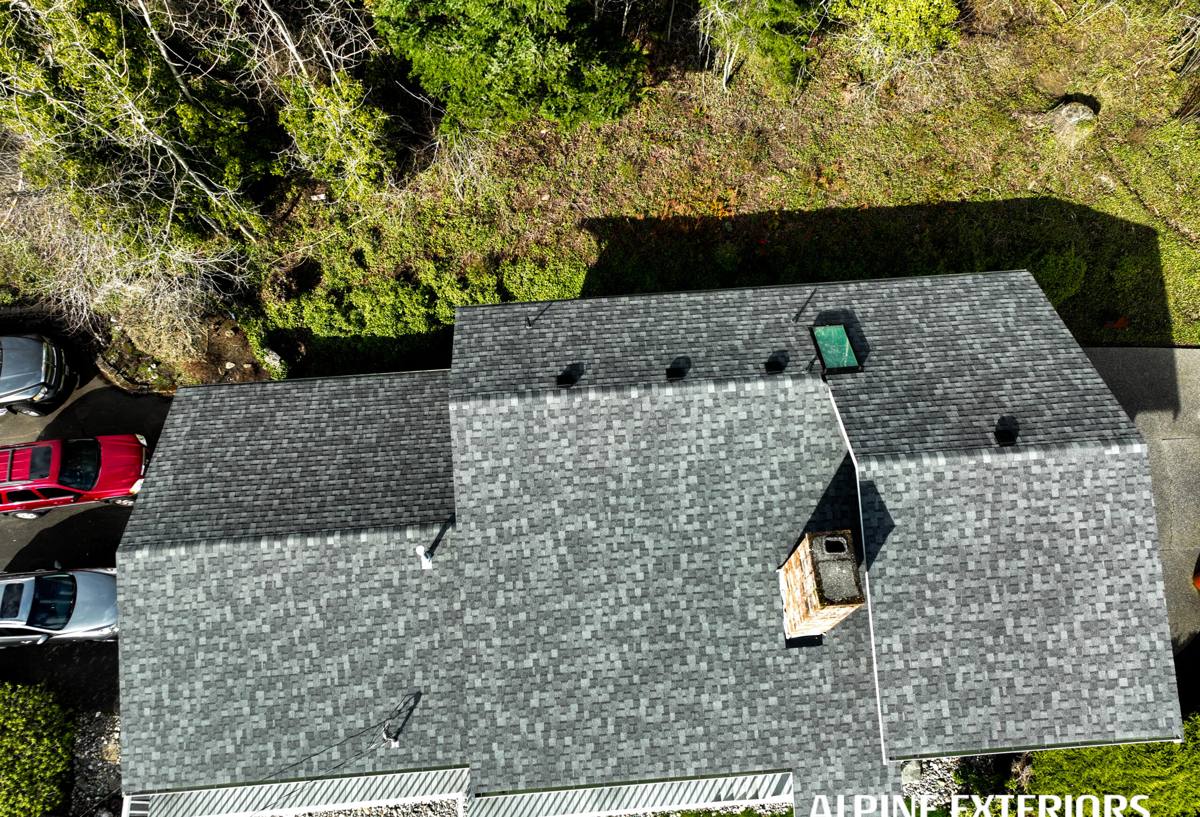
What Salt Air, Rain, and Moss Do to a Roof Here
Three things wear down roofs in this area faster than they would somewhere drier and more open: airborne salt, near-constant rain exposure, and a moss season that can run most of the year on shaded slopes.
Salt Air
Salt-laden air corrodes exposed metal faster than it does inland — fasteners, flashing, vents, and any exposed hardware are all in the line of fire. Cheaper or uncoated metal components can start pitting and staining within a few years. It's one of the reasons fastener and flashing quality matters more here than the shingle brand printed on the wrapper.
Driving Rain
Wind-driven rain doesn't just fall straight down — it gets pushed sideways under shingle tabs, into exposed nail heads, and around poorly lapped flashing. A roof built for a calmer climate, with minimal underlayment and standard flashing details, can let water in at valleys, chimneys, and wall intersections during the wetter, windier months.
Moss and Organic Growth
Shade, moisture, and moderate temperatures are exactly what moss wants. Once moss gets a foothold on a roof, it holds water against the shingle surface, lifts edges as it grows, and works its way into laps and fasteners. Left unaddressed for years, it shortens the life of even a good roofing system.
Signs an Alger Home Needs a New Roof, Not Another Repair
Not every roof problem calls for full replacement. But there's a point where patching stops making financial sense and a new roof becomes the honest recommendation. Some of the signs we look for on inspections in this area:
- Granule loss heavy enough that you can see bare, shiny patches on shingle surfaces
- Moss establishing itself in multiple areas rather than just a single shaded corner
- Soft or spongy spots when walking the roof, which usually means the deck underneath has taken on moisture
- Daylight visible through the roof deck from inside the attic
- Repeated leaks in different spots each winter, rather than one recurring, fixable location
- Shingles cupping, curling, or cracking across large sections rather than a few isolated tabs
- A roof already past 20-25 years old with no major work done
If a roof shows two or more of these, replacement usually costs less over time than continuing to chase repairs.
Choosing a Roofing System for This Climate
There's no single "best" roofing material for every home — it depends on the roof's slope, how much shade it gets, budget, and how the homeowner wants to handle long-term upkeep. Here's how the common options actually perform under the conditions Alger-area roofs deal with.
| Roofing System | How It Handles Rain | How It Handles Moss | Salt Air Durability |
|---|---|---|---|
| Asphalt composition shingle | Good, when installed with proper underlayment and flashing | Needs periodic cleaning and treatment on shaded slopes | Good with quality fasteners and flashing |
| Standing seam metal | Excellent — sheds water quickly, few penetration points | Sheds moss growth better due to smooth, non-porous surface | Requires coated or corrosion-resistant fastener and panel systems |
| Synthetic shake/slate-style | Good, similar performance to quality asphalt | Comparable to asphalt — still benefits from periodic cleaning | Good, generally resistant to corrosion since panels aren't metal |
Asphalt Composition Shingle
Still the most common choice for good reason — reasonable upfront cost, wide range of colors and styles, and solid performance when the underlayment, flashing, and ventilation underneath are done correctly. The shingle itself is rarely the weak link; the installation details around it are what determine how it holds up here.
Metal Roofing
Standing seam metal sheds water and resists moss better than any other common option, which makes it a strong choice for heavily shaded, low-slope, or moss-prone sections of a roof. The tradeoff is higher upfront cost and the need for fasteners and trim rated for coastal/salt-air exposure — cutting corners on hardware here is where problems start.
Synthetic Shake and Slate-Style Products
These offer a different look than shingle or metal without the maintenance concerns some traditional wood or natural slate products carry in a wet climate. We treat them as a middle-ground option — worth discussing if appearance and long-term low maintenance both matter to the homeowner.
What a Correct New Roof Installation Actually Involves
A new roof is only as good as what's underneath the shingles or panels. Most of the failures we get called out to inspect trace back to shortcuts taken in the layers you never see once the job is finished.
Tear-Off and Deck Inspection
We remove the old roofing down to the deck rather than layering over it. That's the only way to actually see the condition of the sheathing — soft, delaminated, or water-stained decking needs to be replaced before anything new goes on. Roofing over a compromised deck just hides the problem for a few more years.
Underlayment and Flashing
Given how much wind-driven rain this area sees, we treat underlayment as a real second line of defense, not a formality. Ice-and-water membrane goes in at eaves, valleys, and around penetrations — the areas most likely to take on water during a sideways rain event. Flashing at chimneys, walls, and roof-to-wall transitions gets properly lapped and sealed rather than just caulked over, since caulk alone is not a long-term fix in this climate.
Ventilation
A roof deck that can't breathe traps moisture from inside the house, which accelerates rot and helps moss and mold get started from underneath as well as above. Balanced intake and exhaust ventilation is part of a correct installation, not an upgrade.
Our Process, Start to Finish
Homeowners generally want to know what's actually going to happen once they sign off on a project. Here's the general shape of it:
- On-site inspection of the current roof, attic ventilation, and any visible problem areas
- Honest assessment of whether repair or full replacement makes sense, with the reasoning explained
- Material and system selection based on the roof's slope, shade exposure, and the homeowner's budget and preferences
- Written estimate covering scope, materials, and timeline before any work begins
- Tear-off, deck inspection, and any necessary sheathing repairs
- Installation of underlayment, ice-and-water membrane, flashing, and ventilation components
- Installation of the new roofing system per manufacturer specifications
- Final walk-through and cleanup, including magnetic sweep for stray fasteners
We don't skip the walk-through step. It's the point where the homeowner sees the finished work and asks questions before we consider the job done.
Living With a New Roof: Moss and Maintenance
Even a well-installed roof in this climate benefits from some basic upkeep. It's not intensive, but it's not "install it and forget it" either.
- Keep overhanging branches trimmed back to reduce shade and debris buildup on the roof surface
- Clear gutters and valleys of needles and leaves at least once or twice a year
- Address early moss growth with proper treatment rather than pressure washing, which can strip granules and shorten shingle life
- Have the roof looked at after any major windstorm to catch lifted shingles or damaged flashing early
- Keep an eye on attic ventilation — blocked vents undo a lot of the benefit of a good installation
None of this replaces professional inspection, but it goes a long way toward getting full value out of a new roofing system in a climate that doesn't let up much between rainy seasons.
Why a Crew That Already Works Alger Matters
Roofing work in this corridor comes with practical wrinkles that a crew unfamiliar with the area can miss. Tree cover means access and staging often need more planning than a wide-open suburban lot. Weather windows for tear-off and dry-in are tighter here than in drier parts of the state, so scheduling and material staging matter more. And because moss and moisture issues show up consistently on certain roof orientations and slopes in this area, a crew that's seen it before knows where to look before problems become visible from the ground.
A crew that treats every job like it's their first time in a wet, wooded, salt-influenced climate tends to under-detail the parts that matter most here — underlayment coverage, flashing laps, ventilation balance. That's where a lot of "new roofs" that fail in year six or seven actually went wrong.
Cost Factors to Expect
Every roof is different, and we don't quote pricing without seeing the actual roof, but these are the main factors that move the number up or down on most Alger-area projects.
| Factor | Why It Affects Cost |
|---|---|
| Roof size and number of facets | More square footage and more valleys/hips mean more material and labor |
| Roofing material chosen | Asphalt shingle is generally the most budget-friendly; metal and synthetic systems run higher upfront |
| Deck condition | Any sheathing replacement adds material and labor beyond the roofing itself |
| Roof pitch and access | Steeper roofs and tree-obstructed access take longer and require more safety setup |
| Ventilation and flashing upgrades | Bringing older ventilation or flashing details up to current standards adds scope but reduces future problems |
The only way to get an accurate number is a physical inspection — anyone quoting a firm price without walking the roof first is guessing.
Questions Worth Asking Before You Hire
- Do you tear off down to the deck, or install over existing layers?
- What underlayment and ice-and-water coverage do you use in valleys and at eaves?
- How do you handle ventilation as part of a replacement, not as an add-on?
- What's your plan for protecting landscaping and cleaning up fasteners and debris?
- Can you walk me through your flashing details at chimneys and walls specifically?
If you're weighing a repair against a full replacement, or just want an honest look at what your roof needs, we're glad to come out and take a look. The estimate is free, there's no pressure attached to it, and you'll get a straight answer about whether replacement actually makes sense for your home right now — you can get started with the form below.