 Chuckanut
 Siding Built for Burlington's Weather, Not Around It
Homes in the Burlington area sit in a stretch of the Pacific Northwest where marine air, sustained rainfall, and long stretches of overcast, damp weather are simply part of the deal. That combination is hard on exterior materials in ways that aren't always obvious from the curb. Moisture doesn't just fall from the sky here — it lingers in the air, settles into shaded north- and west-facing walls, and gives moss, algae, and mildew a long runway to take hold on almost any surface that isn't actively shedding water and drying out between storms.
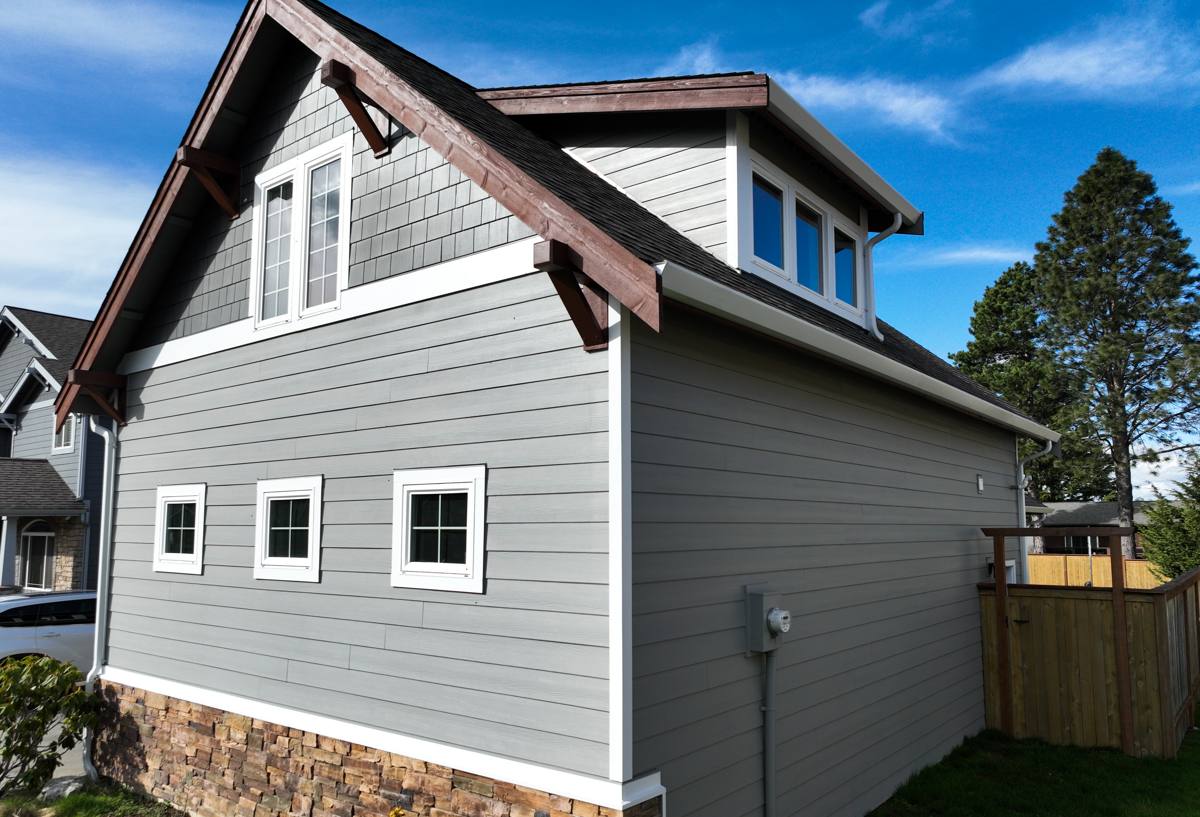
We install James Hardie fiber cement siding exclusively. Not because it's the only product on the market, but because after years of working on homes in this climate, it's the only siding system we're willing to put our name behind for the long haul. This page covers what Burlington-area homeowners actually deal with, and how we approach siding, and the rest of the exterior, to hold up against it.
What This Climate Does to a House Over Time
Salt Air and Moisture Load
Proximity to Puget Sound and the surrounding waterways means salt-laden air is a regular visitor, even a few miles inland. Salt air accelerates corrosion on fasteners, flashing, and any exposed metal trim, and it can speed up the breakdown of finishes that aren't formulated to resist it. Combined with near-constant humidity, exterior materials here are under more sustained moisture stress than they would be in a drier inland climate.
Driving Rain and Wind-Driven Water
Storms coming off the water don't just drop rain straight down — wind pushes it sideways into wall assemblies, around window and door openings, and up under poorly lapped siding courses. A siding system with weak seams, absorbent edges, or installation details that don't account for wind-driven rain will eventually let water behind the cladding, and once that happens, the damage is often happening inside the wall long before it shows up on the surface.
The Long Moss Season
Moss and algae need shade, moisture, and time — and this region offers all three for a good chunk of the year. Roofs, siding, decking, and anything else that stays damp and shaded is a candidate. Moss on siding isn't just cosmetic; it holds moisture against the surface and, on materials that absorb water or degrade under sustained dampness, that can shorten the material's usable life.
Quick Reference: What to Watch For
- Green or black staining on north- and west-facing walls, especially near roof lines and under eaves
- Soft spots, bubbling paint, or swelling at butt joints and corners
- Rust streaking below nail heads or trim fasteners
- Gaps or separation at caulked seams around windows and doors
- Peeling or chalking finish that exposes bare substrate to moisture
Why We Standardized on One Product
We used to get asked to install a wider range of siding products, and for a while we did. What changed is that we started tracking which materials actually held up on the homes we serviced years later, versus which ones needed recoating, patching, or full replacement well ahead of schedule. Fiber cement from James Hardie was the consistent performer in wet, coastal-influenced climates like this one, largely because it isn't an organic material that can absorb water and swell, rot, or feed fungal growth the way wood-based products can.
That doesn't mean every fiber cement product is equivalent, or that other sidings are without merit — plenty of them work fine in the right climate and with the right maintenance commitment. It means that for the specific conditions homes face here — salt air, driving rain, long damp stretches — we found one system that consistently required the least intervention over time, and we stopped installing anything else.
What Hardie Gets Right for This Climate
- Non-combustible core — fiber cement doesn't feed a fire the way wood-based siding can
- Engineered moisture resistance — the HZ5 product line is specifically formulated for wetter, harsher climates
- Factory-applied ColorPlus finish — baked-on color that resists fading and chalking better than field-applied paint, reducing how often the exterior needs to be repainted
- Dimensional stability — it doesn't swell and shrink with moisture the way wood products can, which keeps seams and paint lines tighter over the years
- Strong transferable warranty — meaningful if the home changes hands, which matters in an area with steady turnover
How Correct Installation Changes the Outcome
Fiber cement is only as good as the installation behind it. In a climate that pushes rain sideways and keeps humidity high for weeks at a time, the details most homeowners never see are the ones that determine whether siding lasts 10 years or 40:
- Proper flashing and weather-resistive barrier integration at every window, door, and penetration
- Correct fastener type, spacing, and depth — over-driven or under-driven nails are a common failure point
- Adequate clearance at grade, decks, and roof lines so siding isn't sitting in standing water or trapped moisture
- Proper caulking and sealant at butt joints, using products rated for the exposure
- Rain-screen or drainage plane detailing where the wall assembly calls for it
We install to James Hardie's published specifications, not a shortcut version of them. That's a bigger factor in long-term performance than most homeowners realize when they're comparing bids.
A Local Crew Matters More Than It Sounds
A crew that works across this region regularly develops a feel for which walls take the worst weather, which roof lines shed water poorly, and which details tend to fail first on homes with similar age and construction. That's not something a crew unfamiliar with the area picks up from a spec sheet. It shows up in small decisions — where to add extra flashing, how much clearance to leave at a deck ledger, which side of the house needs closer attention to drainage — that add up to a siding job that's built for the conditions it's actually going to face, not a generic installation dropped into a different climate.
Siding, Roofing, Windows, and Decks — One Envelope
Siding doesn't fail in isolation. A roof that's shedding water poorly onto a wall below, windows that leak at the flashing, or a deck ledger trapping moisture against the house can all undermine even well-installed siding. We handle siding, roofing, windows, and decks because these systems interact, and addressing them together, rather than as disconnected projects, gets a more reliable result for the exterior as a whole.
Common Failure Points Where Systems Meet
| Intersection | What Goes Wrong | Why It Matters Here |
|---|---|---|
| Roof-to-wall | Missing or undersized kickout flashing dumps water behind siding | Constant rain volume makes this a fast-developing problem |
| Window-to-siding | Poor flashing integration lets water track behind the window opening | Wind-driven rain pushes water where gravity alone wouldn't take it |
| Deck-to-wall | Ledger board trapping moisture against the sheathing | Shaded, damp areas near decks are prime moss and rot territory |
| Grade-to-siding | Insufficient clearance lets splash-back and standing water reach the bottom course | Saturated ground for much of the year raises splash exposure |
What to Expect From a Siding Project
Assessment
We start by looking at the whole exterior, not just the siding surface — roof condition, window flashing, deck attachment points, and any existing moisture or moss patterns. This tells us whether it's a straightforward re-side or whether other work should happen first or alongside it.
Product and Color Selection
We'll walk through the relevant Hardie product lines and ColorPlus finish options for the home's exposure — shaded, wind-exposed, and street-facing walls don't all need identical treatment.
Installation
Crews install to manufacturer spec, with attention to the flashing, fastening, and drainage details covered above. We don't skip steps to save time on a job that has to perform for decades in this climate.
Walkthrough
Before we call a project finished, we walk the exterior with the homeowner to confirm the work and answer questions about maintenance going forward.
Cost Factors Homeowners Should Know
Every home is different, but the main variables that move a siding project's price are consistent:
| Factor | Why It Affects Cost |
|---|---|
| Home size and wall complexity | More corners, dormers, and cutouts mean more labor and material waste |
| Existing siding removal | Tear-off and disposal add time versus installing over a prepared surface |
| Substrate repair | Rot or water damage found underneath existing siding needs to be fixed before new siding goes on |
| Trim and detail work | Custom trim, accent boards, and detailed corners take more labor than plain lap siding |
| Product line and finish | Different Hardie board profiles and ColorPlus finish options carry different material costs |
Maintenance That Actually Fits This Climate
One of the practical advantages of fiber cement here is how little upkeep it demands compared to wood-based sidings. A homeowner in the Burlington area is still going to want to:
- Rinse siding periodically to keep moss and algae from establishing, especially on shaded walls
- Keep gutters clear so overflow doesn't run down the siding face
- Trim back vegetation that shades walls and keeps them damp longer
- Check caulked joints every couple of years and re-seal if they've cracked or pulled away
- Address any moss or algae promptly rather than letting it establish over a full season
That's a manageable list — considerably shorter than what wood siding typically demands in this same climate.
If you're weighing a siding project — or roofing, windows, or a deck — and want a straight assessment of what your home actually needs, we're glad to take a look. The estimate is free and there's no pressure to move forward before you're ready.