 Chuckanut
 Exterior Work Built for a Lake Samish Property
Lake Samish sits in a fold of forested hills between Bellingham and Skagit County, just off the Chuckanut corridor. It's a different environment than a flat suburban lot: homes here are tucked under fir and cedar canopy, set close to the water, and often shaded for large parts of the day. That combination — deep shade, still air pooling over the lake, and heavy tree cover — is hard on exterior materials in ways that a sunnier, more open property never has to deal with. Add in Whatcom County's long wet season and driving rain off the foothills, and siding, trim, and roofing on a Lake Samish home earn their keep.
We're a Chuckanut-based siding, roofing, window, and deck contractor, and Lake Samish is squarely in our service area. This page walks through what we see on homes out here, what we install, and why we've standardized on one siding product instead of offering a menu of options.
What the Lake Samish Climate Does to a House
Shade and Moisture
Most lots around the lake have significant tree cover, which is part of the appeal of living there — but it also means siding, fascia, and roof surfaces stay damp longer after every rain. Morning dew and lake humidity linger in shaded areas well into the day. Materials that can't shed water quickly or that absorb moisture at cut edges and fastener points will show it eventually: soft spots, swelling, and paint failure.
Moss and Organic Growth
A long moss season is the reality of forested Whatcom County properties, and Lake Samish is about as exposed to it as anywhere in our service area. North-facing walls, anything under a tree canopy, and roof valleys collect moisture and organic debris almost year-round. Moss and algae growth isn't just cosmetic — trapped moisture underneath accelerates rot in wood-based products and breaks down paint film faster than it would on a drier, more exposed home.
Driving Rain and Wind-Driven Weather
Storms coming off the water and through the Chuckanut gap can push rain sideways into wall assemblies, especially on homes with lake-facing exposure and limited roof overhang. Homes closer to Samish Bay and the open water of Chuckanut proper deal with a real salt-air component in that mix; at Lake Samish itself, set back in the trees, the bigger factor is usually moisture and shade rather than direct salt spray — but the region's wind-driven rain still finds every gap in flashing and trim that a drier climate would forgive.
Why We Install Only James Hardie Fiber Cement Siding
We don't offer vinyl, LP SmartSide, Cemplank, Allura, or primed wood siding. That's a deliberate call, not a lack of options. In an environment like Lake Samish — shaded, damp, moss-prone — the weak points of those other products show up faster than they would on a drier lot:
- Vinyl can warp or become brittle over time and doesn't hold paint if a homeowner ever wants to change the color; it also doesn't resist impact or UV as well over a long service life.
- Wood-based siding (LP SmartSide, primed spruce, cedar) depends on an intact factory coating or paint film to keep moisture out. Any breach — a cut edge, a fastener hole, a scuff during install — becomes an entry point for rot, and that risk goes up in a shaded, moss-heavy environment.
- Other fiber cement brands (Cemplank, Allura) are legitimate products, but we've standardized on one manufacturer so our crews install the same system on every job, warranty claims go through one company, and we're not mixing installation specs across brands.
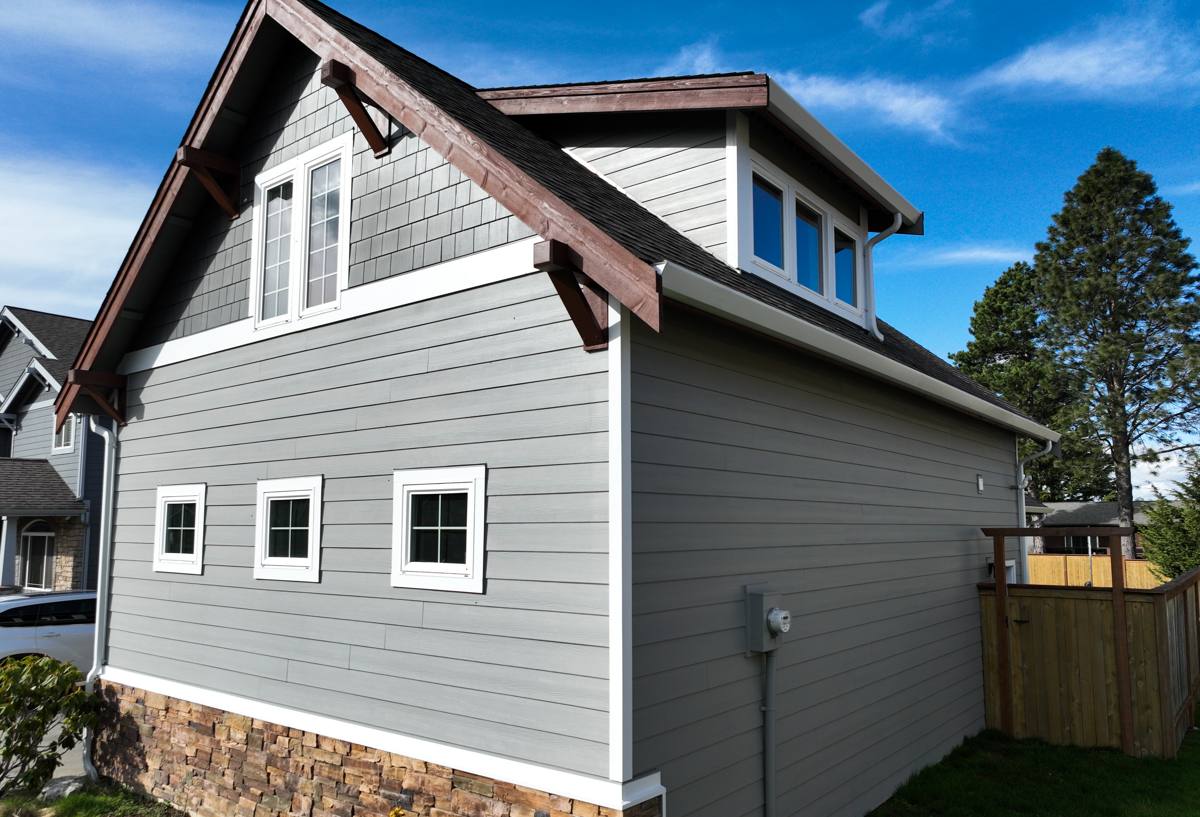
James Hardie fiber cement is non-combustible, dimensionally stable, and comes pre-finished with the ColorPlus factory coating — a baked-on finish that holds color longer than field-applied paint and resists the fade and chalking that shaded, moisture-heavy sites accelerate. Hardie also builds region-specific HZ product lines engineered for Pacific Northwest moisture exposure, which is exactly the profile a Lake Samish property has. Backed by a strong transferable warranty, it's the product we're willing to stand behind on homes in this kind of environment.
Siding Comparison for a Lake Samish Home
| Factor | James Hardie Fiber Cement | Vinyl | Wood-Based (LP SmartSide, Cedar) |
|---|---|---|---|
| Moisture tolerance in shade | High — engineered fiber cement doesn't rot | Moderate — won't rot, but can trap moisture behind it | Lower — depends on coating integrity |
| Moss/algae resistance | Good; factory finish resists staining | Fair; can discolor over time | Lower; organic surface is more vulnerable |
| Fire resistance | Non-combustible | Combustible | Combustible |
| Finish longevity | Factory ColorPlus, long fade resistance | Molded-in color, can chalk/fade | Field paint, needs recoating over time |
| Typical service life | Decades, when installed to spec | Decades, but brittleness increases with age | Shorter without diligent maintenance |
Roofing, Windows, and Decks Around the Lake
Siding is only part of the picture on most Lake Samish homes. We handle roofing, window replacement, and decks as well, and the same climate pressures apply across all of them.
Roofing
Roofs under heavy tree cover collect needle debris and moss faster than open roofs, which shortens the life of the roofing material if it isn't kept clear and properly flashed. We pay close attention to valley flashing, ventilation, and moss-resistant details on shaded roof planes.
Windows
Older windows on lake-facing walls are a common source of drafts and condensation, especially where wind-driven rain has worked its way into the frame over the years. Replacement windows paired with correctly integrated flashing keep water out of the wall assembly, not just out of the window itself.
Decks
Lakefront decks take a beating from standing moisture, shade, and debris. Proper spacing, drainage, and material choice matter more here than on a dry, sun-exposed deck elsewhere in the county.
What Correct Installation Looks Like in This Environment
Fiber cement siding performs the way it's designed to only when it's installed correctly — that matters even more on a shaded, moisture-prone lot like most Lake Samish properties. Our approach includes:
- A drainage plane and rainscreen gap behind the siding so any moisture that gets past the surface can drain and dry instead of sitting against the wall sheathing.
- Correct fastener placement and spacing per Hardie's installation specs — under-driven or misplaced fasteners are one of the most common causes of early siding problems.
- Careful flashing and sealant detailing at windows, doors, and roof-to-wall intersections, where wind-driven rain is most likely to find a gap.
- Factory-cut and field-cut edges sealed per spec, since exposed cut edges are the one place fiber cement can take on moisture if left untreated.
- Attention to clearance from grade, decks, and roof lines so siding isn't sitting in standing water or constant splash-back.
Cost Factors for a Lake Samish Siding Project
| Factor | Why It Matters |
|---|---|
| Access and site terrain | Sloped, wooded lake lots can add setup and material-handling time |
| Extent of moisture or rot damage found | Shaded walls sometimes reveal sheathing damage once old siding comes off |
| Home size and wall complexity | More corners, gables, and trim detail increase labor |
| Siding profile and color selection | ColorPlus factory finishes and certain profiles vary in material cost |
| Trim, flashing, and window integration scope | Full flashing replacement adds cost but reduces future risk |
Why a Local Crew Matters Out Here
Working around Lake Samish means understanding the property types — narrow lake-access driveways, steep grades, septic systems to work around, and homes that see less direct sun than a listing photo might suggest. A crew that works across Whatcom County regularly knows to check for moss buildup and hidden moisture damage before it's asked, and knows how the Chuckanut area's rain patterns differ from a more open, exposed site. That local familiarity shows up in fewer surprises during the job and a finished install that's suited to the actual site conditions, not a generic spec.
Maintenance Once Your Siding Is Installed
- Rinse siding and trim annually, focusing on shaded, moss-prone walls.
- Keep gutters and roof valleys clear of needle and leaf debris, especially under heavy canopy.
- Trim back branches and vegetation that keep siding in constant shade or contact.
- Inspect caulking at windows, doors, and trim joints each year and reseal as needed.
- Address any soft spots, staining, or paint failure promptly rather than waiting for a full season to pass.
If you're weighing a siding, roofing, window, or deck project on a Lake Samish property, we're happy to take a look and give you a straightforward assessment of what your home actually needs. Request a free, no-pressure estimate below and we'll walk the property with you.