 Chuckanut
 What Primed Spruce Siding Actually Is
Primed spruce siding is solid wood lap or panel siding, typically finger-jointed or clear-grade spruce, milled to a profile and coated at the factory with a single coat of primer. It's meant to be installed, caulked, and then field-painted with a finish coat by the contractor or homeowner. It's been a staple product in the Pacific Northwest for decades because it's affordable, easy to cut and nail with ordinary tools, and gives a traditional wood-grain look that some homeowners in older Chuckanut neighborhoods want to match.
We're not going to tell you spruce siding is a scam or that every installation fails. Plenty of homes in Whatcom County have worn it for years. What we will tell you is why, as a company that installs exterior siding for a living in this specific climate, we stopped putting it on houses and standardized on James Hardie fiber cement instead.
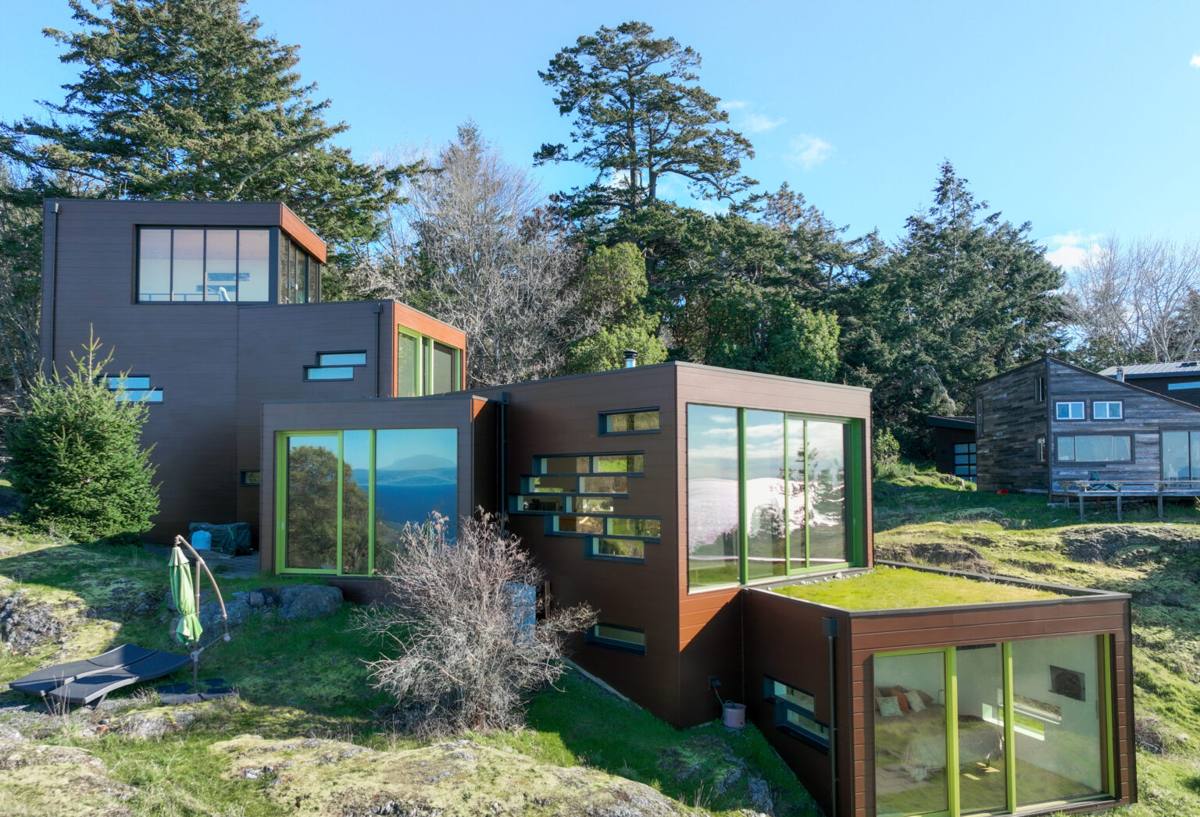
Why It's Still Sold, and Why That's Fair to Acknowledge
Primed spruce has real advantages that explain why it's still on the shelf at lumberyards:
- Lower material cost per square foot than most fiber cement lines
- Familiar wood grain and profile options, including board-and-batten and channel styles
- Lightweight and easy to cut, which can shorten install time on simple elevations
- Can be color-matched to almost anything since it's field-painted
If a homeowner wants a specific historic look and understands the maintenance commitment going in, spruce siding isn't irrational. Our objection isn't to wood as a material — it's to what happens to that wood on the specific kind of houses we build for, in this specific corner of Washington.
The Core Problem: Wood Siding in a Marine Climate
Chuckanut sits close enough to Bellingham Bay and the Salish Sea that salt-laden air is a routine part of the weather, not an occasional event. Combine that with the long stretch of driving rain that Whatcom County sees from fall through spring, and you have two forces working against any wood product at once: salt accelerates the breakdown of paint films and fastener coatings, and sustained moisture gives wood fiber the sustained wetting it needs to start absorbing water past the surface.
Spruce is a softwood. It's dimensionally stable enough to mill cleanly, but it isn't naturally rot-resistant the way old-growth cedar heartwood was, and it has no inherent defense against repeated wet-dry cycling. A factory primer coat is designed to protect the board during shipping and storage — it is not a substitute for a properly maintained field finish, and it was never engineered to hold up against year-round coastal humidity on its own.
What Actually Happens Over Time
The failure pattern we've seen on wood siding in this region is consistent: moisture gets in at the most vulnerable points first — butt joints, cut ends, nail heads, and anywhere caulk has shrunk or separated — and then migrates behind the face of the board. Paint that looks fine from the sidewalk can already be lifting from wet substrate underneath. Once water is behind the finish, the board stays damp longer after every rain, which is exactly the condition spruce handles worst.
Paint and Primer: The Weak Link in the System
The single biggest difference between primed spruce and a factory-finished product like James Hardie's ColorPlus siding is where the finish coat comes from and what it's bonded to. Primed spruce leaves the finish coat to be applied on-site, in field conditions, over a mill-applied primer that was never intended to be the final protective layer. That introduces several points where things go wrong even with careful installation:
- Field paint applied in less-than-ideal humidity or temperature bonds less reliably than a factory-cured finish
- Cut ends exposed during installation need to be back-primed and sealed on-site, and it's easy to miss one
- Repaint cycles typically run every 3-7 years in a coastal climate, each one requiring scraping, caulk renewal, and re-coating
- Any gap in the maintenance schedule lets moisture establish itself before the next repaint catches it
None of this means a painter did bad work. It means the product depends on an ongoing maintenance relationship that most homeowners don't budget time or money for once the initial installation is behind them.
Moss, Mildew, and Whatcom County's Long Wet Season
Anyone who's owned a home in Whatcom County for more than a winter knows the moss season isn't a minor annoyance — it's a months-long condition on north-facing walls, shaded elevations, and anywhere tree cover keeps a wall from drying out between storms. Moss and mildew don't just sit on top of paint; they hold moisture against the surface and, on a porous wood substrate, that moisture has somewhere to go. On fiber cement, that same growth is a cosmetic cleaning issue. On painted wood, it's a moisture-management problem that compounds over a full wet season.
We've been called out to look at spruce siding on Chuckanut homes where the moss pattern on the wall lined up almost exactly with where the paint had failed first. That's not a coincidence — it's the predictable result of a porous, paint-dependent material sitting in a climate that gives it very little time to fully dry out between October and May.
The Real Lifecycle Cost
The sticker price on primed spruce is lower than fiber cement. The lifecycle cost, once you factor in repainting, caulk maintenance, and earlier replacement of damaged boards, tends to run the other way.
| Factor | Primed Spruce Siding | James Hardie Fiber Cement |
|---|---|---|
| Finish coat | Field-applied over mill primer | Factory-baked ColorPlus finish |
| Repaint interval | Roughly every 3-7 years | 15+ years for ColorPlus; longer for primed |
| Moisture behavior | Absorbs and swells if finish fails | Engineered to resist moisture intrusion |
| Combustibility | Combustible | Non-combustible core material |
| Warranty | Limited or none on the wood itself | Strong transferable manufacturer warranty |
| Upfront material cost | Lower | Moderate to higher |
When a homeowner asks us for a straight answer on cost, we tell them the truth: spruce can be cheaper to buy and more expensive to own.
Installation Sensitivity We're Not Willing to Gamble On
Wood siding is far less forgiving of installation shortcuts than most people assume. Every cut end needs to be sealed. Ground clearance has to be right so splashback doesn't sit against the bottom course. Caulk joints need to be maintained on a schedule, not just applied once and forgotten. Fasteners need to be corrosion-resistant given the salt exposure this area gets. Miss any one of these details and the siding's service life drops fast, often in ways that don't show up until years later when the damage is already done behind the paint.
As a company, we'd rather stand behind an installation where the material itself is engineered for this climate than depend on a maintenance schedule staying perfect for the next 20 years on someone else's house.
Why We Install James Hardie Instead
James Hardie fiber cement is the one product we put on Chuckanut homes, and it's a direct answer to everything above. It's non-combustible, which matters given the wildfire smoke seasons the region has seen in recent summers even without direct wildfire exposure. The HZ5 product line is engineered specifically for climates that see sustained moisture and freeze-thaw cycling. The ColorPlus finish is baked on in a factory-controlled environment rather than brushed on in the field, which is why it carries a much longer color and finish warranty than field-applied paint ever could. And because the core material is cement-based rather than wood fiber, it simply doesn't behave the way spruce does when it gets wet season after season.
None of that makes fiber cement magic — it still has to be installed correctly, with the right clearances, fasteners, and flashing details. But it removes the single biggest variable that causes wood siding to fail early in a place like Chuckanut: a finish system that depends on perfect, uninterrupted maintenance in a climate that doesn't give wood much of a break.
Quick Checklist If You Currently Have Primed Wood Siding
- Walk the exterior each spring and check butt joints and cut ends for cracked or missing paint
- Look for soft spots by pressing gently along the bottom courses and around window trim
- Check caulk lines at corners and openings for shrinkage or gaps
- Note any wall sections with persistent moss or mildew — those areas are drying slowest
- Budget for repainting on a real schedule, not "whenever it looks bad"
If your current siding is showing any of those signs, or you're planning ahead for a replacement, we're happy to take a look and give you a straight, no-pressure assessment of what's going on and what your options are. Reach out for a free estimate below.