 Chuckanut
 Allura Isn't a Bad Product — It's Just Not the One We Install
We get this question a lot: "You do fiber cement, Allura does fiber cement, what's the difference?" It's a fair question, and the honest answer isn't that Allura is junk. It's a legitimate fiber cement manufacturer with a real factory, real product testing, and homes across the country wearing it just fine. Our decision to install James Hardie exclusively isn't a knock on Allura's engineering. It's a business and quality-control decision we made after weighing what actually matters for homes on the Whatcom County coast — and deciding we'd rather be excellent at one system than adequate at several.
This page walks through what Allura does well, where the real trade-offs sit, and why James Hardie is the product we stand behind when a Chuckanut homeowner asks us to put new siding on their house.
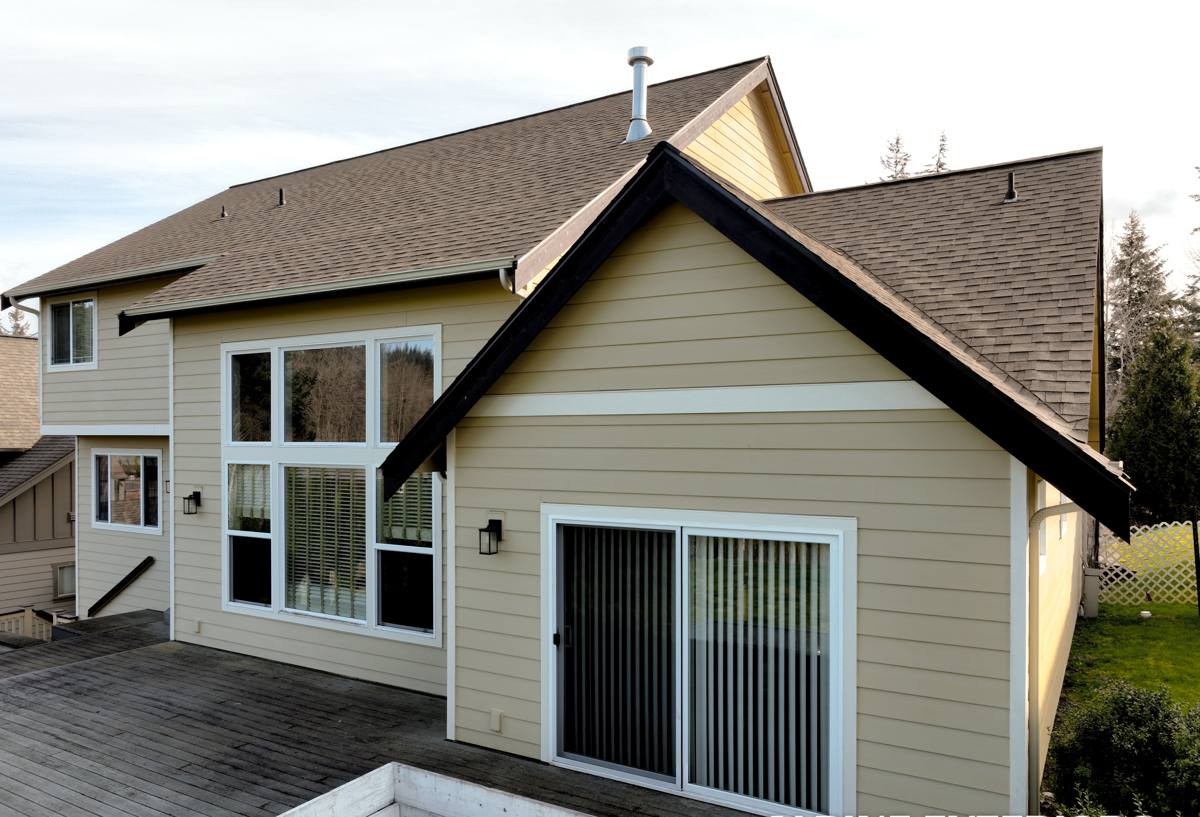
What Allura Gets Right
Fiber cement as a category is a good choice for this part of Washington. It doesn't rot, it resists insects, and it holds paint or factory finish far better than wood over the long haul. Allura's boards are manufactured from the same basic recipe as every fiber cement product — Portland cement, sand, cellulose fiber — pressed and cured into a dense, stable board. It's non-combustible, it's dimensionally stable in wet-dry cycling, and it comes in lap, panel, and shingle profiles that cover most of what a residential job needs.
If a homeowner already has Allura on their house and just needs a repair, a patch, or a partial match, we're not going to pretend the product doesn't exist or that it's structurally suspect. It's a real fiber cement siding. Our reasons for not installing it new are more specific than "fiber cement good, fiber cement bad."
Where the Category as a Whole Gets Tested Hardest
Chuckanut sits close enough to Bellingham Bay and the Salish Sea that salt-laden air is a real factor on fasteners, flashing, and any finish that isn't built for it. Add driving rain off the water most of the fall and winter, and a moss season that runs long into what other regions would call dry months, and you've got a climate that finds every weak point in a siding system within a few years — not a few decades. That's the lens we use for every product decision, Allura included.
Factory Finish: The Detail That Matters Most and Gets Talked About Least
The fiber cement board itself is only half the product. The other half is the factory-applied finish — the paint or coating system baked onto the board before it ever reaches a job site. This is where we see the real gap.
James Hardie's ColorPlus finish is a multi-coat, baked-on finish applied and cured under factory conditions, with color-matched caulk and touch-up product engineered specifically for it. Allura offers primed and prefinished options as well, but the finish ecosystem around it — the depth of color-matched accessories, the touch-up systems, the track record of color and sheen consistency batch to batch — is thinner. On a house exposed to driving coastal rain and UV cycling for years, finish performance is what a homeowner actually sees and lives with. A siding board that holds up structurally but chalks, fades unevenly, or requires field-painting sooner than expected isn't the quiet, low-maintenance exterior most people think they bought.
We'd rather sell a homeowner on a finish system we've seen hold its color and sheen for years in this exact climate than explain, five years in, why one elevation looks different than another.
Climate-Engineered Product Lines
James Hardie builds region-specific formulations — its HZ5 line, for example, is engineered for the wetter, more humid parts of the country, adjusting the board's moisture management characteristics for climates like ours. That's not marketing fluff; it's a real manufacturing decision to build different boards for different weather. Allura's lineup is less segmented by regional climate zone. That doesn't mean their standard board fails here — it means there's less built-in margin specifically tuned for a marine, high-precipitation environment like Whatcom County's.
When we're installing siding that has to shed driving rain for the next 30-plus years without us back on a ladder every other season, we want the manufacturer to have already done the climate-specific engineering, not leave us hoping the standard product handles it.
Warranty Structure: Read the Fine Print, Not Just the Headline Number
Every fiber cement manufacturer publishes a warranty, and headline years look similar across brands at a glance. The differences show up in the details: how proration schedules kick in over time, what's covered on the substrate versus the finish, and how transferability works if the home sells. James Hardie's warranty terms and transfer process are things we've worked with for years and can explain accurately to a homeowner in plain language, backed by a manufacturer with deep, established support in this market.
That familiarity is worth more than it sounds like. A warranty is only as good as a contractor's ability to actually help a homeowner use it. We don't want to be the contractor telling a client to "call the manufacturer" and hoping for the best on a product we install once every few years instead of every week.
Why We Standardized on One Manufacturer
There's a practical, unglamorous reason behind this decision too: consistency reduces mistakes. Every fiber cement system has its own fastener spacing requirements, flashing details, trim profiles, and clearances. When a crew installs one system exclusively, those details become muscle memory. When a company juggles Hardie one week and Allura the next, small spec differences are exactly where errors creep in — a nailing pattern that's correct for one board and wrong for another, a trim reveal that's standard for one system and undersized for the other.
We chose to get very good at one thing rather than adequate at several. For a coastal Whatcom County home where the margin for installation error shrinks fast once salt air and driving rain get involved, that trade-off makes sense to us.
Cost and Trade-Off Comparison
| Factor | James Hardie (what we install) | Allura |
|---|---|---|
| Base material | Fiber cement, HZ5 climate-specific formulation available | Fiber cement, less regional segmentation |
| Factory finish | ColorPlus baked-on finish with matched touch-up system | Primed and prefinished options, thinner accessory ecosystem |
| Regional track record here | Long-established local supply and installer familiarity | Less common on Whatcom County coastal homes |
| Warranty support | We can explain and help administer it firsthand | Warranty exists; less direct local claims experience |
| Installed cost | Comparable range to other quality fiber cement siding | Comparable range to other quality fiber cement siding |
Installed cost between quality fiber cement products is generally in the same broad neighborhood — the real differences show up in finish longevity, warranty support, and how the product performs specifically in a marine, high-rain climate over decades, not in the up-front number.
Questions Worth Asking Before You Choose a Siding Brand
- Is the finish factory-applied and baked on, or field-applied after installation?
- Does the manufacturer publish a climate-specific product line for wet, coastal regions?
- What does the warranty actually cover after year 10 or 15 — full replacement or a shrinking prorated amount?
- Is the warranty transferable to a future buyer, and how is that documented?
- How many jobs has your contractor actually installed with this specific product, in this specific climate?
- Are trim, fasteners, and flashing details specified by the manufacturer for your exact climate zone?
What This Means If You Already Have Allura Siding
If your Chuckanut home currently has Allura siding and it's performing fine, there's no reason to rip it out early. We can still handle repairs, partial replacements after storm or impact damage, and general maintenance guidance. Our "we don't install it new" position is about what we recommend for a full re-side or new construction, not a claim that existing Allura siding is failing or unsafe.
What We Install Instead, and Why
James Hardie is the product we've built our installation practices, warranty knowledge, and finish expectations around. It's non-combustible, engineered in climate-specific formulations, backed by a factory finish system with a long track record, and covered by a warranty we can actually walk a homeowner through in detail because we work with it constantly. For a home dealing with salt air off the bay, driving winter rain, and a moss season that never fully lets up, that combination is what gives us confidence in the work we're signing our name to.
If you're weighing siding options for a Chuckanut home — whether that's a full re-side, storm repair, or just a second opinion on an existing product — we're happy to walk the exterior with you and give you a straight answer, not a sales pitch. Reach out for a free, no-pressure estimate below.