 Chuckanut
 Siding Built for Happy Valley's Coastal Exposure
Happy Valley sits close enough to the water and the forested slopes around Chuckanut that its homes take a different kind of beating than houses twenty minutes inland. Salt-laden air off the Salish Sea, driving rain that comes in sideways during winter storms, and a moss season that can stretch from October well into May all work on exterior siding year-round. If you've owned a home here for more than a few winters, you already know the signs: green streaking on the north side, soft spots near ground level, caulk lines that crack and let water behind the boards. None of that is unusual for this stretch of Whatcom County — it's just what the climate does to siding that wasn't built to handle it.
We install James Hardie fiber cement siding exclusively, and we did not arrive at that decision casually. After years of servicing homes throughout the Chuckanut area, including Happy Valley, we stopped installing products that couldn't reliably stand up to this specific combination of moisture, salt, and shade. This page walks through what local homes are actually up against, how a proper siding job addresses it, and why we stand behind one product system instead of offering a menu of options.
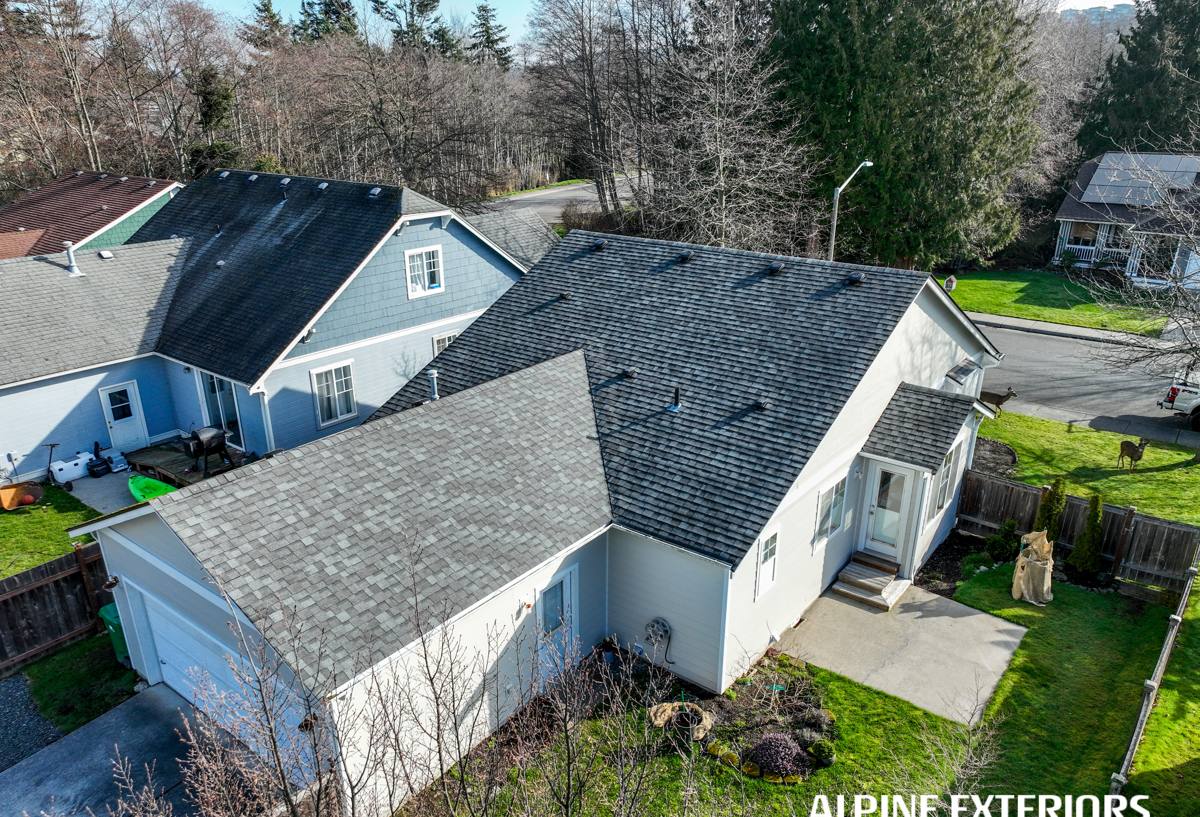
What Happy Valley's Climate Does to Exterior Siding
Salt Air and Metal Fasteners
Proximity to saltwater accelerates corrosion on anything metal — nail heads, flashing, hose bibs, light fixtures. Over time, corroding fasteners can stain siding and, more importantly, lose their grip, which lets panels shift and open seams to water. Correct fastener selection (stainless or hot-dip galvanized, sized and spaced to manufacturer spec) matters more here than it does for a home fifty miles inland.
Driving Rain and Wind-Driven Moisture
Storms rolling off the water don't just fall straight down — they get pushed sideways into walls, especially on west- and south-facing exposures. That means water finds its way into every gap, lap joint, and penetration that isn't properly flashed and sealed. A siding system's water-management details — house wrap, flashing at windows and doors, kick-out flashing at roof-wall intersections — do as much work as the siding material itself.
Moss, Mildew, and Shade
Homes tucked under tree cover or on north-facing lots in Happy Valley often stay damp longer after a storm passes, which is exactly what moss and mildew need to take hold. Wood-based siding products absorb that moisture into the substrate, feeding organic growth from the inside out. Fiber cement doesn't offer the same food source, which is a meaningful difference in a place where things stay green nine months a year.
Why We Only Install James Hardie Fiber Cement
We get asked regularly why we don't offer vinyl, LP SmartSide, or cedar as options. The honest answer is that we used to see the callbacks those products generated in exactly this kind of climate, and we made a business decision to stop installing anything we couldn't fully stand behind here.
- Non-combustible core: Hardie's fiber cement composition doesn't burn, which matters given wildfire smoke and ember exposure is a growing concern even west of the Cascades.
- Engineered for the Pacific Northwest: Hardie's HZ5 product line is formulated specifically for climates like ours — wet winters, moderate humidity swings, freeze-thaw cycling.
- ColorPlus factory finish: A baked-on finish applied under controlled conditions holds up better against UV and moisture than field-applied paint, and it comes with its own finish warranty.
- Moisture behavior: Fiber cement doesn't swell, rot, or delaminate the way wood-based and some engineered wood products can when they take on repeated moisture exposure.
- Transferable warranty: A strong manufacturer warranty that can pass to the next owner is a real asset if you ever sell, particularly in a market where buyers are increasingly asking about siding condition and type.
We're not going to tell you vinyl or engineered wood siding is garbage — they're not, and they work fine in plenty of applications. But for the specific combination of salt exposure, sustained rain, and shade-driven moss we see around Happy Valley, we decided fiber cement was the only product we could install and expect to still look right in fifteen years without excuses.
How We Approach a Siding Project in Happy Valley
Assessment Before Anything Else
Every project starts with a walk-around of the existing exterior — checking for soft sheathing, water staining around windows and penetrations, and the condition of existing flashing. On a coastal-influenced property like the ones in Happy Valley, we're paying particular attention to the north and west walls, where moisture tends to linger longest.
Water Management First
Siding is only as good as what's behind it. We install or verify a proper weather-resistant barrier, correctly lapped and taped, with flashing integrated at every window, door, and roof intersection before a single piece of Hardie board goes up. This is the step that gets skipped on rushed jobs and is almost always the root cause when a homeowner calls us about a leak years later.
Installation to Manufacturer Spec
Hardie siding is only as durable as its installation. That means correct fastener type and spacing, proper joint treatment, and the clearances the manufacturer specifies at grade, roofline, and deck ledgers — details that keep water from wicking into cut edges or sitting against untreated surfaces.
Finish and Final Walkthrough
We finish with caulking at penetrations and trim, confirm paint and finish consistency, and walk the property with the homeowner before calling the job complete.
Beyond Siding: A Full Exterior Approach
Siding rarely fails in isolation. A roof that's shedding water improperly, gutters that overflow onto wall sections, or windows with failed flashing all put extra stress on siding, even good siding. Because we also handle roofing, windows, and decks, we can look at a Happy Valley home's exterior as one connected system rather than patching one component while ignoring another that's feeding it moisture. If your roofline is dumping water directly onto a wall section, or a window is letting water track down behind the siding, replacing the siding alone won't solve the underlying problem.
Comparing Siding Options for This Climate
| Factor | James Hardie Fiber Cement | Vinyl | Wood / Engineered Wood |
|---|---|---|---|
| Moisture resistance | Does not absorb, swell, or rot | Water-resistant but seams can trap moisture | Absorbs moisture; prone to swelling and rot if compromised |
| Salt air / corrosion tolerance | Stable; fastener choice is the main variable | Generally stable but can fade and become brittle | Coatings degrade faster in salt exposure |
| Moss / mildew resistance | Non-organic, doesn't feed growth | Resists growth but can trap moisture behind panels | Organic substrate is a food source for growth |
| Fire rating | Non-combustible | Combustible | Combustible |
| Finish durability | Factory-baked ColorPlus finish | Color molded through, can fade/chalk | Field-applied paint or stain, needs recoating |
| Typical maintenance | Occasional wash, caulk checks | Occasional wash | Regular painting/staining, rot inspection |
Cost Factors Homeowners Should Understand
Every home is different, but a few variables consistently drive the cost of a siding project in Happy Valley:
| Factor | Why It Matters |
|---|---|
| Existing wall condition | Rot or soft sheathing found during tear-off adds repair scope before new siding can go on |
| Home size and complexity | More corners, dormers, and trim detail increase labor time |
| Siding profile and accessories | Lap width, trim style, and corner details affect material cost |
| Access and site conditions | Steep lots, limited driveway access, or tree cover common in Happy Valley can affect staging and scaffolding needs |
| Water-management scope | Full house wrap and flashing replacement costs more than reusing sound existing barrier, but it's often the right call on an older home |
We'll give you a straight answer on which of these apply to your home during the estimate rather than guessing over the phone.
Signs Your Happy Valley Home May Need Siding Attention
- Persistent green or black streaking that returns shortly after cleaning
- Soft or spongy sections when pressed near the base of walls or under windows
- Paint that's peeling or bubbling rather than just fading
- Visible gaps or warping at panel seams and corners
- Musty smell in rooms along an exterior wall
- Fastener heads showing rust stains bleeding through the finish
Why a Local Crew Matters Here
Chuckanut and the surrounding Whatcom County communities, Happy Valley included, don't behave like generic Pacific Northwest exterior projects. A crew that works this specific stretch of coastline knows which walls take the worst of the driving rain, which lots hold moisture longest under tree cover, and how the salt exposure varies depending on how close a property sits to the water. That local pattern recognition shapes decisions on flashing details, fastener selection, and where extra attention is warranted — decisions that are harder to get right for a crew unfamiliar with this specific microclimate.
Get a Free, No-Pressure Estimate
If your Happy Valley home is showing signs of wear from salt air, rain, or moss, or you're planning ahead for a renovation, we're happy to take a look and give you a straightforward assessment. There's no obligation and no pressure — just an honest read on where your exterior stands and what your options are. Use the form below to request a free estimate.