 Chuckanut
 Siding Built for Silver Beach's Climate
Homes in the Silver Beach area of Chuckanut sit in one of the more demanding exterior environments in Whatcom County. You've got proximity to salt water and the moisture it carries inland, driving rain off the water that hits siding at an angle instead of straight down, and a moss season that can run half the year in the shaded, tree-covered lots common to this part of the county. Any one of those factors will wear down the wrong siding material. Together, they make material choice the single biggest decision a homeowner here makes when it's time to re-side.
We're a local siding, roofing, window, and deck contractor, and we install James Hardie fiber cement siding exclusively. Not because it's the only product on the market, but because after years of servicing homes in exactly this kind of environment, it's the one we're willing to put our name behind. This page walks through what Silver Beach homes actually face, how we approach a siding project here, and why Hardie is the standard we hold.
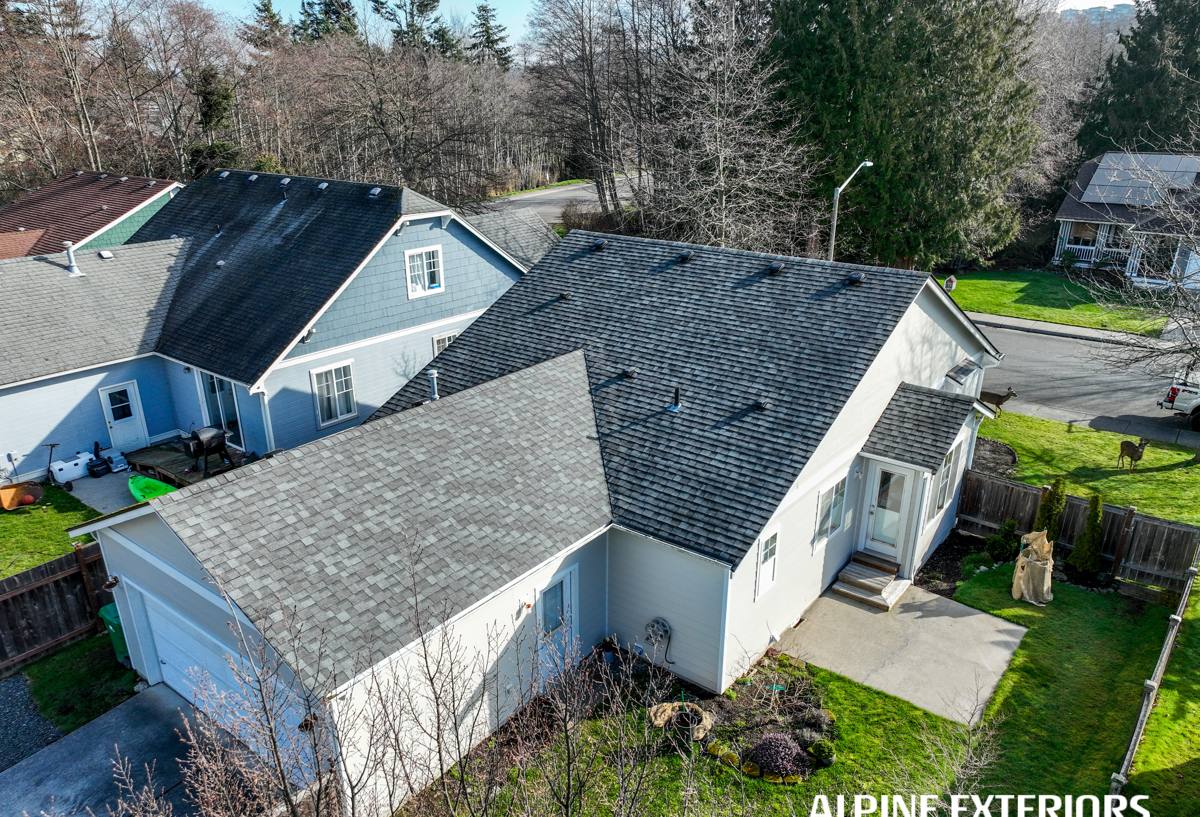
What Salt Air, Rain, and Moss Actually Do to a Home
Salt Air and Coastal Moisture
Airborne salt is corrosive and hygroscopic — it pulls moisture out of the air and holds it against whatever surface it lands on. For siding, that means more sustained dampness at the wall surface than an inland home of the same age would ever see. Fasteners, trim hardware, and any exposed metal components take the brunt of it, and organic materials like wood or wood-composite siding absorb that extra moisture cycle after cycle, which accelerates swelling, checking, and eventual rot at seams and edges.
Driving Rain
Chuckanut's exposure to weather moving in off the water means rain here often isn't falling straight down — it's being pushed sideways into wall assemblies. That matters because most siding failures don't start on the open face of a board; they start at the joints, laps, and penetrations where wind-driven rain gets forced past the surface and into the seams. A siding system with poor water management at those details will show problems years before a system designed for it.
Moss and Sustained Shade
Wooded lots and marine-layer humidity add up to long stretches where siding simply doesn't dry out. Moss and algae need exactly that — shade and moisture — and once established, they hold even more water against the surface, which compounds every other problem. On absorbent siding materials, a mossy section isn't just a cosmetic issue; it's a sign that the substrate underneath is staying wet longer than it should.
Why We Only Install James Hardie
Fiber cement isn't a new idea, but James Hardie is the manufacturer we've standardized on for a specific set of reasons that matter in this climate:
- Non-combustible core. Hardie board is fiber cement, not wood or wood-composite, so it doesn't carry the same fire risk as some alternative materials — relevant given Whatcom County's dry-season wildfire exposure inland, even though Silver Beach itself is a wetter microclimate.
- Engineered for Pacific Northwest moisture. Hardie's HZ5 product line is formulated and tested specifically for climates like ours — freeze-thaw cycling, sustained damp, and coastal exposure.
- Factory-applied ColorPlus finish. The finish is baked on at the factory under controlled conditions, which gives more consistent, longer-lasting color performance than field-applied paint, especially against the fading and mildew staining that shaded, damp sites like Silver Beach tend to produce.
- Doesn't feed moss the way organic siding does. Fiber cement is inorganic. It won't rot, and it doesn't provide the same food source and water retention that wood fiber does, so moss and algae sit on the surface rather than degrading the material underneath.
- A warranty structure we can stand behind. Hardie's transferable warranty coverage gives homeowners real protection, and it holds up because the product performs the way it's rated to when installed correctly.
We get asked from time to time why we don't install vinyl, LP SmartSide, Cemplank, Allura, or primed cedar and spruce siding. The honest answer is that each of those products has real trade-offs — vinyl can warp and doesn't hold up well to sustained coastal moisture at the seams, engineered wood products are more installation-sensitive around moisture intrusion, and other fiber cement brands don't offer the same factory finish and warranty structure we've come to trust. We're not saying any of them are junk. We're saying that after doing this work in exactly this climate, Hardie is what we choose to put our own crews' labor behind.
How a Siding Project Works in the Silver Beach Area
1. On-Site Assessment
We start by walking the property and evaluating current siding condition, moisture damage, trim and flashing details, and how the home's orientation interacts with prevailing wind and rain direction. On a site like Silver Beach, we're paying particular attention to north- and west-facing walls, areas under tree cover, and any spots where past moss growth has left the wall assembly damp longer than it should be.
2. Water Management First
Before a single board goes up, the water-resistive barrier, flashing at windows and doors, and drainage plane behind the siding get addressed. This is the layer that actually keeps a house dry — the siding is the second line of defense, not the first. In a driving-rain environment, skipping or shortcutting this step is where most long-term failures start, regardless of what siding material sits on top.
3. Hardie Installation to Spec
James Hardie publishes specific installation requirements — fastener spacing and type, minimum clearances from grade and roof lines, joint treatment, and caulking practices — and performance depends on following them. We install to those specs as a matter of course, not as an upsell.
4. Final Detailing and Walkthrough
Trim, caulking, and touch-up work get finished, and we walk the property with the homeowner before calling the job done.
Beyond Siding: Roofing, Windows, and Decks
Silver Beach homes dealing with driving rain and coastal moisture usually aren't just facing a siding question — roofing, window seals, and exterior decking all take the same environmental beating. We handle all four because they're connected: a roof leak can show up as siding damage two stories down, and a failed window seal can rot the wall cavity behind perfectly good siding. Having one contractor who understands how those systems interact, rather than four separate specialists working in isolation, matters in a climate this demanding.
Comparing Siding Materials for a Coastal, Shaded Site
| Factor | James Hardie Fiber Cement | Vinyl | Engineered Wood (e.g. LP SmartSide) | Untreated Cedar/Spruce |
|---|---|---|---|---|
| Moisture resistance | Excellent — inorganic, engineered for PNW climate | Good on the face, weak at seams under driving rain | Moderate — moisture-sensitive at cut edges | Poor without diligent maintenance |
| Moss/algae resistance | High — non-organic surface | Moderate | Low — organic wood fiber | Low — organic surface |
| Fire performance | Non-combustible | Combustible, can deform under heat | Combustible | Combustible |
| Finish longevity | Factory-baked ColorPlus finish | Color molded in, can fade/chalk | Field-applied, needs recoating | Requires regular repainting/staining |
| Typical maintenance | Low | Low, but seam issues hard to repair | Moderate to high | High |
What Drives Cost on a Silver Beach Project
Every home is different, but a few factors consistently move the cost of a siding project in this area:
- Existing damage. Rot or moisture intrusion found once old siding comes off adds sheathing repair before new siding can go on.
- Home size and complexity. More corners, dormers, and trim detail mean more labor per square foot.
- Access and site conditions. Steep lots, tree cover, and limited staging area — all common around Silver Beach — affect scaffolding and material handling.
- Board profile and finish selection. Hardie's lap, shingle, and panel styles and ColorPlus color options carry different material costs.
- Trim and flashing scope. Whether existing trim and flashing are reused or replaced as part of the water management upgrade.
We give straight, itemized estimates rather than vague ranges once we've actually seen the property — too much of the cost depends on site-specific conditions to quote responsibly any other way.
Signs Your Siding Needs a Closer Look
A few things worth watching for, especially on shaded or water-facing walls:
- Persistent moss or algae that returns quickly after cleaning
- Soft spots, bubbling, or visible warping in the siding surface
- Paint or finish failure concentrated on one side of the house
- Staining or discoloration around seams, corners, or trim joints
- Musty smell or visible moisture inside exterior walls
- Gaps or separation at butt joints and corner boards
Any one of these on its own might be minor. Several together, especially on a home that's had recurring moss problems, usually means the wall assembly has been staying wet longer than it should for a while.
Why a Local Crew Matters Here
Chuckanut and the surrounding Whatcom County shoreline have their own weather logic — prevailing wind direction, seasonal rain patterns, and shade patterns that shift a lot from lot to lot depending on tree cover and orientation to the water. A crew that works this area regularly knows where moss problems tend to concentrate, which wall orientations take the worst of the driving rain, and how to detail flashing and water management for those specific conditions. That local, repeated experience shows up in the quality of the finished install more than almost any other factor.
If you're weighing a siding, roofing, window, or deck project for your Silver Beach home, we're happy to take a look and walk you through what we're seeing and what we'd recommend — no pressure, no obligation. Reach out using the form below for a free estimate.