 Chuckanut
 Two Different Materials, One Big Decision
When a Chuckanut homeowner starts pricing a re-side, the conversation almost always comes down to two products: James Hardie fiber cement and LP SmartSide engineered wood. Both are legitimate, code-approved siding systems with a long track record in the Pacific Northwest. They are not the same material, though, and the difference matters more here than it does in a dry climate. Chuckanut sits close enough to salt water and the Chuckanut Mountains that homes deal with driving rain off the bay, salt-laden air, and a moss season that can run from October well into spring. That combination is hard on any exterior product, but it's especially hard on anything with a wood-based core.
This page walks through what each product actually is, where LP SmartSide performs well, where the trade-offs show up on homes in this specific climate, and why our company made the decision years ago to install James Hardie exclusively. We're not going to tell you SmartSide is a bad product — it isn't. We're going to explain why we don't put it on Whatcom County homes and what we install instead.
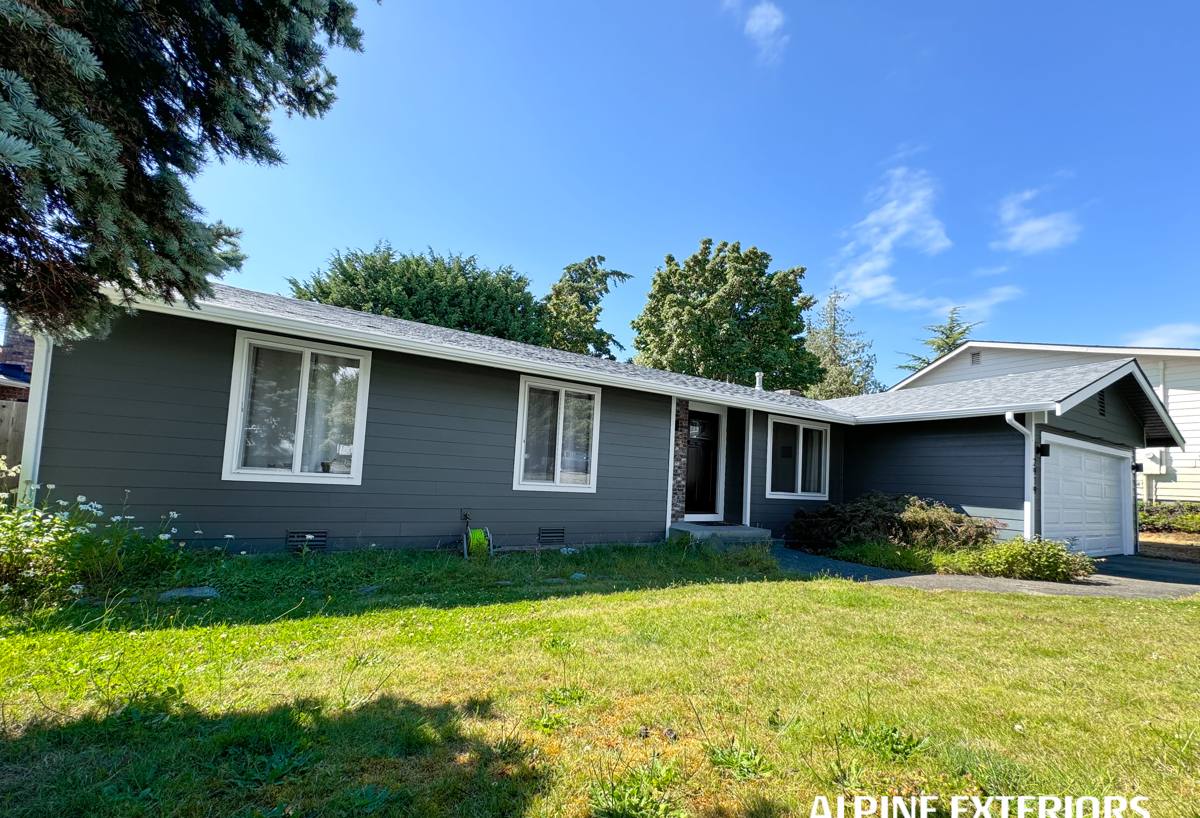
What LP SmartSide Actually Is
LP SmartSide is an engineered wood product. Strand-based wood fibers are treated with zinc borate for insect and fungal resistance, then bonded with resins under heat and pressure into panels, trim, and lap siding. It's lighter than fiber cement, easier on saw blades and installer backs, and it holds a nail well. Homeowners like the warmer, more traditional wood-grain look, and the price point is usually lower than fiber cement, both in materials and labor.
LP has improved the product over the years, and the zinc borate treatment does a real job of resisting rot and insects compared to old-fashioned untreated wood siding. For a lot of climates, and a lot of budgets, it's a defensible choice. We're not disputing that.
Where SmartSide Earns Its Reputation
- Lower upfront material and installation cost than fiber cement
- Lighter weight, which can simplify handling on some retrofit jobs
- A more traditional wood-grain texture that some homeowners prefer visually
- Zinc borate treatment meaningfully reduces rot and pest risk versus untreated wood
The Trade-Offs That Show Up on the Chuckanut Coast
The core issue is simple: SmartSide is still a wood product. Zinc borate slows moisture and insect damage, it doesn't eliminate the fact that the substrate is engineered wood strand, and wood swells and contracts with moisture cycling in a way fiber cement doesn't. In a drier inland climate, that's a manageable, slow-moving concern. On this stretch of coastline, where driving rain comes in sideways off the water and humidity rarely lets up long enough for full drying cycles, the moisture exposure is more constant.
Cut edges and field cuts are the most common failure point. Every SmartSide installation requires field-applied sealant on cut ends and exposed edges — miss one, or let caulk fail a few years down the road, and that's where moisture gets into the strand core. Once water gets past the surface treatment on an engineered wood panel, swelling and delamination can follow, and it's not always visible from the outside until it's already progressed.
The other Chuckanut-specific issue is moss and organic growth. A long, wet moss season means siding here spends months of the year holding surface moisture longer than siding does in sunnier parts of the state. Wood-based products need that surface kept clean and the caulking maintained on a tighter schedule to hold up over decades. That's a real, recurring maintenance commitment — not a one-time install-and-forget situation.
What James Hardie Fiber Cement Is Built From
James Hardie siding is made from Portland cement, sand, and cellulose fiber, cured into a dense, stable board. There's no wood strand core to swell, no organic material for moss or fungus to feed on the way it can with wood-based siding. It's also non-combustible, which matters increasingly to insurers and to homeowners thinking about wildfire exposure even on the wetter west side of the state.
Hardie also engineers specific product lines for specific climates through its HZ5 designation, built for regions like the Pacific Northwest that see sustained moisture, freeze-thaw cycling, and coastal exposure. That's not a marketing label — it reflects real formulation differences aimed at the conditions Whatcom County actually produces.
ColorPlus Factory Finish
Most Hardie installations we do use the ColorPlus finish system — color baked on in a factory-controlled process rather than field-applied paint. That finish resists fading and chipping better than site-applied paint, and because it's cured under controlled conditions rather than applied on a scaffold in variable weather, the coverage is more consistent. It carries its own finish warranty separate from the substrate warranty.
Side-by-Side: The Factors That Actually Matter
| Factor | James Hardie Fiber Cement | LP SmartSide |
|---|---|---|
| Core material | Cement, sand, cellulose fiber | Engineered wood strand |
| Moisture behavior | Dimensionally stable, doesn't swell | Resists rot via treatment, but core can absorb and swell if seal fails |
| Fire rating | Non-combustible | Combustible (wood-based) |
| Maintenance | Occasional wash, caulk checks at joints | Regular caulk/edge inspection, repaint cycles if not factory-finished |
| Typical upfront cost | Higher material and install cost | Lower material and install cost |
| Finish options | ColorPlus factory finish or field paint | Primed, field-painted |
| Warranty structure | Long, transferable substrate warranty | Manufacturer warranty, often more installation-sensitive |
Why Warranty Structure Deserves More Attention Than the Price Tag
Homeowners tend to compare siding bids on price per square foot, but the warranty terms tell you more about what the manufacturer expects to happen over 20-30 years. James Hardie's warranties are long-dated and transferable to a new owner if the home sells, which matters for resale. Engineered wood warranties from LP are real and enforceable, but they typically carry more specific exclusions tied to installation details — gaps, unsealed cuts, ground clearance — because those are the failure points most likely to be triggered by a wood-based core in a wet climate. In practice, that means a warranty claim on a wood-based product is more likely to hinge on whether every installation detail was followed to the letter, in a climate that doesn't forgive small gaps.
Installation Sensitivity: Both Products Demand It, Consequences Differ
It's not accurate to say fiber cement installs itself and SmartSide is fragile — both products have real installation specs, and both fail early when those specs are ignored. Fastener placement, clearance from grade, flashing details, and joint treatment matter on every siding job we do, Hardie included. The difference is what happens when something is missed. A poorly sealed cut edge on fiber cement is a cosmetic and moisture-management issue you can catch and correct. The same miss on an engineered wood product introduces moisture directly into a material that can swell and degrade from the inside, sometimes before it's visible from outside.
That's a meaningful distinction in Whatcom County, where a coastal storm cycle can deliver more sustained wind-driven rain in a season than a lot of installers cut their teeth on elsewhere in the state.
Why We Standardized on Hardie for Homes in This Area
We made the decision, as a company, to install James Hardie exclusively rather than offer both products. That's not because LP SmartSide is a scam or a bad product on paper — it's a legitimate engineered wood siding with a real place in the market. It's because we build our reputation on installations that hold up on this specific coastline for decades, and we'd rather stand behind one non-combustible, dimensionally stable, climate-engineered product line than manage the tighter maintenance and installation tolerances that a wood-based product requires in a place with this much sustained moisture and moss pressure. For Chuckanut and the rest of Whatcom County, that trade-off consistently favors fiber cement.
A Practical Checklist Before You Decide
- Ask any contractor for the specific HZ zone or climate designation of the product they're quoting, not just the brand name
- Get the warranty document itself, not just a summary — read the exclusions section
- Ask how cut edges and field joints will be sealed, and what maintenance schedule that requires
- Compare quotes on total installed cost over a 20-30 year horizon, not just square-foot material price
- Ask whether the finish is factory-applied or field-painted, and what that finish's separate warranty covers
- Ask directly why a contractor installs the products they install — a straight answer tells you a lot
If you're weighing a re-side for a Chuckanut home and want a straight answer about what will actually hold up here, we're happy to walk the exterior with you and give you a free, no-pressure estimate — no hard sell, just an honest look at what your home needs.