 Chuckanut
 Exterior Work Built for Bow's Coastline
Bow sits along the Chuckanut Drive corridor near Samish Bay, in a stretch of Pacific Northwest coastline where the Salish Sea, heavy tree cover, and steep terrain all shape how quickly a house shows its age. Homeowners here rarely have an exterior fail because they neglected it. More often, the products on the wall were simply never engineered for what this particular coastline does to a building envelope, day after day, season after season.
Chuckanut Siding works this area on a regular basis, and our approach to Bow properties is built around three conditions that define exterior performance here: salt-laden air moving off the water, rain that arrives sideways instead of straight down, and a moss and algae season that runs longer than it does even a short distance inland. Understanding those three forces is the starting point for any honest conversation about siding, roofing, windows, or decks in this area.
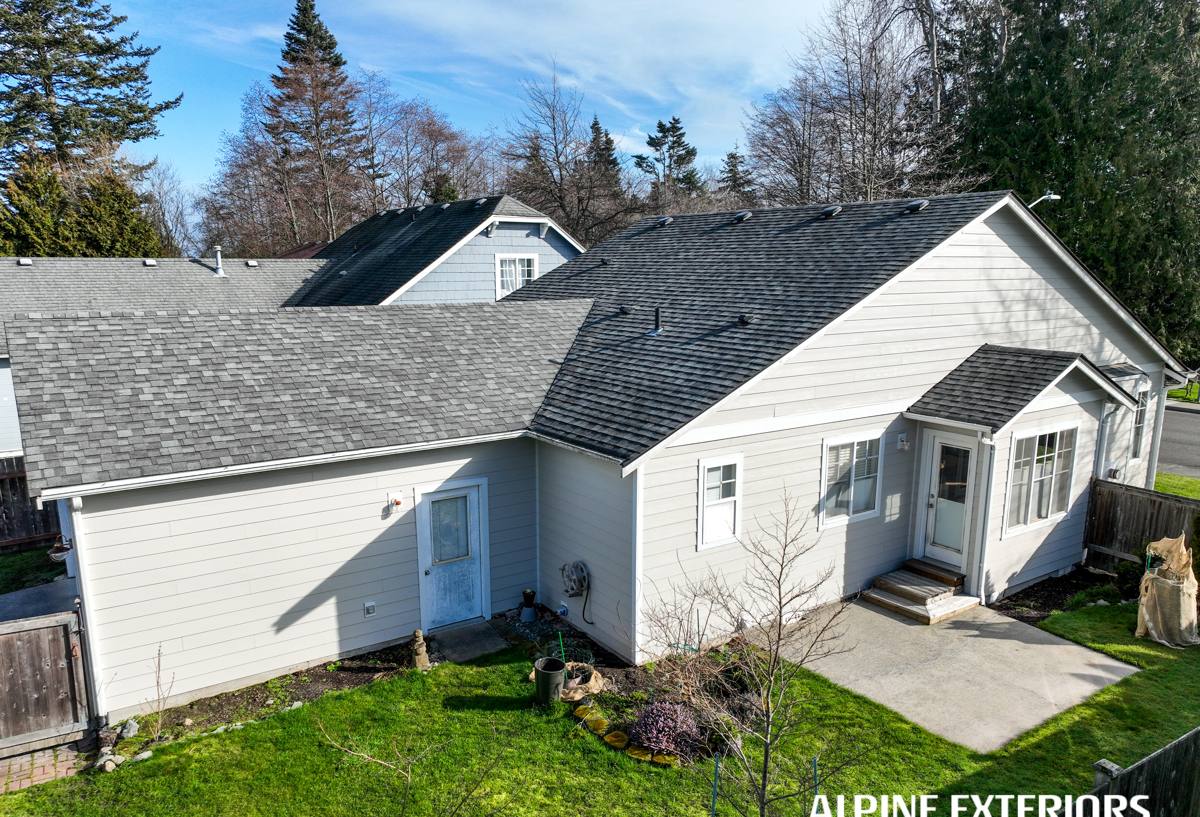
What Salt Air, Driving Rain, and Moss Actually Do to a House
Salt air off the bay is corrosive. It works on exposed fasteners, flashing, and metal trim faster than it would a few miles inland, and it breaks down certain paint and coating systems well ahead of their expected service life. That's a slow, cumulative process — you don't see it happen, you just notice one year that the caulk lines are cracking, the trim paint is chalking, or a fastener head has started to bleed rust down the face of a board.
Wind-driven rain compounds the problem. Instead of falling straight down and running off a wall, rain coming off the water gets pushed sideways into siding laps, window trim, and soffit intersections — the exact seams and joints that stay dry in a more sheltered, inland setting. Water that gets forced into those joints doesn't always show itself right away. It tends to surface later, as soft trim, a stained soffit, or paint that's failing from the inside out.
Then there's shade. A lot of property in and around Bow sits under mature conifers or hillside terrain that keeps the north and west sides of a house damp and slow to dry through fall, winter, and spring. That's precisely the environment moss, algae, and mildew need to establish themselves on an exterior surface. Once organic growth takes hold on a wood-based or poorly sealed product, it holds moisture against the surface and speeds up whatever deterioration is already underway underneath it.
The practical takeaway: any siding material that isn't dimensionally stable, that absorbs water readily, or that depends entirely on a field-applied paint job to stay protected is going to show its age faster here than the manufacturer's general climate ratings might suggest.
Why We Install Only James Hardie Fiber Cement
Chuckanut Siding made a deliberate call to stop installing vinyl, LP SmartSide, primed spruce, cedar, and other fiber cement alternatives like Cemplank or Allura, and to install James Hardie exclusively. That isn't a slogan — it's a response to what we consistently see happen to exteriors along this stretch of the Salish Sea over years of exposure.
- Non-combustible core. Fiber cement doesn't burn, which has become a more relevant consideration even west of the Cascades as wildfire smoke and ember exposure show up more often during dry summer stretches.
- Dimensional and moisture stability. Fiber cement doesn't swell, cup, or rot the way wood-based products can when they stay damp for extended periods, which is a realistic scenario for shaded walls in Bow's marine climate.
- ColorPlus factory finish. Rather than relying on a field-applied paint job to hold up against salt air and UV, Hardie's ColorPlus coating is baked on under controlled factory conditions and carries its own finish warranty, separate from the substrate warranty.
- Climate-engineered HZ product lines. Hardie manufactures regional formulations built for specific exposure profiles, including the wetter Pacific Northwest conditions this coastline sees.
- Strong, transferable warranty. A long, non-prorated substrate warranty transfers to a new owner if the home sells, which protects the investment rather than just the current owner's ownership window.
None of the products we stopped installing are bad products everywhere. Vinyl is affordable and low-maintenance in mild, sheltered climates, but it can warp under sustained heat and doesn't hold up as well against wind-driven debris. LP SmartSide and primed wood siding can perform reasonably well when painted and maintained on a strict schedule — the issue is that the schedule has to actually be kept, and skipping even one maintenance cycle in a wet, shaded environment like Bow's is enough to let moisture get a foothold. We'd rather put one product on every home we touch, one we understand thoroughly and can stand behind completely, than manage different maintenance expectations and warranty structures across five different systems.
| Material | Where it does well | Trade-off in a coastal, shaded climate |
|---|---|---|
| Vinyl | Mild, sheltered inland settings; lower upfront cost | Can warp under heat cycling; less resistant to wind-driven debris |
| LP SmartSide / primed wood | Drier climates with disciplined repainting schedules | Requires consistent field maintenance; vulnerable if a cycle is missed in a wet, shaded location |
| Cedar | Traditional look, sheltered installations | High ongoing maintenance; prone to moisture absorption under tree cover |
| James Hardie fiber cement | Salt air, wind-driven rain, long moss seasons | Higher installed cost than vinyl; requires correct installation to perform to spec |
Siding, Roofing, Windows, and Decks — One Connected System
Most homes near the water don't have a siding problem in isolation. Roofing, window flashing, and deck framing all face the same salt exposure and moisture cycling, and they interact with each other more than most homeowners realize. A poorly flashed window can send water behind otherwise sound siding. A deck ledger attached without proper flashing can rot the wall framing directly behind it. Because Chuckanut Siding handles siding, roofing, windows, and decks with the same crew, we look at a Bow property as one connected exterior system rather than four separate trades that don't communicate.
That matters most at transitions — where siding meets a roofline, where trim wraps a window, where a deck ties into the house. Those junctions are where most real moisture failures start, and they're exactly where a crew that understands this coastline's weather patterns catches problems before they turn into expensive structural repairs.
What a Hardie Siding Project Looks Like
A properly executed Hardie installation isn't just nailing boards to a wall. The details underneath the surface are what determine whether it performs for decades or develops problems in five years.
- Inspection and removal of existing siding, with a look at the sheathing and framing underneath for any moisture damage that needs to be addressed before new siding goes on
- Installation of a weather-resistive barrier and drainage plane appropriate for the wall assembly
- Correct flashing at every window, door, and roofline intersection — the points most exposed to wind-driven rain
- Fastener spacing, clearance above grade, and lap dimensions installed to Hardie's published specifications, not general carpentry habits
- Factory-finished ColorPlus boards installed with touch-up products matched to the specific color line
- Final walk-through covering trim, caulking, and paint lines before the crew leaves the site
What Influences Your Project's Cost
Every Bow property is different, so we're not going to put a specific number on a page you're reading before we've seen your house. What we can do is lay out the factors that actually move the price, so you know what you're evaluating when you get quotes.
| Factor | Why it matters |
|---|---|
| Existing wall condition | Rot or moisture damage found during tear-off adds repair scope before new siding can go on |
| Home size and wall complexity | More corners, dormers, and trim detail mean more labor per square foot |
| Siding profile | Lap siding, board and batten, and shingle-style Hardie products carry different material and labor costs |
| Access and site conditions | Steep terrain, tree cover, and limited staging area — common around Bow — can add time |
| Scope of the project | Siding alone versus a combined siding, roofing, window, and deck project changes both cost and logistics |
Choosing a Contractor for a Bow Property
A crew that mostly works drier, more sheltered inland areas can install siding correctly by the book and still get it wrong for Bow, because the book doesn't account for salt exposure, prevailing wind off the water, or how long a shaded wall stays wet after a storm. Working this stretch of coastline regularly means knowing which details — flashing laps, fastener spacing, clearance above grade, ventilation behind the cladding — need extra attention here specifically, not just in general.
- Ask whether the crew is factory-trained or certified on the specific siding product they're proposing
- Ask how they handle flashing at windows, rooflines, and deck ledgers — this is where most moisture problems actually originate
- Confirm licensing and insurance, and ask for proof rather than taking it on faith
- Ask what warranty covers the installation labor, separate from the manufacturer's material warranty
- Ask whether they've worked specifically in Bow, Samish, or elsewhere along the Chuckanut Drive corridor — not just "the Bellingham area" broadly
Maintaining Hardie Siding in a Marine Climate
One advantage of fiber cement in an environment like this is how little ongoing maintenance it actually needs compared to wood-based alternatives. That doesn't mean zero maintenance. A yearly rinse to knock loose moss, pollen, and salt residue off the surface, prompt attention to any caulking that's cracked or pulled away from trim, and keeping gutters clear so water isn't overflowing onto the wall below all go a long way toward getting the full service life out of the material. Because the ColorPlus finish is factory-applied, you're not on a repainting schedule the way you would be with primed wood — but you should still walk the exterior once or twice a year and look for anything that's changed.
Get a Free, No-Pressure Estimate
If you own a home in Bow and want a straight answer about the condition of your siding, roofing, windows, or deck — and what it would actually take to get it built right for this stretch of coastline — we're happy to take a look. Fill out the form below for a free, no-pressure estimate.