 Chuckanut
 Siding Built for Samish's Salt Air and Rain
Samish sits close enough to the water that homes here live with a different set of exterior problems than houses further inland in Whatcom County. Salt-laden air off Samish Bay works its way into wood grain and metal fasteners, wind-driven rain hits siding sideways during winter storms, and the shaded, damp stretches of the property spend months growing moss instead of drying out. Any siding material you put on a home in this area has to hold up to all three at once, year after year, without constant upkeep.
Chuckanut Siding works this stretch of Whatcom County regularly, and we install one product on every home: James Hardie fiber cement siding. We don't offer vinyl, LP SmartSide, cedar, primed spruce, or other fiber cement brands like Cemplank or Allura. That's a deliberate standard, not a limitation of what we can order, and we explain why throughout this page.
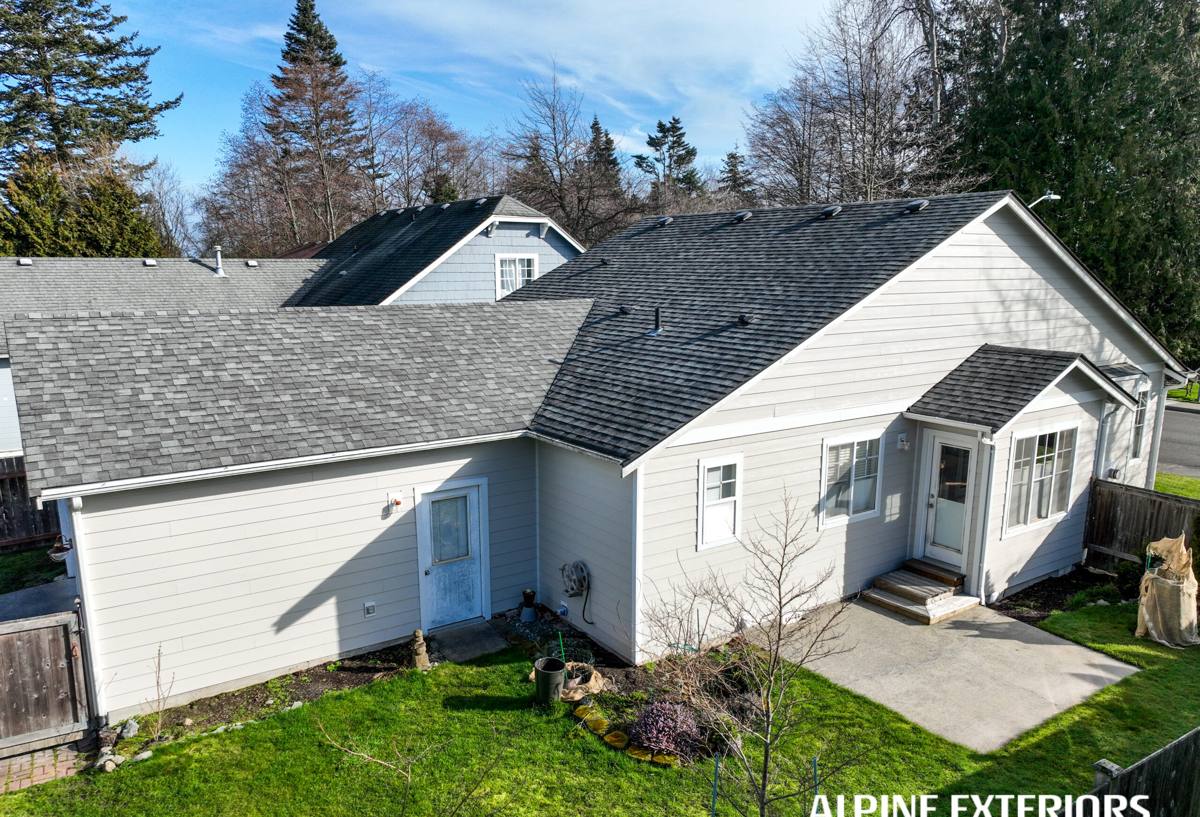
What Samish Homes Are Actually Up Against
Salt Air and Corrosion
Proximity to Samish Bay and the broader Salish Sea means airborne salt settles on exterior surfaces and accelerates corrosion of fasteners, flashing, and any metal trim that isn't properly rated for coastal exposure. Salt also breaks down some paint films faster than inland conditions would, which shows up as chalking, fading, and early peeling on siding that isn't engineered for the exposure.
Driving Rain
Whatcom County's weather pattern brings sustained wet seasons with wind-driven rain that hits walls at an angle rather than simply running down them. That means water gets forced into laps, seams, and butt joints that would stay dry in a calmer climate. Siding systems with weak seams or absorbent cores struggle here in a way they wouldn't in a drier region.
Moss and Prolonged Dampness
Tree cover, shaded north-facing walls, and long stretches of overcast, wet weather give moss and algae exactly the conditions they need. Once organic growth establishes on a wall, it holds moisture against the surface even longer, which speeds up whatever deterioration is already happening underneath.
Why We Don't Install Vinyl, Wood, or LP SmartSide Here
Every siding product has a reasonable case behind it somewhere. Our position isn't that these materials are junk — it's that after years of installing and repairing exteriors in this climate, we decided we'd rather stand behind one product we trust fully than offer several with trade-offs we'd have to talk homeowners around every time.
Vinyl
Vinyl is affordable and low-maintenance in mild climates, and it resists rot because it isn't organic. But it's a thin material that expands and contracts with temperature swings, and its seams and J-channels give wind-driven rain more opportunities to get behind the panel than a factory-finished fiber cement system does. In a driving-rain environment like Samish's, that's a real consideration, not a hypothetical one.
Wood and Primed Spruce
Cedar and primed spruce look good and have a long track record, but they're organic materials in a climate that specializes in keeping things damp. Moss, mildew, and rot are wood's natural enemies, and keeping ahead of them here means a repainting and caulking schedule most homeowners underestimate when they choose wood the first time.
LP SmartSide
LP SmartSide is engineered wood — strand-based, resin-treated, and more moisture-resistant than raw lumber. It's a legitimate mid-tier product. Its core is still wood fiber, though, which means any breach in the factory coating (a deep scratch, an unsealed cut edge, a failed caulk joint) gives moisture a path into a material that can still swell and deteriorate over time. In a salt-air, high-rainfall area, we don't think that risk is worth taking when a non-combustible, cement-based alternative exists.
Other Fiber Cement Brands
Cemplank and Allura are fiber cement, the same basic category as James Hardie, and fiber cement as a category is well suited to this climate. Where we draw the line is manufacturing consistency, factory finish quality, and warranty backing. James Hardie has the deepest track record in the Pacific Northwest specifically, and their ColorPlus finish and climate-specific product engineering are things we've come to rely on job after job.
Why James Hardie Fits This Climate
James Hardie fiber cement is cement, sand, and cellulose fiber — it's non-combustible and doesn't feed rot or insects the way wood-based products can. Hardie engineers its HZ5 product line specifically for regions with significant moisture exposure, which describes the Samish area well. The ColorPlus factory finish is baked on under controlled conditions and holds color and adhesion better than field-applied paint, which matters directly in a salt-air environment where paint failure is a common complaint with other products.
| Factor | James Hardie Fiber Cement | Vinyl | Wood / Engineered Wood |
|---|---|---|---|
| Salt air resistance | Engineered for it (HZ5 line) | Moderate; seams vulnerable | Weak without diligent upkeep |
| Wind-driven rain | Strong lap and joint performance | Panel seams can admit water | Depends heavily on caulking and paint |
| Moss/algae exposure | Non-organic, doesn't feed growth | Non-organic, can trap moisture behind panel | Organic surface, prone to growth |
| Fire resistance | Non-combustible | Melts/deforms under heat | Combustible |
| Finish durability | Factory-baked ColorPlus, long color life | Can fade/chalk over time | Field-applied paint, shorter repaint cycle |
Our Siding Process for Samish Properties
Inspection and Assessment
We start by walking the exterior and looking specifically at the areas that take the worst of Samish's conditions: north and west-facing walls, anywhere with tree cover or reduced airflow, and any spot where old caulking or flashing has already started to fail. We check for moisture damage behind existing siding before quoting anything, because covering up a wet wall with new material doesn't solve the underlying problem.
Moisture Management Details
Correct installation matters as much as the product itself. That means proper water-resistive barrier work, correctly lapped and sealed flashing at windows and doors, appropriate fastener spacing and type for the coastal environment, and gaps and clearances that let any incidental moisture drain and dry rather than sit against the wall. A lot of siding failures we're called out to repair trace back to shortcuts in this stage, not the material itself.
Installation
We install to James Hardie's published specifications, including proper caulking at butt joints, correct nailing patterns, and factory-finished cut edges wherever the plank has to be trimmed on site. This is the stage where a rushed or inexperienced crew introduces the vulnerabilities that show up as problems years down the line.
Final Walkthrough
We go over the finished work with the homeowner, point out anything worth knowing for long-term care, and make sure trim, caulk lines, and paint match are clean before we consider the job done.
Roofing, Windows, and Decks Take the Same Approach
Siding isn't the only part of a Samish home's exterior fighting salt air and rain. We also handle roofing, windows, and decks, and the same logic applies across all of them: materials and installation details have to be matched to what this specific climate does to a house over time, not just what looks good on install day. A new roof with poor flashing details, windows with weak seals, or a deck built with the wrong fastener hardware will all show coastal wear faster than they should. When we're on a property for siding work, we're also looking at how the rest of the exterior is holding up, since these systems interact — bad flashing at a roofline can damage siding below it, and failing window seals can rot the wall assembly around them.
What a Local Crew Actually Gives You
There's a real difference between a crew that installs siding in a dozen different climates and one that works Whatcom County's coastline regularly. We know which walls on a typical Samish property take the worst of the wind-driven rain, how much moss pressure to expect on shaded sides, and which flashing and fastener details actually hold up here versus in a drier region. That local knowledge shapes decisions on every job, from where we pay extra attention during install to how we talk homeowners through maintenance expectations afterward.
Maintenance Expectations for Coastal Whatcom County
- Rinse siding periodically to clear salt residue and organic buildup, especially on shaded or tree-covered walls
- Keep gutters clear so overflow doesn't run down and saturate siding repeatedly in the same spot
- Trim back vegetation that keeps a wall section shaded and damp longer than the rest of the house
- Inspect caulking at trim and joints every year or two and recaulk before gaps let water in
- Watch for moss starting on north-facing or shaded walls and address it before it spreads
- Have flashing at windows, doors, and rooflines checked periodically, since flashing failures are a common hidden cause of siding damage
What to Expect Cost-Wise
Every home is different, and full siding replacement pricing depends on square footage, the condition of what's underneath, trim complexity, and how much of the wall assembly needs repair before new siding goes on. Rather than throw out a number that won't reflect your actual house, we'd rather walk the property and give you a real figure based on what we see.
| Factor | Why It Affects Cost |
|---|---|
| Home size and wall complexity | More square footage and more corners, gables, and trim details mean more labor |
| Condition of existing sheathing/framing | Moisture damage found during tear-off needs repair before new siding goes on |
| Siding profile and finish choice | Different Hardie plank widths, textures, and ColorPlus colors carry different material costs |
| Accessibility | Multi-story sections, steep grades, or limited access can add labor time |
| Scope of related work | Combining siding with roofing, window, or trim work can affect scheduling and total cost |
If you're weighing your options for a home in Samish, we're happy to come take a look, walk you through what we're seeing on your specific exterior, and put together a straightforward, no-pressure estimate. There's no cost or obligation to have us out.