 Chuckanut
 Columbia's Exterior Challenge: Salt Air, Rain, and Moss
Homes in and around Columbia sit close enough to Chuckanut Bay and the broader Whatcom County coastline to feel the effects of salt-laden air on a regular basis. Add in the long, wet stretch of fall through spring typical of this part of the Pacific Northwest, and you have an exterior environment that punishes weak materials faster than most homeowners expect. This isn't a place where a siding or roofing job can be "good enough for most climates." It needs to be right for this one.
Three factors dominate here: salt air that accelerates corrosion and finish breakdown, driving rain that gets pushed sideways into seams and laps during winter storms, and a moss season that can stretch for months under the shade of the evergreen canopy common to this area. Any one of these is manageable on its own. Together, over years, they expose every shortcut in a lower-grade exterior product or a rushed installation.
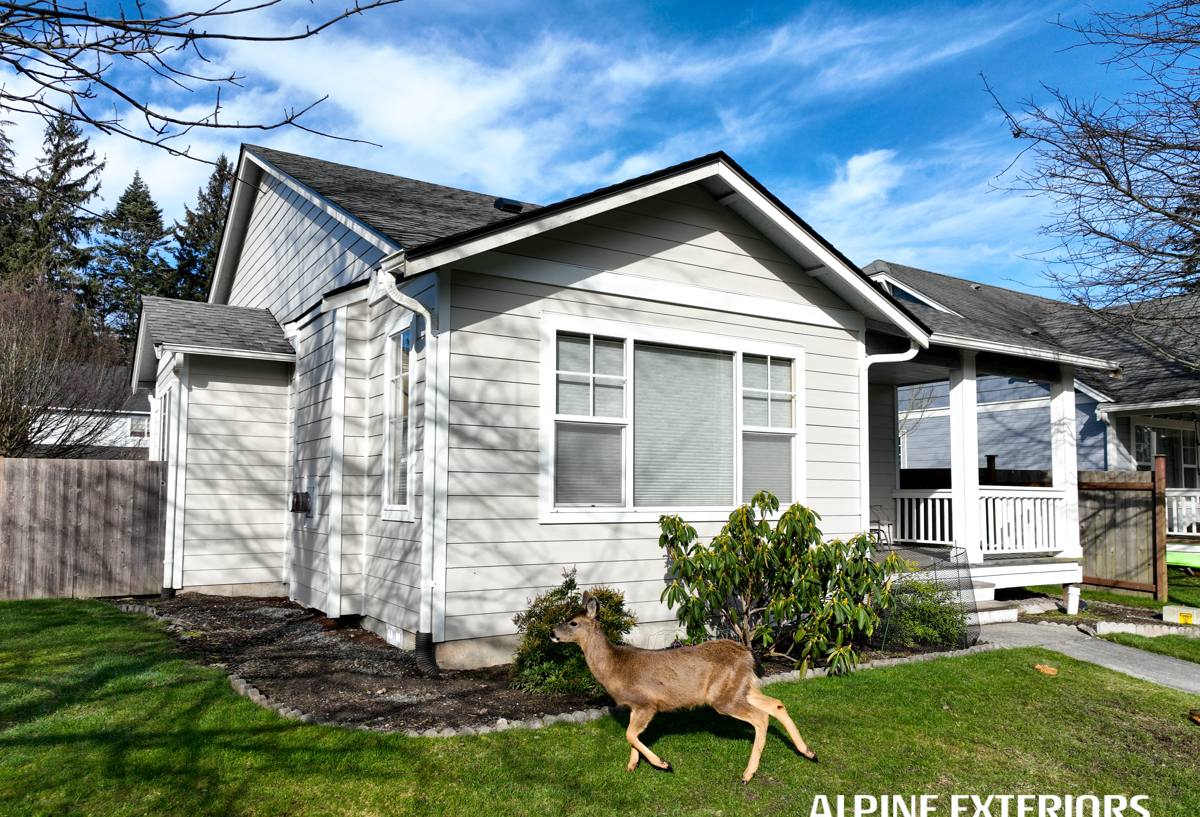
How the Climate Actually Attacks a Home
Salt Air
Salt in the air isn't just a coastal curiosity — it's a slow chemical process. It works on fasteners, flashing, and painted finishes, and it's especially hard on wood-based siding products where the factory or field-applied coating is the only thing standing between the substrate and the weather. Once that coating starts to fail, moisture and salt both get a foothold.
Driving Rain
Whatcom County doesn't just get a lot of rain — it gets wind-driven rain, which behaves differently than a straight-down shower. It finds horizontal laps, unsealed joints, and undersized overhangs, and it drives water behind siding and trim where it can sit against sheathing for days. This is where installation quality matters as much as material choice: even a good product installed with poor flashing details or wrong nailing patterns will let water in.
Moss and Prolonged Dampness
Shaded, tree-covered lots hold moisture longer after a rain event, and moss doesn't need much of a foothold to start colonizing a roof, deck, or siding surface. Beyond the cosmetic issue, moss holds water against the material underneath it, which is a problem for wood products and asphalt roofing alike, and it can work into seams and fastener heads over time.
Why We Install James Hardie Fiber Cement — and Nothing Else
We made a deliberate decision to install only James Hardie fiber cement siding. We don't install vinyl, LP SmartSide, Cemplank, Allura, or primed wood species like spruce or cedar. That's not brand loyalty for its own sake — it's a standard we hold because of what this specific climate does to exterior materials over a 20- or 30-year timeline, not just in the first few years.
Non-Combustible
Fiber cement is engineered from cement, sand, and cellulose fibers, which makes it non-combustible. In a region where wildfire smoke and dry-season fire risk have become more of a seasonal concern even in historically wet areas, that's a meaningful difference from wood-based or vinyl products.
Factory-Applied ColorPlus Finish
James Hardie's ColorPlus finish is baked on in a controlled factory environment rather than applied on-site, which gives it more consistent coverage and better adhesion than field-painted products. It's also backed by its own finish warranty, separate from the substrate warranty, which matters in a climate where UV and salt exposure both work against paint longevity.
Climate-Engineered Product Lines
Hardie makes region-specific formulations — HZ5 for the kind of freeze-thaw and moisture cycling common in the Pacific Northwest — rather than a single one-size-fits-all product. That engineering-for-climate approach is part of why we standardized on this manufacturer rather than a generic fiber cement or composite alternative.
The Trade-Offs We Considered
To be fair to the alternatives: vinyl is less expensive up front and requires no painting, LP SmartSide is lighter and easier to handle, and cedar has a natural look many homeowners love. But vinyl can warp and fade under sustained UV and temperature swings, engineered wood products carry moisture-sensitivity requirements that are unforgiving of installation error, and untreated or primed wood species demand a maintenance schedule most homeowners underestimate — repainting, caulking, and moisture monitoring on a cycle measured in single-digit years, not decades. In a high-moisture, salt-exposed environment like Columbia's, those trade-offs compound faster than they would somewhere drier and more sheltered.
Full Exterior Protection: Siding, Roofing, Windows, and Decks
Siding doesn't work in isolation — it's one part of a building envelope that also includes the roof, windows, and any exterior structures like decks. We handle all four because a weak point in any one of them undermines the others. A roof that's shedding water improperly can soak siding from above. Poorly flashed windows can let water behind even correctly installed siding. A deck built without proper ledger flashing can rot into the house framing it's attached to.
- Siding — James Hardie fiber cement lap, shingle, and panel systems, installed to manufacturer specification for this climate zone
- Roofing — replacement and repair with attention to underlayment, flashing, and ventilation, all of which matter more in a high-moisture, moss-prone environment
- Windows — replacement with correct flashing and sealing at the rough opening, the detail most likely to fail in wind-driven rain
- Decks — construction and repair with materials and fastening details suited to sustained damp exposure
What Our Process Looks Like for a Columbia Home
Inspection First
Before we talk about products, we look at the actual condition of the home — existing siding, trim, flashing, and any signs of past moisture intrusion. Homes near the water or under heavy tree cover often show wear patterns you won't find on a home a few miles inland, and that inspection shapes the recommendation.
Installation to Spec, Not to Shortcut
James Hardie's warranty coverage depends on installation following the manufacturer's published specifications — proper clearances, fastening patterns, and flashing details. We install to that standard as a baseline, not an upsell, because it's the difference between a siding job that performs for decades and one that fails early in exactly the ways this climate is good at finding.
Local Follow-Through
Being a local crew means we're not driving in from out of the county for a warranty call or a follow-up question. If something needs a second look after a hard winter storm, we're close enough to actually do that.
What Affects Cost on an Exterior Project
Every home is different, but the same handful of factors drive most of the cost variation we see on siding, roofing, window, and deck projects in this area.
| Factor | Why It Matters Here |
|---|---|
| Existing exterior condition | Hidden moisture damage behind old siding or trim adds repair scope before new material goes on |
| Home size and complexity | Roofline angles, dormers, and wall cutouts affect both material and labor |
| Siding profile chosen | Lap, shingle, and panel Hardie products vary in material cost and install time |
| Site access and tree cover | Shaded, wooded lots common near Chuckanut can add setup and cleanup time |
| Scope — siding only vs. full envelope | Bundling roofing, windows, or a deck with siding work can reduce redundant setup costs |
Why a Local Crew Matters More Than It Sounds Like It Should
A crew that works Whatcom County exteriors regularly has already seen how this specific mix of salt air, rain direction, and moss growth plays out on real homes over real years. That's different from general contracting experience picked up somewhere drier or more sheltered. It shows up in small decisions — where extra flashing goes, how starter strips are handled, which details get extra attention on a shaded, damp lot — that don't show up on a spec sheet but matter a great deal ten years down the road.
It also matters for accountability. A local company is still local when the warranty question comes up years later, not just during the sales conversation.
Simple Maintenance That Extends the Life of Your Exterior
Even the right materials, correctly installed, benefit from basic upkeep in this climate:
- Rinse siding and decking periodically to keep salt residue and organic buildup from accumulating
- Keep gutters clear so water is directed away from siding and foundation, not overflowing onto walls
- Trim back tree limbs and vegetation that keep siding or roofing shaded and damp longer than necessary
- Address moss on roofing and decking promptly rather than letting it establish and hold moisture
- Have flashing and caulking around windows and doors checked periodically, since these are the most common points of water entry
- Watch for soft spots, discoloration, or paint failure, which are early signs worth investigating before they become bigger repairs
Get a Straight Answer About Your Home
If you're weighing a siding, roofing, window, or deck project for a home in Columbia, we're glad to take a look and give you an honest assessment of what your exterior actually needs — no pressure, no inflated scope. Fill out the form below to schedule a free estimate.