 Chuckanut
 Siding Built for the Alger Area
Alger sits in that quiet stretch along the I-5 corridor between Bellingham and Mount Vernon, tucked close to Chuckanut Drive and the Samish Bay shoreline. It's a beautiful place to own a home, and it's also a demanding place to keep one weathertight. Homes out here take a steady combination of salt-tinged air off the bay, driving rain that comes in sideways off the water, and a moss season that can run eight months or longer under the tree cover typical of this part of Whatcom and Skagit County. None of that is unusual for the Pacific Northwest coast, but it adds up fast on a house, and it adds up faster on the wrong siding material.
We're a local exterior contractor, not a national franchise, and we've built our business around one siding product: James Hardie fiber cement. That's not a marketing angle — it's a standard we hold because we've seen what other materials do after a decade or two in a climate like this one, and we'd rather put something on your house that we know will still look right and perform right after the warranty period than something that looks fine in the showroom and struggles in year twelve.
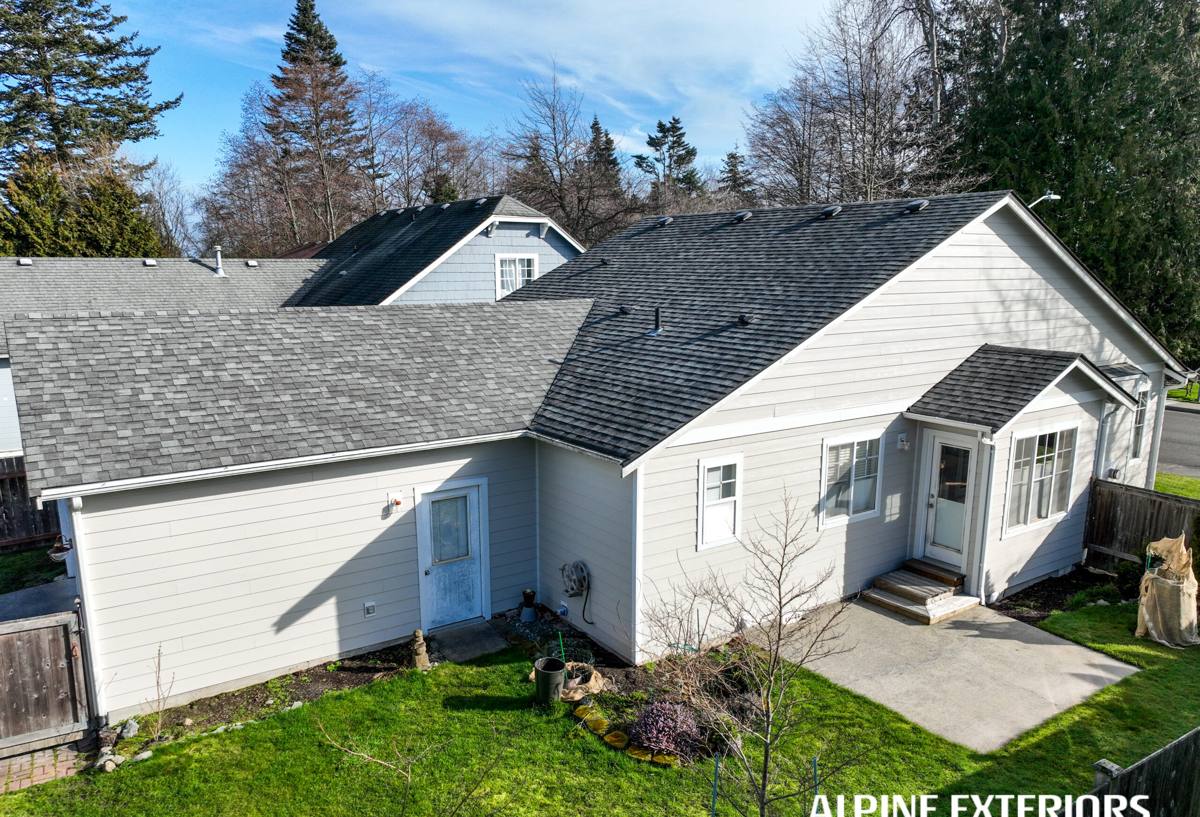
What the Alger Climate Actually Does to a House
Salt Air and Coastal Moisture
Proximity to Samish Bay means airborne salt is a real factor here, even a few miles inland. Salt-laden moisture accelerates corrosion on fasteners, flashing, and any exposed metal trim, and it can degrade certain paints and coatings faster than inland exposure would. Siding material and finish quality both matter more here than they would on the dry side of the state.
Driving Rain
Wind off the water pushes rain horizontally into wall assemblies rather than letting it run straight down and off. That means seams, laps, and butt joints on a wall take on more moisture load than a textbook rain event would suggest. Siding that swells, wicks water, or relies on paint film alone to stay sealed is going to show it first at those joints.
Moss, Mildew, and Shade
Tree cover and marine humidity around Alger keep surfaces damp for long stretches, especially on north-facing walls and anywhere siding sits close to landscaping. Moss and mildew aren't just cosmetic — sustained organic growth holds moisture against a wall surface, which is exactly the condition that causes rot, delamination, and coating failure in materials that aren't built to shrug it off.
Why We Only Install James Hardie
James Hardie fiber cement is engineered specifically to hold up under conditions like these. It's non-combustible, it doesn't absorb and swell with moisture the way wood-based products do, and it's manufactured with HZ5 formulations built for wetter, harsher climates — which describes the Alger area well. The factory-applied ColorPlus finish is baked on under controlled conditions, giving it better fade and moisture resistance than field-applied paint, and it carries a strong transferable warranty that follows the house if you sell.
We get asked fairly often why we don't offer vinyl, LP SmartSide, or a cheaper fiber cement alternative alongside Hardie. The honest answer is that we've chosen to specialize rather than offer a menu of products with very different long-term outcomes. Vinyl can warp and become brittle with age and doesn't hold paint if you ever want to change the color. Engineered wood products are more moisture-sensitive at cut edges and seams than fiber cement, which matters in a climate that stays damp for most of the year. We'd rather install one product exceptionally well than several products at varying levels of confidence.
Material Comparison for a Marine Climate
| Factor | James Hardie Fiber Cement | Vinyl | Engineered Wood (LP-style) |
|---|---|---|---|
| Moisture tolerance | High — doesn't swell or rot | High, but seams/gaps can trap water behind panel | Moderate — vulnerable at cut edges and seams |
| Salt air resistance | Strong; factory finish resists fading and chalking | Can become brittle and discolor over time | Coating wears faster in salt-heavy exposure |
| Moss/mildew resistance | Doesn't feed organic growth; cleans up well | Growth sits on surface, can trap moisture at laps | More susceptible to sustained damp exposure |
| Fire resistance | Non-combustible | Combustible | Combustible |
| Repaint needed | Rarely, factory finish lasts many years | Never painted, but color options limited and fixed | Yes, on a regular maintenance cycle |
Roofing, Windows, and Decks in the Same Climate
Siding doesn't work in isolation. A house near the Chuckanut/Samish shoreline needs its whole exterior envelope working together — roofing that sheds driving rain and resists moss buildup, windows and flashing details that keep wind-driven water out of the wall assembly, and deck materials that can handle constant damp shade without rotting out ledger boards or fasteners. We handle all four (siding, roofing, windows, and decks), and when we're on a project we look at how they interact rather than treating each one as a separate job. A new roof with poor flashing transitions can undermine brand-new siding just as easily as old siding can undermine a good roof.
What Correct Installation Looks Like
Fiber cement siding is only as good as its installation. Hardie's own technical guidelines are specific about clearances, fastening patterns, and flashing details, and skipping them is the most common reason a Hardie installation underperforms. Around Alger, where rain load and moisture exposure run higher than average, we pay particular attention to:
- Proper gap between siding and roof lines, decks, and grade to prevent wicking
- Correct fastener spacing and type to hold panels through wind-driven rain events
- Flashing and house wrap integration at every window, door, and penetration
- Caulking only where Hardie's specs call for it — not as a substitute for proper flashing
- Ventilation behind siding where wall assemblies need it to stay dry
A crew that treats fiber cement like it's the same as any other lap siding will cut corners that don't show up as problems for a year or two — and then show up as callbacks. We install to Hardie's spec because that's what makes the warranty and the performance real, not just on paper.
Working With a Local Crew
There's a practical reason local experience matters for a community like Alger: we've seen how houses in this specific stretch of Whatcom and Skagit County actually weather over time, not just how a spec sheet says a product should perform in general Pacific Northwest conditions. That means we know to pay closer attention to north-facing walls under tree cover, to salt exposure on homes closer to the water, and to the drainage details that matter most when rain comes in sideways off Samish Bay for days at a time. A crew based out of the area is also easier to reach if you ever have a question about your siding years down the road — we're not driving in from out of state for a one-time job.
What to Expect From an Estimate
When we come out to look at a home in the Alger area, we're checking more than just square footage. We look at current siding condition, moisture damage or staining that points to underlying problems, roof and gutter condition as it relates to water management, window flashing, and any deck or trim areas exposed to sustained shade and dampness. That gives us a real picture of what the project needs, not just a number pulled from a general estimate.
Questions Worth Asking Any Contractor Bidding Your Siding Job
- Are you a certified James Hardie installer, and can you explain their fastening and clearance specs?
- What's included in your estimate — tear-off, moisture barrier, flashing, trim, paint or factory finish?
- How do you handle unexpected rot or damage found once old siding comes off?
- What's the warranty structure, and does it cover labor as well as material?
- Can you walk me through how you'll handle moisture management specific to this property?
Cost Factors to Understand Before You Budget
Every home is different, but a few factors consistently drive cost on siding projects in this area more than others:
| Factor | Why It Matters |
|---|---|
| Existing siding removal | Tear-off and disposal add labor, especially with multiple layers or hidden damage |
| Underlying moisture damage | Rot found during removal needs sheathing repair before new siding goes on |
| Home complexity | Dormers, multiple stories, and cut-up wall lines increase labor and material waste |
| Trim and finish level | Factory-finished ColorPlus trim costs more upfront but avoids future field painting |
| Access and site conditions | Sloped lots, tree cover, and limited staging area affect scheduling and labor |
We'd rather walk a homeowner through these variables honestly during an estimate than quote a number that doesn't hold up once the old siding comes off.
Get a Straightforward Estimate
If you're weighing a siding project for a home in the Alger area — or want a second opinion on roofing, windows, or a deck showing wear from the local climate — we're happy to come take a look. There's no pressure and no obligation, just an honest read on your home's condition and what it would take to do the work right. Use the form below to request a free estimate.