 Chuckanut
 Cemplank Is Real Fiber Cement — That's Not the Issue
Let's start with what's true: Cemplank is a genuine fiber cement product, not a vinyl or engineered-wood knockoff. It's made from the same basic recipe as every other fiber cement siding on the market — Portland cement, sand, and cellulose fiber, cured into a dense, non-combustible board. If you're comparing it to vinyl siding or primed wood, Cemplank wins on fire resistance, rigidity, and resistance to pests. That part of its reputation is earned.
So this isn't a page about a "bad" product. It's a page about why, after years of installing and repairing fiber cement siding on homes throughout Whatcom County, we made a business decision to install only one brand — James Hardie — and to walk away from jobs where a homeowner specifically wants Cemplank. We think homeowners deserve the honest reasoning behind that, not just a sales pitch for what we do sell.
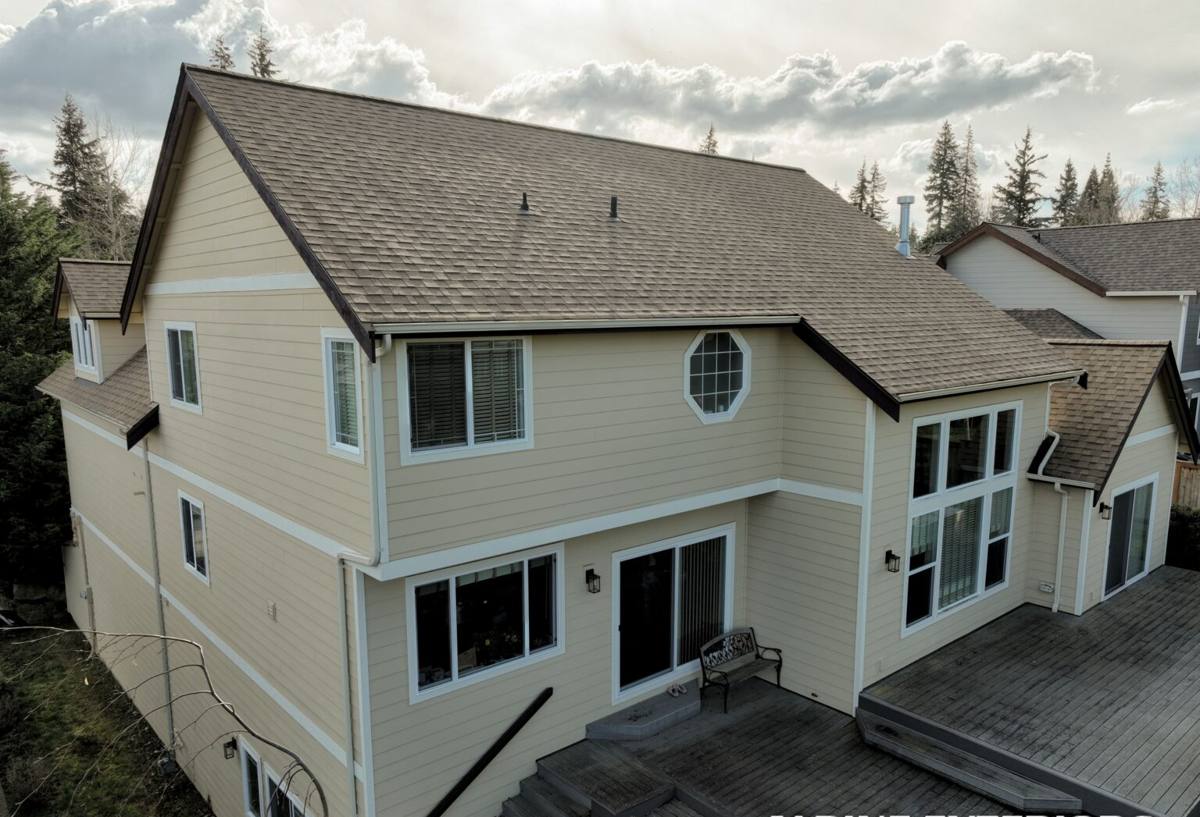
Fiber Cement Isn't One Product — It's a Category
This is the part that gets glossed over in a lot of siding conversations. "Fiber cement" describes a manufacturing category, the same way "SUV" describes a category of vehicle. Two boards can both be fiber cement and still behave very differently in the field, depending on:
- How the board is primed or factory-finished (or not finished at all)
- The consistency of the manufacturing plant's quality control from batch to batch
- How the manufacturer engineers the product for specific regional climates
- The strength and structure of the warranty backing the product
- Whether local lumberyards and distributors actually stock matching trim, touch-up paint, and replacement pieces years down the road
On every one of these points, we've found meaningful gaps between Cemplank and the product line we've standardized on. None of it is dramatic. All of it matters over a 20-30 year install.
The Chuckanut Climate Doesn't Forgive Shortcuts
Whatcom County siding has a specific job to do. Homes here deal with salt-laden air off the Sound, long stretches of driving rain in the fall and winter, and a moss season that can run six months or more on north- and west-facing walls. Any siding installed in Chuckanut is going to spend most of the year damp, and a good chunk of it will be exposed to salt spray depending on proximity to the water.
That combination punishes two things in particular: unfinished or lightly primed cut edges, and coatings that aren't engineered to resist mildew and moss growth in constant moisture. It's not that Cemplank can't survive here — fiber cement as a category holds up fine structurally. It's that the finish system on the board, and the factory engineering behind it, is what determines whether the siding still looks good in year twelve or is already showing streaking, fading, and moss staining that requires repainting.
Why Factory Finish Matters More Here Than in Drier Climates
In a dry inland climate, a primed board that gets field-painted well can go a long time before it needs attention. In Chuckanut, that same primed board is under near-constant moisture load. Every seam, every cut edge, every nail penetration is a potential entry point for water if the field-applied paint isn't perfect and stays perfect for years. Factory-cured, baked-on finishes are simply more consistent than what any crew can achieve with a paint sprayer on site, no matter how skilled the crew is.
Finish System: Factory-Applied vs. Primed-for-Field-Paint
This is the single biggest practical difference between the two products. Cemplank is typically sold primed, meaning the homeowner or contractor is responsible for the topcoat. James Hardie's ColorPlus line is a baked-on, factory-applied finish cured under controlled conditions before the board ever reaches a job site.
| Factor | Primed Fiber Cement (Cemplank) | Factory-Finished (Hardie ColorPlus) |
|---|---|---|
| Who applies the topcoat | Homeowner or field crew, after install | Manufacturer, before install, under controlled conditions |
| Coating consistency | Depends on weather, crew skill, and spray technique on the day | Consistent across every board in the batch |
| Repaint interval | Typically sooner, especially in wet climates | Extended — factory finish is warranted separately and longer |
| Color match on repairs | Field-mixed paint, some variation likely | Touch-up formulated to match factory color |
| Upfront labor cost | Lower material cost, added field-paint labor | Higher material cost, no field-paint labor required |
None of this means a primed board painted well by a good crew will fail. It means the margin for error is smaller, the maintenance clock starts sooner, and the homeowner is more exposed to workmanship variables outside the manufacturer's control.
Warranty Structure — Read the Fine Print
Warranty length gets quoted in sales conversations, but the structure of the warranty matters as much as the number of years. Some fiber cement warranties separate the substrate warranty (the cement board itself) from the finish warranty (the paint or coating), and the finish warranty is often shorter, especially if the topcoat was field-applied rather than factory-applied. Some warranties are also non-transferable, or become void if installation instructions weren't followed to the letter — which is common across the industry, not unique to any one brand.
We tell every homeowner the same thing: before you pick a siding product based on warranty length, find out whether the finish and the substrate are covered under the same terms, and whether the warranty transfers to a future buyer if you sell the house. That second point matters more in a market like Whatcom County's, where siding condition is something buyers and inspectors do notice.
Installation Sensitivity
Fiber cement as a category is less forgiving to install than vinyl. It has to be cut, fastened, and flashed correctly, or moisture problems show up behind the siding long before they're visible on the surface. This is true of every fiber cement product, Cemplank included. Our concern isn't that Cemplank is uniquely hard to install — it's that when a product is less common regionally, fewer local crews have deep repetition installing it correctly, which raises the odds of installation-driven callbacks.
Things that have to be right, regardless of brand:
- Correct nail placement and fastening pattern per the manufacturer's specification
- Properly sealed and primed cut edges before installation, especially at rain-exposed elevations
- Rain-screen or drainage plane behind the siding, not direct-to-sheathing installation
- Flashing detail at every window, door, and horizontal trim transition
- Correct clearance from grade, decks, and roof lines to avoid standing moisture
- Manufacturer-approved caulk and sealant products, not generic substitutes
Get any one of these wrong on any fiber cement product and you'll see the consequences in a Chuckanut winter faster than almost anywhere else in the state.
Availability and Long-Term Support
This is the practical, unglamorous reason that ends up mattering most ten years after installation. James Hardie has a large, established network of dealers and distributors across Western Washington, which means matching trim profiles, touch-up paint, and replacement boards are easy to source if a piece ever gets damaged. Cemplank has a smaller regional footprint, and we've run into situations sourcing exact-match replacement pieces and touch-up paint for repair work on homes we didn't originally build. That's not a knock on the product's performance — it's a supply chain reality that affects homeowners when they need a single damaged board replaced years after the original install crew has moved on to other work.
Why We Standardized on James Hardie
We made the decision to install one fiber cement brand across every job, rather than quoting whatever product a homeowner initially asks about, for a simple reason: consistency of outcome. When we install James Hardie's HZ5 or HZ10 products — engineered specifically for wetter, colder regional climate zones — we know the finish is factory-cured, the warranty structure is transparent, matching materials will be available for repairs a decade from now, and every crew member has deep, repetitive experience installing that exact product to spec. That combination is what lets us stand behind the work long after the job is finished, on homes exposed to the same salt air, driving rain, and moss season as everywhere else in Chuckanut.
If you're weighing Cemplank, Hardie, or another fiber cement option for your home, we're happy to walk through the real differences in person — including showing you actual board samples and finish systems side by side, not just talking points. There's no pressure and no obligation. Reach out for a free estimate and we'll give you the same straight answer we've given every neighbor who's asked.