 Chuckanut
 Sedro-Woolley's Climate Is Hard on Exterior Siding
Homes in the Sedro-Woolley area sit in a stretch of the Pacific Northwest where marine air, heavy seasonal rainfall, and shaded, tree-lined lots combine to create some of the toughest conditions a house exterior can face. Salt-laden air moving in off the water accelerates corrosion on fasteners and trim. Driving rain, especially in the fall and winter storm cycles, pushes moisture sideways into seams and laps that a drier climate would never test. And a long moss season, often stretching from late fall through spring, keeps north-facing walls and shaded siding damp for weeks at a time. None of this is unusual for Whatcom County, but it does mean the siding on your home is working harder than siding in a drier inland climate, and it will show wear faster if the wrong material or a sloppy installation is behind it.
We've built our business around understanding exactly how that combination of salt air, rain, and moss plays out on real houses, and around installing one product system that's engineered to handle it.
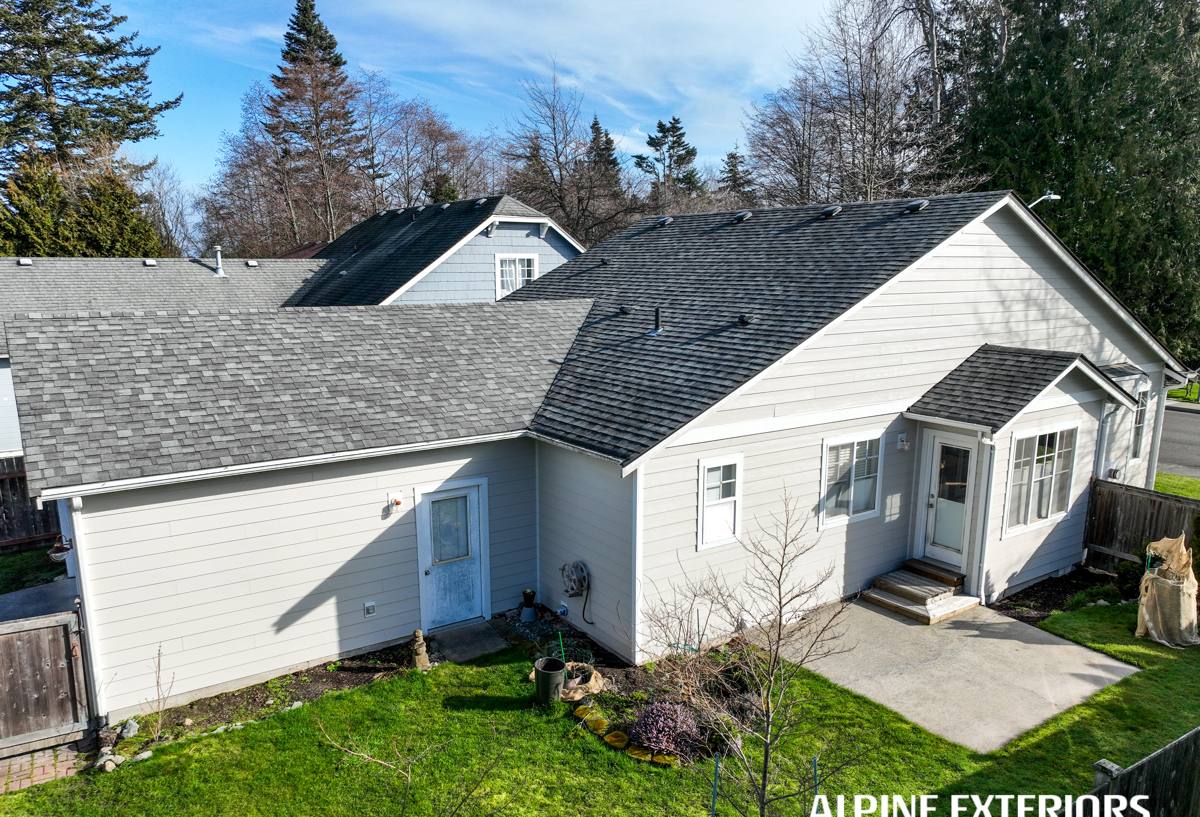
What Moisture and Moss Actually Do to a Wall
Driving Rain and Wind-Driven Moisture
Vertical rain is manageable for almost any siding product. The problem is wind-driven rain that hits a wall at an angle and gets forced up under laps, around window trim, and into butt joints. Over years, that repeated wetting and drying cycle is what causes wood-based products to swell, delaminate at the edges, or take on moisture that never fully dries out before the next storm arrives.
Moss, Algae, and Shaded Exposures
Moss doesn't just grow on roofs. On siding, it takes hold wherever a wall stays damp and shaded, usually the north and west elevations, under eaves, and near mature trees. Moss and algae growth trap moisture directly against the siding surface, which is a slow but steady stress test on paint film, caulk joints, and the substrate underneath. A siding material that can't tolerate sustained dampness is going to fail faster on a lot like this than it would on an open, sunny site.
Why We Standardized on James Hardie Fiber Cement
We install James Hardie fiber cement siding exclusively. We don't offer LP SmartSide, vinyl, Cemplank, Allura, primed spruce, or cedar, and that's a deliberate decision, not an oversight. Each of those alternatives has real strengths, but they also come with trade-offs that we've decided aren't worth carrying on a Sedro-Woolley home given what this climate does to a wall over 20 or 30 years.
- Wood-based siding (LP SmartSide, primed spruce, cedar) uses wood fiber or solid wood as its base material. Even with engineered strand technology or good primers, wood-based products remain more sensitive to sustained moisture exposure than fiber cement, and edge swelling or delamination can show up sooner in a wet, shaded climate.
- Vinyl siding is affordable and low-maintenance in many climates, but it's a thin, flexible material that can warp in temperature swings, doesn't hold paint if you ever want a color change, and its seams and J-channels give wind-driven rain more places to find a way in over time.
- Other fiber cement brands (Cemplank, Allura) are legitimate fiber cement products, but we've chosen to standardize on one manufacturer's system so our crews are deeply familiar with one set of installation specs, one flashing detail standard, and one warranty structure, rather than switching methods project to project.
James Hardie fiber cement is non-combustible, holds up to sustained moisture without the swelling and rot risk of wood-based products, and comes from the factory with a baked-on ColorPlus finish that's more resistant to fading and chipping than field-applied paint. For a house dealing with salt air, driving rain, and a long moss season, that combination is what we'd want protecting our own home.
James Hardie's Climate-Engineered Product Lines
James Hardie builds region-specific formulations under its HZ5 and HZ10 designations, engineered for the freeze-thaw, humidity, and moisture exposure patterns of different parts of the country. For the Pacific Northwest, that means a product engineered around sustained damp conditions rather than a one-size-fits-all formulation. We spec the appropriate HZ line for this climate zone on every project.
| Product Line | Best Suited For | Key Feature |
|---|---|---|
| HardiePlank Lap Siding | Traditional lap-siding look, most common on Whatcom County homes | Widest color and texture selection, engineered for regional moisture exposure |
| HardiePanel Vertical Siding | Modern facades, accent walls, gable ends | Clean vertical lines, often paired with board-and-batten trim |
| HardieShingle | Craftsman and cottage-style homes | Staggered or straight-edge shingle profile without the moisture sensitivity of cedar shingle |
| HardieTrim | Window and door surrounds, corner boards, fascia | Matches siding durability at the joints where water intrusion typically starts |
How We Install for This Climate
Material choice only matters if the installation behind it is done right, and that's especially true where wind-driven rain is a regular occurrence. Our crews follow James Hardie's published fastening and clearance specs rather than shortcuts, because the details are what actually keep water out.
- Correct starter strip and lap gauge so water sheds outward at every course
- Weather-resistant barrier and properly lapped flashing at every window, door, and penetration
- Rain screen or drainage gap detailing where the wall assembly calls for it, so moisture that does get behind the siding can drain and dry
- Manufacturer-spec fastener placement and caulking at butt joints and trim, using materials rated for coastal, salt-exposed air
- Proper clearance between siding and grade, decks, and roof lines to keep the bottom edge of the siding out of standing moisture
These aren't optional extras. They're the difference between siding that performs for decades and siding that looks fine for a few years before problems start showing at the seams.
Beyond Siding: Roofing, Windows, and Decks
The same weather that stresses siding in this area stresses the rest of the exterior too. We also handle roofing, window replacement, and decks, and we look at a home as one connected system rather than isolated projects. A roof that's shedding water improperly, or flashing that's failed at a window, will undermine even a well-installed siding job by feeding moisture into the wall assembly from above or the side. When we quote siding work, we're also looking at the roofline, the window flashing, and any deck ledger connections nearby, because those are the spots where water problems on a Sedro-Woolley home most often start.
What Affects the Cost of a Siding Project
Every home is different, but the same handful of factors drive most of the variation in price on siding projects in this area. Rather than quote a number that won't mean much without seeing your house, here's what actually moves the estimate:
| Factor | Why It Matters |
|---|---|
| Home size and wall complexity | More corners, gables, and dormers mean more cutting, trim, and labor time |
| Current siding removal | Tear-off of old wood, vinyl, or damaged siding adds time versus a bare or already-stripped wall |
| Substrate and moisture damage | Rot or water damage found underneath the old siding needs repair before new siding goes on |
| Product line and profile | Lap, panel, and shingle profiles carry different material and labor costs |
| Trim and accent work | Board-and-batten accents, trim details, and color changes at transitions add labor |
| Access and site conditions | Steep lots, mature landscaping, or limited staging area affect scheduling and equipment needs |
Caring for James Hardie Siding in a Wet, Mossy Climate
One advantage of fiber cement in this climate is how little upkeep it actually needs compared to wood-based alternatives, but "low-maintenance" isn't "no-maintenance." A short annual routine keeps it performing for the long haul:
- Rinse the exterior once or twice a year with a garden hose, focusing on shaded, north-facing walls where moss and algae tend to establish
- Avoid pressure washing directly at seams and butt joints, which can force water behind the siding
- Trim back trees and shrubs to keep airflow moving across shaded wall sections
- Check and re-caulk trim joints and penetrations every few years, since caulk wears out well before the siding does
- Watch gutters and downspouts for overflow that sheets water down the wall face instead of away from it
Why a Local Crew Matters Here
A siding crew that mostly works drier, inland climates doesn't always think about rain screens, salt-air fastener corrosion, or moss-prone shade the way a crew that works this specific region does every day. We're based here, we see how homes in Whatcom County actually age year over year, and our installation details reflect that experience rather than a generic national playbook. That local familiarity extends to knowing what permitting and inspection expectations look like in this area, and how to sequence a project around the wetter months without leaving a wall exposed longer than it needs to be.
If your Sedro-Woolley home's siding is showing wear, or you're planning ahead before the next wet season sets in, we're happy to take a look and walk you through what we'd recommend. Reach out for a free, no-pressure estimate using the form below.