 Chuckanut
 Mount Vernon's Exterior Climate Challenge
Mount Vernon sits in the Skagit Valley, close enough to Puget Sound and the Chuckanut environs that homes here deal with a specific mix of weather stress: damp marine air carrying salt, long stretches of driving rain off the water, and a moss season that seems to start earlier every year and end later. Add in the valley's flat, low-lying terrain and the tree cover common to older neighborhoods, and you get siding that stays wet longer than it would in a drier inland town. That combination of moisture, salt exposure, and shade is exactly what breaks down the wrong exterior materials over time.
None of this means Mount Vernon is a bad place to own a home — it just means the exterior envelope has to be chosen and installed with this specific climate in mind, not a generic national standard. We've built our whole business around that idea.
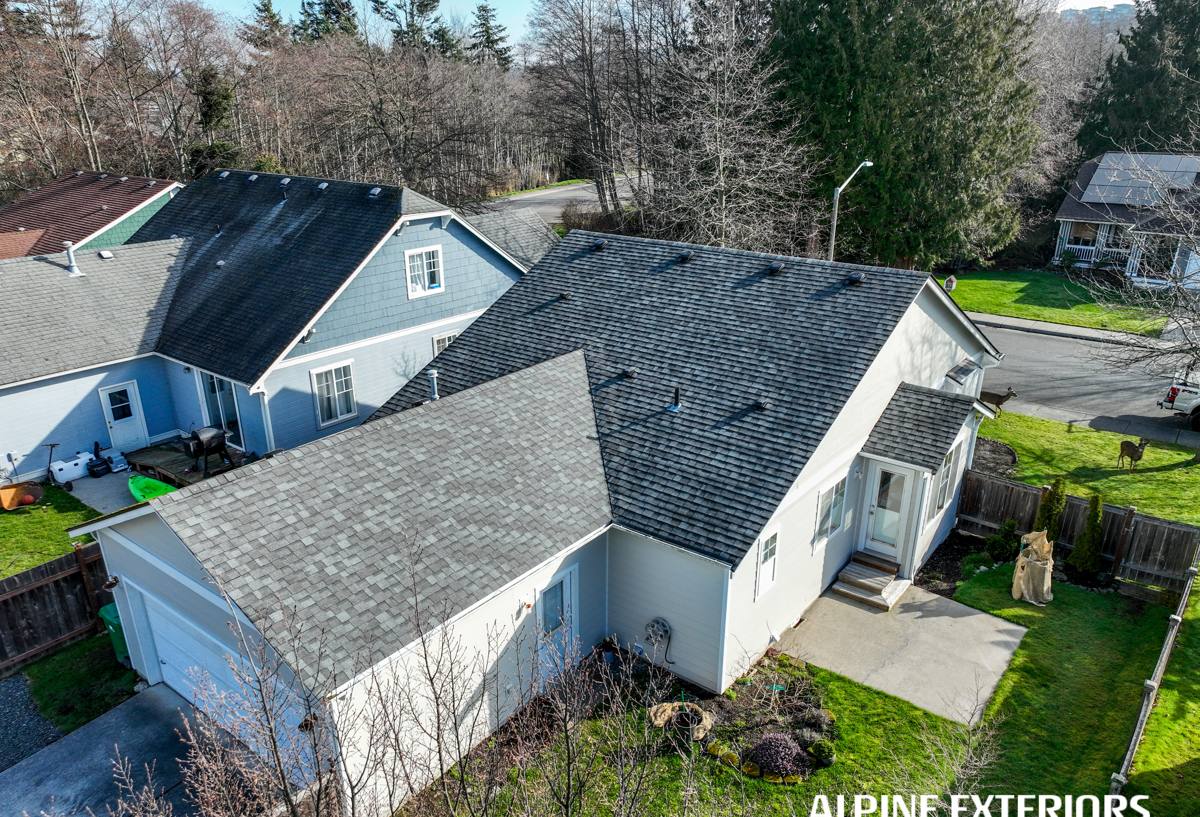
What This Climate Does to Different Siding Materials
Not all siding responds to Skagit Valley weather the same way. Understanding the failure patterns helps explain why we've standardized on one product rather than offering several.
Wood-Based and Engineered Wood Products
Primed spruce, cedar, and engineered wood siding (like LP SmartSide) all share a wood core. Wood is dimensionally stable when it's dry, but our region rarely gives it the chance to fully dry out between rain events, especially on north-facing walls or under mature trees. Repeated wet-dry cycling stresses seams and fastener points, and any breach in the factory coating becomes a place for moisture to work its way into the substrate. Cedar in particular needs ongoing maintenance — refinishing, caulking, sometimes replacement of individual boards — to hold up long-term in a marine climate.
Vinyl Siding
Vinyl handles moisture well in the sense that it doesn't absorb water, but it has its own weaknesses here: it can warp or distort with temperature swings, salt air can dull and chalk the surface faster than inland installations, and it's not a fire-resistant material. It's also hard to make vinyl look like anything other than vinyl — a real consideration on the older, character-driven homes common in this area.
Fiber Cement
Fiber cement is cement, sand, and cellulose fiber pressed into boards — it doesn't rot, it doesn't attract insects, and it's non-combustible. Not every fiber cement product is engineered the same way, though, which is why brand and formulation matter as much as the material category itself.
Why We Install Only James Hardie
We install James Hardie fiber cement siding exclusively — we don't offer vinyl, LP SmartSide, Cemplank, Allura, primed spruce, or cedar. That's a deliberate standard, not a limitation in what we're capable of installing. Hardie's HZ5 product line is engineered specifically for climates like ours: cold-wet cycling, moisture exposure, and coastal-adjacent conditions. The ColorPlus factory finish is baked on under controlled conditions rather than field-painted, which matters in a place where painting windows are short and humidity is high even in summer. Hardie also backs its products with a strong, transferable warranty structure that reflects confidence in the material's long-term performance.
We're not going to tell you every other product on the market is worthless — cedar has real appeal, vinyl is inexpensive, and engineered wood has improved over the years. What we will tell you is that after years of doing exterior work in this region, we decided one material gave homeowners the best combination of durability, appearance, and low maintenance for what Skagit Valley and Chuckanut-area weather actually does to a house. That's Hardie, and it's the only thing we put our name behind.
Why a Local Crew Matters in Mount Vernon
Siding installation is a detail trade. Flashing at windows and doors, proper starter strip placement, correct fastening patterns, and drainage planes behind the cladding all matter more in a wet climate than in a dry one — get any of them wrong and water finds its way in eventually. A crew that works this valley regularly understands where moisture tends to collect on a given home, how prevailing wind-driven rain hits different elevations, and how much clearance to leave for material movement given our temperature and humidity swings.
There's also a practical side to being local: when you need a warranty question answered, a follow-up visit scheduled, or just want someone who'll pick up the phone, a crew based near Chuckanut rather than a national franchise or a company two hours away makes that easier.
Our Full Exterior Services in Mount Vernon
We work on the whole building envelope, not just siding, because these systems interact. A roof leak can ruin new siding from the top down, and windows that aren't properly flashed will undermine even a correctly installed Hardie wall.
- Siding: Full and partial James Hardie siding replacement, trim, and repairs
- Roofing: Roof replacement and repair, coordinated with siding and trim work where projects overlap
- Windows: Replacement windows installed with proper flashing and integration into the siding envelope
- Decks: New deck construction and repair, built to handle the region's rain and moss exposure
Bundling exterior work under one crew also means fewer seams between trades — the same team that flashes your windows can make sure the siding around them is detailed correctly, instead of two separate contractors pointing fingers at each other later.
What the Installation Process Looks Like
A proper Hardie installation in this climate involves more than nailing boards to a wall. The steps that matter most:
- Removing old siding and inspecting the sheathing underneath for hidden rot or moisture damage
- Repairing or replacing any compromised sheathing before anything new goes up
- Installing a weather-resistive barrier and drainage plane appropriate for the wall assembly
- Flashing all windows, doors, and penetrations to shed water outward, not into the wall
- Installing Hardie boards to manufacturer specifications for fastening, clearances, and joint treatment
- Finishing trim, caulking, and touch-up so the ColorPlus finish reads seamless
Skipping the inspection step is one of the most common shortcuts in this trade, and it's the one that causes the most expensive problems later — new siding over rotten sheathing just hides the issue for a few more years.
What Affects the Cost of a Siding Project
Every home is different, but the same handful of factors drive most of the cost variation we see on Mount Vernon-area projects.
| Factor | Why It Matters |
|---|---|
| Condition of existing sheathing | Hidden moisture damage found during tear-off adds repair scope |
| Home size and wall complexity | More corners, gables, and trim detail mean more labor |
| Siding profile and accessories | Lap width, trim style, and accent details affect material cost |
| Access and site conditions | Mature landscaping, tight lots, or multi-story walls affect setup time |
| Scope of related work | Bundling window, trim, or roof work with siding changes total project cost |
We don't publish blanket per-square-foot pricing because the sheathing condition alone can swing a project significantly once we're actually into the walls — an honest estimate has to start with a real look at the house.
Signs Your Siding May Need Attention
Given how much moisture this region deals with, it's worth checking your home's exterior at least once a year, especially before and after the wet season.
- Persistent moss or algae growth that returns quickly after cleaning
- Soft spots, bubbling, or visible warping in siding boards or trim
- Peeling paint or finish, particularly on north-facing or shaded walls
- Gaps opening up at seams, corners, or around windows and doors
- Any musty smell or visible staining on interior walls that back up to exterior siding
- Siding that feels spongy or crumbles slightly when pressed
Catching these early usually means a repair; ignoring them usually means a full replacement once the sheathing underneath is compromised.
Maintenance in a Wet, Mossy Climate
One advantage of Hardie fiber cement is how little ongoing maintenance it needs compared to wood-based products. It won't rot, and the factory-applied ColorPlus finish resists the fading and chalking that field-applied paint struggles with in this humidity. That said, no siding is entirely maintenance-free here — periodic gentle washing to keep moss and algae from taking hold, especially on shaded sides of the house, and keeping gutters and downspouts clear so water isn't sheeting down the wall, both go a long way toward protecting the investment long-term.
Ready to Talk About Your Home
If you're noticing wear on your Mount Vernon home's siding, roofing, windows, or deck, we're happy to take a look and give you an honest read on what's going on and what it would take to fix it. There's no pressure and no obligation — just a straightforward estimate from a crew that works this climate every day. Fill out the form below to get started.