 Chuckanut
 Siding Built for Bellingham's Marine Climate
Bellingham sits where the Salish Sea, the foothills of the Cascades, and a genuinely wet Pacific Northwest climate all meet. Homes here take a different kind of beating than houses on the dry side of the state or even homes further inland in Whatcom County. If you're near Chuckanut Bay, Bellingham Bay, or anywhere in between, your siding is doing constant, quiet work against salt-tinged air, sideways rain, and long stretches of shade that never really dry out between storms.
We're a local crew, not a regional call center dispatching whoever's available. When we bid a Bellingham job, we're accounting for the same conditions we see on our own routes every week — not guessing from a spec sheet.
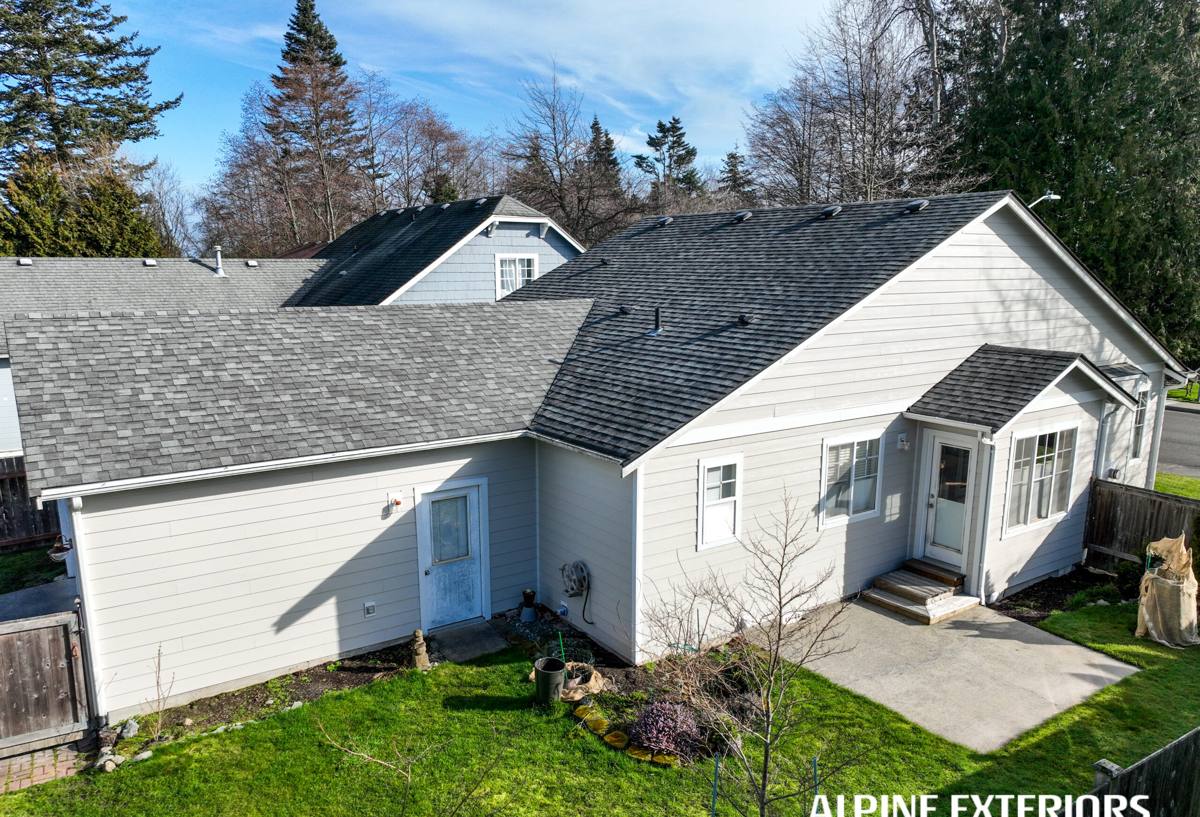
What Bellingham Homes Face Year-Round
Salt Air Off the Bay
Anywhere close to Bellingham Bay or Chuckanut Bay, siding is exposed to a low but steady dose of salt-laden air. Salt doesn't rot wood or fiber cement the way moisture does, but it accelerates corrosion on fasteners, flashing, and trim hardware, and it can dull or chalk lower-quality paint finishes faster than inland exposure would. Material choice and fastener choice both matter more here than they would twenty miles east.
Driving Rain and Wind-Driven Moisture
Storms coming off the Strait of Georgia and the Salish Sea often arrive with real wind behind them, which means rain doesn't just fall — it drives sideways into wall assemblies, especially on west- and south-facing elevations. Siding systems that rely on caulk and paint film alone to stay watertight tend to show it first at seams, butt joints, and window returns. A weather-resistive barrier, proper flashing, and correctly lapped siding matter more here than in a drier climate where a small gap in the system might never get tested.
Moss, Mildew, and Long Shade
Whatcom County's growing season for moss and algae is long — many properties here, especially those with mature tree cover near Chuckanut, stay damp and shaded for months at a stretch. Wood-based sidings, and even some engineered wood products, are vulnerable to moisture wicking at cut edges and fastener points once organic growth takes hold. Fiber cement doesn't feed mold or moss the way wood fiber does, which is one of several reasons it holds up better under this kind of sustained shade and dampness.
Why We Install Only James Hardie Fiber Cement
We made a decision early on to install one siding system: James Hardie fiber cement. That's not a marketing angle — it's a standard we hold because of what we've seen perform, and not perform, on homes in this exact climate.
What We Don't Install, and Why
We don't install vinyl, LP SmartSide, Cemplank, Allura, primed spruce, or bare cedar. Each of those products has a legitimate place in the market and reasonable manufacturers behind them, but each also comes with a trade-off that concerns us for this specific climate:
- Vinyl siding can warp or distort under sustained UV and temperature swings, and its seams and J-channels give wind-driven rain more opportunities to find a path behind the cladding.
- LP SmartSide and other engineered wood products perform well when detailing is perfect, but any cut edge, fastener penetration, or caulk failure exposes wood fiber to moisture — a real risk in a climate this consistently wet.
- Cemplank and Allura are also fiber cement, and reasonable products, but we've standardized on one manufacturer, one training pipeline, and one warranty structure so our crews install to spec every time rather than switching systems job to job.
- Primed spruce and bare cedar are beautiful but require a maintenance commitment — recoating, caulking, moisture checks — that most homeowners underestimate, especially with the moss pressure Whatcom County puts on wood.
James Hardie's fiber cement is non-combustible, dimensionally stable in wet-dry cycling, and factory-finished with ColorPlus technology, which bakes color into the board under controlled conditions rather than relying on job-site paint to hold up against salt air and driving rain. Hardie also builds climate-engineered HZ product lines specifically for wetter regions like ours, and backs installations with a strong transferable warranty when the work is done to their specification. That combination is why it's the only system we put our name behind.
Our Services in the Bellingham Area
Siding is our specialty, but most homes don't need siding in isolation — the same wind and rain exposure that stresses cladding also stresses the roof, windows, and any exterior decking. We handle all four so the building envelope gets treated as one system instead of four separate contractors working around each other.
| Service | What We Address |
|---|---|
| Siding | James Hardie fiber cement replacement, repair, and new installation with proper flashing and moisture management |
| Roofing | Roof replacement and repair, with attention to the same wind-driven rain and moss exposure that affects siding |
| Windows | Replacement windows integrated with new or existing siding so flashing and water management stay continuous |
| Decks | Deck rebuilds and repairs suited to a consistently wet, shaded climate |
Bundling siding with roofing or window work often makes sense here because it lets us tie flashing details together in one pass, rather than one contractor's work undermining another's a year later.
What a Local Crew Means for You
Working out of the Chuckanut area, we're not commuting in from another part of the state or subcontracting out to whoever's cheapest that week. That matters in a few concrete ways:
- We know how Bellingham's rain patterns and shade lines actually behave on specific elevations, not just in general terms.
- We can get back to a job quickly if something needs a follow-up look, rather than scheduling around a multi-hour drive.
- We're accountable to a community we actually live and work in — our reputation locally is the whole business.
- We understand Whatcom County permitting and inspection expectations because we deal with them regularly, not occasionally.
Cost Factors for a Bellingham Siding Project
Every home is different, but the same handful of variables drive most of the cost difference between projects in this area:
| Factor | Why It Matters Here |
|---|---|
| Extent of moisture damage found during tear-off | Long-term dampness near shaded or bay-adjacent lots sometimes means sheathing repair before new siding goes on |
| Home size and wall complexity | More corners, dormers, and trim details mean more labor and more flashing points |
| Siding profile and ColorPlus color selection | Lap width, shingle-style panels, and factory finish options all price differently |
| Existing siding removal | Wood, vinyl, or engineered wood tear-off adds labor versus a bare-sheathing start |
| Accessibility and site conditions | Sloped lots, mature landscaping, or tight setbacks common in this area can affect staging and labor time |
We'll walk your home with you and give you a real number based on what we find, not a phone estimate based on square footage alone.
Signs Your Bellingham Home May Need New Siding
- Soft spots, bubbling, or visible warping, especially on west- or south-facing walls
- Persistent moss or dark staining that returns quickly after cleaning
- Paint that's peeling or chalking faster than it used to, particularly near the bay
- Visible gaps, cracked caulk, or separation at seams and trim joints
- A musty smell or soft drywall on interior walls that back up to exterior siding
- Siding that's original to a home built more than 20-25 years ago with no known upgrades
Our Process
We start with a walk-around inspection, looking specifically at moisture entry points, flashing condition, and any areas where shade and drainage have created chronic dampness. From there we scope the tear-off, confirm what the sheathing looks like once old siding comes off, and install James Hardie fiber cement with correctly lapped weather-resistive barrier, flashing, and fastening to manufacturer spec. We don't shortcut the parts of the job nobody sees — those are usually the parts that determine whether siding lasts 10 years or 40 in this climate.
Living With Fiber Cement Siding in This Climate
One of the practical advantages of James Hardie siding in a place like Bellingham is how little ongoing maintenance it asks for compared to wood or engineered wood alternatives. ColorPlus finishes are engineered to resist fading and chalking under UV and salt exposure, and because the material itself doesn't feed mold or moss, routine care is mostly limited to occasional rinsing and keeping gutters and drainage clear so water isn't sitting against the base of walls. It's a lower-maintenance answer to a climate that doesn't give siding much of a break.
If you're weighing a siding, roofing, window, or deck project on a Bellingham home, we're glad to come take a look and give you a straightforward, no-pressure estimate — just fill out the form below.