 Chuckanut
 Why Blanchard Roofs Take a Different Kind of Beating
Homes in the Blanchard area sit close enough to the water that the weather feels different than it does even a few miles inland. Storms roll through with driving, sideways rain instead of the gentler straight-down kind, and the wind that comes with them tends to hit roofs at an angle rather than head-on. Add in the long, damp stretch of the year that Whatcom County sees every fall through spring, and a roof here is working harder than a roof in a drier, more sheltered part of the state. Storm damage repair in this area isn't just about patching what broke — it's about understanding why it broke in the first place and making sure the fix holds up the next time the weather turns.
Salt Air and Wind Off the Water
Being close to Chuckanut means dealing with salt-laden air on a regular basis. Salt air accelerates corrosion on exposed metal — nails, flashing, fasteners, and any hardware that isn't rated for coastal exposure will degrade faster here than it would twenty miles inland. Wind-driven storms compound the problem by working moisture into places it normally wouldn't reach, like under shingle tabs or around flashing edges that have already started to weaken. When a storm lifts or tears shingles, it's often the combination of wind plus already-softened fasteners that does the damage, not the wind alone.
A Moss Season That Barely Ends
Moss is a year-round concern in this part of Whatcom County, not a seasonal nuisance. Shaded, north-facing slopes and roofs under tree cover stay damp for long stretches, and moss doesn't just sit on top of shingles — it works into the granules and lifts shingle edges as it grows, creating small gaps that wind and rain can exploit during a storm. A roof that already has moss creeping under its shingle tabs is far more vulnerable to wind uplift than a clean one, which is why storm damage repair here often turns up moss-related wear alongside the storm damage itself.
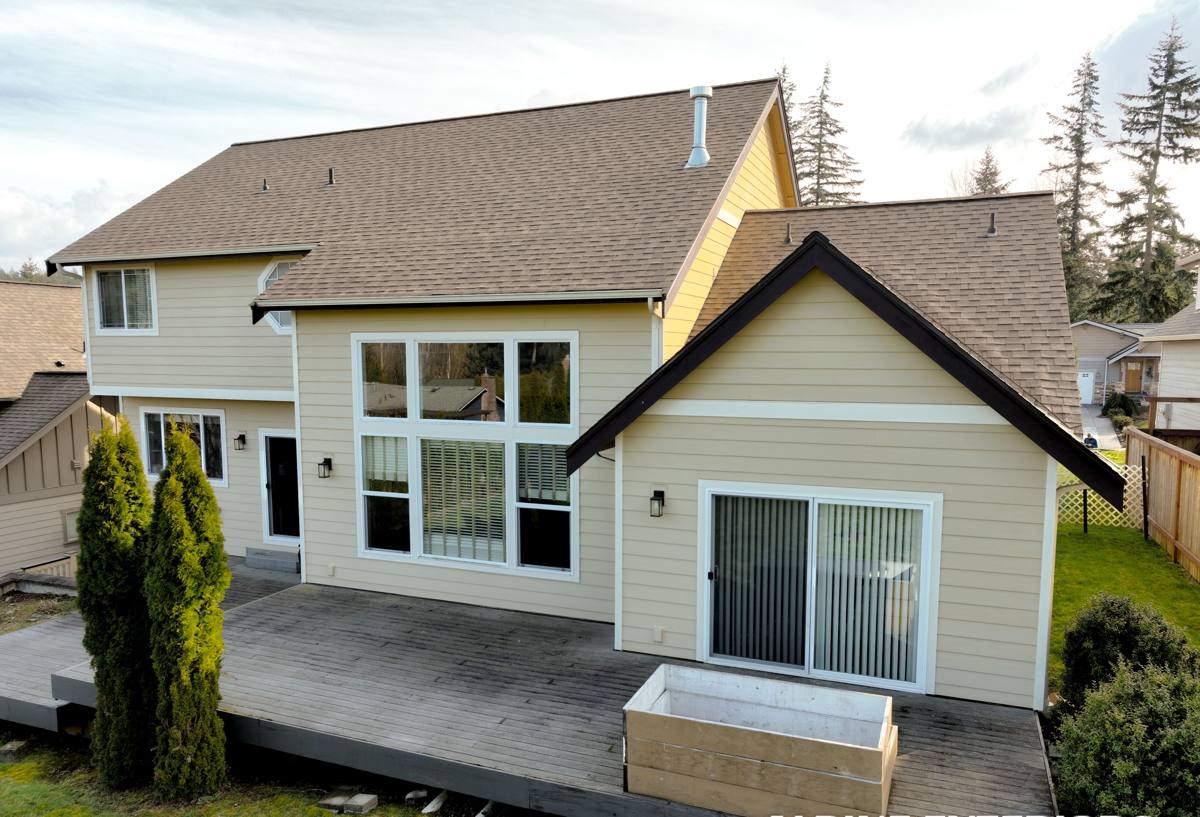
What Storm Damage Actually Looks Like on a Blanchard Roof
Not all storm damage is obvious from the ground. Some of it shows up right away; some of it only shows up as a stain on a ceiling weeks later. The most common forms we see on homes in this area include:
- Lifted or torn shingle tabs — usually along roof edges, ridges, and any slope facing the prevailing wind
- Granule loss — heavy rain and hail-like debris can strip the protective granules off asphalt shingles, leaving bare, vulnerable spots
- Damaged or displaced flashing — around chimneys, vent pipes, and roof-to-wall transitions, where wind uplift and corrosion both do their work
- Branch or debris punctures — from the dense tree cover common around Blanchard properties
- Moss-lifted shingle edges — pre-existing moss growth that gives wind something to grab onto
- Clogged or torn-loose gutters — which back water up under the lowest course of shingles during heavy rain
Some of these are visible from the driveway. Others require getting up on the roof, or at minimum a close look with binoculars and a look in the attic for daylight, staining, or damp insulation.
Why a Fast, Correct Response Matters More Here
A small gap in a shingle or a piece of lifted flashing doesn't cause much harm on its own. The damage comes from what happens next — repeated cycles of rain finding that gap, drying out, and getting driven back in by the next storm. Over a few weeks in a wet Whatcom County winter, that cycle can soak roof sheathing, wet insulation, and start mold growth in spaces you can't see without opening up a wall or ceiling. Moss makes this worse by holding moisture against the roof surface even between storms, so a repair that only addresses the visible tear without dealing with the moss around it tends to fail again within a season or two. The right response isn't just fast — it has to actually address the cause, not just the symptom.
Our Storm Damage Repair Process
Storm damage repair works best when it follows a clear sequence, rather than jumping straight to nailing down whatever looks obviously broken. Here's how we approach it on Blanchard homes:
- Full roof inspection. We look at more than just the damaged area — we check the whole slope, the flashing, the gutters, and the attic for signs of water intrusion that may have started before the storm.
- Temporary weatherproofing. If there's an active leak or exposed decking, we get it covered and watertight the same visit so no more water gets in while repairs are scheduled.
- Documentation. We photograph and note the damage clearly enough to support an insurance claim, including anything pre-existing (like moss wear) that's relevant to the full picture.
- Honest scope of repair. We tell you plainly whether this is a targeted repair or whether the damage — or the roof's overall condition — means repair won't hold and replacement is the more honest recommendation.
- Matching materials and technique. Repairs are done with materials that match your existing roof as closely as possible, tied in correctly with proper flashing and underlayment, not just surface-patched.
- Final walkthrough. We confirm the fix is sound and go over anything we noticed that could cause problems in the next storm.
Matching the Repair to What's Already on Your Roof
Blanchard has a mix of roof ages and shingle types, and the right repair approach depends on what's already up there. Older 3-tab asphalt roofs, newer architectural shingle roofs, and metal roofs all behave differently in wind and moisture, and repairing one the way you'd repair another usually leads to a mismatched, short-lived fix.
| Roofing Type | Common Age on Local Homes | Moss & Algae Resistance | Wind Performance | Repair Consideration |
|---|---|---|---|---|
| 3-tab asphalt shingles | Older homes, original roofs | Lower — flat profile holds moisture | Lower wind rating, more prone to tab lift | Matching discontinued colors/profiles can be difficult |
| Architectural (laminate) shingles | Common on roofs replaced in the last 10-20 years | Better, especially with algae-resistant granules | Higher wind rating when properly fastened | Easier to source close matches; thicker profile hides small patches better |
| Standing seam metal | Newer installs or full replacements | Very good — sheds moss more readily | Strong wind performance when panels and fasteners are sound | Repairs require panel-specific technique; salt air makes fastener choice important |
This isn't a case of one option being universally "better" — it's about knowing what you have, what condition it's in, and what a repair on that specific material actually requires to hold up through another wet season.
Working With Your Insurance Company
Most storm damage claims move faster and more smoothly when the documentation is clear from the start. We provide detailed photos, a written description of the damage, and a straightforward scope of work an adjuster can review without back-and-forth. We'll also tell you plainly if we think a claim is worth filing at all — some damage is minor enough that a repair costs less than a deductible, and we'd rather say that upfront than encourage a claim that doesn't make financial sense for you.
Reducing Your Next Storm Damage Repair Bill
You can't control the weather coming off the water, but you can control how ready your roof is for it. A few maintenance habits make a real difference for homes in the Blanchard area:
- Clear gutters and downspouts at least twice a year, more often if you're under heavy tree cover
- Trim back branches that overhang the roofline before they become storm-driven debris
- Have moss treated and removed on a regular schedule rather than waiting until it's thick
- Check attic ventilation — poor airflow traps moisture and speeds up sheathing damage
- Walk the roofline (or have it checked) after any significant windstorm, not just once a year
- Address small flashing or fastener issues promptly, before wind gets a chance to work them loose
Why a Crew That Already Works in Blanchard Makes a Difference
A contractor who works this stretch of Whatcom County regularly knows which slopes tend to hold moss, which roof ages are due for attention, and how quickly conditions can turn from a light rain to a driving storm off the water. That familiarity matters when you're trying to get a tarp up before the next system rolls through, or when you need someone who can look at a roof and know right away whether what they're seeing is fresh storm damage or the tail end of months of moss and moisture working at it. Local experience doesn't replace a careful inspection, but it does mean fewer surprises and a repair plan built around how homes in this specific area actually age and fail.
If you've got storm damage on your Blanchard home — or you just want a professional set of eyes on your roof before the next system rolls in — we're happy to take a look. Estimates are free, there's no pressure to sign anything on the spot, and you'll get a straight answer about what your roof actually needs.