 Chuckanut
 Metal Roofing Built for Burlington's Climate
A metal roof asks different things of an installer than an asphalt shingle roof does, and in a place like Burlington that difference matters. Salt-tinged air moving in off Skagit Bay works on exposed fasteners and cut edges year after year. Rain here rarely falls straight down for long stretches — Pacific storm fronts push it sideways, and a metal roof has to shed that water through seams and laps rather than just a flat field of shingles. And on shaded or tree-covered lots, a long moss season settles onto north-facing slopes and stays there for months. None of that makes metal the wrong choice. In many respects it's a stronger long-term fit for this climate than asphalt. But it has to be installed by someone who understands panel-specific fastening, flashing, and expansion detailing, not treated like a shingle job with different material on top.
This page focuses specifically on metal roofing for homes in and around Burlington — what the local conditions actually demand from a metal roof, what separates a correct install from one that leaks or oil-cans within a few years, and how we run the job from first inspection to final walkthrough.
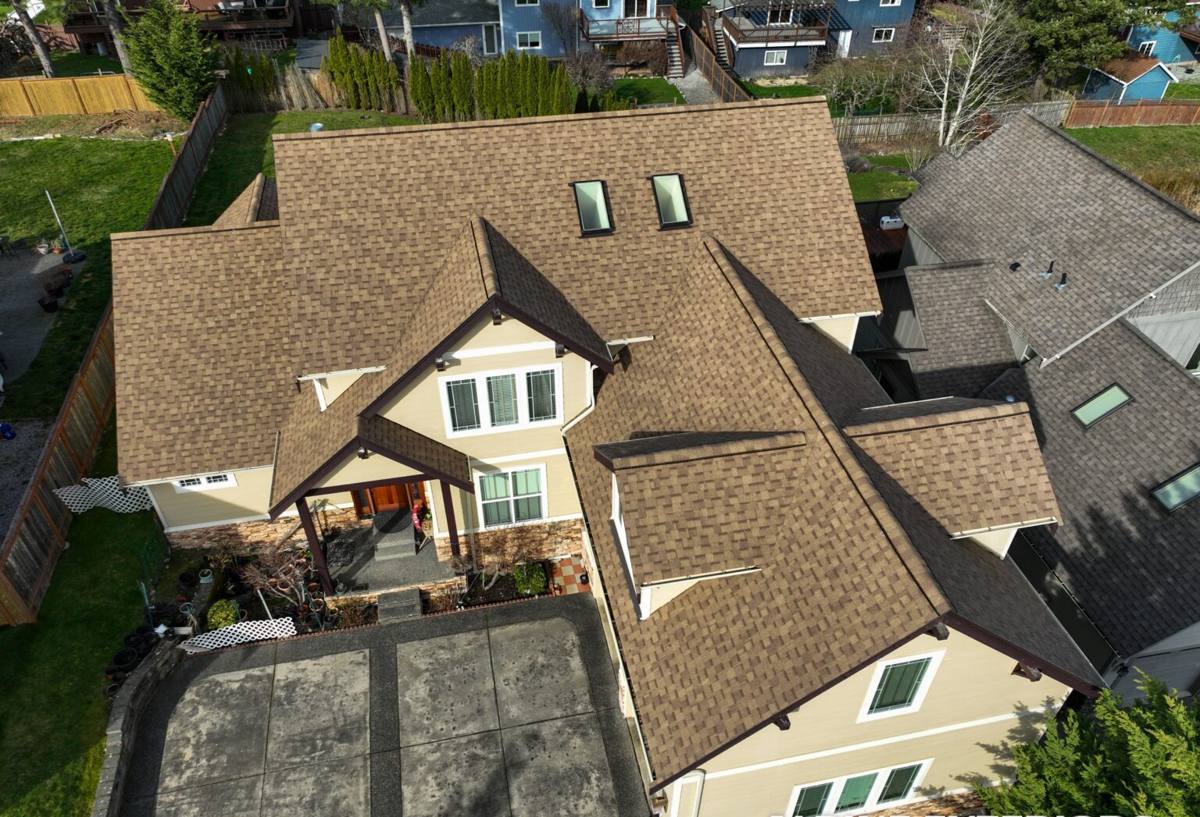
Why Homeowners in This Area Choose Metal
Metal roofing has become a more common choice around Burlington for a few practical reasons that hold up specifically in a wet, salt-influenced valley climate. It sheds moss and standing water far better than a textured shingle surface, since there's no granule bed or shingle tab edge for organic growth to grab onto and hold moisture against. It handles wind-driven rain well when the panel system and flashing are installed correctly, because water runs off a continuous metal surface rather than working its way under lapped shingle edges. And a quality metal roof, properly installed and maintained, typically outlasts an asphalt shingle roof by decades rather than years.
None of that is automatic just because the material is metal. The panel type, the fastening method, the underlayment, and the flashing details all have to be matched to this specific climate and to the shape of the roof they're going onto. A metal roof installed with shortcuts can fail earlier than a well-installed asphalt roof, which is why the installation details in this page matter as much as the material choice itself.
What Local Weather Actually Demands From a Metal Roof
- Corrosion-resistant panel and fastener specification: Salt-laden air accelerates corrosion at cut edges, exposed fasteners, and any coating breach far faster here than it would further inland.
- Underlayment rated for wind-driven rain: Rain pushed sideways and up under panel laps needs a synthetic or self-adhered underlayment behind the metal, not a bare deck or minimal felt layer.
- Concealed or properly gasketed fasteners: Exposed screws with worn rubber washers are one of the most common sources of slow leaks on older metal roofs in wet climates, and washer failure happens faster with repeated freeze-thaw and salt exposure.
- Correctly engineered expansion allowance: Metal panels expand and contract with temperature swings, and Burlington's mix of cold winter mornings and warmer summer roof-surface temperatures means that movement has to be designed for, not fought against.
Standing Seam vs. Exposed-Fastener Panels
Not all metal roofing is the same system, and the two most common types homeowners ask about behave very differently over time in this climate.
Standing seam panels interlock along raised vertical ribs, with fasteners concealed underneath the seam rather than punched through the flat panel face. Because there's no exposed fastener for water to find a way around, and because the panels are engineered to float on clips that allow for thermal expansion, standing seam holds up especially well through repeated wet-dry and warm-cold cycles. It's a more involved, more expensive install, but it's the system we recommend when a roof's budget allows for it, particularly on lower-slope sections or roof planes that collect the most direct wind-driven rain.
Exposed-fastener panels are more affordable and install faster, using screws driven directly through the panel face into the deck or purlins below, typically with a rubber washer sealing each fastener. That washer is the weak point over time — it hardens and cracks with age and UV and salt exposure, and once it fails, water has a direct path through the panel. Exposed-fastener systems can be a reasonable, cost-conscious choice for outbuildings, shops, or simpler roof geometries, but on a primary residence in a climate this wet, we walk homeowners through that trade-off honestly before they commit to it.
What a Correct Metal Roof Install Involves
A metal roof is a system, not just a panel. Skipping or shortcutting any one layer underneath the visible metal is where premature leaks and corrosion tend to start.
Deck Inspection and Prep
Whether we're installing over an existing deck or doing a full tear-off, the deck gets inspected for rot, soft spots, and hidden moisture damage before anything new goes down. Metal roofing is unforgiving of an uneven or compromised substrate — panels won't lie flat and seams won't seal consistently over a deck that isn't sound.
Underlayment and Ice-and-Water Protection
A synthetic or self-adhered underlayment goes down as a secondary water barrier beneath the metal, which matters directly here since wind-driven rain routinely gets forced up under panel laps rather than simply running off. Self-adhered ice-and-water membrane at eaves, valleys, and other high-risk transitions adds another layer of protection exactly where water is most likely to find a way in.
Fastening and Clip Systems
On standing seam, concealed clips allow the panel to expand and contract with temperature changes without tearing loose or buckling. On exposed-fastener systems, fastener spacing, torque, and washer quality all have to follow manufacturer specification rather than a faster shortcut pattern, since over- or under-driven screws are a common cause of early washer failure.
Flashing at Valleys, Chimneys, and Walls
Most leaks on a metal roof don't start in the open panel field — they start at flashing. Valleys, chimney and skylight penetrations, and wall-to-roof transitions all need flashing that's properly lapped, integrated with the underlayment, and detailed for metal-specific movement, not caulked over after the fact as a patch.
Expansion Allowance
Metal panels move more with temperature swings than asphalt shingles do, and a correct install accounts for that movement at every seam, fastener, and penetration. Panels fastened too rigidly, without allowance for expansion, are prone to oil-canning, seam distortion, or fastener pull-through over time as the metal expands and contracts through the seasons.
Panel and Coating Options Compared
| System | Typical Lifespan | Fit for Burlington Conditions |
|---|---|---|
| Exposed-Fastener Steel Panel | 20-30 years | Lower upfront cost; washer seals are the weak point in a wet, salt-influenced climate and need periodic inspection |
| Standing Seam Steel or Aluminum | 40-60 years | Concealed fasteners and floating clips handle expansion and wind-driven rain well; the strongest fit for most primary roofs here |
| Aluminum (vs. Steel Substrate) | 40-60+ years | Naturally corrosion-resistant, a strong option on lots closer to the bay or with heavier salt exposure |
| Galvalume or Painted Steel Coatings | Coating-dependent | A quality baked-on paint or PVDF coating resists chalking and fade far longer than uncoated or lower-grade finishes in sustained damp conditions |
For most Burlington homes, standing seam in steel or aluminum, with a quality factory-applied coating, offers the best balance of upfront cost and long-term performance given the local wind exposure, salt air, and moss season. Aluminum is worth the extra consideration on lots with the most direct exposure to salt-laden air off the bay, since it doesn't rely on a coating alone to resist corrosion the way painted steel does.
Cost Factors Worth Understanding
Two metal roofing bids for the same house can land far apart, and the gap is almost always real differences in scope and system, not one contractor simply padding the number. Understanding what actually drives cost makes it much easier to compare estimates that look nothing alike on paper.
| Factor | What It Affects |
|---|---|
| Panel system (exposed-fastener vs. standing seam) | Material cost, install labor, and long-term maintenance needs |
| Substrate (steel, aluminum, or specialty metal) | Corrosion resistance and upfront material cost |
| Coating grade | How long the finish resists fading, chalking, and coastal salt exposure |
| Tear-off vs. install over existing deck | Whether hidden deck damage gets found and repaired before panels go down |
| Roof pitch, complexity, and penetrations | Labor time, flashing scope, and staging or access needs |
| Underlayment grade | How well the roof resists wind-driven rain getting under panel laps |
A written estimate that breaks these components out separately tells you far more than a single lump-sum number. It's worth asking any contractor to walk you through exactly what panel system, coating, and underlayment are included before comparing two prices side by side.
How Our Process Works
We keep the process straightforward because a roof this size on your home deserves clear communication at every stage, not surprises after the fact.
- In-person inspection: We walk the roof and attic ourselves rather than estimating from a photo, and document the existing deck, flashing, and ventilation conditions.
- Written estimate: You get a clear, itemized bid covering panel system, coating, underlayment, flashing, and cleanup — not a single vague line item.
- Panel and color selection: We walk through panel profile, substrate, and coating options against your budget and the specific exposure your roof sees.
- Scheduling around weather: We build reasonable flexibility into the timeline, since wet-season delays are a normal part of working in this region, not an excuse we reach for later.
- Tear-off or prep, and deck repair: Any deck damage we find gets addressed before a single panel goes down.
- Underlayment, flashing, and panel installation: Each layer goes on to manufacturer specification, with concealed-fastener or gasketed screw detailing and expansion allowance built in from the start.
- Final walkthrough and cleanup: We review the finished roof with you in person and do a full site and metal-shaving sweep before we consider the job done.
Why Hiring a Crew That Already Works in Burlington Matters
Metal roofing rewards installers who've done it repeatedly in the exact conditions your roof will face. A crew that regularly works roofs in and around Burlington has already seen how salt air corrodes underspecified fasteners and coatings, how wind-driven rain finds its way through poorly lapped panel seams, and which roof orientations hold moss longest through the wet months. That's earned, practical knowledge, and it shows up in small decisions throughout a job — decisions a crew unfamiliar with this specific stretch of Skagit County might not think to make at all.
It also matters after the job wraps up. A workmanship warranty is only as good as the company standing behind it years later, and a contractor with an established, ongoing presence in the area is one you can actually reach if a question about a seam or a fastener comes up down the road, rather than a name that's moved on to a different region.
A Practical Checklist Before You Choose a Metal Roofing Contractor
- Do they specify panel system, substrate, and coating grade in writing, not just "metal roof"?
- Is expansion allowance and clip or fastener detailing explained clearly for the specific panel system?
- Is flashing work at valleys, chimneys, and walls explicitly written into the bid?
- Do they carry current WA contractor licensing, liability insurance, and workers' compensation?
- Can they point to recent, real metal roofing work in or near Burlington?
- Does the bid clearly separate manufacturer material warranty from the contractor's own workmanship warranty?
Signs Your Burlington Metal Roof May Need Attention
Metal roofs give warning signs well before a leak actually shows up inside the house, and catching those signs early is often the difference between a minor repair and a much larger one.
- Rust streaking or visible corrosion starting at cut edges, fasteners, or panel seams
- Cracked, hardened, or missing rubber washers on exposed-fastener panels
- Oil-canning or visible panel distortion, which can point to inadequate expansion allowance
- Moss or organic buildup collecting in valleys or along shaded panel laps
- Loose or lifting panels at eaves or ridge caps after a windstorm
- Water staining on interior ceilings or in the attic, particularly near valleys or penetrations
If any of this sounds familiar, it's worth having the roof looked at before the next stretch of heavy weather rather than waiting for a leak to force the decision.
Maintaining a Metal Roof Once It's Installed
A correctly installed metal roof needs far less upkeep than an asphalt shingle roof, but "far less" isn't "none." Keeping gutters and valleys clear ahead of the wet season prevents debris and standing water from sitting against panel seams. A periodic visual check of exposed fasteners and washers, where applicable, catches early wear before it becomes a leak. And after any major windstorm, a quick look for lifted panels or ridge cap movement is worth the few minutes it takes. A contractor who installed the roof correctly should be able to tell you exactly what to watch for on your specific system.
If you're weighing a metal roof for your Burlington home, we're happy to take a look and give you a straight assessment of what your roof actually needs — no pressure, no generic sales pitch. Use the form below to request a free estimate and we'll walk the property with you and talk through what we see.