 Chuckanut
 Bellingham Sits Right Where the Weather Gets Serious About Wood
Ask anyone who has owned a deck in Bellingham for more than a couple winters and they will tell you it is rarely one big storm that ruins a deck. It is every ordinary week between October and May. Bellingham sits close enough to the water that salt-laden air rides in on the wind, and Whatcom County's marine climate keeps humidity high enough that wood surfaces rarely get a real chance to dry out between rain events. Add driving rain that comes in at an angle off the water, and a moss season that can run half the year or longer, and you have conditions that punish a deck built to a generic, one-size-fits-all spec.
None of that means a deck cannot last for decades here. It means the details that would not matter much in a dry inland climate — fastener coatings, board spacing, ledger flashing, footing depth, drainage under the structure — matter a great deal in Chuckanut and the surrounding Bellingham area. We build and repair decks in this specific climate, not a textbook one, and this page walks through what that actually looks like in practice.
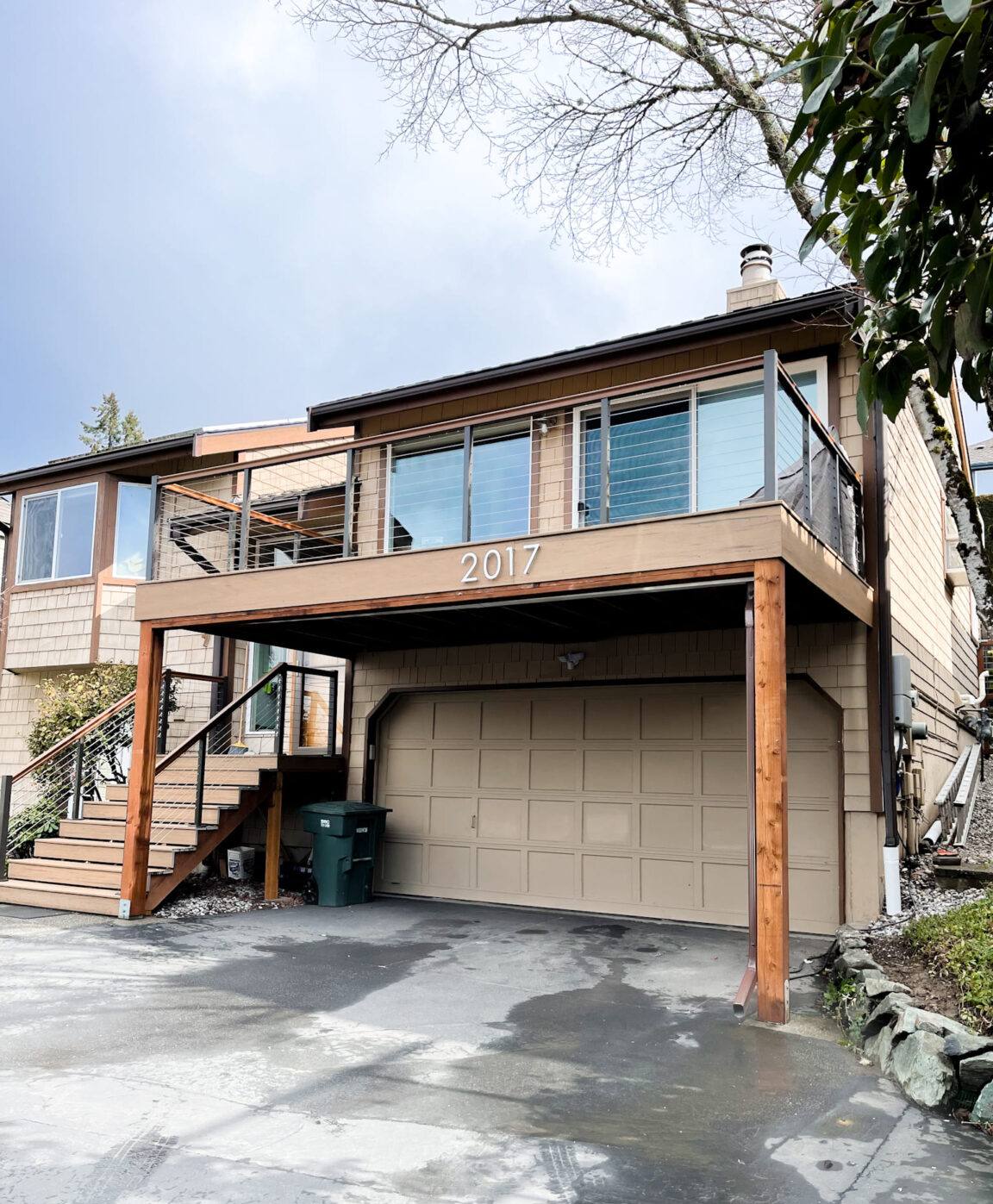
What Salt Air, Rain, and Moss Actually Do to a Deck
Salt Air and Corrosion
Homes near the water in Whatcom County deal with airborne salt that settles on every exposed metal surface — nail heads, screw shanks, joist hangers, railing brackets. Ordinary electro-galvanized fasteners can start showing rust streaks and pitting well before the wood around them has aged. Once a fastener corrodes, it loses holding strength and can stain the decking around it, which is often the first visible sign that something underneath is not built for the environment.
Driving Rain and Standing Water
Rain here does not fall straight down. It gets pushed sideways by wind coming off the water, which means it finds its way into joints, under railing posts, and behind ledger boards that a calmer climate would leave alone. Any spot where water can collect instead of shedding — a low corner, a poorly sloped board, a ledger without proper flashing — becomes a rot starting point.
Moss, Algae, and the Long Wet Season
Western Washington's moss season is long, and a deck is basically a horizontal surface sitting in shade and moisture for months at a time. Moss and algae hold water against the wood surface, make boards slippery, and accelerate surface breakdown. Tight board spacing, poor airflow underneath, and heavy shade all make it worse. A deck built without those factors in mind will need moss treatment every year just to stay safe to walk on.
Building It Right the First Time
Footings and Framing
Everything visible on a deck sits on top of footings and framing nobody sees, and that is where corners get cut on cheap jobs. Footings need to go below the frost line and bear on undisturbed or properly compacted soil — in low, damp yards common around Bellingham, that sometimes means going deeper or adding drainage gravel so the footing is not sitting in a pocket of saturated ground all winter. Framing lumber should be rated for ground contact where it is close to grade, and every ledger board attached to the house needs continuous flashing that directs water out and away from the wall, not down into it.
Decking Material Choices
There is no universally "correct" decking material — there is a correct material for a given budget, look, and maintenance appetite. Here is how the common options actually behave in this climate:
| Material | How it handles our climate | Maintenance | Typical lifespan here |
|---|---|---|---|
| Pressure-treated wood | Affordable, but absorbs moisture readily; needs good airflow underneath to avoid cupping and rot | Annual cleaning, periodic sealing | 10-15 years with upkeep |
| Cedar | Naturally rot-resistant and handles our humidity better than most softwoods, but still needs protection from standing water | Regular cleaning and refinishing to hold color | 15-20 years with upkeep |
| Capped composite | Cap layer resists moisture absorption and moss staining far better than wood | Occasional washing, no sealing or staining | 25-30+ years |
| PVC decking | Fully synthetic, essentially immune to rot and moisture absorption; performs well in constant damp shade | Occasional washing | 25-30+ years |
We do not push one material on every homeowner. A cedar deck that gets cleaned and refinished on schedule can look great for years; a composite or PVC deck is the better call for a shaded, damp spot where nobody wants to be out there scrubbing moss every spring. The honest trade-off is upfront cost versus long-term maintenance labor, and we will walk through that math for your specific site rather than defaulting to whatever is easiest to install.
Fasteners and Hardware
Given the salt air issue described above, we do not use bargain fasteners on decks in this area. Stainless steel or heavily coated, corrosion-rated fasteners and structural hardware cost more up front but avoid the rust staining and premature loosening that shows up within a few years when cheaper hardware is used near the water.
Our Deck Building Process
- On-site assessment. We look at drainage, sun and shade exposure, soil conditions, and how the deck will tie into the house before recommending anything.
- Design and material selection. We talk through wood versus composite versus PVC honestly, including maintenance expectations, and settle on a layout and railing style that fits the home.
- Permitting. We handle the permit application and coordinate required inspections with the local building department so the job is documented and code-compliant.
- Footings and framing. Footings are set to proper depth, ledger flashing is installed correctly, and framing is spaced and fastened to spec, not just to "looks solid."
- Decking, railing, and finish work. Boards are laid with spacing appropriate to the material and climate, railings are secured per code, and all fasteners and hardware match the corrosion-resistance level of the rest of the build.
- Final walkthrough. We go over care and maintenance for the specific material installed so you know exactly what upkeep it needs, and what it does not.
Permits and Code Around Bellingham and Whatcom County
Most new decks and many significant deck repairs or rebuilds require a permit, and requirements can vary depending on deck height, size, and proximity to property lines. Rather than have a homeowner guess at what applies, we handle the permit application and inspection scheduling as part of the job. Skipping this step is one of the more common shortcuts we see on decks that were built cheaply — it can create problems at resale when a buyer's inspector or the title company asks for permit records that do not exist.
Common Problems We Find on Existing Bellingham-Area Decks
- Ledger boards attached to the house without proper flashing, allowing water to track into the rim joist and wall framing over time
- Undersized or shallow footings that shift slightly with seasonal ground saturation, leading to a deck that feels bouncy or slightly uneven
- Standard fasteners showing rust bleed and loosening, especially on railings and stair stringers exposed to weather
- Tight board spacing on wood decking that traps moisture and accelerates moss growth and surface rot
- Missing or blocked ventilation underneath low decks, keeping framing damp long after rain has stopped
None of these are unusual or embarrassing — they are just what happens when a deck built for a milder or drier climate meets Whatcom County weather year after year. Most are fixable without a full rebuild if they are caught before rot spreads into structural framing.
A Maintenance Routine That Actually Works Here
Whatever material a deck is built from, a little seasonal attention goes a long way in this climate. A practical routine looks like this:
- Sweep debris and standing leaves off the deck regularly through fall, when they hold moisture against the boards
- Wash down the surface at least once a year with a deck-safe cleaner to remove algae and moss before it takes hold
- Check railings, stair connections, and any visible fasteners for rust staining or looseness once a year
- Confirm gaps between boards are clear and not packed with debris, so water can drain through instead of pooling
- For wood decks, reapply sealer or stain on the schedule the product calls for, typically every one to three years
- Walk underneath the deck occasionally to check that ventilation gaps are not blocked by stored items or overgrown vegetation
What a New Deck Typically Costs
Cost depends heavily on size, material, height off the ground, and railing style. As a general guide, before any site-specific factors are considered:
| Cost factor | Why it moves the price |
|---|---|
| Decking material | Pressure-treated wood is the lowest upfront cost; cedar runs higher; capped composite and PVC cost more up front but reduce maintenance labor over the deck's life |
| Height and stairs | A deck significantly above grade needs taller footings, more framing, and code-required stair and railing details, all of which add labor and material |
| Site access and slope | Sloped yards, poor soil, or limited equipment access can add to footing and excavation work |
| Railing style | Basic wood or metal railing costs less than cable or glass-panel systems |
| Permit and inspection | Permit fees and required inspections vary by project scope and are set by the local building department, not by us |
We give a firm, itemized estimate after seeing the site, not a phone-quote guess, because the factors above genuinely change the number from one yard to the next.
Why Hiring a Crew That Already Works Bellingham and Chuckanut Matters
A deck built by a crew that mostly works drier, inland climates will often make reasonable-sounding decisions that simply do not hold up here — standard fasteners instead of corrosion-rated ones, tight board spacing that looks clean on install day but traps moisture all winter, or a ledger detail that is fine somewhere with less driving rain. We work on homes throughout Chuckanut and the greater Bellingham area, so the moss, the salt air, and the rain patterns are not an afterthought — they are the baseline we design around from the first conversation.
Being local also means faster response for the small things: a follow-up question about maintenance, a warranty check, or a look at an existing deck before a problem gets expensive. We are not driving in from out of the area for a one-time job and disappearing.
If you are planning a new deck or want an honest read on the condition of an existing one, we are happy to come take a look. There is a form below for a free, no-pressure estimate — no obligation, just a straight assessment of what your deck needs.