 Chuckanut
 Board & Batten Siding in Happy Valley: What Local Homes Actually Need
Board and batten has become one of the most requested siding styles in Happy Valley, and it's easy to see why. The bold vertical lines look sharp on everything from a modern farmhouse rebuild to a simple ranch that needs a facelift, and the deep shadow lines the battens throw give a home real texture instead of a flat wall. But board and batten is also one of the least forgiving siding styles when it's installed without respecting the climate it's going into. In a community like Happy Valley, tucked into the wetter, shadier terrain near Chuckanut with tree cover that keeps moisture around longer than it does out in the open, the details behind the boards matter as much as the look of them.
This page is specifically about board and batten siding for homes in Happy Valley — what the local weather does to this style if it's built wrong, what a correct installation actually involves, and why we install it in James Hardie fiber cement only.
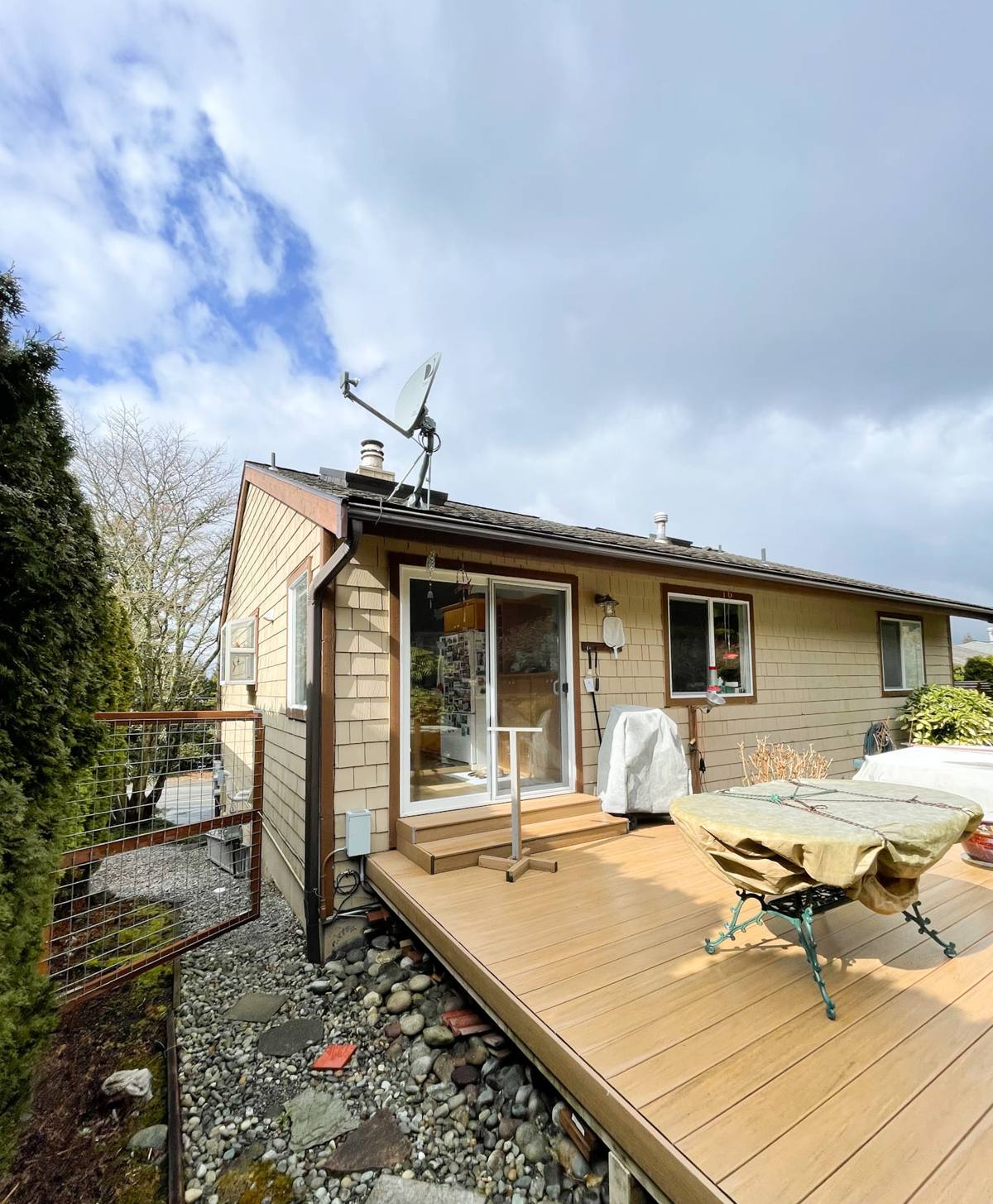
Why Happy Valley's Climate Is Hard on Board & Batten
Board and batten relies on vertical seams and overlapping battens to shed water. That's a good system when it's detailed correctly, but it depends entirely on what's happening behind the boards, not just what you see from the curb. A few things about this area make that detailing non-negotiable:
- Salt air. Proximity to the water brings a fine, constant salt content into the air that accelerates corrosion on fasteners, flashing, and any metal trim. Cheap or exposed fasteners in a board and batten system fail faster here than almost anywhere inland.
- Driving rain. Wind-driven rain doesn't just run down a wall — it gets pushed sideways and upward into seams, laps, and butt joints. Board and batten has more vertical seams than lap siding, which means more opportunities for wind-driven moisture to find a way in if those seams aren't backed properly.
- A long moss season. Shade from tree cover and persistent damp conditions mean moss and algae have more months of the year to establish themselves than in drier, sunnier parts of the state. Moss holds moisture directly against a wall surface, and on the wrong material that moisture doesn't just sit on top — it gets absorbed.
None of this means board and batten is a bad choice for Happy Valley. It means the material and the installation have to be matched to what the neighborhood actually experiences, not to a showroom sample.
What Happens When It's Installed Wrong
The most common failure we see with board and batten in wet coastal-influenced climates isn't dramatic — it's slow. Battens installed tight against the wall with no drainage path trap moisture behind them. Fasteners driven through both the board and the batten without proper spacing crack the substrate over time as wood movement or moisture cycling pushes against a fixed point. Caulk used as the primary defense against water — instead of correct flashing and lapping — fails within a few years and nobody notices until there's already damage underneath. In a moss-prone environment, moisture that's already trapped behind poorly vented battens gives organic growth an even easier foothold.
Why We Only Install James Hardie for Board & Batten
Board and batten in wood or engineered wood products asks a lot of the material — it has more exposed vertical edges, more seams, and more surface area catching wind-driven rain than a standard lap profile. That's exactly the profile where moisture-sensitive substrates struggle most. James Hardie's fiber cement board and batten systems are engineered specifically for this kind of exposure:
- Non-combustible fiber cement core. It doesn't swell, rot, or feed moss and algae the way organic wood fibers can when they stay damp for long stretches.
- Climate-engineered HZ10 formulation for the Pacific Northwest, built to hold up to sustained moisture exposure rather than the drier, hotter conditions other regions deal with.
- Factory-applied ColorPlus finish that's baked on and warranted against peeling and cracking — critical on board and batten, where every seam and edge is a place field-applied paint tends to fail first.
- Dimensional stability. Hardie board and batten panels and boards don't expand and contract the way wood does, which keeps fastener points, seams, and caulk lines intact for the long haul instead of working loose year after year.
We don't install LP SmartSide, vinyl, Cemplank, Allura, primed spruce, or cedar board and batten. Each has real strengths, but on this profile specifically — with more seams, more vertical water paths, and this area's combination of salt air and prolonged dampness — we've seen the trade-offs land against them often enough that we standardized on Hardie and stopped offering the alternatives.
What a Correct Board & Batten Installation Involves
The visible boards and battens are the last step, not the main event. A board and batten job that's going to hold up in Happy Valley's conditions is built from the wall out:
1. Water-Resistive Barrier and Drainage Plane
Every board and batten installation we do starts with a continuous weather-resistive barrier, properly lapped shingle-style so water is directed down and out, never behind the barrier.
2. A Rain Screen Gap
Because board and batten has more seams than lap siding, giving water a place to drain and air a way to circulate behind the boards is essential. A furring strip or engineered rain screen product creates that gap, which is one of the single biggest differences between board and batten that lasts and board and batten that traps moisture.
3. Flashing at Every Transition
Windows, doors, roof-to-wall intersections, and any horizontal trim need metal or self-adhered flashing integrated into the water-resistive barrier — not caulk bridging a gap after the fact.
4. Correct Fastening
Battens are fastened to align with the framing or furring underneath, using corrosion-resistant fasteners driven at the manufacturer's specified pattern — important in a salt-air environment where the wrong fastener corrodes and stains the face of the siding within a few seasons.
5. Proper Clearance
Bottom edges are held clear of grade, decks, roofs, and hardscaping per Hardie's published clearances, so the board and batten never sits in standing water or gets trapped in a spot that stays damp longer than it should.
6. Sealant as a Backup, Not a Primary Seal
Caulk gets used where the manufacturer specifies it, but it's the last layer of defense — never the only thing standing between a seam and the weather.
Our Process for a Happy Valley Board & Batten Project
- On-site assessment. We look at sun exposure, tree cover, drainage around the foundation, and the current wall assembly before we ever talk product or price.
- Substrate check. If there's existing damage from moisture or moss behind old siding, we identify and address it before anything new goes on — covering a wet wall with new siding just hides the problem.
- Detailed install plan. Rain screen approach, flashing details, and batten layout get planned around your home's specific exposure, not a one-size-fits-all template.
- Installation to manufacturer spec. Fastening, clearances, and flashing follow James Hardie's published requirements, which is also what keeps the product warranty valid.
- Final walkthrough. We go over the finished work with you, including basic care and what to watch for over the first few seasons.
Board & Batten Material Comparison
| Factor | James Hardie Fiber Cement | Wood / Primed Spruce | Vinyl | Engineered Wood (LP-type) |
|---|---|---|---|---|
| Moisture absorption | Very low | High — swells and checks | None, but traps moisture behind it | Low if intact, high once coating is compromised |
| Moss/algae resistance on face | Strong with factory finish | Weak — organic material feeds growth | Moderate, but growth still adheres to surface | Moderate |
| Salt air / fastener corrosion risk | Low with correct fasteners | Moderate | Low on the material, but trim and fasteners still at risk | Moderate |
| Finish longevity | Factory ColorPlus, long warranty | Field-applied, repaints needed often | Color molded in, fades over time | Field or factory finish, seam sensitivity |
| Dimensional stability | High | Low — expands, contracts, warps | Moderate, can warp in heat | Moderate |
Choosing a Contractor for Board & Batten in Happy Valley
Board and batten is one of the easiest siding styles to install poorly and have it look fine for the first year or two before problems show up. Ask any contractor bidding the job these questions before you sign anything:
- Do you install a rain screen or drainage gap behind board and batten, or is it face-nailed directly to the barrier?
- What fasteners do you use, and are they rated for coastal or salt-air exposure?
- How do you flash window and door transitions on a board and batten wall specifically?
- What clearance do you hold at the bottom edge above grade, decks, and roof lines?
- Will the installation meet the manufacturer's requirements to keep the product warranty valid?
- Have you worked on homes in this area before, and do you understand what the shade and moisture here do to siding over time?
A contractor who already works in Happy Valley and the surrounding Whatcom County area has seen what happens to siding here five and ten years out — not just what it looks like on installation day. That local track record is worth more than a lower bid from a crew that's never dealt with this area's combination of salt air, driving rain, and moss.
Let's Talk About Your Home
If you're weighing board and batten for a Happy Valley home, we're glad to walk the property with you, look at your sun and moisture exposure, and give you a straight answer on what a correctly built system would involve — no pressure, no inflated claims. Use the form below to request a free estimate.