 Chuckanut
 Roofing Built for Happy Valley's Conditions
Happy Valley sits in a part of Whatcom County where the roof over your head works harder than most homeowners realize. You've got salt-laden air drifting in off the water, long stretches of driving rain through fall and winter, and a moss season that seems to start earlier and run later every year. A roof that would hold up fine in a drier inland climate can start showing real problems here within a decade if it wasn't installed with these specific conditions in mind.
We install new roofs for homes throughout the Happy Valley area, and the approach we take is shaped by what actually fails on roofs in this part of Chuckanut and Whatcom County — not a generic installation checklist written for a different climate. This page walks through what that means in practice: what your roof actually needs to hold up here, what a correct installation involves, and how we handle the job from first look to final walkthrough.
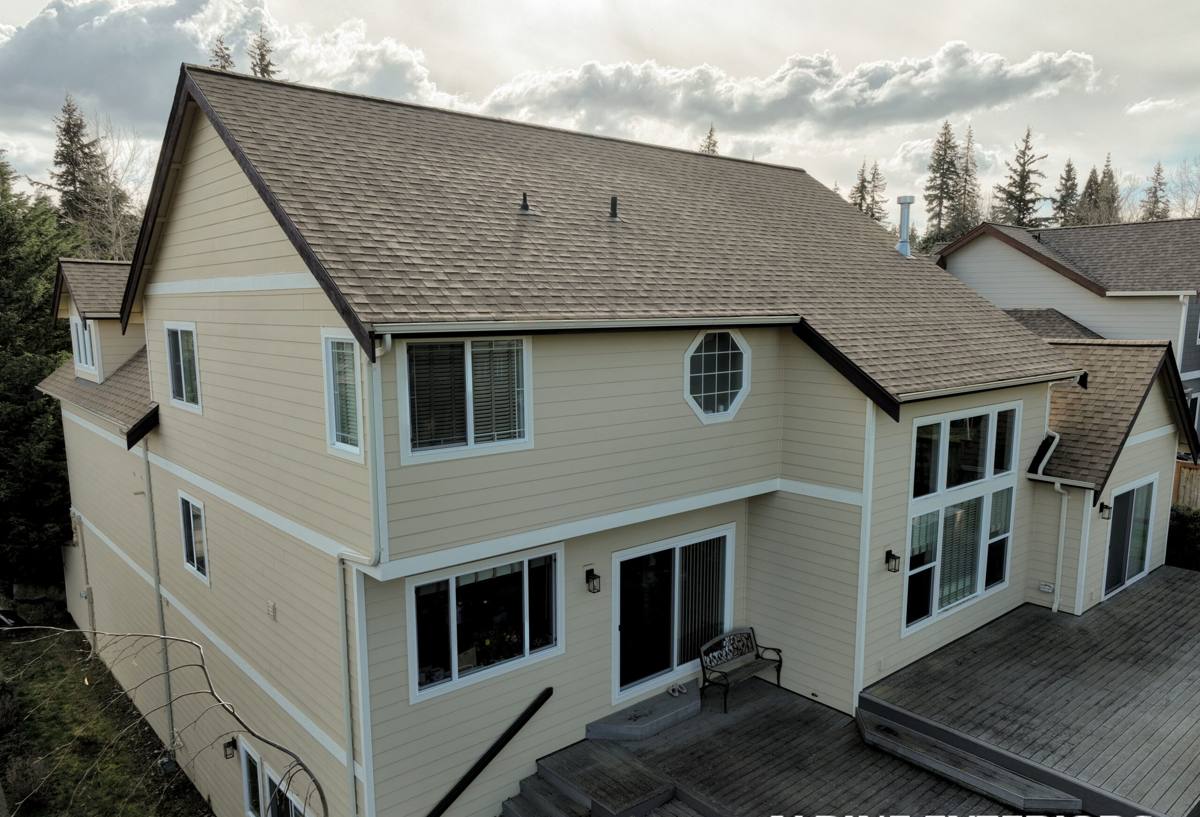
Why Local Climate Changes What "Correct Installation" Means
Salt Air and Metal Fasteners
Homes closer to the water deal with airborne salt that accelerates corrosion on exposed metal — fasteners, flashing, drip edge, and vent components. A roof installed with standard-grade hardware can start showing rust streaks and weakening fastener heads well before the shingles themselves are due for replacement. We spec corrosion-resistant fasteners and flashing for Happy Valley installs as a standard practice, not an upgrade option, because replacing failed flashing on an otherwise-good roof is a needless expense we'd rather help you avoid.
Driving Rain and Wind-Driven Water
Whatcom County doesn't just get a lot of rain — it gets rain pushed sideways by wind off the water, which finds its way into gaps that vertical rain would never reach. That changes how underlayment, flashing laps, and roof-to-wall transitions need to be detailed. Standard nail patterns and minimal underlayment coverage that pass code in a milder climate leave real vulnerabilities here.
Moss, Shade, and Roof Longevity
Happy Valley's tree cover is part of what makes the area attractive to live in, but it also means shaded, damp roof sections that are prime territory for moss and algae growth. Moss isn't just cosmetic — it holds moisture against the roofing material, lifts shingle edges as it grows, and can work its way under the roof surface over time. A new roof installed without moss-resistant material choices or without attention to ventilation and drainage in shaded areas will fight a losing battle against moss from year one.
What a Correct New Roof Installation Actually Involves
A new roof is more than shingles nailed to plywood. Here's what we consider non-negotiable on every install, especially in a climate like this one:
| Component | Why It Matters Here |
|---|---|
| Full tear-off to deck | Lets us inspect the actual roof deck for rot, soft spots, or prior moisture damage that a roof-over would hide |
| Deck repair as needed | Damp climates hide slow leaks; any compromised sheathing gets replaced, not covered up |
| Ice-and-water shield at vulnerable points | Protects eaves, valleys, and penetrations where wind-driven rain and ice concentrate |
| Synthetic underlayment, full coverage | A more reliable water barrier under driving rain conditions than older felt products |
| Corrosion-resistant flashing and fasteners | Salt air accelerates standard hardware failure near the water |
| Balanced intake/exhaust ventilation | Reduces trapped moisture that feeds moss growth and shortens shingle life |
| Moss-resistant shingle or treatment options | Addresses the specific growth pressure from shaded, damp conditions |
Our Process for Happy Valley Roof Installations
1. On-Site Assessment
We start with a walk of the roof and attic, not just a look from the driveway. We check for existing moss and algae staining, soft or spongy deck sections, ventilation adequacy, and how the roof handles water at valleys, chimneys, and wall transitions. Every recommendation we make afterward is based on what we actually find, not a standard package we push on every home.
2. Material Selection Based on Exposure
Not every section of a roof faces the same conditions. A south-facing slope with good sun exposure dries out and sheds moss differently than a north-facing slope shaded by trees. We talk through material and color options with you based on how your specific roof is exposed to sun, wind, and rain, along with your budget and the look you want for the home.
3. Tear-Off and Deck Inspection
We remove the old roofing down to the deck. This is the point where hidden problems — soft plywood, old leak damage, inadequate ventilation baffles — actually get found and fixed, rather than sealed under a new layer of shingles.
4. Underlayment and Flashing Detail Work
This is where the driving-rain resistance of your new roof gets built in. Ice-and-water shield goes down at eaves, valleys, and around every penetration. Flashing is installed with proper lap direction and sealed at transitions where wind-driven water tends to find gaps.
5. Roofing Installation
Shingles or panels go on to manufacturer spec with the corrosion-resistant fasteners appropriate for a coastal-influenced climate. We pay particular attention to nail placement and exposure, since improperly fastened shingles are a common source of early wind and rain damage.
6. Final Walkthrough
We walk the finished roof and the property with you, cover care and maintenance specific to your home's shade and exposure, and answer any questions before we consider the job done.
Signs Your Happy Valley Roof May Need Replacement, Not Repair
- Moss growth returning within months of cleaning, even in the same shaded spots
- Granule loss visible in gutters or at the base of downspouts
- Soft or spongy feeling on the roof deck when walked (a licensed contractor should check this, not a homeowner on a ladder)
- Daylight visible through the roof deck from inside the attic
- Curling, cracking, or lifted shingle edges, especially on shaded slopes
- Rust streaking around flashing, vents, or fasteners
- Interior water stains on ceilings after heavy or wind-driven rain
- A roof older than its expected material lifespan that has not had a full inspection in several years
Some of these are repairable. Others mean the underlying materials or deck have reached the point where a repair is a short-term patch rather than a real fix. Part of our job during an assessment is being straightforward with you about which category your roof falls into.
Cost Factors for a New Roof in This Area
Every roof is different, and we don't think it's honest to quote a number without seeing the home, but there are a handful of factors that consistently move the price up or down on Happy Valley installations:
| Factor | Why It Affects Cost |
|---|---|
| Roof size and pitch | More surface area and steeper pitches mean more material and labor time |
| Deck condition | Rot or soft sheathing found during tear-off adds repair scope |
| Number of valleys, penetrations, and transitions | Each one needs individual flashing and underlayment detail work |
| Material choice | Standard asphalt shingle, architectural shingle, and metal options carry different material and labor costs |
| Ventilation upgrades | Adding or correcting intake/exhaust ventilation is sometimes needed alongside the roof itself |
| Access and tree cover | Heavily treed lots common in Happy Valley can add time for material staging and debris removal |
Why It Matters That We Already Work in Happy Valley
A crew that regularly works this specific area already knows which slopes tend to hold moss, how local wind patterns drive rain into roof transitions, and which material and flashing choices actually hold up here versus which ones look fine on a spec sheet but underperform in this climate. That's not something you get from a contractor who mostly works drier, more sheltered parts of the county and treats every job the same way.
We're also a phone call away if something comes up after the install — a question about maintenance, a concern after a big storm, a warranty question. Working locally means we're not disappearing after the final invoice.
Maintaining Your New Roof in a Moss-Prone, Salt-Air Climate
- Keep overhanging branches trimmed back to reduce shade and debris buildup on the roof surface
- Clear gutters and downspouts at least twice a year so water isn't backing up under roof edges
- Have moss and algae treated promptly rather than left to spread across a shaded slope
- Schedule a roof inspection after any major windstorm, especially one with heavy rain
- Watch for early granule loss or rust streaking as a sign to call for an inspection before small issues become leaks
A well-installed roof still needs basic upkeep in this climate. The good news is that upkeep is inexpensive and quick compared to dealing with the water damage that comes from ignoring early warning signs.
Get a Straightforward Estimate for Your Happy Valley Home
If your roof is showing its age, dealing with persistent moss, or you're simply planning ahead, we're happy to come take a look and give you an honest assessment of where things stand. There's no pressure and no obligation — just a clear picture of your options and what a correct installation would involve for your specific home. Use the form below to request your free estimate.