 Chuckanut
 Building Decks for Larrabee's Stretch of Chuckanut Country
The homes along the Larrabee side of Chuckanut Drive sit in one of the more demanding spots in Whatcom County to build outdoor structures. You've got sandstone bluffs, thick stands of Douglas fir and madrona, steep lots that drop toward Samish Bay and Chuckanut Bay, and a coastline close enough that salt-laden air reaches decks well up the hillside. Add in a Pacific Northwest rain season that runs long and a tree canopy that keeps a lot of surfaces shaded and damp for most of the year, and you end up with conditions that punish an ordinary deck build. A deck that would hold up fine in a dry, open subdivision inland can start showing rot, rust, and moss within a couple of seasons out here.
This page is about one job, done right, for this one area: custom deck construction for Larrabee-area homes near Larrabee State Park and the Chuckanut corridor. Not a general decking overview — the specific choices that matter when you're building on this terrain, in this climate, for the long haul.
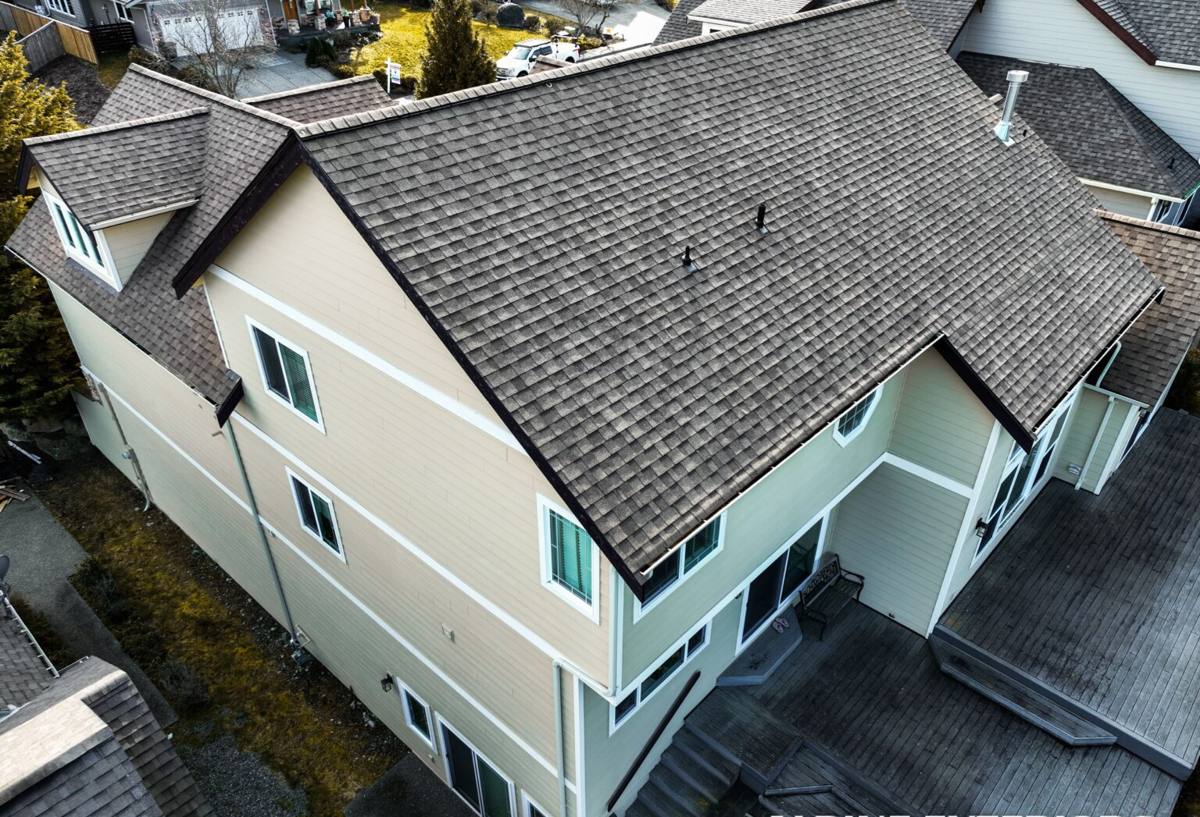
What Larrabee's Site Conditions Ask of a Deck
Every deck we build here has to answer to the same three things: salt air, shade-driven moisture, and slope. Ignore any one of them and the deck ages faster than it should.
Salt Air and Metal Fasteners
Homes with a view toward Samish Bay or Bellingham Bay get a steady drift of salt air, and that's hard on hardware. Standard galvanized fasteners and connectors can start corroding faster than you'd expect this close to the water, and once a fastener starts rusting, it weakens the connection long before the wood around it shows any obvious damage. We spec stainless steel or high-grade coated fasteners and structural connectors for anything within reach of that salt air, and we pay attention to which metals are touching which — mixing incompatible metals speeds up corrosion on both.
Shade, Moss, and Standing Water
A lot of Larrabee lots are shaded most of the day by evergreen canopy, which is part of what makes the area beautiful and also exactly why moss and algae take hold on deck surfaces so quickly. Moss holds moisture against the decking, and moisture held against wood or even composite boards long enough will eventually cause problems — soft spots in wood, staining, and a surface that gets slick and dangerous underfoot. Framing that's built without enough airflow underneath, or a deck surface with no slope to shed water, makes the moss problem worse and speeds up wear on everything beneath it.
Slope and Elevated Framing
Because so many lots here step down toward the water, a lot of Larrabee decks are elevated, cantilevered, or built on a series of stepped footings rather than a flat, at-grade platform. That means more engineering attention on footings, post spacing, and lateral bracing than a typical ground-level deck needs, and it means the crew building it has to be comfortable working on a slope without cutting corners on those footings just because they're harder to dig and pour.
Choosing Decking Material for This Microclimate
There's no single "best" decking material — there's a best material for this site, this budget, and this owner's tolerance for maintenance. In a climate this wet and shaded, the honest trade-offs matter more than they would somewhere drier.
| Material | Typical Lifespan | Moss & Algae Resistance | Salt Air Resistance | Maintenance |
|---|---|---|---|---|
| Pressure-treated lumber | 15–20 years | Low — needs regular cleaning and sealing to resist growth | Fair with stainless fasteners | Highest — annual cleaning, periodic sealing |
| Cedar | 15–20 years | Moderate — natural oils help, but shade still promotes growth | Fair to good | High — regular cleaning and refinishing |
| Capped composite | 25–30 years | Good — capped surface resists staining, needs periodic washing | Good | Low — occasional washing |
| PVC / cellular PVC | 25–30+ years | Very good — non-organic surface, moss doesn't take hold as easily | Very good | Lowest — occasional washing |
Real cedar and pressure-treated lumber still make sense for owners who want a natural look and are willing to keep up with cleaning and sealing on a set schedule — and for railings, stairs, and structural framing, quality lumber remains a standard, cost-effective choice regardless of the surface decking material. Where we push back is on using budget, uncapped wood-composite blends as a low-maintenance surface promise in a shaded, wet spot like this — those products can hold moisture at the surface and grow moss faster than a properly capped composite or PVC board, which defeats the reason most owners choose composite in the first place. We'll walk through the honest maintenance load of each option for your specific lot before you commit to one.
What a Correctly Built Deck Involves in This Climate
The parts of a deck nobody sees are the parts that determine whether it's still solid in fifteen years. Out here, a few of them matter more than usual.
- Footings sized for the actual soil and slope, not a one-size-fits-all spec — Whatcom County's frost depth and soil-bearing requirements still apply even on a hillside lot.
- Ledger board flashing that properly sheds water away from the house rim joist — a poorly flashed ledger is one of the most common causes of hidden rot behind a deck, and it's worse in a climate that gets this much rain.
- Stainless or high-grade coated structural connectors at every joist hanger, post base, and beam connection exposed to salt air.
- Consistent surface slope, typically a slight pitch away from the house, so water doesn't pool and feed moss growth.
- Adequate air gap and ventilation beneath the deck so the framing can dry out between rain events instead of staying damp for weeks at a time.
- Board spacing appropriate to the material — too tight and debris packs in and holds moisture; too wide and it looks sloppy and can be a hazard for small gaps in decking material expansion.
None of this is exotic. It's standard deck-building practice applied with the discipline this climate demands, rather than skipped because the lot is steep or the weather makes the work less convenient for the crew.
Our Process, From First Look to Finished Deck
- Site visit and slope assessment. We walk the lot, look at sun exposure, tree cover, drainage patterns, and how the deck will tie into the existing structure.
- Design and material conversation. We talk through layout, railing style, and decking material honestly — including what each option will actually require from you in upkeep.
- Permitting. Deck projects in Whatcom County typically require a building permit, and elevated or engineered decks may need additional review. We handle that process rather than leaving it to you.
- Footings and framing. This is where slope, soil, and fastener choices covered above get built in correctly, before any decking goes down.
- Decking, railing, and finish work. Installed to the material manufacturer's spacing and fastening specs, with attention to drainage and airflow underneath.
- Final walkthrough. We go over care and maintenance specific to your material and site, so you know what to expect from year one onward.
Keeping a Chuckanut-Area Deck Healthy Year After Year
Even a well-built deck needs some seasonal attention in a climate this wet and shaded. The schedule below is a general guide — how often you need each step depends on how much shade and tree cover your specific lot gets.
- Sweep debris — needles, leaves, seed pods — off the deck regularly through fall so it doesn't trap moisture against the boards.
- Wash the deck surface at least once or twice a year to remove early moss and algae growth before it gets established.
- Check and clear gaps between boards where debris and moss like to collect.
- Inspect fasteners and connectors periodically for early rust, especially on decks closest to the water.
- Confirm gutters and downspouts near the deck are directing water away, not onto the deck surface or framing below.
- For wood decks, plan on resealing on the schedule recommended for your specific lumber — shaded, damp decks typically need it more often than the manufacturer's baseline interval.
Why a Crew That Already Works Larrabee Matters
A deck built by a crew that hasn't worked this stretch of Chuckanut Drive before tends to make the same predictable mistakes: standard fasteners that weren't rated for the salt air, framing that doesn't account for how much shade the site actually gets, or a permitting process that stalls because the crew wasn't ready for what Whatcom County's slope and setback requirements ask for on a hillside lot. None of that is intentional — it's just what happens when a build is treated like it's happening anywhere else.
We build here regularly, which means we already know the questions to ask about your specific lot's sun exposure, soil, and slope before we ever price the job, and we're not guessing at what materials and fasteners actually hold up on this side of the county. That's the difference between a deck that looks good for the first year and one that's still solid a decade or two in.
Get an Honest Look at Your Project
If you're planning a new deck or replacing one that hasn't held up to the moss and moisture out here, we're happy to walk the site with you and give you a straight read on what it'll take. Use the form below to request a free, no-pressure estimate.