 Chuckanut
 Roofing Built for the Skagit Valley, Not a Catalog Photo
Sedro-Woolley sits at the edge of the Skagit Valley, where the marine air coming off the Sound meets the foothills of the Cascades. That combination means long, wet winters, a slow-drying tree canopy, and a moss season that can run eight months or more on a shaded roof. A roof that looks fine going on in July can be growing moss mats by the following spring if it wasn't built for this specific climate. Roofing here isn't just about laying shingles in straight lines — it's about managing water and moisture the whole way through the system, not just at the surface.
We're based nearby in Chuckanut and have done roof work throughout Whatcom and Skagit counties, so we've seen how the same shingle, installed two different ways, can perform completely differently after five Pacific Northwest winters. This page covers what a correct new roof installation actually involves for a Sedro-Woolley home, and why the details matter more than the brand name on the shingle wrapper.
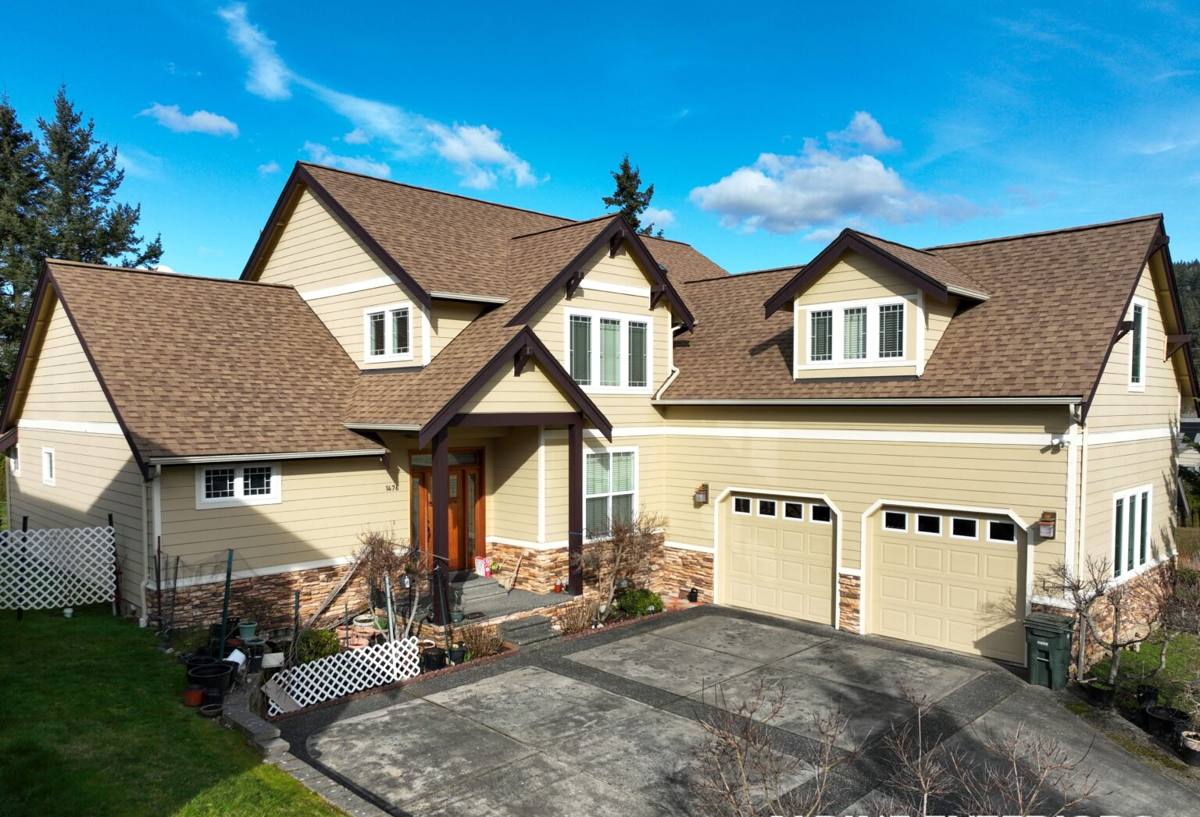
What This Climate Actually Does to a Roof
Sedro-Woolley is far enough inland that salt air isn't the main concern here the way it is on our coastal jobs closer to the water — but the region still shares the same driving rain and long wet season that define roofing failures across Whatcom and Skagit counties. A few things are consistent on almost every Sedro-Woolley roof we've evaluated:
- Moss and algae growth on north-facing slopes and anywhere tree cover blocks afternoon sun
- Sustained rain saturation rather than short, heavy downpours — water sits on the roof surface and in valleys longer than it would in a drier climate
- Poor attic ventilation in older homes, which traps moisture underneath the roof deck and shortens the life of the shingles from below
- Debris buildup from surrounding fir and cedar trees, which holds moisture against the roof surface even after rain stops
None of these are dramatic, one-time events. They're slow, cumulative pressure — which is exactly why a roof that's "close enough" on installation day tends to fail early, while a properly detailed roof will outlast its rated lifespan.
The Parts of a Roof Nobody Sees (But That Determine How Long It Lasts)
Underlayment and Ice-and-Water Barrier
The shingles are the visible layer, but the underlayment underneath is what actually keeps water out if wind-driven rain gets under a shingle tab — which it will, eventually, in this climate. We use synthetic underlayment across the full roof and self-adhering ice-and-water shield at the eaves, valleys, and any roof-to-wall transitions, since these are the spots where standing water and wind-driven rain cause the most damage over time.
Flashing
Flashing around chimneys, skylights, vent pipes, and wall intersections is one of the most common places we find leaks on older Sedro-Woolley roofs — usually because it was reused during a prior re-roof instead of replaced, or sealed with caulk instead of properly integrated with the roofing layers. New flashing gets installed with every roof replacement we do, not patched over.
Ventilation
A roof deck that can't breathe traps moisture from the living space below, which condenses against the underside of the roof and rots the deck from the inside — often with no visible sign from the exterior until the damage is advanced. Balanced intake (at the eaves) and exhaust (at the ridge) ventilation is part of a correct installation, not an upsell.
Roof Deck Condition
Before any new roofing goes down, the deck itself gets inspected. Soft spots, delamination, or water-stained sheathing get replaced — laying new shingles over a compromised deck just hides the problem for a few more years before it becomes a bigger repair.
Choosing a Roofing Material for Sedro-Woolley Weather
There's no single "best" roofing material — the right choice depends on the roof's slope, sun exposure, tree cover, and your budget and timeline. Here's how the common options actually perform under Skagit Valley conditions:
| Material | How it handles moss & moisture | Typical lifespan here | Trade-offs |
|---|---|---|---|
| Architectural asphalt shingle | Good with proper ventilation and zinc/copper strips at the ridge to slow moss regrowth | 25–30 years | Most economical; requires periodic moss treatment on shaded slopes |
| 3-tab asphalt shingle | More prone to moss holding moisture against the tab due to flatter profile | 15–20 years | Lowest upfront cost, shortest lifespan in this climate |
| Standing seam metal | Excellent — smooth surface sheds water and resists moss anchoring | 40–50+ years | Higher upfront cost; requires an installer experienced with metal detailing |
| Cedar shake | High maintenance burden in a wet climate — needs regular treatment to resist rot and moss | Varies widely with upkeep | We're honest with clients that the maintenance schedule here is demanding; it's not the product for a low-upkeep roof |
For most Sedro-Woolley homes, a mid-to-upper-tier architectural asphalt shingle strikes the right balance of cost, appearance, and performance against moss and rain. Metal is worth the conversation on steeper roofs with heavy shade, where moss pressure is the most persistent.
Our Installation Process
- On-site inspection — we evaluate the existing roof, deck condition, ventilation, and any problem areas before quoting anything
- Written estimate — material options, scope, and a clear price, with no vague allowances
- Tear-off and deck inspection — old roofing removed down to the deck, damaged sheathing identified and replaced
- Ice-and-water shield and underlayment — installed at all vulnerable points and across the full roof
- Flashing installation — new flashing at every penetration and transition
- Roofing material installation — installed to manufacturer specification, which is also what keeps the material warranty valid
- Ventilation check — intake and exhaust balanced for the attic space
- Cleanup and final walkthrough — magnetic sweep for stray fasteners, debris hauled off, and a walkthrough so you know exactly what was done
Permits and Local Requirements
Roof replacements in Sedro-Woolley typically require a building permit, and inspections are tied to specific stages of the work, not just the finished product. We handle the permit application and coordinate inspections as part of the job — it's not something we hand back to the homeowner to sort out mid-project. Skipping the permit might save a little time up front, but it can create real problems later if you ever sell the home or file an insurance claim on a roof that was never inspected.
Signs Your Roof May Need Replacing, Not Just Repair
Not every roofing issue means a full tear-off. But a few signs usually indicate the roof is past the point where patching makes sense:
- Granule loss heavy enough that you're finding shingle grit in the gutters regularly
- Shingles that are curling, cracking, or missing across multiple areas, not just one spot
- Moss that keeps returning within a season or two of cleaning, especially on north-facing slopes
- Visible sagging anywhere along the roofline
- Water stains on interior ceilings or in the attic that appear during or after heavy rain
- A roof that's at or past its rated lifespan and has multiple worn areas rather than one isolated problem
If you're only seeing one or two of these in a single area, a repair may be the more sensible move — we'll tell you that directly rather than pushing a full replacement you don't need yet.
Why Working With a Crew That Already Knows Sedro-Woolley Matters
A roofing crew that mostly works drier climates or unfamiliar terrain tends to under-detail the things that matter most here — skimping on ice-and-water coverage, reusing old flashing, or skipping ventilation upgrades because "the last roof didn't have it." We work throughout Whatcom and Skagit counties and see the same rain patterns, tree cover, and moss pressure on job after job, which means we're not guessing at how a roof will hold up on your specific slope and exposure — we've already seen how similar roofs in the area perform five and ten years out.
It also means faster response if something needs attention after the job is done. A roofing company several counties away isn't going to prioritize a callback the way a local crew will.
What a New Roof Typically Involves, Cost-Wise
Pricing depends on roof size, pitch, current layer count, deck condition, and material choice, so we don't publish blanket numbers — a roof with a straightforward tear-off and standard asphalt shingle will run well below a steep, cut-up roofline with multiple layers to remove or a switch to standing seam metal. What we can tell you honestly: the biggest cost swings usually come from deck repair needs discovered during tear-off and the material tier you choose, not from labor differences between contractors. We'll walk you through exactly what's driving your number before any work starts, so there are no surprises once the tear-off begins.
If your roof is showing its age or you're planning ahead for a replacement, we're happy to take a look and give you a straightforward, no-pressure estimate. There's no cost or obligation to have us come out — just an honest read on where your roof actually stands and what your options are. Use the form below to get in touch.