 Chuckanut
 Siding That Actually Has to Work in Silver Beach
Silver Beach sits close enough to the water and deep enough in the tree canopy that its homes take a different kind of beating than siding fifteen miles inland. Salt-tinged air off the bay, driving rain that comes in sideways more often than straight down, and a moss season that can run eight or nine months out of the year — that's the combination any exterior product on a Silver Beach home has to survive, year after year, without babysitting from the homeowner. Not every siding material is built for that. This page is about what James Hardie fiber cement siding does specifically for homes in this part of Chuckanut, what a correct installation looks like here, and how we approach the job when we're on your street.
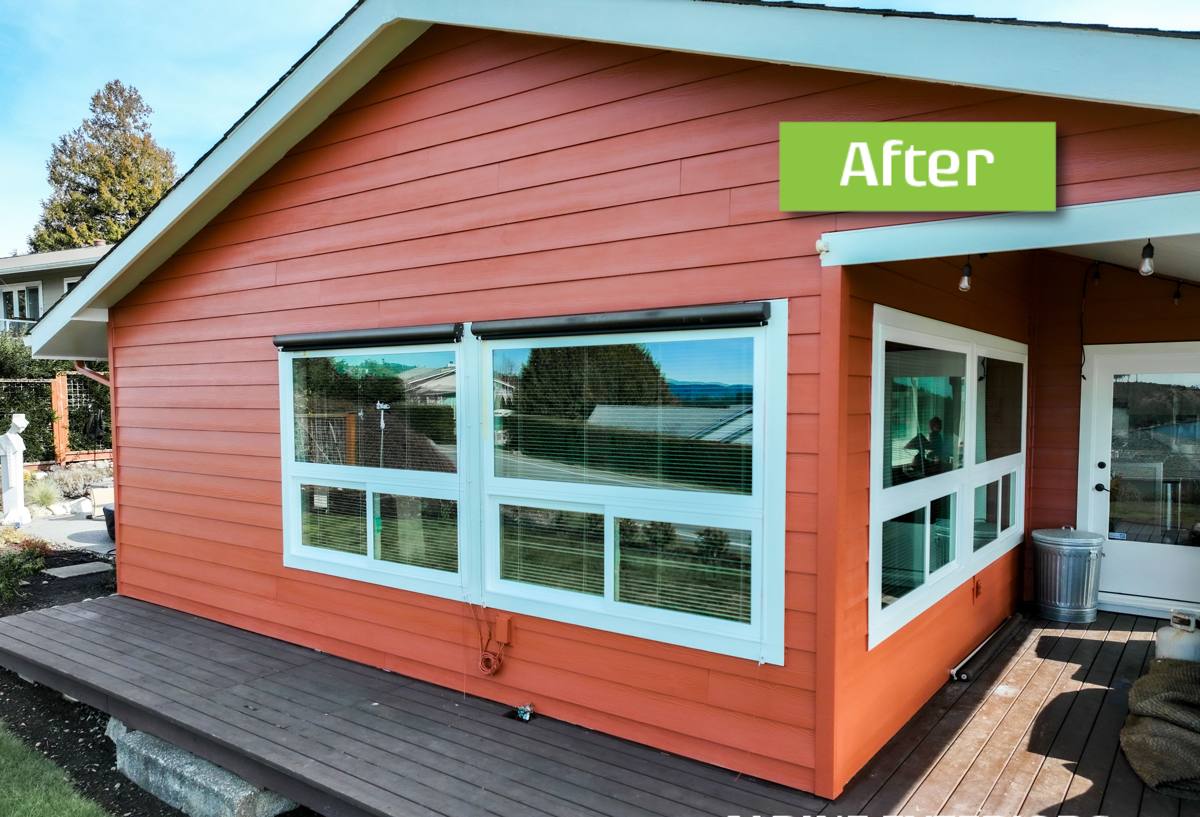
What Salt Air, Rain, and Moss Actually Do to a House
Each of these three factors wears down siding in its own way, and most siding failures we get called out to inspect are some combination of all three working on a weak point at once.
Salt Air
Airborne salt is corrosive to fasteners, flashing, and any exposed metal trim. On siding materials with metal facing or unprotected edges, it accelerates rust and pitting. Fiber cement itself doesn't corrode, but the fasteners and flashing tying it to the house still need to be rated for the exposure, and the finish on the siding needs to resist salt residue building up and holding moisture against the surface.
Driving Rain
Wind-driven rain off the water doesn't just wet the surface of a wall — it gets pushed sideways and upward into laps, seams, and penetrations that a calm-weather product might never test. This is where water management behind the siding (house wrap, flashing, proper lap orientation) matters as much as the siding material itself. A great product installed with poor water management will still fail.
Moss and Sustained Moisture
Whatcom County's long wet season means north- and west-facing walls, and anything shaded by mature trees, stay damp for extended stretches. Moss and algae take hold on any surface that can't shed water and dry out between rain events. On wood-based products, sustained dampness invites rot at the cellular level. On fiber cement, the concern is different — it's about keeping the factory finish intact so moss has less to grip and the substrate underneath stays sealed.
Why James Hardie Is What We Put on Silver Beach Homes
We install James Hardie fiber cement siding exclusively — not vinyl, not LP SmartSide, not cedar, not primed spruce, not other cement-board brands. That's a deliberate standard, not a lack of options. Fiber cement as a category resists the three stressors above better than wood-based or plastic-based sidings, and Hardie's specific engineering and factory finish are the reason we trust it on homes exposed to this climate.
| Material | Moisture / Rot Resistance | Salt Air Behavior | Moss Resistance | Long-Term Maintenance |
|---|---|---|---|---|
| James Hardie Fiber Cement | Non-organic core, does not rot | Stable; factory finish resists salt residue buildup | Hard, smooth ColorPlus surface sheds growth better than porous materials | Occasional wash; no repainting for years with ColorPlus |
| Vinyl | Doesn't rot, but seams and edges can warp or gap over time | Can become brittle and discolor with UV and salt exposure | Textured/lapped seams can trap moisture and grime | Low, but color fades and panels aren't repairable in sections easily |
| LP SmartSide (engineered wood) | Wood-based; vulnerable if seams, cuts, or fastener holes aren't fully sealed | No inherent salt resistance; relies entirely on coating integrity | Susceptible if coating fails and moisture reaches the wood strand core | Coating maintenance is critical; failure points show up at cut edges |
| Cedar / Primed Wood | Organic material; rot risk is ongoing without diligent upkeep | No resistance; salt accelerates weathering of raw wood | High — organic surface, especially in shade, holds moss readily | Regular repainting/staining and moss treatment required |
The pattern across the table is consistent: the products that struggle here struggle because they depend on a coating or seam integrity holding up perfectly, indefinitely, against exactly the conditions Silver Beach delivers. Fiber cement's non-combustible, non-organic core removes rot from the equation entirely, and Hardie's factory-applied ColorPlus finish is engineered and warrantied specifically against the kind of fading and moisture intrusion this climate causes.
Choosing the Right Hardie Product Line for This Location
James Hardie doesn't make one generic siding — it engineers its HZ5 and HZ10 product lines for different climate zones based on moisture exposure, freeze-thaw cycling, and humidity. Homes in Whatcom County fall into the wetter, marine-influenced zone, which is exactly what the HZ engineering is built to address. For Silver Beach specifically, that means:
- Lap siding for most main wall areas, sized and profiled to match the home's existing character or a planned refresh
- Panel or shingle-style siding where architectural detail calls for it, such as gable accents
- HardieTrim at corners, window and door casings, and fascia — matched material so the whole envelope weathers evenly
- ColorPlus factory finish in a color chosen with this climate's UV and moisture behavior in mind, not just how it looks on a sample chip
The right combination depends on the home's exposure — how much direct wind-driven rain a given wall takes, how much shade and moss risk it has, and what look fits the property. We walk through that during the estimate rather than defaulting to one spec for every house.
What a Correct Installation Actually Involves
Fiber cement siding fails prematurely almost exclusively because of installation mistakes, not because the material itself gave out. In a climate that pushes water at a house from every angle, the details behind the siding matter as much as the boards themselves. A correct install includes:
- Proper weather-resistive barrier (house wrap) installed and lapped correctly before any siding goes up
- Flashing at every window, door, and roof-to-wall intersection, directing water out and away from the wall assembly
- Correct fastener type, spacing, and penetration depth — under-driven or over-driven nails are a leading cause of early failure
- Proper clearance between siding and grade, decks, and roof lines so water doesn't wick up from below
- Caulking only where Hardie's specifications call for it — sealing the wrong joints traps moisture instead of shedding it
- Field-cut edges primed or sealed per Hardie's installation instructions, since a raw cut edge is the fastest path for moisture into the board
- Correct lap exposure and course alignment for wind-driven rain resistance, not just visual consistency
Every one of those steps is spelled out in Hardie's published installation requirements, and following them is also what keeps the manufacturer's warranty valid. A beautiful-looking job that skips flashing details or fastener specs is a job that starts failing behind the surface within a few wet seasons — you just can't see it yet.
How We Approach the Job
Our process on a Silver Beach home generally runs through these stages:
- On-site assessment — we look at wall exposure, existing water damage or rot, trim and flashing condition, and moss/algae patterns to understand what each elevation is dealing with.
- Product and color selection — matching Hardie's line and ColorPlus color to the home's exposure and your preferences, with honest input on what holds up best where.
- Tear-off and substrate check — removing old siding reveals sheathing condition, which sometimes needs repair before new siding goes on. We flag this before it becomes a surprise mid-project.
- Water management install — house wrap and flashing done to spec, since this is the part of the job that determines how the siding performs in ten years, not just how it looks on day one.
- Siding and trim installation — following Hardie's fastening and clearance specifications throughout.
- Final walkthrough — checking seams, caulking, trim lines, and touch-up before we consider the job done.
Color and Finish Choices That Hold Up Here
ColorPlus finish is baked on in a controlled factory environment rather than field-applied, which means better UV and moisture resistance than a job-site paint job, and it comes with its own finish warranty separate from the substrate warranty. That matters more in a marine climate than it might elsewhere, since field-applied paint has to cure and bond in whatever weather window is available, while ColorPlus arrives already cured. When homeowners ask us about color, we talk through how a given shade performs under this area's grey-sky months and how it reads against moss-prone shade versus open, salt-air-exposed walls — dark colors show dust and pollen differently than light ones, and some tones hide the natural streaking that any exterior surface gets over time better than others.
Maintenance: What Silver Beach Homeowners Actually Need to Do
One of the real advantages of a correctly installed Hardie system in this climate is how little upkeep it demands compared to wood or coated engineered wood products. That said, "low maintenance" isn't "no maintenance." A realistic yearly routine looks like:
| Task | Frequency | Why It Matters Here |
|---|---|---|
| Rinse siding with a garden hose (low pressure) | 1–2x per year | Clears salt residue, pollen, and organic buildup before it can support moss growth |
| Inspect caulk joints and trim | Annually | Wind-driven rain finds any gap that's opened up over the year |
| Trim back vegetation near walls | As needed | Reduces shade and airflow blockage that extends moss season on a wall |
| Check gutters and downspouts | Fall and spring | Overflow running down a wall defeats even well-installed siding |
Notice what's missing from that list: repainting, sanding, and re-caulking entire wall sections. That's the practical payoff of choosing a factory-finished, non-organic siding system for a house that sits in this kind of weather pattern.
Why It Matters That We Already Work This Neighborhood
Installation quality on fiber cement siding isn't uniform across contractors — the manufacturer's requirements are detailed, and cutting corners on flashing or fastening doesn't show up as a problem until a few wet seasons in. A crew that already works Silver Beach and the broader Chuckanut area has seen how specific walls on specific exposures behave here: which elevations take the worst of the driving rain, where moss tends to establish first, and what water management details actually hold up through a full Whatcom County winter. That's knowledge you don't get installing siding in a dry inland climate and assuming it transfers.
We install James Hardie exclusively because, in our experience doing this work in this exact climate, it's the product that holds up to salt air, driving rain, and a long moss season with the least amount of long-term trouble for the homeowner — installed correctly, by people who understand what "correctly" means for a wall on this coastline.
If you're considering new siding for a Silver Beach home, we're happy to walk the property, look at your specific exposures, and put together a free, no-pressure estimate — just fill out the form below.