 Chuckanut
 New-Construction Windows in South Hill: What the Build Site Actually Demands
When a house is framed and the wall cavity is still open, you get one real chance to install windows correctly. On a new build in South Hill, that chance matters more than it does in a lot of places. The lots up here sit close enough to the water and exposed enough to weather that a window opening treated as a generic rectangle — instead of a system that has to shed water for the next 30 years — is how call-backs start. We install new-construction windows for builders and owner-builders in this part of Whatcom County, and the job is as much about sequencing and flashing detail as it is about the window unit itself.
New-construction windows are different from replacement windows in a practical way: they use a nail fin (also called a nailing flange) that attaches directly to the sheathing before siding goes on, rather than fitting inside an existing frame. That means the window becomes part of the building's water-management system, not a patch added later. Get that integration wrong and the mistake gets buried behind siding for years before it shows up as a stain, a soft spot, or a moldy sill.
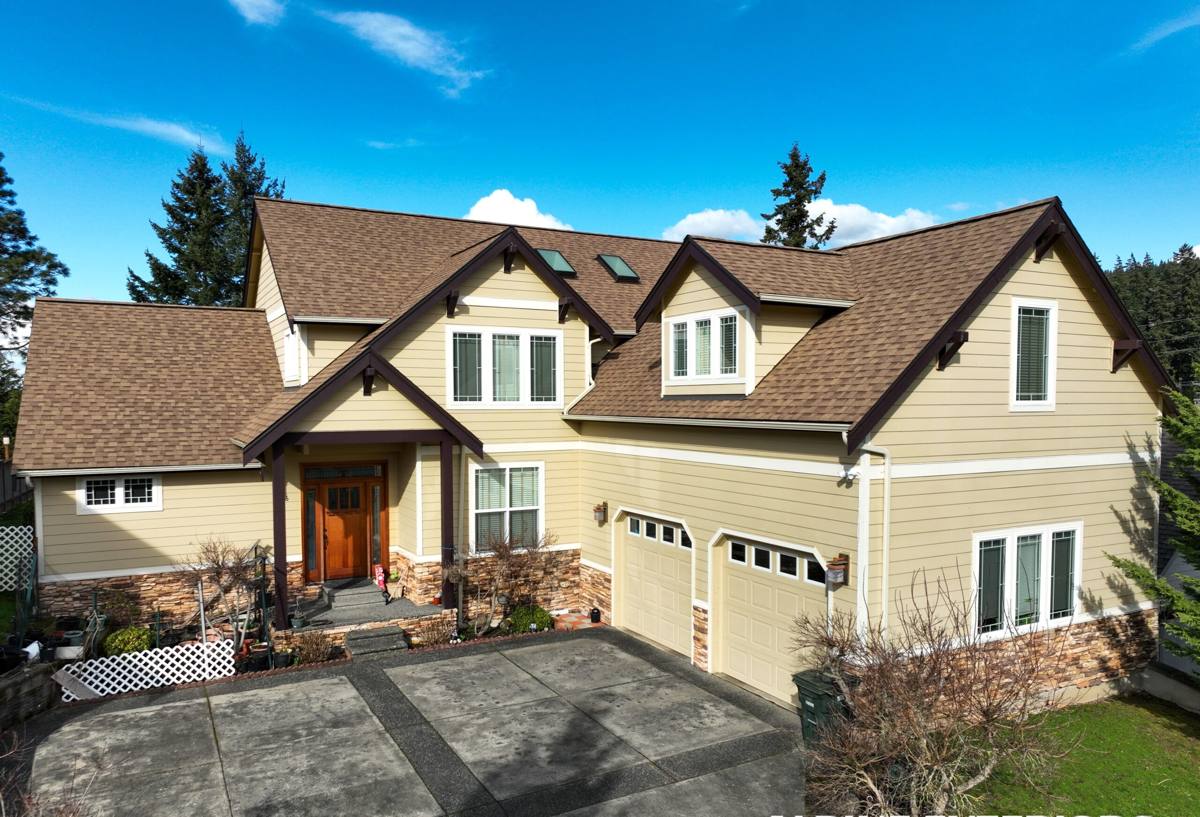
Why Chuckanut's Climate Changes the Window Plan
Chuckanut sits where the Salish Sea, the foothills, and a lot of annual rainfall all meet, and South Hill sites often get the full effect — salt-laden air off the water, wind-driven rain that hits walls sideways rather than falling straight down, and a moss season that runs long and damp for much of the year. None of that is exotic weather, but it does mean a window installation has to assume moisture will find every gap eventually.
Salt Air
Airborne salt accelerates corrosion on hardware, fasteners, and some metal window components. It also breaks down cheaper sealants faster than inland installers typically plan for. We spec fasteners and flashing tape rated for coastal exposure rather than whatever is cheapest at the supply house.
Driving Rain
Wind-driven rain doesn't just land on a window — it gets pushed up and under trim, sills, and laps in the weather barrier if they're installed in the wrong order. Proper new-construction flashing uses a shingle-style, water-shedding sequence (sill pan first, then sides, then head flashing lapped over the sides) specifically to defeat this.
Moss Season
Extended damp periods keep moss, algae, and mildew active on north-facing and shaded elevations for much of the year. Window sills and trim details that trap standing water or restrict drainage become a moss and rot starting point faster than most homeowners expect.
What a Correct New-Construction Window Install Actually Involves
A proper install on a South Hill build follows a specific order, and skipping steps is exactly how water problems get built into a brand-new house.
- Rough opening check. Confirm the opening is square, level, and sized correctly before anything else happens — even a small out-of-square opening stresses the window frame and compromises the seal over time.
- Sill pan flashing. A sloped, sealed sill pan under the window directs any water that gets past the unit back outside instead of into the wall cavity.
- Window set and shim. The unit is set plumb, level, and square, then shimmed at the manufacturer's specified points — not just at the corners.
- Flange integration with the weather-resistive barrier. Side flanges, then the head flange, are integrated with the house wrap or building paper in a shingle-lap sequence so water always drains downward and outward.
- Sealant and backer rod at the interior. Interior air sealing controls condensation and drafts; it's a separate step from the exterior weatherproofing, not a substitute for it.
- Fastening per manufacturer spec. Correct fastener type, spacing, and location — this is also what keeps most window warranties valid.
Every one of those steps gets inspected before siding covers it up. Once trim and siding go on, there's no easy way to check the flashing again, which is why we don't rush this stage even when a build schedule is tight.
Choosing Frame Material and Glazing for This Site
South Hill's mix of salt exposure, rain, and temperature swing narrows down what makes sense long-term. There isn't one universally "best" window — the right call depends on the elevation's exposure, the home's design, and budget.
| Frame Material | Moisture / Salt Resistance | Maintenance | Best Fit |
|---|---|---|---|
| Vinyl | Good; won't corrode or rot | Low — occasional cleaning | Budget-conscious builds, most elevations |
| Fiberglass | Excellent; very stable in wet/salt exposure | Low | Exposed, water-facing elevations; long-term owners |
| Wood-clad (exterior aluminum/composite clad) | Good on the exterior face; interior wood needs protection | Moderate — finish upkeep on interior wood | Traditional interior look with protected exterior |
Whichever frame material a build uses, the glazing package matters just as much. Washington's energy code sets minimum U-factor and Solar Heat Gain Coefficient (SHGC) requirements, and most new builds here land on dual- or triple-pane units with a Low-E coating and argon or krypton gas fill between panes. On south- and west-facing walls that catch more direct sun and wind, we'll talk through SHGC tradeoffs specifically — a coating tuned for solar control performs differently than one tuned for winter heat retention, and the right choice depends on which elevation and how exposed the wall is.
Working With Your Builder: How Our Process Fits the Build Timeline
On new construction, windows are one link in a chain — framers, the weather barrier crew, window installers, and siding all have to hand off cleanly to each other. We coordinate directly with the general contractor or owner-builder on timing so windows go in right after rough framing passes inspection and before the weather barrier gets buttoned up, which keeps the flashing sequence correct instead of retrofitted.
We also flag rough-opening issues before window units arrive on site. Catching a sizing or square problem while it's still just framing lumber is a same-day fix. Catching it after windows are ordered and delivered costs the build real time and money.
Common Mistakes We See on New-Construction Jobs in This Area
- Flashing tape applied out of shingle-lap order, so water gets directed into the wall instead of away from it.
- Sill pans skipped or improperly sloped, leaving no backup drainage path if the primary seal ever fails.
- Fasteners or flashing components not rated for coastal/salt exposure, leading to premature corrosion.
- Window openings sealed with caulk alone instead of a proper flashing system — caulk is a backup layer, not the primary defense.
- Interior and exterior sealing treated as one step, which traps moisture instead of managing it.
Maintenance After Move-In: What South Hill Homeowners Should Expect
A correctly installed window still needs basic upkeep in this climate. Salt air residue and pollen build up on glass and hardware faster here than inland, so an occasional rinse and wipe-down of tracks and hardware helps hardware last. On shaded or north-facing walls, keep an eye on sills and trim for moss or algae growth during the wetter months — it's cosmetic at first, but left unaddressed it holds moisture against the trim longer than it should. Check weep holes (the small drainage openings at the base of the frame) once or twice a year to make sure they're clear of debris, since a blocked weep hole defeats the drainage the whole system was designed around.
Checklist: What to Confirm Before Windows Go In
- Rough openings are square, level, and correctly sized for the ordered units
- Sill pan flashing is specified and on the material list
- Weather-resistive barrier is scheduled to integrate with window flanges in the correct sequence
- Frame material and glazing package match the elevation's sun and wind exposure
- Fasteners and flashing tape are rated for coastal/salt exposure
- Installer will inspect and document flashing before siding covers it
- Manufacturer warranty terms and required installation methods are on hand and being followed
Why a Crew That Already Works South Hill Matters
None of this is exotic knowledge, but it's the kind of detail that's easy to skip when a crew is used to drier, less exposed sites. A crew that regularly works new construction around Chuckanut and greater Whatcom County already knows which elevations on a South Hill lot tend to catch the worst of the driving rain, which sites need extra attention to moss and drainage, and how to sequence flashing so it holds up through a full Pacific Northwest winter — not just look right on install day. That local pattern recognition is what keeps a brand-new house from developing an old house's water problems within a few years.
If you're planning new-construction windows for a build in South Hill or elsewhere around Chuckanut, we're happy to walk the site, talk through frame and glazing options for your specific elevation, and coordinate with your builder's schedule. Reach out for a free, no-pressure estimate using the form below.