 Chuckanut
 Board & Batten in Alger: A Style That Has to Earn Its Keep
Board and batten has a long history in this part of Whatcom County, and it's easy to see why homeowners in Alger keep asking for it. The vertical lines read as barn-modern or classic farmhouse depending on the trim and color choices around it, and it pairs well with the wooded, semi-rural character of the area between Chuckanut Drive and the flats near Alger. But board and batten is not a "pick a look and go" decision here. It's a siding profile with a specific set of installation requirements, and in a stretch of Whatcom County that sees salt-laden air off the Sound, long stretches of driving rain, and a moss season that can run most of the year, getting those requirements right is what separates a batten job that looks good for two years from one that looks good for thirty.
This page is about that one job, done correctly, in this one place: what Alger's climate actually does to vertical siding, what a correct installation involves board by board, and why the crew you hire matters as much as the material you choose.
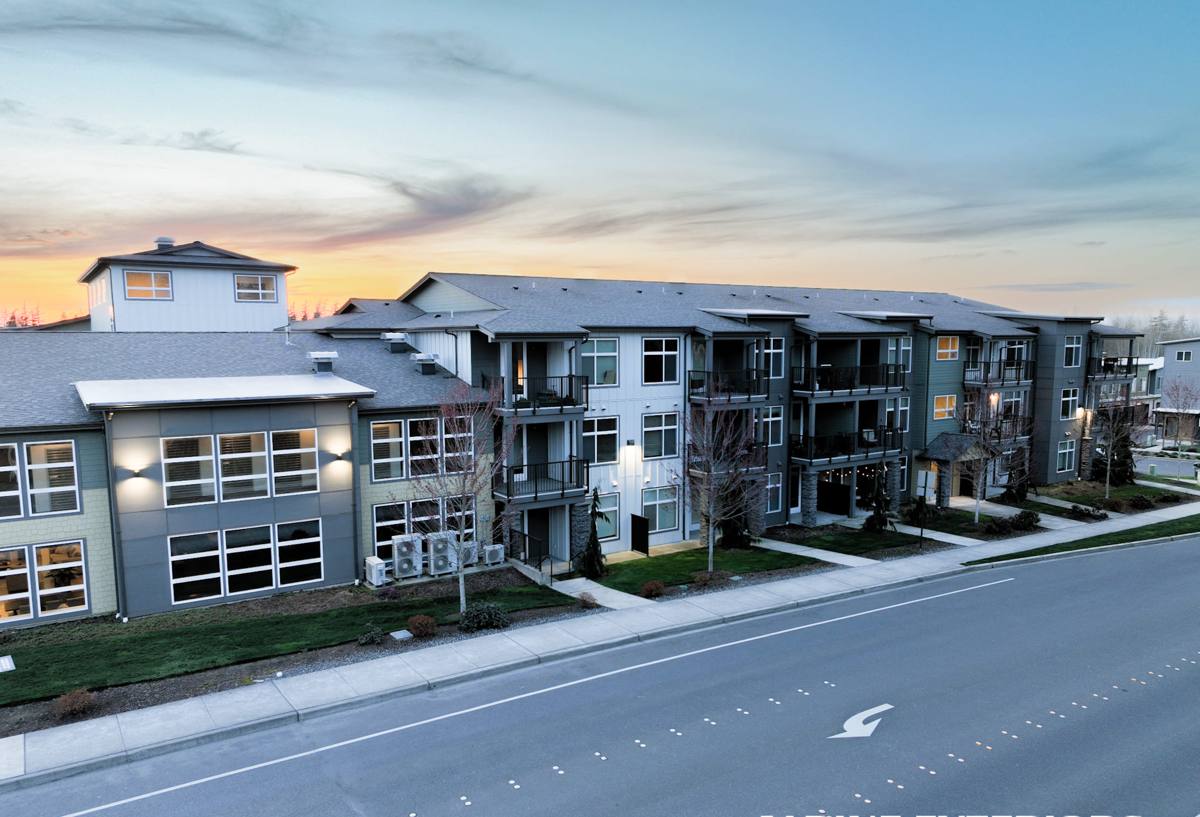
What Alger's Climate Does to Vertical Board & Batten Siding
Board and batten looks simple from the street, but it behaves differently than horizontal lap siding in wet weather, and Alger's climate stresses every one of those differences.
Driving rain and vertical seams
Lap siding is designed so each course sheds water onto the course below it. Board and batten relies instead on the battens covering the vertical seams between panels, which means those seam-to-batten joints are doing the water-shedding work that overlaps do on lap siding. When wind-driven rain comes off the water and pushes rain sideways against a wall — a regular event on this stretch of Chuckanut's coastline — those seams take a direct hit. If the batten spacing, fastening, and the drainage plane behind the panel aren't done correctly, water finds its way behind the siding instead of running off the face of it.
Moss and lichen in a shaded, damp climate
Alger's mix of tree cover and persistent damp means moss and lichen growth on exterior surfaces is close to a given, not a maybe. On siding, this is more than cosmetic. Moss holds moisture against the surface far longer than open air would, and on the wrong material that trapped moisture becomes a slow path to rot, delamination, or paint failure — especially at the horizontal batten strips and trim, which naturally collect more organic debris than open wall sections.
Salt air and fastener corrosion
Being close enough to Samish Bay and the broader Puget Sound corridor means airborne salt is a real factor for exterior metal, not a coastal-town cliché. Fasteners, flashing, and any exposed hardware need to be rated for it. A board and batten wall has more exposed fastening than most siding profiles — battens are typically face-nailed or blind-nailed at regular intervals along their whole length — so getting the fastener spec right matters more here than it would on a plainer wall.
Comparing Board & Batten Materials for This Climate
Homeowners researching board and batten usually come across four material paths. Here's an honest look at how each one holds up against Alger's specific conditions.
| Material | Behavior in driving rain | Moss/moisture resistance | Long-term upkeep |
|---|---|---|---|
| Solid wood battens & boards | Absorbs water at end grain and seams; swells and shrinks seasonally | Organic material — moss and mildew take hold readily without regular treatment | Repainting, caulk renewal, and spot repairs on a recurring cycle |
| Engineered wood (OSB-based) panels | Better than raw wood but still wood-fiber core; edge sealing is critical | Vulnerable if the factory edge seal is compromised by a cut or impact | Manufacturer coating maintenance and prompt repair of any damaged seals |
| Vinyl board & batten | Sheds water on the face but relies on loose-fit installation, which can let wind-driven rain work behind panels | Doesn't rot, but traps moisture behind it if the wall assembly isn't ventilated well | Low upkeep but can crack, fade, or warp; not repairable in sections |
| James Hardie fiber cement (HardiePanel + battens) | Non-combustible, dimensionally stable cement composite; engineered to resist swelling and warping | Won't rot from moss or organic growth; factory ColorPlus finish resists the staining that shows on wood | Occasional wash-down; no repainting cycle with ColorPlus finishes |
This is the honest reasoning behind why we standardized on James Hardie fiber cement for every home we side, including board and batten work in Alger. Wood and engineered wood board and batten can look identical to fiber cement on day one. The difference shows up in year five and year fifteen, once moss season and driving rain have had their say.
Why HardiePanel over field-built alternatives
James Hardie's vertical panel products are engineered specifically for this application — factory-controlled thickness and density, a moisture-resistant composition, and a factory-applied ColorPlus finish baked on before the product ever reaches a jobsite. That consistency matters on a board and batten wall because every seam and batten location is a potential water entry point, and a material that doesn't move seasonally the way solid wood does keeps those seams tighter over time.
What a Correct Board & Batten Installation Actually Involves
The single biggest driver of how a board and batten wall performs in Alger's weather isn't the brand of siding — it's whether the install followed the water-management details underneath it. Here's what that means in practice.
A drainage plane behind the panel
Fiber cement board and batten should go over a code-compliant weather-resistive barrier with a drainage gap behind the panel, not directly against sheathing. That gap gives any moisture that does get past the face a path to drain and dry out instead of sitting against the wall assembly. On a home exposed to driving rain, this detail is not optional.
Correct batten spacing and fastening
Battens need to land over the panel seams with enough width to fully cover the joint, and fasteners need to follow the manufacturer's nailing pattern and edge distances exactly. Under-driven or over-driven fasteners, or battens that miss the seam by even a small margin, create a weak point that shows up as a water stain or soft spot years later.
Flashing at every horizontal transition
Window heads, door heads, and any point where the wall meets a roofline or deck ledger needs proper flashing integration, not just caulk. Caulk is a maintenance item; flashing is a permanent water-management detail. A crew that treats caulk as the primary defense is setting the wall up to fail once that caulk ages out.
Factory finish preserved through installation
Part of the value of James Hardie's ColorPlus finish is that it's applied and cured under factory conditions, which outperforms field-applied paint. Preserving that finish means using the touch-up products Hardie specifies for any cut edges, and handling panels in a way that doesn't chip or scuff the factory coating during install.
Our Process for a Board & Batten Project in Alger
We approach every board and batten job in this area the same disciplined way, because the climate doesn't give shortcuts a pass.
1. On-site assessment
We look at the existing wall assembly, current siding condition, moss and moisture patterns on the specific elevations most exposed to weather, and any trim or flashing conditions that need attention before new siding goes on.
2. Moisture and substrate prep
Any water-damaged sheathing or framing found during tear-off gets addressed before anything new is installed. Installing new siding over a compromised substrate just hides a problem instead of solving it.
3. Weather barrier and drainage plane installation
We install the housewrap or weather-resistive barrier and furring or drainage matting per manufacturer and code requirements, so the wall has the ventilation gap that keeps board and batten performing in wet climates.
4. Panel and batten installation to spec
Panels and battens go up following James Hardie's fastening schedule, clearances, and flashing details — not a generic "close enough" approach.
5. Final detailing and walkthrough
Trim, caulking at appropriate transition points, and a final review of every seam and fastener line before we consider the job finished.
Board & Batten vs. Other Hardie Profiles
Board and batten isn't the right fit for every home, and part of an honest consultation is talking through whether it's actually the best match for a given house and budget.
- Board & batten: Strong vertical lines, farmhouse or modern-rustic character, more seams and fastening exposure to manage.
- HardiePlank lap siding: Traditional horizontal shadow line, fewer vertical seams, often the more budget-friendly option for large wall areas.
- HardiePanel with trim (no battens): Clean, flat modern look with fewer exposed fasteners than a full batten pattern.
- Mixed approach: Board and batten on gables or accent walls with lap siding on the main body — common in this area for a layered look without full-wall batten exposure.
Maintenance and Lifespan in a Moss-Prone Climate
Fiber cement board and batten is low-maintenance compared to wood, but "low-maintenance" doesn't mean "no attention." Here's a realistic checklist for keeping a board and batten wall performing well through Alger's wet seasons.
- Rinse down siding once or twice a year, focusing on north-facing and shaded walls where moss and lichen tend to collect first.
- Keep gutters clear so overflow doesn't run down the wall face and concentrate water at specific batten sections.
- Trim back vegetation and tree limbs that keep a wall section shaded and damp longer than the rest of the house.
- Inspect caulking at window and door transitions every year or two and refresh it before it cracks or pulls away.
- Address any impact damage or chipped finish promptly with the correct touch-up product rather than leaving bare substrate exposed.
Why a Crew That Already Works in Alger Matters
Board and batten installation instructions read the same everywhere in the country, but the conditions they're tested against are not. A crew that already works this stretch of Chuckanut and the surrounding Whatcom County coastline has already seen how driving rain behaves against a west- or south-facing wall here, which elevations collect moss fastest, and how salt air affects hardware choices over a full winter. That's the difference between following a spec sheet and understanding why the spec sheet says what it says. It shows up in the small judgment calls made on a scaffold — where to add an extra fastener, which transition needs a belt-and-suspenders flashing detail — that a spec alone won't tell you.
Get a Straight Answer on Board & Batten for Your Alger Home
If you're weighing board and batten for a home in Alger, we're glad to walk the property with you, talk through what your specific walls are dealing with, and give you a straightforward, no-pressure estimate — no scare tactics, just what the job actually needs. Fill out the form below to get started.