 Chuckanut
 Composite Decking in York: Built for a Wet, Salt-Touched Corner of Whatcom County
Homes in the York area near Chuckanut sit in one of the more demanding outdoor environments in Western Washington. You've got moisture rolling off the Salish Sea, long stretches of driving rain from fall through spring, and a tree canopy that keeps decks shaded and damp well after the rest of the yard has dried out. A deck built without that reality in mind doesn't fail dramatically — it just quietly rots, warps, or grows a green film that never fully goes away. Composite decking, installed correctly for this specific climate, is one of the more effective ways to stop that cycle.
This page is about one job in one area: composite deck installation for York homes. Not a general product pitch, and not a one-size-fits-all deck page. What follows is how the local climate actually stresses a deck, what a correct composite installation looks like here, and how we approach the work.
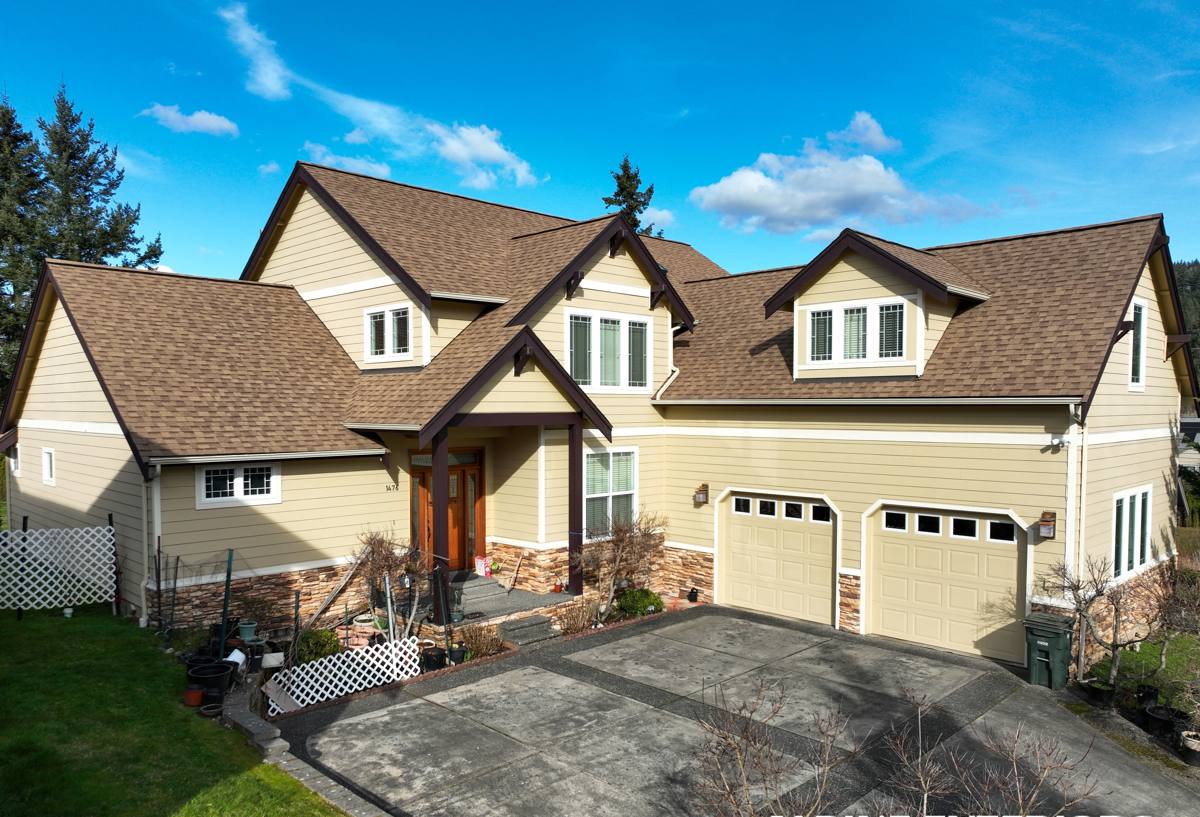
What York's Climate Actually Does to a Deck
Whatcom County's marine climate is mild compared to a lot of the country, but "mild" doesn't mean gentle on wood or fasteners. A few things stand out for decks in and around York:
Salt Air and Corrosion
Proximity to saltwater means airborne salt settles on exposed surfaces, including deck boards, railings, and metal hardware. Over time, salt exposure accelerates corrosion in fasteners and framing connectors that aren't rated for it, and it can dull or discolor certain finishes faster than an inland deck would experience.
Driving Rain
Rain here doesn't just fall straight down — wind-driven rain pushes water sideways into board gaps, ledger connections, and stair stringers. A deck that isn't detailed for lateral water intrusion will hold moisture in places you can't see until rot has already started underneath.
Moss and Algae Season
Shaded, damp decks in this region can grow moss and algae for a good part of the year, not just a few weeks. On traditional wood, that growth gets a foothold in the grain itself. On the wrong composite surface, it can sit on top and make boards genuinely slick underfoot — a real slip hazard on stairs and ramps.
Why Composite Makes Sense for This Environment
Composite isn't automatically the right call for every deck everywhere, but for the moisture and organic growth patterns common around York, it solves problems that wood struggles with. The honest comparison looks like this:
| Factor | Pressure-Treated Wood | Composite Decking |
|---|---|---|
| Moisture absorption | Absorbs water, swells/shrinks seasonally | Minimal absorption in capped products |
| Moss/algae resistance | Grain traps organic growth | Smoother surface, easier to keep clean |
| Maintenance | Annual stain/seal recommended | Periodic washing, no staining |
| Splintering/warping | Common as boards age | Rare with quality capped boards |
| Upfront cost | Lower material cost | Higher material cost |
| Long-term cost | Ongoing refinishing labor adds up | Lower lifetime maintenance cost |
The trade-off is real: composite costs more upfront. For a lot of York homeowners dealing with shade, salt exposure, and limited time for yearly deck maintenance, the lifetime math still favors composite. We'll tell you honestly if your situation is one where wood still makes sense — it sometimes does, especially for smaller budgets or decks that get full sun and airflow.
What a Correct Composite Decking Job Actually Involves
Composite boards are only as good as what's underneath and around them. A lot of composite deck problems people encounter elsewhere trace back to installation shortcuts, not the product itself. For this climate, the details that matter most are:
Substructure and Ventilation
Composite decking still needs a properly spaced, level joist system with adequate airflow underneath. In a damp, shaded lot, poor ventilation under the deck traps moisture against the framing even if the surface boards themselves are moisture-resistant. We check clearance to grade and joist spacing against the manufacturer's span tables, not just what "looks fine."
Fasteners and Hardware Rated for Coastal Exposure
Given the salt air around York, we use corrosion-resistant fasteners and structural hardware rated for coastal or marine-grade exposure, not standard interior-grade hardware. This matters most at hidden connection points — ledger boards, joist hangers, and stair stringers — where corrosion does its damage out of sight.
Hidden Fastening and Board Gapping
Most quality composite systems use hidden clip fasteners rather than face screws, which keeps water from pooling in screw heads and gives a cleaner look. Board gapping has to account for both drainage and the composite material's expansion and contraction with temperature swings.
Flashing at the Ledger
Where the deck attaches to the house, proper flashing keeps driving rain from working its way behind the ledger board and into the wall assembly — one of the most common sources of hidden rot on any deck in a wet climate, composite or not.
Surface Texture for Slip Resistance
Not all composite surfaces perform the same when wet and shaded. We favor boards with a textured, slip-resistant finish on stairs, ramps, and shaded sections where moss growth is more likely, rather than assuming a smooth board will be safe underfoot year-round.
Our Process for York Decking Projects
- On-site assessment: We look at sun/shade exposure, drainage, existing framing condition, and proximity to salt air to determine what the deck actually needs, not just what it looks like it needs.
- Structural evaluation: If we're rebuilding on existing framing, we inspect joists, posts, and footings for rot or movement before any composite board goes down. Composite decking installed over a compromised substructure just hides the problem longer.
- Material selection: We walk through composite board options, colors, and price tiers based on your budget and how the space gets used — full sun, deep shade, high foot traffic, or a low-use side deck all call for different choices.
- Installation: Framing repairs or upgrades first, then hidden-fastener board installation, railing, stairs, and any picture-framing or trim detail.
- Final walkthrough: We check board spacing, fastener seating, railing stability, and drainage before calling the job done.
Composite Decking Options and What Drives the Cost
Composite decking isn't one product — it's a range of board constructions and price points. The right pick depends on budget, exposure, and how long you want to go between any maintenance at all.
| Cost Factor | Why It Matters in York |
|---|---|
| Capped vs. uncapped composite | Capped boards resist moisture and staining better — worth the upcharge in a wet, shaded climate |
| Board profile (grooved vs. solid edge) | Grooved boards support hidden fasteners but need proper end-capping to keep water out of the core |
| Deck size and layout | Cutting and waste go up with angled decks, picture-frame borders, or multiple stair sections |
| Substructure condition | Reusing sound existing framing costs less than a full tear-out and rebuild |
| Railing system | Composite or aluminum railing adds cost but matches the low-maintenance goal of the decking itself |
| Fastener and hardware grade | Coastal-rated hardware costs more than standard-grade but avoids early corrosion near salt air |
We'll walk through these trade-offs during the estimate rather than quoting a flat per-square-foot number that doesn't reflect your actual deck.
Keeping a Composite Deck Ahead of Salt Air and Moss Season
Composite decking cuts maintenance significantly, but "low-maintenance" isn't "no-maintenance," especially in this climate. A short seasonal routine keeps a York deck performing the way it's supposed to:
- Sweep debris and organic buildup off the surface regularly, especially in shaded corners where moss takes hold first
- Wash the deck with a soft-bristle brush and a composite-safe cleaner once or twice a year — pressure washers can damage the cap layer if used incorrectly
- Rinse salt residue off the surface and railings periodically if the deck is exposed to direct sea air
- Check that gaps between boards stay clear so water can drain instead of pooling
- Inspect railing posts and stair connections annually for any movement or loosening
- Trim back overhanging branches where possible to reduce shade, debris, and moisture retention on the deck surface
None of this is heavy work, but skipping it entirely for years at a stretch is where even good composite decking starts to show its age early.
Why Hiring a Crew That Already Works in York Matters
Composite decking installation isn't complicated in theory, but the details that separate a deck that lasts from one that doesn't are all local: how much salt exposure a given lot actually gets, where moss takes hold fastest given the tree cover, which hardware grade actually holds up here versus on paper. A crew that's already worked on decks throughout the York area and greater Chuckanut region has seen which shortcuts cause problems in this specific climate and which details are worth the extra time. That's not something you get from a general contractor working a spec sheet for the first time.
We also know the practical side of working in this area — typical lot layouts, drainage patterns on sloped yards common around Chuckanut, and how to sequence a deck rebuild around the wetter months so framing isn't left exposed longer than it needs to be.
Get a Straight Answer on Your Deck
If you're weighing composite decking for a home in York or elsewhere around Chuckanut, we're happy to take a look and give you an honest read on what your deck actually needs — not an upsell. Reach out for a free, no-pressure estimate using the form below.