 Chuckanut
 Siding in Alger Has to Earn Its Keep
Alger sits in the stretch of Whatcom County where the Chuckanut hillsides meet open water, and that combination puts a specific kind of stress on a house exterior. It isn't one big weather event that wears siding out here — it's the accumulation of small, constant exposures: salt-laden air drifting off the water, driving rain that comes in sideways during winter storms, and long stretches of shade and dampness that let moss and algae take hold and never really let go. A siding product that performs fine in a dry inland climate can struggle in this environment, and a siding job that's installed a little loose can turn into a moisture problem within a few winters.
This page is about one thing specifically: installing James Hardie fiber cement siding correctly on homes in and around Alger, and what that actually requires given the climate this community sits in.
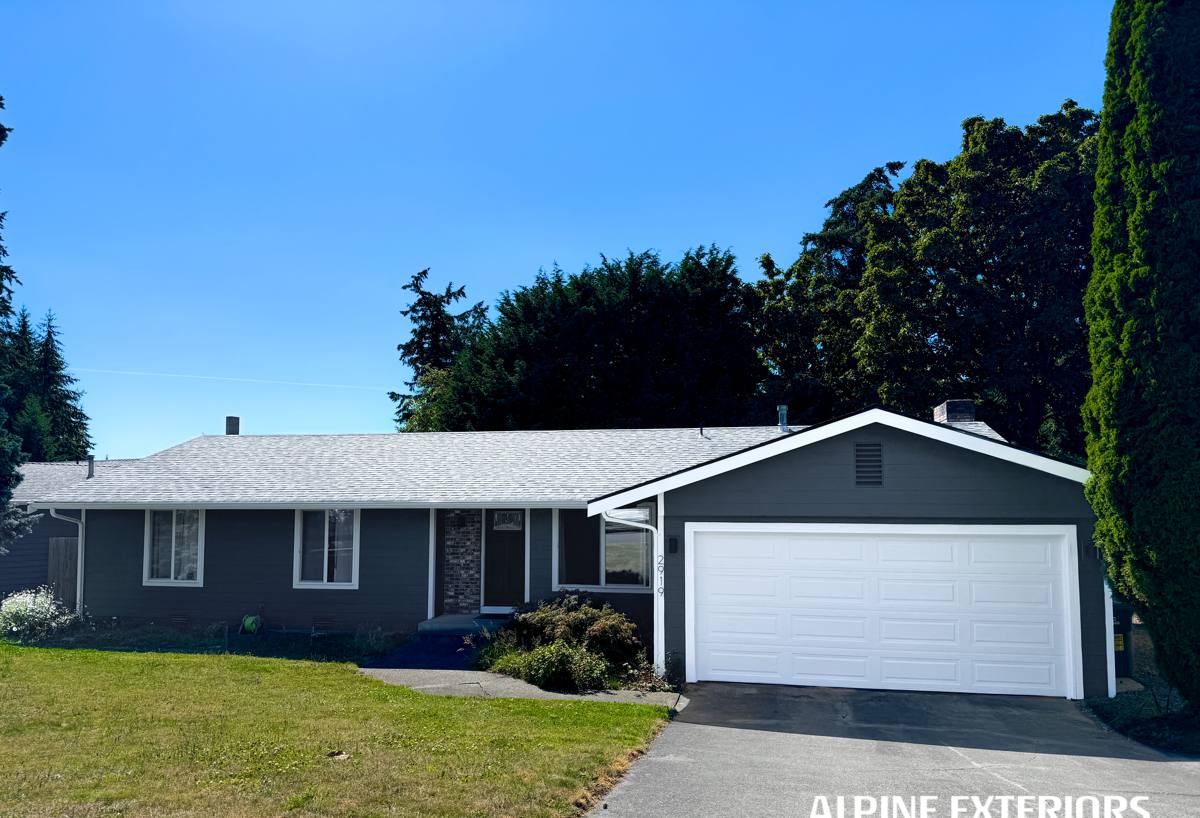
What the Chuckanut-Area Climate Does to Siding
Salt Air
Homes closer to the water deal with airborne salt that settles on exterior surfaces year-round. Salt accelerates corrosion of metal fasteners and trim, and it can degrade lower-grade paint finishes faster than manufacturers advertise. Siding and the materials used to hang it need to be rated for that kind of exposure, not just for general Pacific Northwest rain.
Driving, Wind-Driven Rain
Rain that falls straight down is relatively easy for any siding system to shed. Rain that's pushed sideways by wind — which is common on exposed and elevated lots around Chuckanut — finds every gap, seam, and under-lapped joint. That's a water management problem, not just a materials problem, and it's the single biggest reason siding installations fail early in this area.
A Long Moss Season
Shaded walls, tree cover, and consistent moisture add up to a moss and algae season that runs much longer here than in drier parts of the state. Moss holds water against a wall surface, and over time that constant dampness is what breaks down siding that isn't built to resist it — whether that's rot in wood-based products or coating failure in others.
Why This Company Installs Only James Hardie
We don't install LP SmartSide, vinyl, Cemplank, Allura, primed spruce, or cedar. That's not a marketing position — it's a decision based on what holds up in exactly the conditions described above. Vinyl can warp and its seams open under sustained wind-driven rain. Wood and wood-composite products need a level of ongoing maintenance — recaulking, repainting, moisture monitoring — that most homeowners don't keep up with consistently over 15–20 years, and once moisture gets behind them, rot follows. Cedar looks good on day one but is a genuine long-term commitment if you want it to survive a wet, mossy climate without failing.
James Hardie fiber cement is non-combustible, dimensionally stable in wet-dry cycling, and factory-finished with ColorPlus technology, which means the color coat is baked on under controlled conditions rather than applied on site where weather and application quality can vary. For a climate that punishes gaps in workmanship and marginal materials, that consistency matters more than it does in a milder region.
Comparing Siding Options for This Climate
| Factor | James Hardie Fiber Cement | Vinyl | Wood / LP-Type Composite |
|---|---|---|---|
| Salt air resistance | Engineered for it; factory finish resists fading and chalking | Can become brittle and discolor over time | Finish degrades faster; needs recoating |
| Wind-driven rain performance | Rigid, holds tight seams when installed to spec | Panels can flex and open at seams in high wind | Dependent on caulking and paint staying intact |
| Moss / algae resistance | Non-organic material, doesn't feed rot | Doesn't rot, but moss still grows on the surface | Vulnerable to moisture intrusion once coating fails |
| Ongoing maintenance | Occasional washing; repaint only if desired | Low, but limited repair options once damaged | Regular recaulking and repainting required |
| Fire resistance | Non-combustible | Melts/deforms under heat | Combustible |
What a Correct James Hardie Installation Involves
The product performs the way it's rated to only if the installation follows James Hardie's own specifications, and in a high-moisture, wind-exposed area like Alger, cutting corners here is where problems start. A correct job includes:
- A weather-resistive barrier installed and lapped correctly behind the siding, not just present
- Proper flashing at every window, door, and roofline transition so water is directed out, not in
- Correct fastener type and spacing, rated for coastal exposure, driven to the depth Hardie specifies — not overdriven or underdriven
- Minimum clearance maintained between the siding's bottom edge and grade, decks, or roofing to prevent wicking
- Properly caulked and sealed joints at trim and penetrations, using sealants rated for the exposure
- Panel and plank overlaps sized to shed wind-driven rain, not just vertical rainfall
- Cut edges of factory-finished panels touched up per manufacturer guidance so the cut edge doesn't become the weak point
Any one of these done wrong won't necessarily show up right away. It shows up two or three winters later, usually as a soft spot, a stain, or paint failure at a seam — and by then it's a repair job, not a touch-up.
Our Process on Alger Homes
Assessment
We start by walking the exterior and looking specifically at exposure: which walls take the most wind-driven rain, where moss has already established itself, where the existing siding or sheathing shows signs of moisture damage. That assessment shapes the install plan, not just the material choice.
Prep and Water Management
Before any Hardie board goes up, we address what's behind it — house wrap, flashing details, and any sheathing that needs attention. This is the step that gets skipped on rushed jobs and is the step that determines whether the siding lasts.
Installation
Hardie boards, panels, and trim are installed to manufacturer spec with fasteners and spacing suited to this area's wind and salt exposure. We work in a way that respects the local weather window rather than pushing installation during conditions that compromise sealant cure or fastening.
Finish and Walkthrough
Trim, caulking, and touch-up are completed, and we walk the finished job with the homeowner so they know what a correctly finished Hardie exterior should look like and how to spot an issue early if one ever comes up.
Why a Local Crew Matters More Than It Sounds Like It Should
Hiring a crew that already works the Chuckanut and Alger area isn't about convenience — it's about experience with this specific set of conditions. A crew that mostly works drier, inland jobs may not think twice about a marginal flashing detail or a slightly short overlap, because in their usual conditions it rarely gets tested. Here, it gets tested every winter. Knowing which walls on a given lot take the worst of the wind, how much moss pressure a shaded elevation is going to see, and how salt exposure changes near the water all inform decisions that don't show up on a generic spec sheet.
It also matters for timing. Coordinating an exterior install around this region's wet season takes local judgment — knowing when a dry window is long enough to keep water management details from being compromised mid-installation.
Living With James Hardie Siding in This Climate
One advantage of fiber cement here is how little ongoing work it actually needs. Periodic washing to keep moss and algae from building up on the surface is the main task — it doesn't feed the material the way it can undermine wood-based products, but moss will still grow on any exterior surface exposed to shade and moisture, so keeping it off matters for appearance and to keep debris from holding water against the wall. Because the ColorPlus finish is factory-applied and warranted separately from the substrate, homeowners aren't stuck on a repainting cycle just to protect the material underneath, the way they would be with site-finished siding.
Hardie also carries a strong transferable warranty, which matters in an area where homes do change hands — it's a real asset when the siding was installed correctly in the first place, since installation defects are typically outside what a product warranty covers.
What to Expect Cost-Wise
Costs for a James Hardie project depend on the size and complexity of the home, how much existing siding and sheathing needs to come off, the trim package, and site access. Homes closer to the water or with more wall exposure to wind-driven rain may need more attention to flashing and water management details, which affects labor more than material cost. We don't publish blanket per-square-foot numbers because they're rarely accurate for a specific house — an on-site assessment is the only honest way to scope it.
Get a Straight Answer for Your Home
If you're weighing a siding replacement in Alger or anywhere along the Chuckanut corridor, we're glad to come look at the house, talk through what your specific exposure calls for, and give you a straightforward estimate — no pressure, no upsell to a product we don't stand behind. Use the form below to get started.