 Chuckanut
 Deck Repair Built for Mount Vernon's Climate
A deck in the Mount Vernon area lives a harder life than most homeowners assume. Long stretches of driving rain, salt-tinged air moving up from the Sound and river delta, and a moss season that can stretch from October well into April all work on the wood and hardware year after year. None of that damage happens overnight — it shows up as soft spots, loose railings, and stains that don't scrub out, usually a few years before a full failure. Deck repair done right in this area isn't about slapping in a new board and calling it finished. It's about understanding why that board failed in the first place and making sure the fix outlasts the next few wet seasons, not just the next dry one.
We work on decks throughout Chuckanut and the surrounding Skagit Valley communities, and Mount Vernon decks tend to show a consistent pattern of wear tied directly to the regional climate: moisture trapped where boards meet framing, moss holding water against wood far longer than rain alone would, and fasteners corroding faster than the wood around them fails. A repair plan that ignores those patterns is a repair that has to be redone.
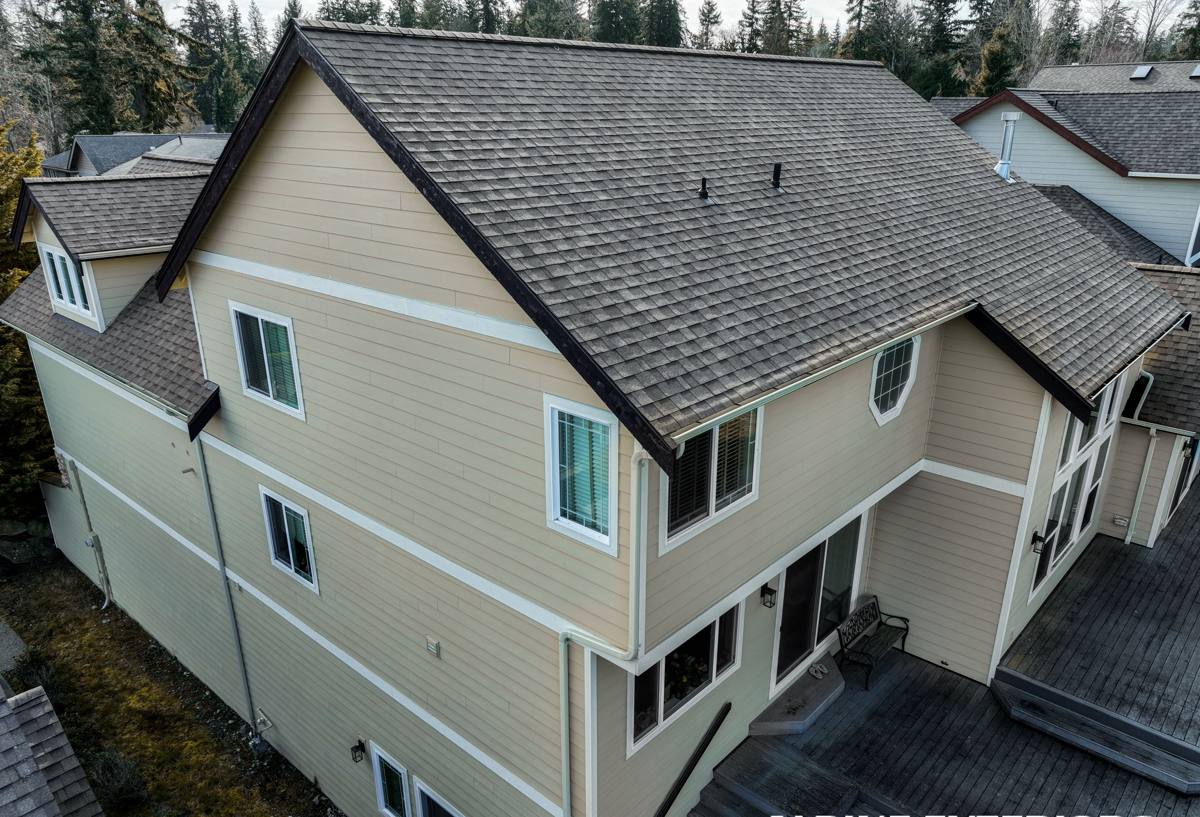
Signs a Mount Vernon Deck Needs Repair
Most deck problems announce themselves quietly before they become expensive. Catching them at this stage is the difference between a repair bill and a rebuild bill.
- Boards that flex, feel spongy, or bounce more than they used to when you walk across them
- Green or black moss film building up in the same spots every year, especially on north-facing sections or under overhangs
- Rust streaking down from screw or nail heads, or fasteners that have started to back out
- Railings or stair posts that wiggle when you grab them — this is a safety issue, not a cosmetic one
- Gaps opening up between the deck and the house at the ledger board, or daylight visible where there shouldn't be any
- Standing water that takes more than a day to fully dry after a normal rain
- Discoloration or soft wood directly around post bases and stair stringers, where water collects and sits
Any one of these on its own might just need a targeted fix. Several at once, especially soft framing combined with loose railings, usually means the deck's structure is asking for a closer look before it's used again through another wet season.
What a Correct Deck Repair Actually Involves
It Starts Underneath, Not on Top
A deck's visible surface — the decking boards themselves — is the least important part of a repair from a structural standpoint. The ledger board (where the deck bolts to the house), the joists, the beam, and the posts and footings underneath are what actually hold the structure up. We check these first, because a beautiful new deck board fastened to a soft or rotted joist is a repair that fails again within a season or two.
The Ledger Connection Gets Special Attention
The ledger board is the single most common failure point on older decks in this region, because it sits directly against the house where flashing can fail and water can wick in unseen for years. We check for proper flashing, correct fastener type and spacing, and any signs of moisture intrusion into the house's rim joist. This connection is what keeps a deck attached to the building — it is not a place to cut corners or reuse questionable hardware.
Fasteners Matter More Than Most Homeowners Realize
In a marine-influenced climate with salt air and near-constant moisture cycling, the wrong fastener can undo an otherwise good repair. Standard zinc-plated screws and nails corrode faster here than in a dry inland climate, and corroding fasteners are a leading cause of soft framing and stained decking. We use hot-dip galvanized or stainless-steel fasteners rated for exterior and ground-contact use, matched to whatever decking material is on the deck.
Drainage and Airflow Underneath
Decks that trap moisture underneath — because of poor grading, tight skirting, or debris buildup — stay wet longer after every rain and grow moss and mildew faster. Part of a proper repair is making sure water has somewhere to go and air can circulate underneath, not just replacing what's visibly damaged on top.
Common Deck Problems We Find in the Mount Vernon Area
| Problem | Typical Cause Here | What the Fix Involves |
|---|---|---|
| Soft or spongy decking boards | Prolonged moisture exposure, poor drainage, or moss holding water against the wood | Remove and replace affected boards; correct drainage or spacing that's causing water to sit |
| Loose or wobbly railings | Corroded or under-spec fasteners, or post connections never built to current standards | Re-anchor with proper hardware, sister posts if the wood itself is sound, or rebuild the connection |
| Rust staining and popped fastener heads | Standard fasteners not rated for this climate's moisture and salt exposure | Remove and replace with hot-dip galvanized or stainless fasteners |
| Persistent moss and green staining | Shaded areas, poor airflow, and our long wet season | Clean and treat the surface, then address the underlying moisture and airflow issue so it doesn't return as fast |
| Ledger board separation or rot | Failed or missing flashing where the deck meets the house | Correct flashing, replace damaged framing, re-secure with code-appropriate hardware |
| Uneven or sinking deck sections | Undersized or shifting footings, often on older or owner-built decks | Assess footings and posts; reinforce or replace as needed before touching the surface above |
Repair or Replace? How We Help You Decide
Not every deck problem calls for a full rebuild, and not every deck is worth repairing indefinitely. We walk homeowners through this honestly rather than defaulting to whichever option is more profitable for us.
| Factor | Leans Toward Repair | Leans Toward Replacement |
|---|---|---|
| Structural framing (joists, beam, posts) | Sound, with only isolated soft spots | Widespread rot or soft framing throughout |
| Age of the deck | Under 15-20 years, built to reasonable standards | Older, owner-built, or undersized for current code expectations |
| Extent of damage | Localized to a few boards, a railing section, or fastener issues | Damage spread across most of the surface or into the ledger and footings |
| Drainage and moisture history | One-time or correctable moisture issue | Chronic moisture problem that's already damaged multiple systems |
| Homeowner goals | Extend the life of a deck you're happy with | Want a different layout, size, or material going forward |
When the framing underneath is solid, repair is almost always the smarter money — there's no reason to tear out a good structure because the top layer took weather damage. When the framing itself has been compromised in multiple places, patching the surface just delays a bigger cost and creates a safety question in the meantime.
Our Repair Process
- On-site assessment. We check the decking, framing, ledger connection, railings, stairs, and footings — not just the spot the homeowner called about, since related problems often hide nearby.
- Honest scope and estimate. We tell you what actually needs fixing now, what's worth watching, and what can wait, with a written estimate before any work starts.
- Removal of damaged material. Affected boards, framing, or hardware come out completely rather than being covered over — hiding a soft spot under new decking just moves the problem.
- Structural correction first. Ledger, framing, and footing issues get addressed before any new surface material goes down.
- Rebuild with climate-appropriate materials and hardware. Matched decking where possible, correct flashing, and fasteners rated for this region's moisture and salt exposure.
- Final check and cleanup. We test railings and stair connections for solidity and leave the site clean.
Decking Materials: Trade-Offs We're Upfront About
Homeowners often ask whether to repair with the same material or switch to something else while boards are already open. There's no single right answer — each material comes with a genuine trade-off, and we'd rather explain that plainly than push whatever's easiest to install.
- Pressure-treated wood is affordable and easy to match to existing framing, but it needs regular sealing or staining in this climate to resist moisture and moss, and it will eventually need that maintenance kept up.
- Cedar holds up naturally well to moisture and looks better untreated than treated pine, but it's a softer wood that dents more easily and costs more upfront.
- Composite decking resists moisture and moss buildup far better than wood and needs little maintenance, but it costs more initially, and not every composite product performs the same — installation sensitivity and manufacturer warranty terms vary enough that we only install brands with track records we trust in wet climates.
Our standard is to recommend what fits the specific deck, the homeowner's maintenance appetite, and the budget — not to steer everyone toward one product line.
Maintenance That Extends a Repair's Lifespan
A repair is only as good as the upkeep that follows it. In an area with this much rain and moss pressure, a little seasonal attention goes a long way toward not needing another repair call in a few years.
- Clear leaves and debris from between boards and off ledges before the wet season sets in each fall
- Rinse or gently brush off moss buildup before it establishes a thick mat, rather than letting it sit all winter
- Check railings and stair connections for looseness once a year, ideally before winter
- Keep gutters and downspouts near the deck clear so runoff isn't dumping directly onto or under it
- Reseal or restain wood decking on the manufacturer's recommended schedule — skipping a cycle in this climate shows up fast
- Look underneath the deck occasionally for standing water or debris blocking airflow
Why a Crew That Already Works Mount Vernon Makes a Difference
Deck repair isn't a one-size-fits-all trade. A crew that works the Mount Vernon area and the broader Skagit Valley on a regular basis has already seen how the local combination of rain, salt air, and moss season plays out on real decks, season after season — which fastener types hold up, which framing details fail first, and which repairs actually last through a full winter versus which ones come back. That local pattern recognition is hard to get from a crew that's only passing through the area for one job. It shows up in faster, more accurate assessments and in repairs built for the conditions this deck will actually face, not generic conditions from somewhere drier.
If you've got a deck showing any of the wear signs above, or you just want a straight answer on whether it needs a repair or a rebuild, we're happy to take a look. Reach out for a free, no-pressure estimate using the form below.