 Chuckanut
 Alger's Siding Problem Isn't Age — It's Exposure
Most siding failures we see in Alger have nothing to do with how old the house is. A 15-year-old wall can be rotting behind the trim while a 40-year-old wall two properties over is holding up fine. The difference is exposure: how much wind-driven rain a wall catches, how much shade and tree cover keeps it damp, and how much salt-laden air off the water works into the seams and fasteners over time. Out here along the Chuckanut corridor, homes get all three at once, and it adds up faster than most homeowners expect.
Salt air corrodes fasteners and finishes gradually, not all at once — you don't notice it until a nail head is bleeding rust through the paint or a corner post has started to separate. Driving rain doesn't just wet the surface of your siding; on an unmaintained or poorly detailed wall, it gets pushed sideways and upward under laps and around trim, which is a different kind of moisture load than a house on a dry, open lot ever deals with. And the long moss season — the stretch of the year when shaded, damp surfaces stay wet long enough for moss and algae to take hold — keeps organic growth in contact with your siding for months at a time, not weeks.
None of that means your siding is doomed. It means the material and the installation details matter more here than they do in a lot of places, and that's the lens we bring to every replacement job in Alger.
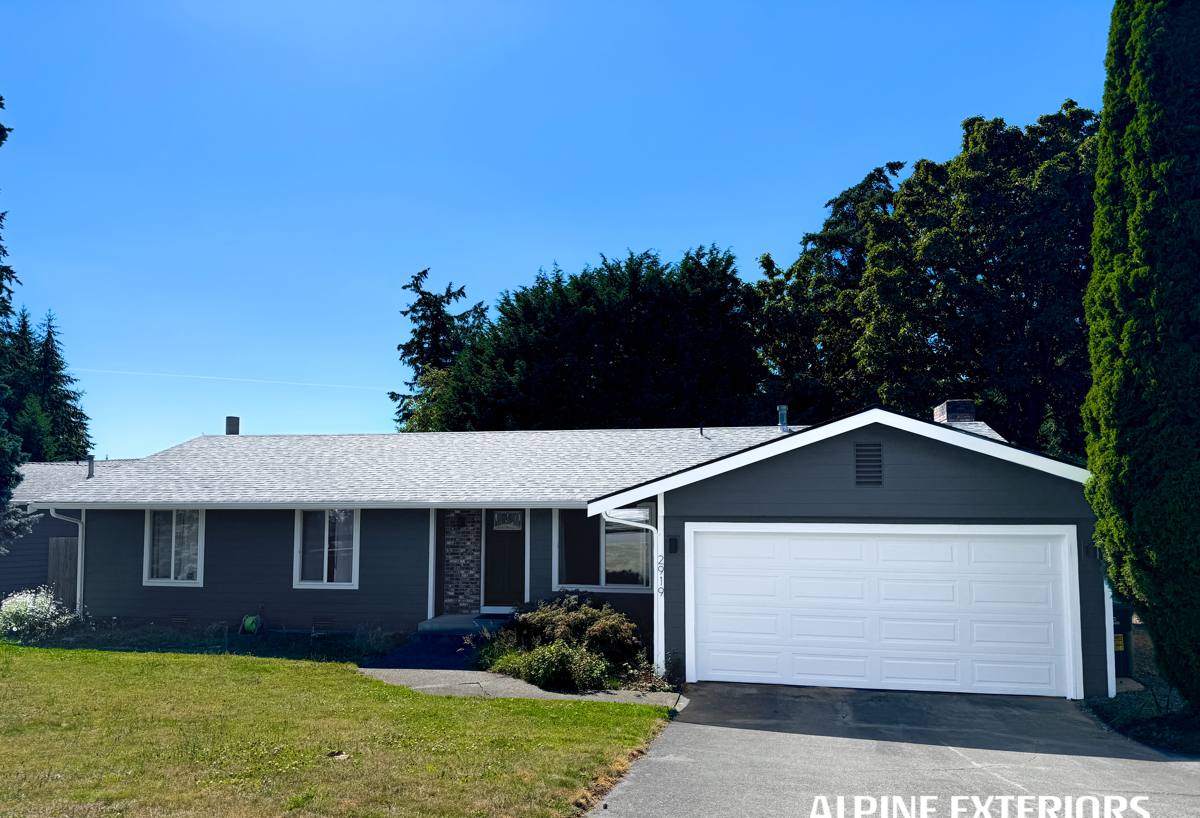
What a Correct Siding Replacement Actually Involves
"Replace the siding" sounds like a one-step job, but the siding itself is the last thing that goes on. Everything underneath it is what actually determines whether the new siding lasts 10 years or 40.
Inspecting What's Underneath Before Anything Goes Back Up
Once the old siding is off, we look at the sheathing, the weather-resistive barrier, and the framing at every window, door, and penetration. This is the point where hidden problems — soft sheathing, failed old flashing, gaps where moisture has been tracking behind the wall for years — finally become visible. Any repair or replacement of damaged sheathing happens before a single new piece of siding goes up. Skipping this step and just nailing new siding over old problems is the single most common shortcut we see, and it's the reason some "new" siding jobs fail within a decade.
Flashing and Drainage Details That Get Skipped
Given how much wind-driven rain this area gets, flashing details are not optional trim work — they're the actual moisture management system for the wall. That means proper head flashing over windows and doors, correct kick-out flashing where a roofline meets a wall, and a drainage plane that lets any water that does get behind the siding find its way back out instead of sitting against the sheathing. A house can have expensive siding and still fail early if these details were rushed.
Why We Install Only James Hardie Fiber Cement
We made a decision years ago to stop installing vinyl, LP SmartSide, and other engineered wood or composite products, and to install James Hardie fiber cement exclusively. That's not a marketing position — it's a practical one, based on what holds up under the conditions homes in this area actually face.
Fiber cement is non-combustible, which matters increasingly to insurers and homeowners alike. It doesn't absorb water the way engineered wood products can, so it doesn't swell, delaminate, or take on the kind of edge damage that shows up on wood-based siding after repeated wet-dry cycles. Hardie's ColorPlus factory finish is baked on under controlled conditions rather than field-painted, which gives it better adhesion and more consistent fade resistance than a job-site paint job — a real advantage when your siding spends months of the year under damp shade rather than drying out in full sun.
Vinyl has its own trade-offs we won't rehash in detail here, but the short version is that it expands and contracts more than fiber cement, its seams and corners are more vulnerable to wind-driven rain intrusion, and it doesn't hold paint if a homeowner ever wants to change the color down the road. LP SmartSide and other wood-based composites perform reasonably well when installation is perfect and maintenance is kept up, but they're wood at their core, and wood-based products are simply more sensitive to the sustained moisture exposure this area delivers. We'd rather install one product very well than install several products with compromises we'd have to explain to a homeowner in year eight.
Matching the Product Line to This Area's Exposure
James Hardie makes climate-engineered product lines for a reason — a house in a dry inland climate doesn't need the same specification as a house catching salt air and driving rain off the water. For Alger and the surrounding Chuckanut area, we generally spec Hardie's HZ5 line, engineered for wetter, harsher climates, with attention paid to which profile and finish makes sense for how shaded or sun-exposed a given wall is.
| Consideration | Why It Matters Here |
|---|---|
| HZ5 climate engineering | Built for regions with significant moisture exposure rather than dry, hot climates |
| ColorPlus factory finish | More consistent, longer-lasting color than field-applied paint in a damp, shaded climate |
| Plank vs. panel profile | Affects how water sheds on shaded walls and how moss/algae tend to collect at laps |
| Trim and fascia material | Trim takes the most direct weather exposure and should match the siding's climate spec |
Our Process, Start to Finish
- On-site walkthrough: We look at your existing siding, trim, and any visible trouble spots — soft areas, staining, gaps — and talk through what we're seeing.
- Written estimate: A clear scope covering tear-off, any anticipated sheathing repair, flashing details, and the specific Hardie products and colors involved.
- Tear-off and inspection: Old siding comes off, sheathing and framing are inspected, and any necessary repairs are made before anything new goes on.
- Weather barrier and flashing: Correct installation of the drainage plane and flashing at every window, door, and penetration.
- Hardie installation to manufacturer spec: Proper fastening, clearances, and joint treatment — the details that determine whether the warranty is actually honored down the road.
- Final walkthrough: We go over the finished job with you before calling it done.
What Drives the Cost of a Siding Replacement in Alger
We don't publish flat prices because every house is different, but the factors that move a bid up or down are consistent from job to job.
| Factor | Effect on Cost |
|---|---|
| Amount of hidden sheathing/framing repair needed | The biggest variable — often invisible until tear-off |
| Home size and number of stories | More square footage and access complexity increase labor |
| Siding profile and trim detail | More corners, trim boards, and architectural detail add time |
| Current siding material | Some materials come off faster and cleaner than others |
| Site access and shade/tree cover | Affects staging, drying time, and scheduling around wet weather |
Because so much depends on what's under the existing siding, an honest estimate always includes room for what tear-off reveals — we'll flag it and price it before proceeding, not after.
Signs Your Siding Is Telling You Something
Homeowners in this area often live with early warning signs longer than they should, mostly because the damage is gradual. Worth a look if you're seeing any of the following:
- Soft or spongy spots when you press on the siding, especially near the bottom courses or under windows
- Persistent moss or algae staining that comes back within weeks of cleaning
- Paint that's bubbling, peeling, or won't hold in the same spots year after year
- Visible gaps, warping, or separation at seams and corners
- Rust streaks below fasteners or trim
- A musty smell near exterior walls, especially in a room that stays shaded most of the day
Any one of these on its own might just need a repair. Several at once, especially on the same wall, usually means the underlying moisture problem has been going on longer than the surface suggests.
Why It Matters That We Already Work This Area
A crew that mostly works dry, sunny neighborhoods and occasionally takes a job out toward the water doesn't have the same instincts as one that works Alger and the surrounding Chuckanut area regularly. Knowing which walls take the worst of the wind-driven rain, how long moss season actually runs here versus elsewhere in the county, and which details tend to fail first on older homes in this exposure isn't something you get from a manual — it comes from doing the work here repeatedly. That local pattern-recognition shows up in small decisions during a job: where we pay extra attention to flashing, which walls get a closer look during tear-off, and what we flag for a homeowner even when it wasn't part of the original scope.
Get a Straight Answer About Your Siding
If your siding is showing any of the signs above, or you just want an honest read on how much life is left in what you've got, we're happy to take a look. The estimate is free, there's no pressure attached to it, and you'll get a clear picture of what your house actually needs — not just a quote. Use the form below to get started.