 Chuckanut
 Why Sehome Decks Wear Differently Than Decks Inland
A deck built in Sehome doesn't face the same conditions as one built forty miles inland. Whatcom County's coastal position means a deck here is dealing with three things at once, year-round: salt-laden air moving off the water, long stretches of driving rain, and a moss season that can stretch from late fall well into spring. None of these is dramatic on its own. Together, over several winters, they find every weak point in a deck's design.
Most deck problems we get called out to inspect in this area aren't failures of the whole structure. They're small, specific failures — a fastener that corroded faster than it should have, a ledger board that never had a gap for water to escape, decking laid tight enough that moss got a foothold before the first season was even over. A deck built with this climate in mind avoids nearly all of it.
Salt Air and Metal Fasteners
Airborne salt accelerates corrosion on standard fasteners, brackets, and hardware. It's slow and easy to ignore until a joist hanger or ledger bolt is compromised where you can't see it — under the decking, against the house. The fix isn't complicated, but it has to be decided before the first board goes down, not after rust shows up.
Driving Rain and Ledger Connections
Wind-driven rain doesn't just fall on a deck, it gets pushed sideways into every seam, especially where the deck ledger meets the house. This is the single most common source of hidden rot we find on older decks in this area, because it's invisible until siding or framing is opened up for another reason.
Moss Season and Slick Surfaces
A long wet season with limited direct sun means moss and algae get a real head start on any horizontal wood surface, especially in shaded or tree-covered yards, which are common on the hillier lots around Sehome. Board spacing, surface texture, and drainage underneath the deck all affect how fast that moss shows up and how hard it is to keep off.
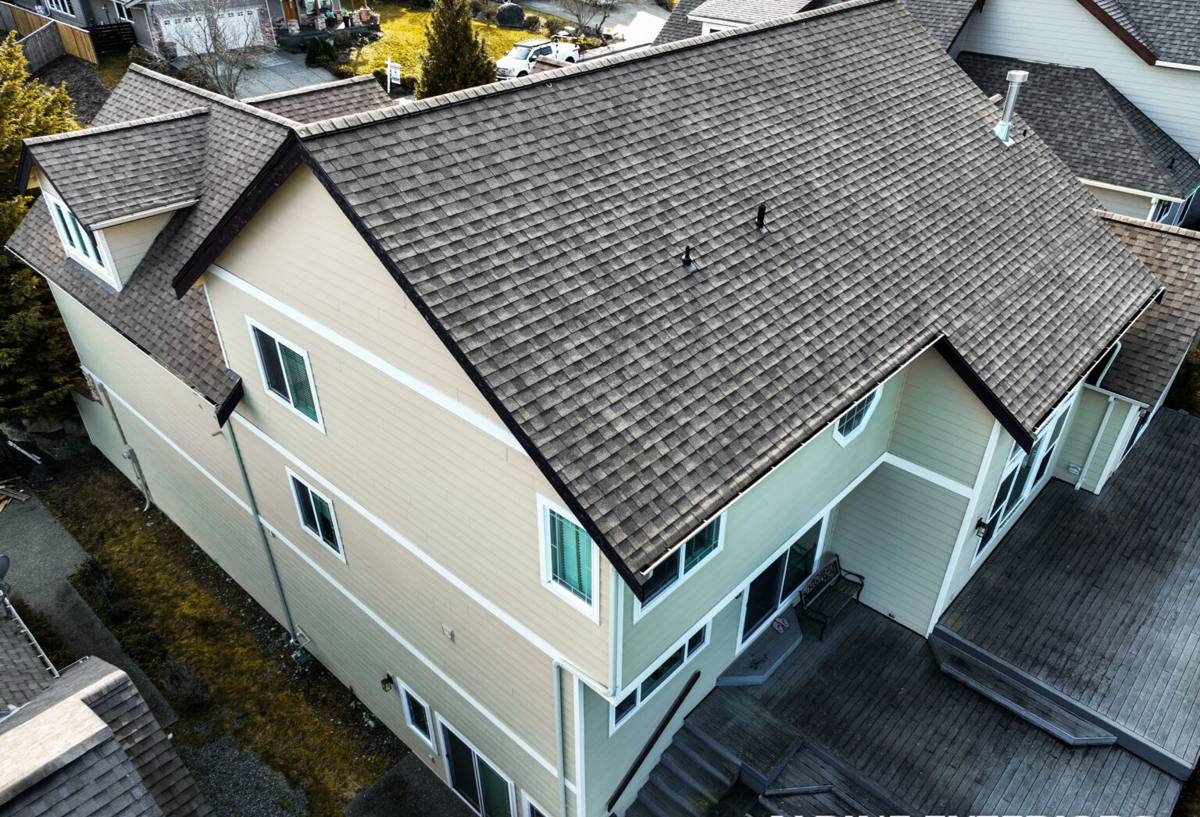
What a Deck Built for This Climate Actually Requires
There's a difference between a deck that's structurally sound on the day it's finished and one that's still sound in eight years. For Sehome, that difference comes down to a handful of decisions that don't cost much more up front but matter enormously over time.
- Stainless steel or coated corrosion-resistant fasteners and hardware, not standard galvanized, anywhere near the coast
- Proper ledger flashing with a drainage gap, so water that gets behind the board has somewhere to go
- Decking gapped and installed to manufacturer spec for drainage, not tightened up for looks
- Joist tape or equivalent protection on framing lumber to slow moisture absorption at the most vulnerable connection points
- Adequate under-deck clearance and grading so water and debris don't sit and hold moisture against framing
- A surface material and finish chosen with moss and algae growth actually in mind, not just color and price
None of these are exotic. They're standard best practice that gets skipped when a deck is priced and built purely to a minimum. We build to this list as our default, not as an upsell.
Our Deck Building Process for Sehome Homeowners
We keep the process straightforward because a deck project shouldn't feel like a mystery. Here's how it typically goes from first call to finished deck.
- Site visit and assessment. We look at the site conditions specific to your lot — slope, sun and shade exposure, tree cover, drainage, and how the deck will attach to the house.
- Design and material selection. We walk through decking and framing options honestly, including the real maintenance trade-offs of each, so you're choosing based on how you actually want to live with the deck, not just the showroom sample.
- Permitting. Deck permitting requirements vary by jurisdiction and by deck height and attachment method. We handle the paperwork and inspections so nothing gets built that has to be torn out later.
- Framing and structural work. This is where the climate-specific details — flashing, fastener choice, joist protection — actually get built in, not added as an afterthought.
- Decking, railing, and finish work. Final surface installation, railing per code, and any stairs or lighting are completed to spec.
- Final walkthrough. We go over the finished deck with you, including what maintenance it actually needs and on what schedule.
Choosing the Right Decking Material for Sehome
There's no single "best" decking material — there's a best material for your budget, your sun exposure, and how much upkeep you actually want to do. Here's how the common options compare specifically against this area's conditions.
| Material | Moss/Algae Resistance | Maintenance | Typical Lifespan Here |
|---|---|---|---|
| Pressure-treated wood | Low — needs regular cleaning and sealing | High — annual cleaning, periodic sealing | 10-15 years with upkeep |
| Cedar | Moderate — natural oils help, but fades and needs sealing | Moderate to high | 15-20 years with upkeep |
| Composite decking | Higher, but not immune — still needs periodic cleaning in shaded areas | Low — occasional wash, no sealing | 25-30 years |
| PVC decking | Highest among common options | Low | 25-30+ years |
We'll be direct with you: composite and PVC cost more up front but need far less fighting with moss and moisture over the years, which matters a lot on shaded or tree-covered lots. Wood costs less initially but only holds up if someone actually keeps up with cleaning and sealing on schedule. Neither answer is wrong — it depends on what you'd rather spend, money now or time later.
Framing, Fasteners, and Flashing Details That Matter Most Here
The parts of a deck nobody sees are the parts that fail first in this climate. A ledger board without proper flashing is the most common hidden failure point we encounter, because it sits directly against the house where wind-driven rain gets pushed hardest. Correct flashing creates a drainage path so water that reaches that joint sheds away from the structure instead of sitting against it.
Fastener choice matters more here than in drier, inland parts of the state. Standard galvanized hardware can start showing corrosion years earlier near the coast than the same hardware would inland. We spec corrosion-resistant fasteners and connectors as standard practice on decks in this area, not as an optional upgrade.
Under-deck ventilation and drainage also deserve attention that's easy to skip. A deck built low to the ground, or over a slope without proper grading, can trap moisture underneath long after the surface looks dry. That trapped moisture is exactly what accelerates rot in framing and encourages moss to spread from the ground up.
Maintenance Realities: Keeping Moss and Mildew Off Your New Deck
Even the best-built deck needs some seasonal attention in a climate like this one. The goal isn't zero maintenance — it's building the deck so the maintenance it does need is simple and infrequent, not a constant battle.
- Sweep debris and leaves off the deck regularly through fall and winter, especially under tree cover
- Keep gutters and downspouts clear so runoff isn't dumping extra water onto or near the deck
- Do a light wash of the deck surface at least once a year to knock back early moss and algae growth before it establishes
- Check railings, stairs, and ledger areas annually for any soft spots, movement, or visible corrosion on hardware
- Re-seal wood decking on the schedule appropriate to the product — don't wait until it's visibly gray and dry
- Keep planters and anything that holds standing water off the deck surface itself
Permits and Local Requirements
Deck projects in Whatcom County typically require a permit once you're past a certain height or attaching structurally to the house, and requirements can vary depending on setbacks, lot slope, and whether the deck is covered. Rather than guess at what applies to your property, we handle the permit application and inspection scheduling as part of the project, so the deck is built and documented correctly from the start. That matters at resale too — an unpermitted deck attached to the house is a common issue that surfaces during a home sale inspection.
Why a Crew That Already Works in Sehome Matters
A contractor who builds decks all over the state knows general best practice. A contractor who works this specific area regularly knows which details actually get tested by this specific climate — which fastener specs hold up, which flashing details actually stop the wind-driven rain problem, and which decking choices hold up against a real moss season rather than a theoretical one. That's not a marketing point, it's just what repeated exposure to the same conditions teaches a crew over time.
It also means fewer surprises during the project itself. Local permitting quirks, typical soil and slope conditions on hillside lots, and realistic timelines around the wetter months are all things that come from having actually built decks here before, not from a general playbook.
If you're planning a new deck or replacing one that's showing its age, we're happy to come take a look and talk through honest options for your specific property. There's no cost and no pressure for an estimate — just a straightforward look at what your deck actually needs to hold up here.