 Chuckanut
 Storm Damage Roof Repair Built for Alger's Weather
Alger sits in a stretch of Whatcom County where the roof over your head does real work. Storms roll in off the water with driving rain and wind, salt-laden air works into every exposed fastener and flashing seam, and a moss season that can run half the year keeps shingles wet longer than they were ever designed to stay. When a storm knocks loose shingles, drives water under flashing, or splits a ridge cap, the damage doesn't always show up right away — and waiting is how a $400 repair turns into a $4,000 one.
This page covers what storm damage roof repair actually involves for homes in and around Alger, what our process looks like, and why it matters to hire a crew that already knows how roofs in this part of Whatcom County fail.
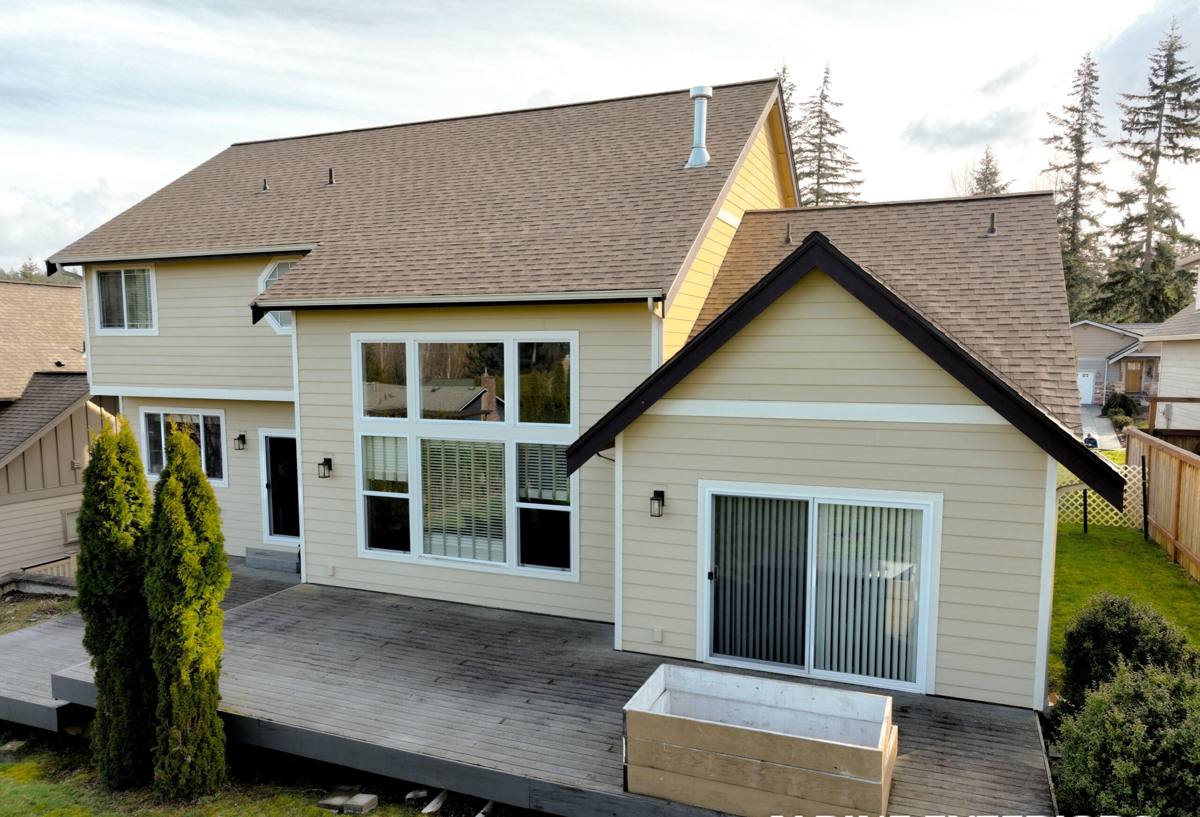
What Storm Damage Actually Looks Like Here
Not every storm-damaged roof is missing shingles you can spot from the driveway. In this climate, the damage that costs homeowners the most is usually the kind you can't see from the ground.
Wind Damage
Gusts off the water don't just tear shingles off — they lift the tab edge just enough to break the seal underneath, then the wind moves on and the shingle lays back down looking fine. That broken seal is now an open door for wind-driven rain on the next storm. We check seal lines, not just missing pieces.
Water Intrusion
Driving rain finds the weak points: flashing around chimneys and vents, valleys where two roof planes meet, and any spot where a fastener has backed out or corroded. Once water gets under the roofing material, it can travel sideways along the decking before it ever shows up as a ceiling stain inside the house.
Moss and Debris Damage
A long moss season means moss mats can sit on a roof for months, holding moisture against the shingle surface and working under tab edges. After a windstorm, moss and needle debris also tend to pile up in valleys and behind chimneys — exactly where water needs a clear path to drain. Storm damage repair on an Alger roof almost always includes clearing this out, because leaving it defeats the repair.
Fastener and Flashing Failure
Salt air accelerates corrosion on exposed metal — nail heads, flashing, and vent boots age faster here than they would inland. A storm doesn't have to be severe to finish off a flashing seam that's already been quietly corroding for years.
Why Salt Air, Rain, and Moss Compound Each Other
None of these factors act alone, and that's the part homeowners often miss. Salt air corrodes fasteners and flashing edges faster, which creates small gaps. Driving rain finds those gaps under wind pressure. Standing moisture from moss season then keeps the area wet long after the rain stops, so any exposed wood or underlayment doesn't get a chance to dry out between storms. A roof that might handle any one of these conditions on its own can fail years earlier when all three are working on it at once — which is the normal state of affairs for a roof near Chuckanut and the water.
What a Correct Storm Damage Repair Includes
A proper repair isn't just replacing what's visibly missing. It's tracing the damage back to its actual extent and fixing the cause, not just the symptom.
- Full roof inspection, not just the area you reported — wind and water damage often extends past the obvious spot
- Check of the roof decking underneath for soft spots, staining, or rot before any new material goes down
- Matching replacement shingles or roofing material as closely as possible to what's already on the roof
- Flashing inspection and re-sealing or replacement at chimneys, vents, and valleys — not just caulk over the old flashing
- Moss and debris clearing in valleys and around penetrations so water has a clear drainage path
- Fastener check for corrosion or backing-out, with replacement where the salt air has done its damage
- Interior check for water staining or damp insulation if the leak has been active for a while
- Photos and a written summary of what was found and what was repaired, for your records and for insurance if needed
Skipping the decking check is the most common shortcut in rushed storm repairs. New shingles over wet or soft decking look fine for a season, then fail again — often worse than the original damage.
Our Process, Start to Finish
1. Inspection and Assessment
We walk the roof (or use a drone where conditions or pitch make walking it unsafe) and document every point of damage, not just the one you called about. You get a plain-English explanation of what we found — no scare tactics, no upselling a full re-roof when a repair will genuinely hold.
2. Written Scope and Estimate
Before any work starts, you get a clear scope of what's being repaired, what materials will be used, and a firm estimate. If we find something worse once we open up the area — like rotted decking under the shingles — we stop and talk to you before proceeding, not after the invoice.
3. The Repair
We match materials as closely as possible, properly flash and seal every penetration we touch, and clear moss and debris from the surrounding area so the repair isn't undone by the next wet season. We don't leave a tarp-and-see approach in place when the weather allows a real fix.
4. Final Check and Documentation
We walk the repair with you, confirm drainage and sealing look right, and leave you with documentation of the work — useful for your own records and for any insurance claim tied to the storm event.
Repair vs. Replacement: How We Make That Call
| Factor | Repair Usually Makes Sense | Replacement Should Be Considered |
|---|---|---|
| Extent of damage | Isolated to one section or a handful of shingles | Damage spread across multiple roof planes |
| Roof age | Roof has significant remaining service life | Roof is already near the end of its expected lifespan |
| Decking condition | Decking is sound once exposed | Widespread soft spots or rot found under shingles |
| Material availability | Close match to existing shingles is available | Existing material is discontinued or badly weathered elsewhere |
| Storm history | First significant damage in a well-maintained roof | Repeated storm damage in the same areas over recent years |
We'll always recommend the repair when a repair is the honest answer. Replacement only gets suggested when the numbers or the underlying condition genuinely point that way.
Insurance and Storm Damage
Many storm damage repairs in this area are at least partially covered by homeowner's insurance, depending on your policy and the cause of the damage. We're glad to document what we find with photos and a written report you can hand to your adjuster. We don't handle the claim for you or promise a specific coverage outcome — that's between you and your insurer — but we make sure the paperwork on our end supports your claim rather than complicating it.
What Delaying a Repair Costs You
The biggest expense in storm damage repair usually isn't the repair itself — it's what happens while it waits. A small flashing leak left through one more rainy season can mean:
- Wet insulation that loses its R-value and needs replacement
- Decking rot that turns a shingle repair into a structural repair
- Interior drywall or ceiling damage from a slow, hidden leak
- Mold growth in attic spaces that stay damp through a long moss season
- A small isolated repair growing into a multi-section replacement
If you noticed damage after a storm — or you're not sure whether that lifted shingle is actually a problem — getting it looked at before the next round of weather is the difference between a straightforward fix and a much bigger one.
Why a Local Crew Matters for This Kind of Repair
Storm damage repair rewards knowing the specific ways roofs fail in a specific place. A crew that works Alger and the surrounding Chuckanut area regularly knows which flashing details tend to corrode first in this salt air, which valleys collect moss fastest given the tree cover and drainage patterns common here, and how driving rain off the water tends to find its way in. That's the kind of judgment that comes from doing this work in Whatcom County conditions repeatedly, not from a general roofing checklist. It also means a faster response after a storm — we're not driving in from across the region to look at a roof we've never seen the local weather do damage to before.
Get a Free, No-Pressure Estimate
If a recent storm left you with a lifted shingle, a slow leak, or just a nagging feeling that something up there isn't right, we're happy to take a look. Use the form below to request a free estimate — we'll assess the actual damage, explain what we find in plain terms, and give you a straight answer on what it takes to fix it right.