 Chuckanut
 Why Fairhaven Roofs Wear Differently Than Roofs Inland
Fairhaven sits close enough to the water that homes here deal with a different combination of stresses than a roof twenty minutes inland. Salt-laden air off Bellingham Bay accelerates corrosion on exposed metal fasteners, flashing, and vents. Driving rain off the water doesn't just fall straight down — wind-driven rain gets pushed sideways and up under shingle tabs, valleys, and roof-wall intersections that would stay dry in a calmer storm. And because Fairhaven's tree cover and marine humidity keep roof surfaces damp longer than drier parts of Whatcom County, moss and moss-adjacent algae get a long growing season with almost no dry-out window in fall, winter, or spring.
None of that means asphalt shingles are a poor fit for Fairhaven. They're still one of the most cost-effective, widely available, and easily repaired roofing materials on the market. It means the installation details matter more here than they would in a mild, dry climate — the shingle itself is only part of the system, and cutting corners on underlayment, ventilation, or flashing shows up faster on a Fairhaven roof than it would elsewhere.
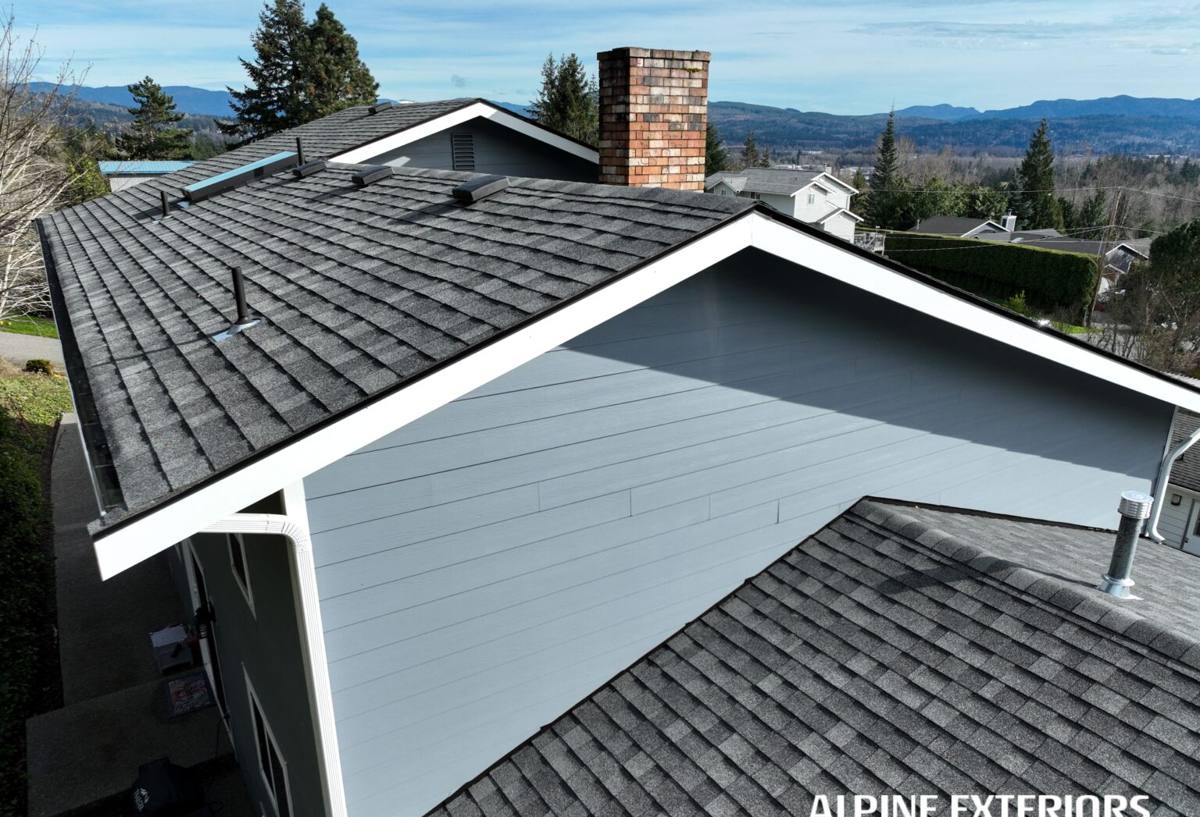
What a Correct Asphalt Shingle Roof Needs in This Climate
Underlayment That Handles Wind-Driven Moisture
Standard felt underlayment can work, but in exposed or wind-prone sections of a Fairhaven roof, a synthetic underlayment or self-adhered membrane at vulnerable areas gives an extra layer of protection if wind-driven rain gets past the shingle surface. Valleys, eaves, and any roof-to-wall transition are where we pay the closest attention, since those are the areas most likely to see water pushed uphill by wind rather than simply running downhill by gravity.
Flashing That Won't Corrode Quietly
Salt air is hard on unprotected or low-grade metal. Flashing around chimneys, skylights, dormers, and sidewalls needs to be a material and coating that holds up to marine air over the long term, installed so water sheds over every lap rather than into it. Corroded or poorly lapped flashing is one of the most common causes of a "roof leak" that actually has nothing to do with the shingles themselves.
Ventilation That Keeps the Deck Dry From Underneath
A shingle roof doesn't just need to keep water out from above — it needs to let moisture escape from below. Warm, humid indoor air that gets trapped in an attic will condense on the underside of a cool roof deck, especially during Whatcom County's long damp winters. Balanced intake and exhaust ventilation keeps that moisture moving instead of settling into sheathing, which protects both the roof deck and the shingles' warranty.
Moss and Algae: The Slow Damage Nobody Notices Right Away
Moss doesn't just look bad. As it establishes on a shingle roof, it holds moisture directly against the shingle surface far longer than open air would, and its root structure works into the granule layer and shingle mat over time. On a north-facing slope or a section shaded by trees — common around Fairhaven — moss can take hold within a couple of seasons if a roof isn't checked and cleaned periodically.
Algae staining (the dark streaking many homeowners assume is dirt or soot) is a different organism, but it thrives in the same damp, shaded conditions. It's mostly cosmetic, but heavy staining is a sign a roof surface is staying wet longer than it should, which is worth a closer look for moss growth or ventilation issues underneath.
- Trim back overhanging branches to increase sun exposure and airflow across the roof surface
- Keep gutters and valleys clear so water isn't sitting against shingle edges
- Have moss physically removed rather than pressure-washed, which can strip granules and shorten shingle life
- Consider algae-resistant shingles (copper- or zinc-infused granules) on shaded or north-facing sections
- Schedule a roof check after major fall storms, when debris tends to collect in valleys
Choosing a Shingle Built for This Environment
Not every asphalt shingle product is worth installing on a home exposed to salt air and a long wet season. We steer clients toward products with a proven wind rating and algae-resistant granules, and we're honest about the trade-offs between shingle classes rather than pushing whatever has the highest markup.
| Shingle Type | Typical Lifespan | Wind Resistance | Best Fit for Fairhaven |
|---|---|---|---|
| 3-Tab Standard | 15–20 years | Lower | Budget projects on sheltered slopes only |
| Architectural / Dimensional | 25–30 years | Higher, better sealant strips | Our standard recommendation for most Fairhaven homes |
| Premium/Designer Architectural | 30+ years | Highest available in asphalt | Exposed, high-wind, or high-visibility roofs |
Architectural shingles cost more up front than 3-tab, but their thicker profile and stronger sealant strips matter more on a home taking regular wind-driven rain off the bay than they would on a sheltered inland lot. For most Fairhaven homes, that upgrade pays for itself in fewer wind-related repairs and a longer service life before the roof needs replacing again.
How We Approach an Asphalt Shingle Roofing Project
Inspection and Deck Assessment
Before any shingles go on, we check the roof deck itself. Years of trapped moisture from a failing roof can soften plywood or OSB sheathing, and installing new shingles over a compromised deck just hides a problem that will resurface. Any soft or damaged sections get replaced before underlayment goes down.
Tear-Off Rather Than Overlay
We generally recommend a full tear-off rather than layering new shingles over old ones. A tear-off lets us actually see the deck condition, install underlayment correctly at eaves and valleys, and avoid the added weight and heat retention that come with double-layered roofing — all of which matter more in a damp climate where hidden moisture is the real long-term threat.
Underlayment, Flashing, and Ventilation First
The shingles are the last thing installed, not the first thing that matters. We install underlayment and ice/water protection at vulnerable areas, replace or install new flashing at every penetration and transition, and confirm intake and exhaust ventilation is balanced before a single shingle goes down.
Shingle Installation and Detail Work
Proper nailing pattern, correct exposure, and careful work at valleys, hips, ridges, and edges are what separate a roof that performs for its full rated lifespan from one that starts showing problems in year eight or ten. This is also where wind resistance is either earned or lost — a shingle rated for high wind speeds still needs to be fastened correctly to deliver that rating.
Cleanup and Final Walkthrough
We clear the site of old material and debris, do a magnetic sweep for stray nails, and walk the finished roof with the homeowner so they know what was done and what to watch for going forward.
Repair vs. Replacement: How We Help You Decide
Not every roof problem in Fairhaven means a full replacement. Isolated wind damage, a failed section of flashing, or a localized leak can often be repaired if the rest of the roof is in reasonable shape and the shingles aren't past their practical service life. We look at the age of the roof, the extent of granule loss, how widespread any moss or moisture damage is, and whether the underlying deck is sound before recommending either path — and we'll tell you plainly if repair is the more sensible call.
| Factor | Leans Toward Repair | Leans Toward Replacement |
|---|---|---|
| Roof age | Under 12–15 years | Approaching or past rated lifespan |
| Damage extent | Localized (one slope, one leak) | Widespread granule loss or multiple leak points |
| Deck condition | Sound, no soft spots | Soft sheathing or signs of long-term moisture |
| Moss/algae coverage | Light, recently developed | Heavy, long-established growth |
What Drives the Cost of a Fairhaven Asphalt Shingle Project
Every roof is different, but a few factors consistently move the price on projects in this area: roof pitch and complexity (valleys, dormers, and multiple roof planes take more time and material than a simple gable), the condition of the existing deck once torn off, the shingle class chosen, and how much flashing and ventilation work is needed. We provide a written estimate before work starts, and we flag any deck repair needs as soon as they're found rather than after the fact.
Why It Matters to Hire a Crew That Already Works This Area
A roofing crew that regularly works Fairhaven and the surrounding Whatcom County waterfront already knows which slopes tend to hold moss, which flashing details fail first in salt air, and how local wind patterns off the bay actually behave on a roof, not just in a manufacturer's spec sheet. That familiarity shows up in fewer callbacks and a roof system that's built for the conditions it will actually face, not a generic installation pulled from a drier region's playbook.
It also matters for something more practical: scheduling around this area's weather windows. Tear-offs and installations need a reasonable stretch of dry weather, and a crew that knows the local forecast patterns plans projects accordingly instead of leaving a deck exposed and hoping the rain holds off.
Maintaining Your Roof Between Projects
- Have gutters and valleys cleared at least twice a year, more often under heavy tree cover
- Get a visual roof check after any major windstorm
- Address moss growth early rather than letting it establish over multiple seasons
- Watch for granule buildup in gutters, which signals accelerated shingle wear
- Confirm attic ventilation isn't blocked by insulation, storage, or debris
- Have flashing checked periodically, especially around chimneys and skylights
If you're weighing a repair, a full replacement, or just want an honest read on how much life is left in your current roof, we're glad to come take a look. Estimates are free and there's no pressure — just a straight assessment of what your roof actually needs, using the form below to get started.