 Chuckanut
 Why Bellingham Windows Need to Be Chosen Differently
Homes around Bellingham and the Chuckanut area sit in one of the more demanding window environments in Washington. You've got salt-laden air rolling in off Bellingham Bay, long stretches of driving rain that hits west- and south-facing walls at an angle rather than straight down, and a moss season that can run most of the year on shaded elevations. None of that is dramatic on its own, but stacked together over years, it's exactly the combination that finds every weak point in a window installation — the seal that was cut a little short, the flashing that was skipped to save time, the sill that wasn't sloped correctly.
A window that performs fine in a drier inland climate can start failing early here if it wasn't specified and installed with Whatcom County conditions in mind. This page is about what that actually means in practice for a custom window job on a Bellingham-area home — not a general overview of window shopping, but the specific things that matter for houses dealing with this exact climate.
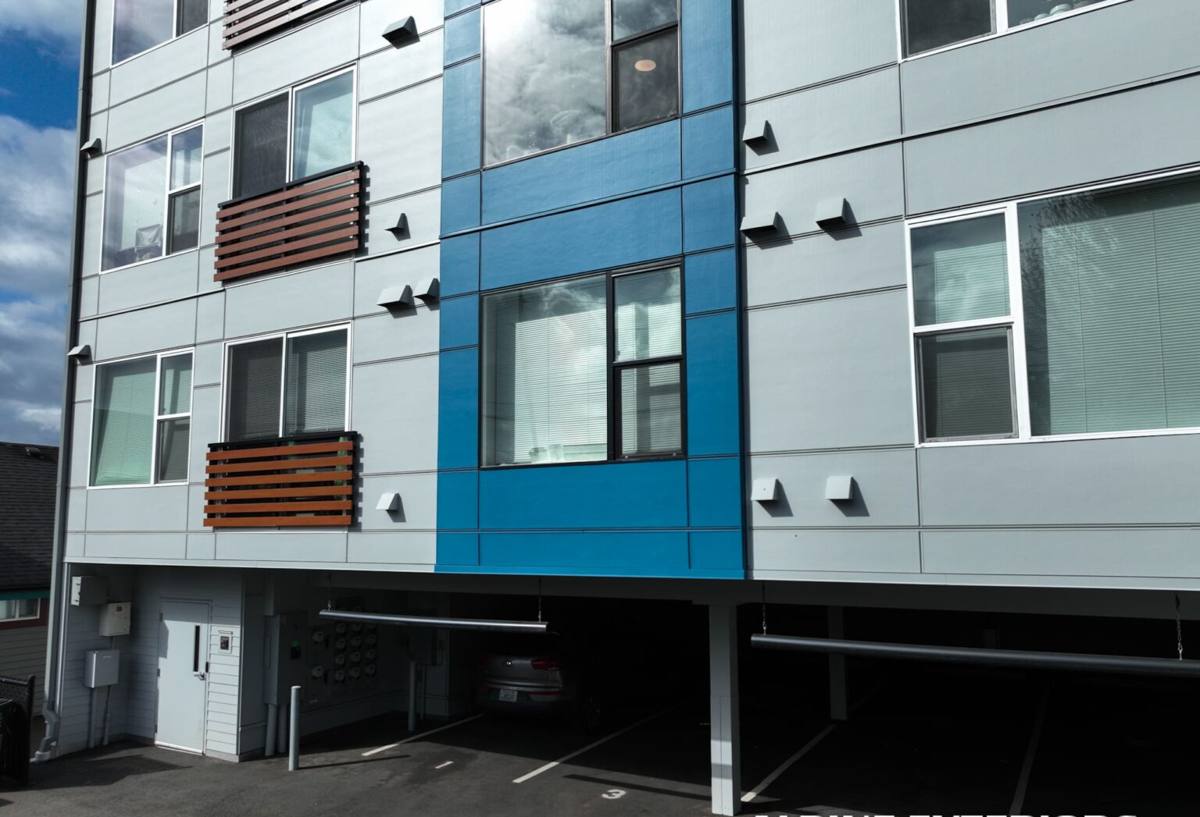
What "Custom" Should Actually Mean
"Custom" gets used loosely in this trade. For us, it means two things: the window itself is sized and specified to fit your actual rough opening rather than forcing your opening to fit a stock size, and the installation is built around the real condition of your wall — not a generic assumption about it.
Older vs. Newer Construction
Bellingham has a real mix of housing stock — older homes with original wood-frame openings that have settled or shifted slightly over decades, and newer construction with more standardized framing. Older openings are rarely perfectly square anymore, which is exactly why custom measurement matters: a window ordered off a rough estimate can end up with gaps that get packed with extra caulk or trim instead of properly sealed, which is a common source of the drafts and water intrusion we get called out to fix.
Matching the Wall, Not Just the Opening
Custom also covers how the window meets your siding and trim. On a house with fiber cement or wood siding, the window's flange, trim depth, and flashing need to integrate with what's already there so water sheds outward instead of finding a path behind the cladding. This is where a lot of quick window swaps go wrong — the glass and frame look fine, but the water management around the opening was never actually addressed.
Frame Material: What Holds Up Here
Frame material matters more in a marine, high-moisture climate than it does somewhere dry. Salt air accelerates corrosion on some hardware and finishes, and constant moisture cycling stresses any material that expands, contracts, or absorbs water differently than the wall around it.
| Material | Moisture & Salt Air Resistance | Maintenance | Typical Cost Range |
|---|---|---|---|
| Vinyl | Good — won't rot or corrode, but can become brittle with age in UV/salt exposure | Low — occasional cleaning | Lower |
| Fiberglass | Very good — dimensionally stable, holds up well to moisture cycling and salt exposure | Low | Mid to upper |
| Wood-Clad (exterior clad, wood interior) | Good on the exterior if the cladding is intact; wood interior needs the room to stay reasonably dry | Moderate — cladding protects the wood, but any breach needs prompt attention | Upper |
| Aluminum | Fair — prone to condensation and corrosion in salt air unless thermally broken | Moderate | Varies |
There's no single "correct" answer for every house — a covered porch elevation facing away from prevailing weather has different needs than an exposed second-story wall catching driving rain straight off the water. We walk through this with you honestly rather than pushing whatever happens to be in stock.
Glass and Weatherproofing Choices
Double-Pane vs. Triple-Pane
Most Bellingham-area homes do fine with a quality double-pane, low-E, argon-filled unit. Triple-pane adds real value on north- and west-facing exposures that take the brunt of winter storms, or in rooms where you've noticed condensation or cold-feeling glass in the old windows — but it also adds weight, cost, and isn't automatically the right call for every opening.
Condensation and Interior Moisture
In a climate this damp, interior condensation is often as much about the house's ventilation and humidity as it is about the window itself. A new, properly sealed window will actually show condensation more noticeably if a bathroom fan isn't venting outside or a kitchen runs humid — that's worth knowing before you assume a new window is "defective" because you're still seeing moisture on the glass in January.
Flashing and Sill Pan Details
This is the part that doesn't show up in a brochure but matters most here: a sill pan under the window, properly lapped house wrap or weather-resistive barrier above and around the opening, and flashing tape integrated in the right order. Skipping or rushing this is the single biggest reason window installations leak in a climate with sustained driving rain — and it's invisible once the trim goes back on, which is exactly why it matters who's doing the work.
What We Commonly Find on Bellingham-Area Windows
- Moss and organic growth building up in window trim and sills on shaded, north-facing walls
- Fogged or hazy glass from failed seals letting moisture between the panes
- Soft or rotting wood at the sill or lower frame corners, usually where caulk failed and water sat
- Persistent drafts around the frame that trace back to poor or missing flashing, not the glass itself
- Paint or finish failure on the exterior trim from repeated wet-dry cycling
None of these are unusual for the area — they're what long-term exposure to this climate does to a window installation over time, especially one that wasn't detailed for it in the first place.
Our Process for a Custom Window Job
1. On-Site Assessment
We look at each opening individually — condition of the existing frame and sheathing, sun and weather exposure, signs of prior water intrusion, and how the opening ties into your siding and trim.
2. Measurement and Specification
Each window is measured and ordered to the actual opening, with frame material, glass package, and hardware selected based on that specific location on the house, not a one-size approach for the whole project.
3. Removal and Opening Prep
We check the sheathing and framing behind the old window for hidden rot or moisture damage before the new unit goes in — this is often where problems from years of wear actually surface, and it's much cheaper to address during a window job than to discover later.
4. Installation with Proper Water Management
Sill pan, flashing, and weather-resistive barrier integration happen in the correct sequence, sealed and lapped to shed water outward. This step is where we spend the extra time other shortcuts skip.
5. Trim, Finish, and Walkthrough
Interior and exterior trim is finished to match your home, and we walk the job with you before we consider it done.
Signs Your Windows Are Due for Replacement
- Fog, haze, or visible moisture trapped between the panes of glass
- Noticeable drafts near the frame even when the window is fully closed and locked
- Windows that are difficult to open, close, or lock — often from frame warping or swelling
- Soft, spongy, or visibly rotted wood at the sill or frame corners
- Condensation on the interior glass that persists beyond normal seasonal humidity
- Cracked, gapped, or missing caulk and sealant around the exterior trim
Why Local Installation Experience Matters
A crew that works Bellingham and the surrounding Whatcom County area regularly has already seen how salt air, driving rain, and moss season play out on real houses over years, not just at the time of installation. That shows up in small decisions — which flashing detail to prioritize on a west-facing wall, when triple-pane is worth it versus overkill, how to handle an older opening that's shifted slightly over the decades. It's the difference between a window job that looks right on install day and one that's still performing correctly five or ten winters later.
Keeping Your New Windows Performing Long-Term
Custom windows installed correctly for this climate still benefit from basic upkeep. Rinse salt residue off exterior frames periodically if you're in a more exposed, coastal-facing location. Keep gutters and downspouts clear so water isn't sheeting down across window openings. Check caulk lines yearly, especially after a hard winter, and clear moss or organic debris from sills and trim before it holds moisture against the frame. None of this is complicated, but it's what actually extends the life of the installation.
If you're weighing custom window options for a Bellingham-area home, we're happy to take a look and talk through what actually makes sense for your house — no pressure, no upsell. Fill out the form below for a free estimate.