 Chuckanut
 Bellingham's Climate Is Harder on Siding Than It Looks
Bellingham sits where Puget Sound air, heavy winter rain, and dense tree cover all meet at once. That combination is deceptively tough on exterior walls. Salt-laden air off Bellingham Bay works into fasteners and trim over time. Driving rain, pushed sideways by wind off the water, finds every gap in a poorly lapped or poorly flashed installation. And the long stretch of overcast, damp months each year — especially on shaded, north-facing walls near trees — gives moss, algae, and mildew months to establish themselves before a warm, dry spell ever shows up to dry things out.
None of that makes siding fail overnight. It's slow. A wall that's technically "fine" for a few years can be hiding trapped moisture, softening trim, or a moss colony working its way under a lap joint. The siding material and the installation details both matter more here than in a drier, milder climate — which is exactly why we install one product system, to one standard, rather than mixing and matching based on what's cheapest for a given job.
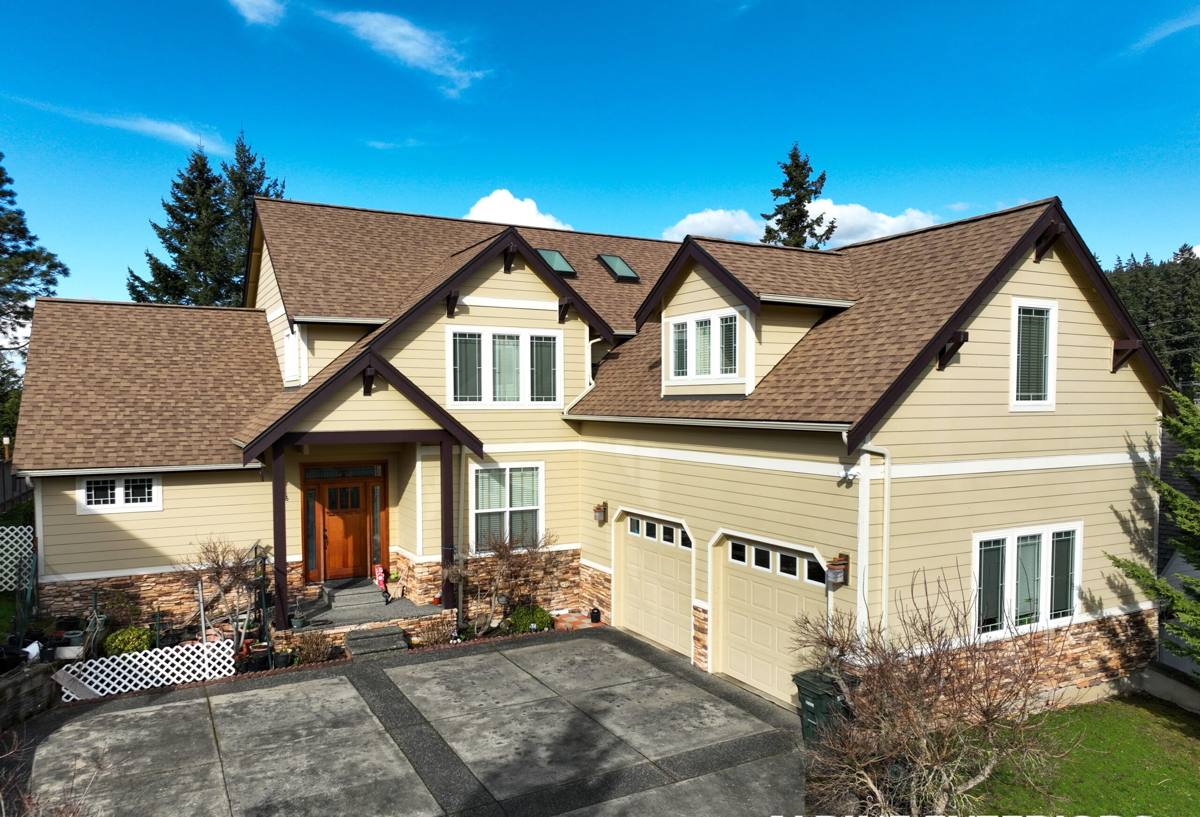
What "Correct" Fiber Cement Installation Actually Involves
Fiber cement is only as good as the install behind it. In a wet, marine climate like ours, a handful of details separate a siding job that lasts decades from one that causes problems in five years.
Water management comes before the siding itself
- A drainage plane (weather-resistant barrier) installed and lapped correctly, shingle-style, so water sheds outward and down
- Rainscreen or furring strips where wall assemblies need a gap for water to drain and air to move behind the siding
- Flashing at every horizontal transition — window and door heads, deck ledgers, roof-to-wall intersections — installed so water is directed out, not behind the cladding
- Proper kick-out flashing at rooflines that meet a wall, a spot that's frequently skipped and a common source of hidden rot
Fastening and clearances that respect the material
Fiber cement has to be fastened per the manufacturer's specifications — correct nail type, placement, and depth — or the warranty and the performance both suffer. Clearances matter just as much: siding held off the roofline, deck surfaces, and grade by the specified gap keeps splash-back and ponding water away from the bottom edge of the boards, which is the first place moisture damage shows up on any siding.
Sealed, factory-finished cut edges
Every field cut exposes raw fiber cement. In a climate that gets this much rain, an unsealed cut edge is an entry point for moisture. Factory-primed and factory-finished boards need their cut ends sealed as part of the install — not treated as an afterthought.
Why We Install Only James Hardie Fiber Cement
We don't install LP SmartSide, vinyl, Cemplank, Allura, primed spruce, or cedar. That's a deliberate standard, not a lack of options. Each of those products has real strengths, but each also comes with a trade-off we don't want to carry on a Bellingham home:
- Vinyl is inexpensive and low-maintenance, but it can warp under heat and impact stress, and it doesn't hold paint if a homeowner ever wants a different color down the road.
- Engineered wood products like LP SmartSide perform well when detailed correctly, but wood-based substrates are inherently more sensitive to sustained moisture exposure — a real consideration in a climate with this much sustained damp weather.
- Primed spruce and cedar are natural materials that need regular refinishing to hold up, and untreated or under-maintained wood is exactly what moss and mildew prefer in a shaded, wet environment.
- Other fiber cement brands (Cemplank, Allura) are legitimate fiber cement products, but we've standardized on one manufacturer so our crews install one system, know its specifications cold, and can back it with a single, consistent warranty conversation.
James Hardie fiber cement is non-combustible, holds a factory-baked ColorPlus finish that resists fading and chipping far better than field-applied paint, and its HardieZone HZ5 product line is engineered specifically for climates like the Pacific Northwest's — freeze-thaw cycles, sustained moisture, and coastal exposure. Combined with a strong transferable warranty, it's the product we're comfortable putting our name behind on Bellingham homes.
Which Hardie Product Line Fits a Bellingham Home
James Hardie makes several distinct product lines, and the right choice depends on the home's style, exposure, and existing trim details.
| Product | Best Suited For | Bellingham Consideration |
|---|---|---|
| HardiePlank lap siding | Traditional and craftsman-style homes, most common choice | Wide range of exposures and textures; pairs well with existing trim profiles common in older Bellingham neighborhoods |
| HardieShingle siding | Cottage, cape cod, and accent-gable applications | Mimics a cedar shingle look without the ongoing refinishing wood shingles demand in a damp climate |
| HardiePanel vertical siding | Modern facades, gable accents, mixed-material exteriors | Clean vertical lines that read well on newer builds and additions around town |
| HardieTrim boards | Corners, fascia, window and door surrounds | Matches the siding's moisture and finish performance so trim doesn't become the weak point |
How the Process Works, Start to Finish
A Bellingham fiber cement project generally moves through the same core stages, though the sequence gets adjusted for the specific home:
- On-site assessment. We look at existing siding, wall assemblies, trim condition, and any signs of past moisture intrusion before quoting anything.
- Tear-off and substrate check. Removing the old siding is also when hidden water damage, soft sheathing, or inadequate flashing gets found — and addressed before new material goes up.
- Water-resistive barrier and flashing. This is the layer that does the real work of keeping a Bellingham home dry; it's installed and inspected before any siding is hung.
- Rainscreen/furring where called for. Depending on the wall assembly and exposure, a drainage gap gets built in behind the cladding.
- Siding installation. Hardie boards, panels, or shingles installed to manufacturer fastening and clearance specifications.
- Trim, caulking, and finish details. Corners, window surrounds, and cut-edge sealing finished out.
- Final walkthrough. Confirming clearances, sealant lines, and finish quality before calling the job done.
What Drives Cost on a Bellingham Fiber Cement Project
Every home is different, but the same handful of factors move the price up or down on most projects in this area:
| Factor | Why It Matters Here |
|---|---|
| Existing wall condition | Hidden moisture damage from a prior siding failure means sheathing repair before new siding goes on |
| Number of stories and roof complexity | Multi-story homes and cut-up rooflines mean more flashing detail and more staging time |
| Product line and profile | Lap siding, shingle siding, and panel siding carry different material and labor costs |
| Trim scope | Full trim replacement adds cost but keeps the whole exterior system performing consistently |
| Site access and season | Tree cover, tight lots, and our wetter months can affect scheduling and staging |
Living with Fiber Cement in a Moss-Prone, Salt-Air Environment
Correctly installed Hardie siding is genuinely low-maintenance, but "low-maintenance" doesn't mean "no attention." A short seasonal checklist keeps it performing the way it's designed to in our climate:
- Rinse off accumulated grime, pollen, and salt residue once or twice a year, especially on walls facing the water
- Keep an eye on shaded, tree-covered walls where moss and algae are most likely to establish
- Trim back vegetation and tree limbs that keep a wall damp and out of the sun
- Check caulking at trim joints and penetrations annually and re-caulk where it's cracked or pulled away
- Watch gutters and downspouts near siding for overflow that sends water down the wall face instead of away from it
None of that requires refinishing, repainting, or the kind of upkeep wood or vinyl siding eventually demands — it's routine home care, not a maintenance program.
Why a Crew That Already Works Bellingham Matters
Fiber cement installation isn't complicated in principle, but getting the water management right — the part that actually determines how the siding performs ten or twenty years out — takes familiarity with how local homes are built and how this climate behaves against them. A crew that regularly works Bellingham homes has already seen where flashing tends to get skipped on older houses, which wall orientations hold moisture longest, and what it actually takes to keep a fiber cement installation performing through a full Whatcom County winter. That local pattern recognition is worth more than a lower bid from a crew installing siding here for the first time.
If you're weighing a siding replacement or planning ahead for one, we're happy to take a look at your home and walk through what a correct James Hardie installation would involve for your specific walls and exposure. Reach out for a free, no-pressure estimate using the form below.