 Chuckanut
 Why Bellingham Roofs Wear Differently Than Roofs Inland
A roof in Bellingham does a different job than a roof forty miles inland. Sitting near Puget Sound and the Chuckanut hillsides, homes here deal with a marine layer that keeps things damp for weeks at a stretch, wind-driven rain that comes in sideways off the water, and enough tree cover and shade to keep moss growing on north-facing slopes nearly year-round. None of that is unusual for Whatcom County — it's just the baseline your roof has to survive, every year, for decades.
That means a "new roof" here isn't just about picking a shingle color. It's about underlayment that can handle sustained wet weather, flashing that won't corrode in salt-laden air, and a ventilation plan that keeps moss and moisture from working their way into the deck. When we install a roof in Bellingham, we build it for the climate it will actually live in, not a generic spec sheet.
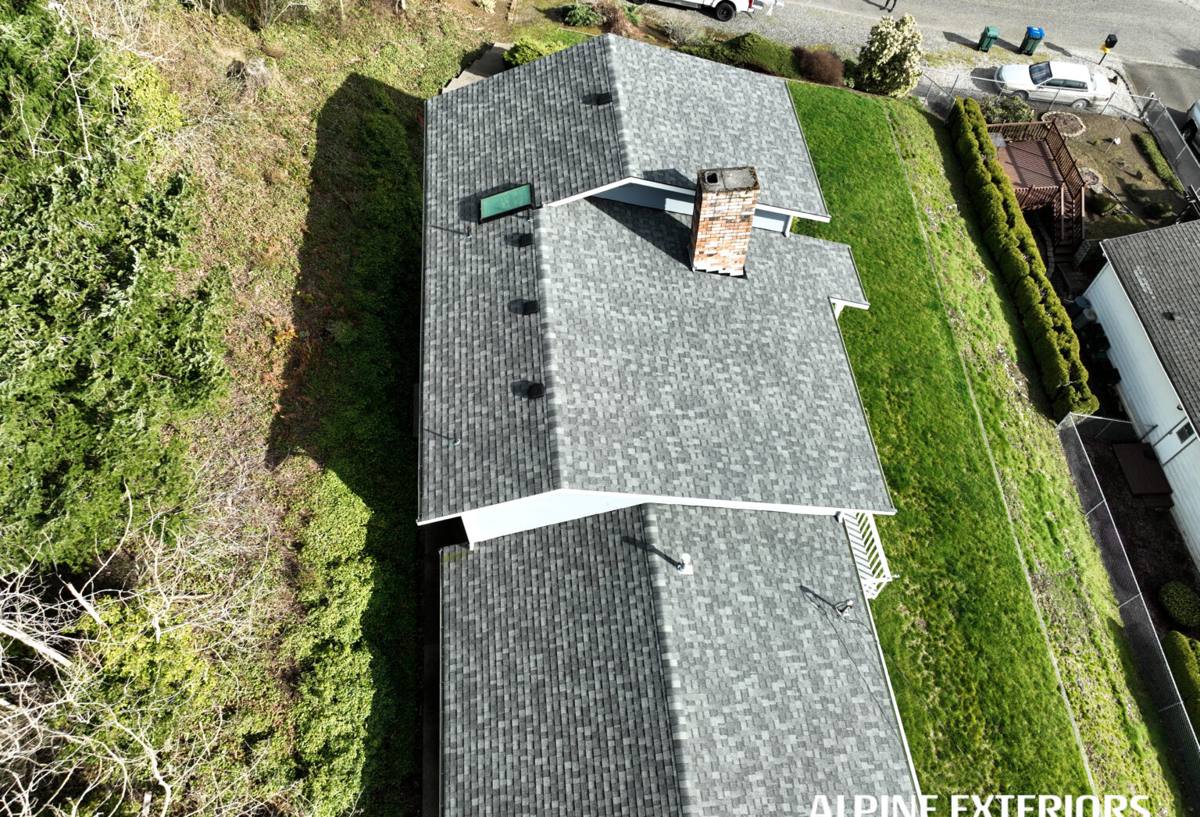
What Salt Air, Rain, and Moss Actually Do to a Roof
Salt Air and Metal Components
Proximity to the water means the air carries salt, and salt accelerates corrosion on anything metal — nails, flashing, vent boots, drip edge. A roof that would hold up fine in a dry inland climate can see premature rust and metal fatigue here if the wrong fastener or flashing material was used. This is one of the most common causes of leaks we find on older Bellingham roofs: not the shingles failing, but the metal around them giving out first.
Driving Rain and Wind-Driven Water
Bellingham's rain rarely just falls straight down. Storms off the Sound tend to push rain sideways, which means water gets tested against every seam, valley, and penetration on a roof, not just the open field of shingles. A roof that's watertight in calm weather can still leak in a wind-driven storm if the flashing details and underlayment weren't built with that in mind.
Moss, Shade, and Trapped Moisture
Between the tree cover common on Chuckanut-area and Bellingham lots and the long damp season, moss has plenty of time and moisture to take hold, especially on north-facing or heavily shaded slopes. Moss isn't just cosmetic — it holds water against the roofing material, lifts shingle edges as it grows, and keeps the deck underneath from ever fully drying out. Left long enough, that trapped moisture is what actually rots decking and shortens a roof's life, not the moss itself.
Signs a Bellingham Home Needs a New Roof, Not Another Repair
Not every roof problem calls for full replacement — but in this climate, certain signs mean patching is just delaying a bigger cost. Here's what we look for when deciding whether repair still makes sense:
- Granule loss heavy enough that you can see bare asphalt on multiple slopes, not just one spot
- Moss that keeps returning within a year or two of cleaning, especially on shaded slopes
- Soft or spongy decking felt underfoot during inspection, a sign moisture has already reached the sheathing
- Daylight visible through the attic at roof boards, or consistent damp/musty smell in the attic space
- Flashing that's visibly rusted, cracked, or pulling away around chimneys, skylights, and vents
- Shingles curling, cupping, or cracking across large sections rather than isolated spots
- The roof is at or past the manufacturer's expected service life for its material and this climate
- Repeated leaks in different locations each season, rather than one recurring, fixable spot
If you're seeing one or two of these, a repair may still buy you time. If you're seeing several at once, replacement is usually the more honest recommendation, and we'll tell you that directly rather than stacking patches on a roof that's already past its useful life.
Choosing a Roofing System Built for This Climate
There's no single "best" roofing material for every home — it depends on your roof's slope, how much shade it gets, your budget, and how long you want to go before your next major roofing project. Here's how the common options actually perform under Bellingham's specific conditions:
| Material | Moss Resistance | Salt-Air Durability | Typical Lifespan Here | Maintenance Needs |
|---|---|---|---|---|
| Architectural asphalt shingle | Moderate; benefits from zinc/copper strips on shaded slopes | Good, with corrosion-resistant flashing and fasteners | 20–30 years | Periodic moss treatment and gutter clearing |
| Standing seam metal | Strong; sheds moss more easily due to smooth, steep-friendly surface | Requires coated or marine-grade metal to avoid premature corrosion | 40–50+ years | Low; occasional fastener and seam checks |
| Synthetic/composite shingle | Good; resists moisture absorption better than organic-based products | Good, with proper flashing details | 30–50 years | Low to moderate |
For most Bellingham homes, a well-installed architectural asphalt shingle with the right underlayment and flashing package is a solid, cost-effective choice. Homes with heavy shade, steep valleys, or owners who want to minimize long-term moss maintenance often lean toward metal. We'll walk your specific roof and give you a straight recommendation rather than pushing whatever's easiest to install.
What a Correct Roof Installation Actually Involves
The materials on top get all the attention, but most roof failures in this region trace back to what's underneath and around them. A correct installation means getting every layer right, not just laying shingles over what's already there.
Tear-Off and Deck Inspection
We remove the old roofing down to the deck rather than layering over it. That's the only way to actually see the condition of the sheathing — soft spots, rot, or old water damage don't show up until the old layer is off. Any damaged decking gets replaced before anything new goes down; installing a new roof over a compromised deck just guarantees an early failure.
Underlayment and Ice-and-Water Protection
Given how long Bellingham stays wet through fall, winter, and spring, underlayment choice matters more here than in drier climates. We use synthetic underlayment across the field and self-adhering ice-and-water membrane at the vulnerable points — eaves, valleys, and around penetrations — where wind-driven rain and standing water are most likely to find a way in.
Flashing Details
Flashing is where most leaks start, and it's where salt air does the most damage over time. We use corrosion-resistant flashing at chimneys, skylights, sidewalls, and vent penetrations, and we form and seal it correctly rather than relying on caulk to cover a shortcut. This is the detail that separates a roof that lasts from one that leaks in five years.
Ventilation
Proper intake and exhaust ventilation keeps attic temperatures and moisture in balance, which does two things at once: it extends shingle life by reducing heat buildup, and it reduces the damp, stagnant air that helps moss and mildew take hold. We check existing ventilation on every replacement and correct it if it's undersized or blocked, which is common on older Bellingham homes.
Our Installation Process, Step by Step
- On-site inspection and honest assessment of whether repair or replacement is the right call for your roof
- Written estimate covering material options, scope of work, and timeline, with no pressure to decide on the spot
- Scheduling around Whatcom County's weather windows to avoid installing during active storm systems
- Full tear-off and deck inspection, with any damaged sheathing replaced before moving forward
- Installation of underlayment, ice-and-water membrane at vulnerable areas, and new flashing throughout
- Installation of the chosen roofing material to manufacturer specifications, including proper nailing patterns and exposure
- Ventilation check and correction where needed, including ridge and soffit venting
- Full site cleanup, including magnetic sweep for stray fasteners
- Final walkthrough so you can see the finished work and ask questions before we consider the job done
Ventilation and Moss Prevention After Installation
A new roof isn't a one-time fix in this climate — a small amount of ongoing attention keeps it performing the way it should for its full lifespan. We design roofs with moss prevention in mind from the start: proper slope transitions, clean valleys that shed water quickly, and, where appropriate, zinc or copper strips near the ridge that discourage moss regrowth on shaded slopes as rainwater carries trace metal down the roof face.
Beyond that, the biggest factor in long-term roof health is keeping gutters and valleys clear, especially heading into the wetter months. Standing water and trapped debris are what give moss and rot the foothold they need. We're happy to walk you through a simple seasonal maintenance routine after installation so the roof we build stays in the condition it started in.
What Affects the Cost of a New Roof in Bellingham
Every roof is priced based on its own specifics, but the same handful of factors drive most of the variation between jobs. Understanding them helps you evaluate any estimate you receive, from us or anyone else:
| Factor | Why It Matters |
|---|---|
| Roof pitch and access | Steep or hard-to-access roofs take longer and require more safety setup |
| Material choice | Asphalt, synthetic, and metal roofing carry different material and labor costs |
| Deck condition | Rotted or damaged sheathing found during tear-off adds material and labor |
| Number of existing layers | Removing multiple old roofing layers takes more time and disposal cost |
| Roof complexity | Valleys, dormers, skylights, and chimneys each add flashing work |
| Ventilation upgrades | Adding or correcting ridge and soffit venting is an added but worthwhile line item |
We won't quote a number without seeing the roof, but we can tell you upfront that the lowest bid on paper is often the one that skips underlayment upgrades, uses minimal flashing, or leaves ventilation as-is even when it's inadequate. Those shortcuts don't show up until a few winters in.
Why Hiring a Crew That Already Works in Bellingham Matters
Roofing crews that mostly work drier, inland climates don't always default to the underlayment coverage, flashing corrosion-resistance, or ventilation planning that Bellingham roofs actually need — because their usual jobs don't demand it. A crew that regularly works Whatcom County knows which slopes tend to hold moss, how far up a valley ice-and-water protection should run given our rain patterns, and which fastener and flashing materials hold up against salt air over the long term.
There's also the practical side: local crews understand Bellingham's permitting process, are familiar with the mix of home ages and roof framing common in the area, and can schedule around the region's weather patterns instead of working against them. That local knowledge doesn't show up as a line item on an estimate, but it shows up in how the roof performs five, ten, and twenty years out.
If your roof is showing its age or you just want a straight opinion on where it stands, we're glad to take a look. Fill out the form below for a free, no-pressure estimate on your Bellingham roof.