 Chuckanut
 Bellingham Roofs Work Harder Than Most
A roof in Bellingham doesn't get an easy life. Between the salt-laden air moving in off the water, long stretches of driving rain, and a moss season that can run nine months out of the year, the materials up there are under near-constant low-grade attack. None of it looks dramatic day to day — a little discoloration here, a soft patch of green there — but it adds up, and it adds up fastest on the roofs that never get a proper repair when a small problem is still small.
This page is about one job: repairing an existing roof on a Bellingham home, done right, not a sales pitch for a full tear-off you don't need. A lot of roofs in this area can go years longer with the right targeted repair. The trick is knowing which problems are cosmetic, which are structural, and which repair actually fixes the cause instead of just patching the symptom.
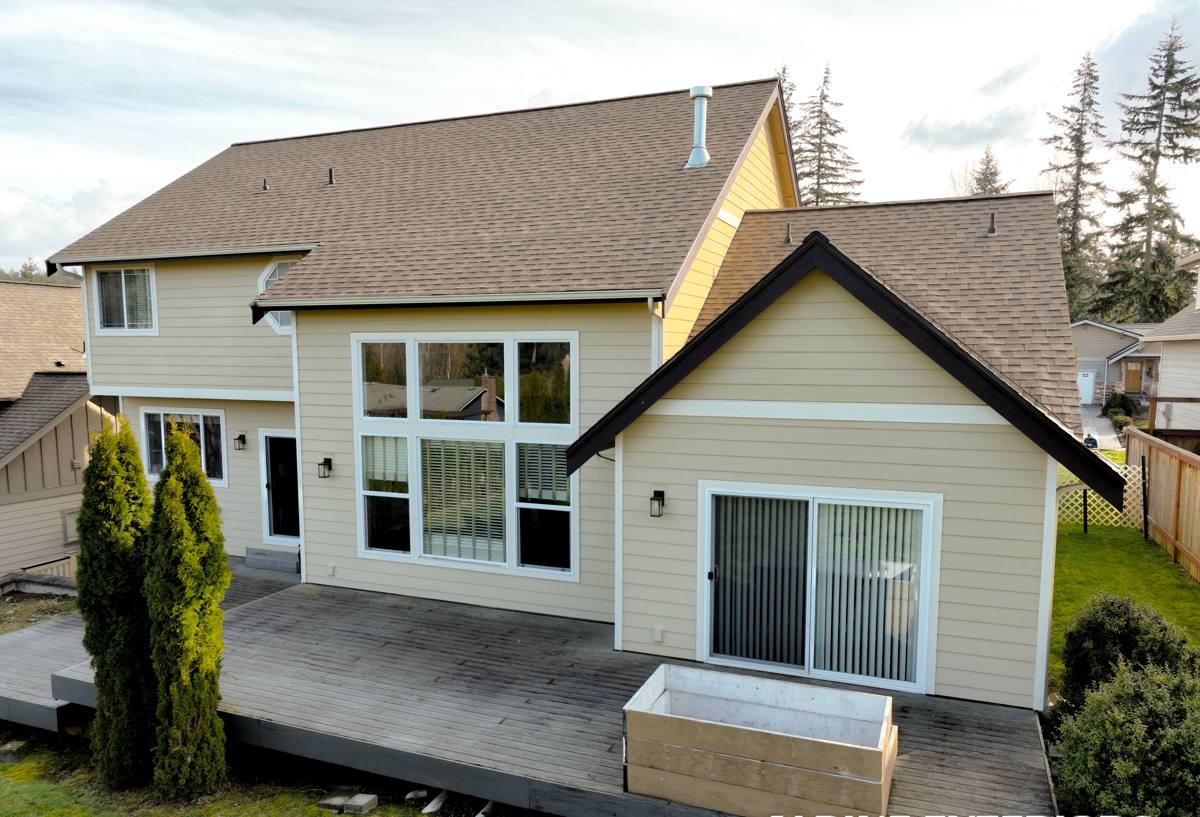
What the Climate Actually Does to a Roof Here
Whatcom County weather isn't especially violent, but it's relentless, and relentless is worse for a roof than dramatic. Three things drive most of the repair calls we see on Bellingham homes:
Salt Air and Metal Fatigue
Homes closer to the water pick up airborne salt that settles on exposed metal — flashing, fasteners, gutter hardware, vent caps. Over years, that accelerates corrosion in anything that isn't a marine-grade or properly coated material. It's rarely the shingles themselves that fail first near the water; it's the small metal details that were never built for salt exposure.
Driving, Wind-Pushed Rain
Rain that comes in sideways finds every gap a straight-down rain would never reach. Wind-driven rain gets up under shingle tabs, behind step flashing, and into nail penetrations that are perfectly fine in calm weather. Most of the leaks we trace back start at a flashing detail or a fastener, not a failed shingle field.
Long Moss Season
Shade, moisture, and mild temperatures are exactly what moss wants, and this area gives it all three for most of the year. Moss holds water against the roof surface far longer than bare shingle would dry, which softens granule adhesion, lifts shingle edges, and eventually works its way under the roofing at the butt joints.
Signs a Repair Call Is Overdue
Most roof damage here doesn't announce itself with a dramatic leak. It shows up as small, easy-to-dismiss signs first:
- Granules collecting in gutters or at downspout outlets after normal rain, not just after a storm
- Dark streaking or green/black moss growth concentrated on north-facing or shaded slopes
- Curling, cupping, or lifted shingle tabs, especially along ridges and edges
- Rust staining below metal flashing, vents, or fasteners
- Soft spots or slight sagging felt when walking a low-slope section
- Water stains on interior ceilings that only appear during wind-driven storms, not steady rain
- Daylight visible through the attic decking at any point
Any one of these on its own is worth a look. Two or more together usually means the damage has moved past the surface and into the underlayment or decking, which changes the scope of the repair.
What a Correct Roof Repair Actually Involves
A repair that holds up in this climate is never just "replace the bad shingles." It has to address why that section failed in the first place.
Flashing Before Field Shingles
Because wind-driven rain concentrates at transitions — valleys, chimneys, skylights, sidewalls — flashing gets inspected and, where needed, replaced before we touch the surrounding shingles. Reusing old, pitted, or improperly lapped flashing under new shingles just guarantees the same leak reappears in a season or two.
Decking and Underlayment Condition
Once shingles are pulled back, the decking underneath tells the real story. Soft, delaminating, or water-stained decking gets replaced in the repair area rather than roofed over. Underlayment gets matched to the exposure of that section — added ice-and-water protection at eaves, valleys, and low-slope transitions where standing moisture is a known risk in our climate.
Matching Materials, Not Just Filling Gaps
Shingle color and profile fade and weather over time, so a repair patch that uses brand-new shingles against a ten-year-old roof will stand out. We match as closely as the existing product allows and set expectations honestly if an exact match isn't available — a slight difference in a repaired section is normal and not a defect.
Fasteners and Metal Rated for the Exposure
Given the salt air issue described above, repair work on homes closer to the water gets corrosion-resistant fasteners and flashing rather than standard-grade hardware, even if it costs a little more up front. Redoing the same repair in five years because the nails rusted through isn't a savings.
Repair or Replace? Weighing the Real Factors
Not every roof problem needs a full replacement, and not every roof is a good candidate for another patch. Here's how we walk homeowners through that decision:
| Factor | Leans Toward Repair | Leans Toward Replacement |
|---|---|---|
| Roof age | Under 15-20 years, within expected lifespan of the material | At or past the material's typical service life |
| Extent of damage | Isolated to one slope, valley, or penetration | Spread across multiple slopes or the whole field |
| Decking condition | Solid, dry decking found once shingles are pulled back | Widespread soft spots, rot, or delamination |
| Repair history | First or second repair on this roof | Third or later repair to the same general area |
| Moss/moisture pattern | Localized to shaded sections, manageable with cleaning | Heavy, roof-wide moss with granule loss throughout |
When a roof lands solidly in the "repair" column, that's what we recommend and price. We don't upsell a replacement to a roof that has years of honest service left in it.
Our Process for a Bellingham Roof Repair
The process is the same whether the job is small or larger in scope:
- Inspection from the ground and the roof — we look at the interior attic space where accessible, not just the shingle surface, since that's often where the real damage shows first.
- Honest diagnosis — you get a clear explanation of what failed, why it failed in this specific spot, and what the repair will and won't address.
- Written scope and estimate — materials, the area of the roof involved, and a straightforward price range before any work starts.
- The repair itself — flashing and decking addressed first, matched materials installed, corrosion-resistant hardware used where exposure calls for it.
- Cleanup and a final check — including a look at whether moss or debris elsewhere on the roof is likely to cause the next call, so you know what to watch.
Between Repairs: Keeping Moss and Debris From Undoing the Work
A good repair can still be shortened by neglect in the months after. Simple maintenance keeps the rest of the roof from catching up to the section that just got fixed:
- Clear gutters and downspouts each fall, before the heavy rain season sets in
- Remove overhanging branches that keep shaded sections of roof damp longer than the rest
- Have visible moss treated or physically removed rather than left to spread season over season
- Check attic ventilation — poor airflow traps moisture from below and accelerates decking and shingle wear from underneath
- Walk the roofline visually after major windstorms for lifted shingles or displaced flashing
Why a Crew That Already Works Bellingham Roofs Matters
Roofing technique doesn't change by zip code, but judgment does. Knowing which slopes on a typical Bellingham home hold moss longest, which flashing details tend to fail first under this area's wind-driven rain, and which materials actually hold up against salt exposure near the water comes from working on roofs in this specific climate, not from a general repair checklist. That local familiarity is what keeps a repair from being a short-term patch and turns it into a fix that holds through the next several wet seasons.
It also means a faster, more accurate diagnosis. When the first thing to check is whatever fails first in this climate — instead of running through a generic list of possibilities — the repair gets scoped correctly the first time.
If you're seeing moss, staining, granule loss, or a leak that only shows up in wind-driven storms, we're happy to take a look and give you an honest, no-pressure estimate on what it will take to fix it right. There's no obligation — just a straight answer on what's going on with your roof and what your options are.