 Chuckanut
 Bellingham's Weather Is Rough on Roofs
Bellingham sits right on Bellingham Bay, and that location cuts both ways for homeowners. It's a beautiful place to live, but the roof over your head takes a beating that inland homes never see. Salt-laden air off the water works into shingle granules, metal fasteners, and flashing over time. Add in driving rain that comes sideways off the bay during winter storms, and you've got moisture finding its way into every gap, nail hole, and worn seam a roof develops as it ages.
Then there's moss. Whatcom County's mix of shade, moisture, and mild temperatures gives moss and algae nearly year-round conditions to take hold on a roof, especially on north-facing slopes and anywhere tree cover blocks the sun. Moss doesn't just look bad — it holds water against the roofing material, lifts shingle edges, and slowly breaks down the surface underneath it. A roof that would last two more decades in a drier climate can start failing early here if moss and moisture aren't kept in check.
None of this means Bellingham homes need exotic materials or gimmicks. It means the replacement has to be done with this specific climate in mind — the right underlayment, the right ventilation, and materials chosen for how they actually perform in salt air and driving rain, not just how they look on a sample board.
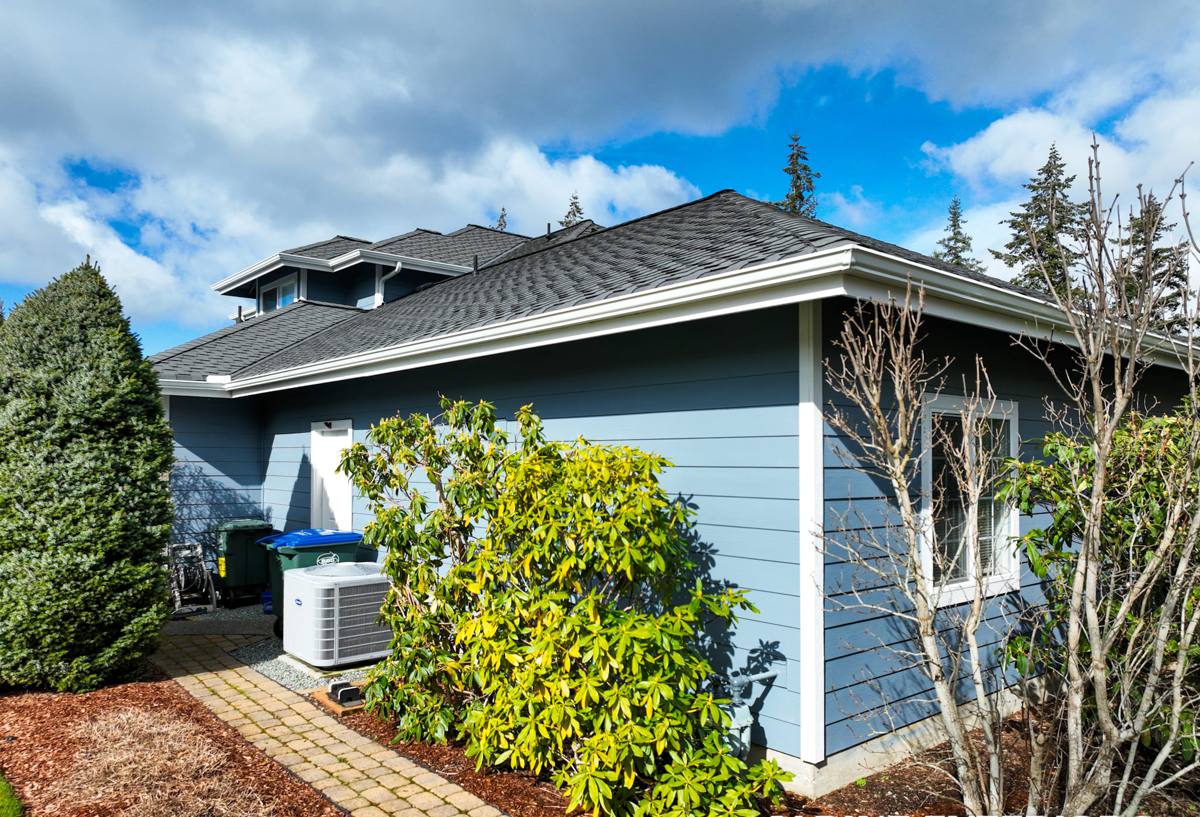
Signs It's Time to Replace, Not Repair
Not every roofing problem calls for a full replacement. Plenty of leaks and worn spots can be repaired if the rest of the roof is still sound. The question we're always trying to answer for a homeowner is whether you're fixing an isolated problem or patching a roof that's failing across the board.
When a Repair Still Makes Sense
If the roof is younger, the damage is localized — a section of flashing, a handful of cracked shingles, a vent boot that's dried out — and the decking underneath is still solid, a repair is usually the honest recommendation. There's no reason to replace a whole roof to fix one bad spot.
When Replacement Is the Better Call
Replacement becomes the right call when the wear is spread across the whole roof rather than concentrated in one area. Common signs we look for on Bellingham homes include:
- Shingles that are curling, cupping, or losing granules across large sections, not just one slope
- Moss or algae growth that keeps returning within a season or two of cleaning
- Soft or spongy decking discovered during an inspection, which points to moisture that's already gotten underneath the roofing material
- Daylight visible through the roof deck from inside the attic, or water stains that show up in more than one spot
- A roof that's approaching or past the expected lifespan of its material, especially if it's never had major work done
If you're not sure which category your roof falls into, an honest inspection should tell you — and it should come with a straight answer, not an automatic push toward the bigger job.
What a Correct Roof Replacement Actually Involves
A roof replacement is more than stripping old shingles and nailing down new ones. In a climate like this one, the parts of the job you can't see after it's done are what determine whether the new roof actually holds up.
Full Tear-Off and Deck Inspection
We remove the old roofing down to the deck rather than layering over it. That's the only way to actually see the plywood or plank decking underneath, which is where moisture damage from a failing roof usually shows up first. Any soft, delaminated, or rotted decking gets identified and replaced before anything new goes down — skipping this step is how a new roof ends up with problems inside of a few years.
Underlayment and Moisture Protection
Underlayment is the roof's backup layer if wind-driven rain gets past the surface material, which happens more often here than in calmer inland climates. We use synthetic underlayment as the standard, with self-adhering ice-and-water barrier at the eaves, valleys, and any roof-to-wall transitions where wind-driven rain is most likely to force its way in.
Ventilation
Attic ventilation controls moisture and temperature inside the roof system, and it's easy to overlook because it's invisible from the ground. Poor ventilation traps humid air against the underside of the decking, which accelerates rot and can encourage moss and mildew from the inside out. Balanced intake and exhaust ventilation is part of a correct replacement, not an upgrade you pay extra for.
Flashing and Transitions
Chimneys, skylights, dormers, and sidewall transitions are where the majority of roof leaks actually start, not in the open field of shingles. New step flashing, counter-flashing, and properly sealed penetrations at every one of these points matter as much as the shingles themselves.
Choosing the Right Roofing Material for This Climate
There's no single "best" roofing material — the right choice depends on your budget, your roof's design, and how much long-term maintenance you're willing to keep up with. Here's how the common options compare for a coastal Whatcom County home:
| Material | Moss & Moisture Resistance | Typical Lifespan | Maintenance |
|---|---|---|---|
| Asphalt composition shingle (algae-resistant) | Good, with copper or zinc granules that slow algae and moss growth | 20-30 years | Low to moderate; periodic moss treatment on shaded slopes |
| Standing seam metal | Very good; smooth surface sheds moisture and gives moss little to grip | 40-50+ years | Low; occasional fastener and sealant checks |
| Cedar shake or shingle | Poor without diligent upkeep; wood holds moisture and is highly prone to moss in shaded, damp conditions | 20-30 years with maintenance | High; regular treatment and cleaning required to prevent premature rot |
We're upfront that we steer most Bellingham homeowners away from untreated cedar roofing specifically because of how this climate treats it — not because it's a bad product everywhere, but because wood roofing in a shaded, damp, salt-air environment demands a maintenance commitment most homeowners don't want to sign up for. Algae-resistant asphalt shingles or standing seam metal give you a roof that fights this climate instead of needing constant help to survive it.
Our Roof Replacement Process
The steps don't change much from one job to the next, but the details we pay attention to at each step do, based on your roof's exposure, pitch, and condition:
- On-site inspection of the current roof, attic ventilation, and decking, followed by a written estimate
- Material selection based on your roof's slope, sun exposure, and your budget
- Permitting, scheduling, and material delivery
- Protecting your landscaping, siding, and gutters before work begins
- Full tear-off of the existing roofing down to the deck
- Deck inspection and repair of any damaged sheathing
- Installation of underlayment, ice-and-water barrier, flashing, and ventilation components
- Installation of the new roofing material
- Full site cleanup, including a magnetic sweep for stray nails
- Final walkthrough with you and paperwork for material and workmanship warranties
What Affects the Cost of a Bellingham Roof Replacement
Every roof is different, so we don't quote a job until we've actually looked at it, but the same handful of factors drive the price on nearly every project:
| Factor | Why It Matters |
|---|---|
| Roof size and pitch | More square footage and steeper slopes mean more material and more labor time |
| Number of existing layers | Removing multiple old layers of roofing takes more time than a single tear-off |
| Decking condition | Rotted or soft sheathing found during tear-off has to be replaced before new roofing goes down |
| Material choice | Standard asphalt shingle, premium shingle, and metal roofing all sit at different price points |
| Roof complexity | Valleys, dormers, skylights, and multiple roof planes add labor and flashing work |
| Access and site conditions | Steep lots, mature trees, or limited staging space can add time to the job |
As a broad range, most full roof replacements on a typical single-family home in this area land in the five-figure range, with the final number depending heavily on the factors above. We'd rather give you a number based on your actual roof than a figure pulled out of thin air over the phone.
Why a Bellingham-Based Crew Makes a Difference
Roofing crews that work outside this region tend to treat every job the same way, regardless of climate. A crew that works Bellingham and the surrounding Whatcom County area day in and day out knows which slopes on a given lot are going to hold moss, which underlayment details actually matter when the rain comes in sideways off the bay, and how to plan a tear-off around a weather window instead of leaving decking exposed overnight.
Local experience also means we're familiar with the permitting process for the jurisdictions we work in, and we're not disappearing to the next state over once your roof is finished. If a warranty question comes up two years down the road, you're calling a crew that's still working in your neighborhood, not chasing down a company that only passed through once.
Caring for Your New Roof
A correctly installed roof still needs a small amount of upkeep to reach its full lifespan in this climate. A few habits go a long way:
- Keep gutters and downspouts clear so water isn't backing up under the roof edge
- Trim back overhanging branches to cut down on shade, debris, and moss growth
- Schedule moss treatment on shaded or north-facing slopes before it becomes established growth
- Do a visual check after major windstorms for lifted shingles or displaced flashing
- Have the roof looked at every few years, even if nothing seems wrong, so small issues get caught early
If you're weighing whether your current roof needs a repair or a full replacement, we're happy to come take an honest look. Fill out the form below for a free, no-pressure estimate on your Bellingham home.