 Chuckanut
 Blanchard sits along the Chuckanut corridor, where forested bluffs run down close to the water and homes get the full weather package that comes with it. A deck out here isn't a weekend accessory — it's an outdoor structure that has to shed water, resist rot, and stay safe underfoot through a wet season that runs longer than most of the state deals with. Building one correctly in this specific spot takes different detailing than building the same deck somewhere drier and more open. This page walks through what that actually means, from the ground up.
What Blanchard's Site Conditions Demand From a Deck
Most Blanchard properties share a few things in common: tree cover close to the house, ground that holds moisture longer than open lots, and exposure to weather rolling in off the water. That combination changes how a deck should be built before a single board goes down. Footing depth and drainage around the posts matter more here than on a dry inland lot. Ledger board flashing has to be done right the first time, because a leak behind a ledger board doesn't show itself until the framing underneath has already started to suffer. And any low-clearance area under the deck needs enough airflow to keep humidity from just sitting there season after season.
None of this is exotic work. It's standard deck-building practice applied with the discipline a wetter, shadier site actually requires — the kind of detailing that's easy to skip on a bid built for a drier climate and hard to notice missing until years later.
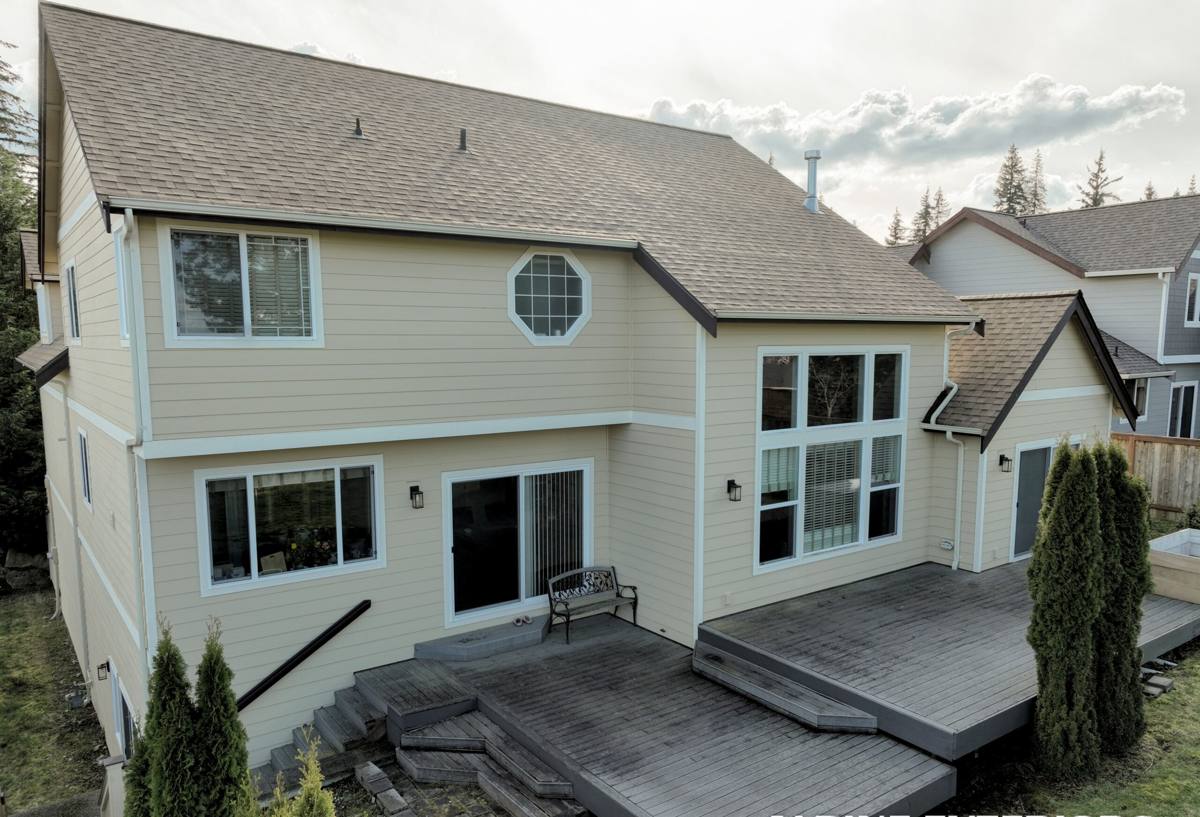
What Salt Air, Driving Rain, and Moss Season Do to a Deck Over Time
Three conditions do most of the damage to decks in this area, and they compound each other. Salt air off the water accelerates corrosion in fasteners, hardware, and any exposed metal connectors — a deck built with the wrong hardware grade can show rust streaks and weakening connections years before it should. Driving rain doesn't fall straight down here; storms push it sideways into railings, stair stringers, and any horizontal surface that isn't detailed to shed water quickly, which means end grain and joints take on moisture that a calmer climate would rarely expose them to. And a moss season that can run most of the year on shaded decking surfaces holds that moisture against the wood or composite surface, feeding the kind of slow organic growth that makes boards slick underfoot and, on wood, speeds up decay.
Individually, any one of these is manageable. Together, over a 10- to 20-year deck lifespan, they're the reason two decks built with the same lumber can age completely differently depending on how well the build accounted for this climate from day one.
Where Decks Actually Start to Fail
Deck failure in this area is rarely dramatic. It's usually a slow, localized process — a fastener that starts to corrode and loosen, a ledger connection where flashing was skipped or installed wrong, a stair stringer that stays damp longer than the rest of the structure and starts to soften at the base. Because these are gradual, localized problems, they're easy for a homeowner to miss until a board needs replacing or a railing starts to feel less solid than it used to.
Decking Material Options for a Blanchard Property
There's no single right decking material for every homeowner — it comes down to budget, maintenance appetite, and how much you value a natural look versus low upkeep. Here's how the common options actually compare in this climate.
| Material | Moisture Behavior Here | Maintenance Needed | Typical Lifespan |
|---|---|---|---|
| Pressure-treated lumber | Resists rot when properly finished and ventilated; end grain and cut edges are vulnerable if not sealed | Re-sealing every 1-2 years; regular moss and mildew treatment | 15-20 years with upkeep |
| Cedar | Naturally decay-resistant but organic; performance depends heavily on finish and drainage detailing | Re-staining every 2-3 years; joint and fastener inspection | 15-25 years with consistent maintenance |
| Composite decking | Does not absorb moisture or rot; surface can still support moss/mildew growth in shaded, damp spots | Periodic cleaning; no staining or sealing required | 25-30+ years, manufacturer-warrantied |
| PVC decking | Fully synthetic, no organic core, strong moisture resistance | Lowest maintenance of the common options | 25-30+ years, manufacturer-warrantied |
Composite and PVC decking have become the more common choice for exactly the reasons this climate rewards — an organic wood surface has to be maintained on schedule to keep moisture out, while a synthetic surface simply doesn't have that vulnerability at the material level. That said, plenty of homeowners still want the look and feel of real wood, and a well-built, well-maintained wood deck can absolutely hold up here. The honest trade-off is maintenance discipline versus upfront cost and appearance, and we'll walk through that plainly rather than push whichever material is easiest for us to install.
What a Correctly Built Deck Actually Involves
A deck that holds up in this climate comes down to a handful of structural details that are easy to see if you know to look for them, and easy to miss if you don't.
Footings and Framing
Footings need to be sized and set to depth for the soil and frost conditions on the specific site, not just poured to a generic minimum. Framing lumber should be rated for ground contact where it's close to grade, and joist spacing needs to match the decking material's manufacturer specification — composite and PVC products often call for tighter joist spacing than solid wood, and skipping that detail shows up as flex and bounce underfoot within a few years.
Ledger Board Flashing
Where a deck attaches to the house, the ledger board connection is the single most important flashing detail on the whole structure. Water that gets behind an improperly flashed ledger board doesn't just damage the deck — it can work its way into the house's wall framing behind it. This is one detail we don't compromise on regardless of budget.
Fasteners and Hardware
In a salt-air environment, fastener and connector grade matters more than it does inland. Hardware rated for coastal exposure resists corrosion far longer than standard-grade fasteners, and using the wrong grade is one of the most common ways a deck's structural connections weaken years before the decking surface itself shows any wear.
Drainage and Ventilation
Any deck with usable space underneath needs enough clearance and airflow to keep that space from turning into a permanently damp, shaded pocket — exactly the environment moss and mildew need to establish. Grading the ground under the deck to shed water away from the house, rather than letting it pool, is part of a build that's planned for this climate rather than just following a generic framing plan.
A Practical Checklist for Evaluating a Deck Build or Existing Deck
- Footings sized and set to depth for the actual soil conditions on site, not a generic minimum
- Ledger board properly flashed where the deck meets the house
- Fasteners and structural hardware rated for coastal, salt-air exposure
- Joist spacing matched to the specific decking material's manufacturer spec
- Adequate clearance and airflow under the deck to prevent standing humidity
- Grading under and around the deck that moves water away from the house
- Railings and stair stringers detailed to shed water rather than trap it in joints
- A clear answer from the contractor on what maintenance the finished deck will need
If you're evaluating an existing deck rather than planning a new one, this same list works as an inspection guide — most of the early warning signs of a deck in trouble show up in these exact spots first.
Permits and Practical Considerations for a Blanchard Build
Deck construction in this part of Whatcom County typically requires a building permit once the deck exceeds a certain height or size, and requirements can vary depending on the specific property and its location relative to shorelines, slopes, or other site conditions common in the Chuckanut area. We handle the permitting conversation as part of the process rather than leaving a homeowner to sort it out alone, and we'll give you a straight answer on what your specific property will require before work starts.
Our Process for a Blanchard Deck Build
We start with a walk of the property to look at grade, drainage, sun and shade exposure, and how the deck will tie into the house. From there we talk through material options honestly, including the maintenance trade-offs of each, and put together a plan that accounts for the site rather than a one-size-fits-all layout. Once the scope is set, we handle permitting where required, build the substructure to the detailing this climate calls for — footings, flashing, fasteners, and ventilation — and finish with the decking, railing, and any stairs. We walk the finished deck with the homeowner before calling the job done, so you know exactly what you're getting and what it'll take to keep it looking right.
Why a Crew That Already Works Blanchard Matters
A deck built to a generic spec sheet can look fine on day one and still fail early in a climate like this one. A crew that already works the Chuckanut and Blanchard area knows which details actually matter here — where moss takes hold first, how far wind-driven rain travels up a wall or railing, which fastener grades hold up and which don't, and how to grade and ventilate a low-clearance area so it doesn't turn into a standing-moisture problem two years down the road. That's not something you get from a plan drawn up for a different climate and applied here without adjustment. It's the difference between a deck that needs real repair work in year five and one that's still solid at year twenty.
If you're planning a new deck or want an honest look at one you already have, we're glad to come take a look at your Blanchard property, walk through material and layout options, and give you a clear, no-pressure estimate.