 Chuckanut
 Siding on a Blanchard Home Has a Harder Job Than It Looks Like
Blanchard sits in the part of Whatcom County where the weather comes off the water and doesn't let up for months at a time. Homes here deal with salt-laden air, wind-driven rain that hits siding sideways instead of straight down, and a shaded, damp growing season that's practically an invitation for moss and mildew. None of that is unusual for this part of the state — but it does mean that siding choice and installation quality matter more in Blanchard than they would in a drier, more sheltered inland town.
This page is about one thing: installing James Hardie fiber cement siding correctly on a Blanchard house, in a way that actually holds up to the conditions this specific area throws at it.
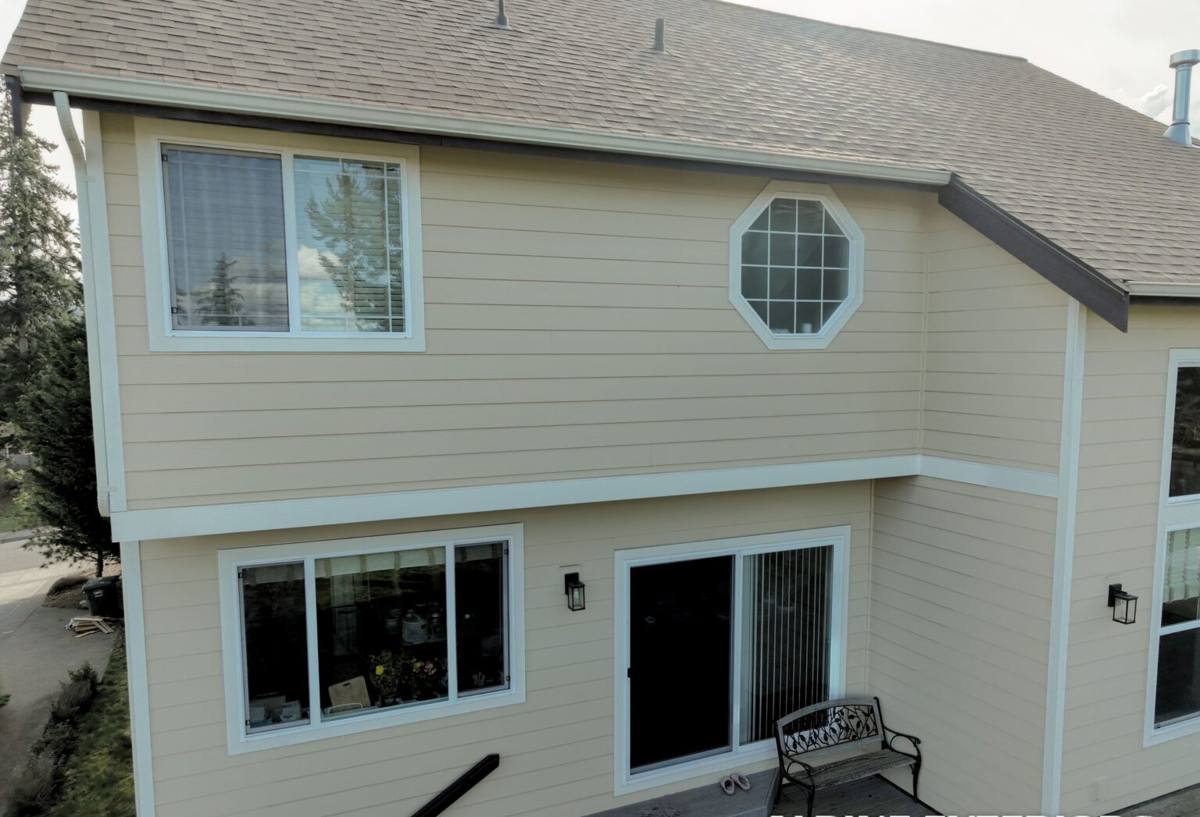
Why Blanchard's Coastal Climate Is Tough on Siding
Salt Air and Corrosion
Proximity to saltwater means airborne salt settles on exterior surfaces year-round, not just during storms. Salt is corrosive to exposed metal fasteners and trim, and it accelerates the breakdown of lower-grade paint finishes. Siding materials and coatings that aren't built for a marine-influenced environment tend to chalk, fade, and corrode faster here than the same product would twenty or thirty miles inland.
Driving Rain and Wind-Driven Moisture
Storms rolling through this stretch of Whatcom County rarely arrive as gentle, straight-down rain. Wind pushes water sideways and up under laps, trim, and joints — the exact places where a siding system either sheds water or lets it in. A siding product's resistance to water absorption, and the quality of the flashing and drainage plane behind it, matters more here than in calmer inland microclimates.
Moss, Shade, and an Extended Damp Season
Between tree cover and the marine layer, many Blanchard properties stay shaded and damp well into the year. That combination is ideal for moss and algae growth on north-facing walls, under eaves, and anywhere air doesn't circulate well. Siding that absorbs moisture gives moss something to root into; siding that stays dimensionally stable and sheds water gives it far less to hold on to.
What James Hardie Siding Brings to a Blanchard Home
A Fiber Cement Core That Doesn't Move With the Weather
James Hardie siding is fiber cement — a mix of cement, sand, and cellulose fibers — engineered to stay dimensionally stable through wet and dry cycles. It doesn't swell, cup, or warp the way wood-based products can when they take on repeated moisture, and it's non-combustible, which matters given the wildfire smoke and ember exposure the whole region has seen in recent summers.
ColorPlus Factory Finish
Most of the siding we install uses Hardie's ColorPlus finish — a coating baked on in a controlled factory process rather than rolled or sprayed on-site. That matters directly for a salt-air environment: factory-applied finishes bond more consistently and resist fading, chipping, and peeling far better than field-applied paint, which is the first thing to fail when salt and UV exposure team up on a lower-grade coating.
Built for This Climate Zone
Hardie engineers its siding in different formulations for different climate zones — including an HZ5 line built for regions with significant moisture and temperature swings, which describes western Washington well. That's a meaningful difference from a generic, one-size-fits-all siding product; it's siding designed with places like Blanchard in mind, not just tolerated by them.
What a Correct Installation Involves
The siding product only performs as well as the installation behind it. In a high-moisture area like Blanchard, the details behind the boards matter as much as the boards themselves.
Water Management Comes First
Before a single piece of Hardie goes up, the wall needs a proper water-resistive barrier, correctly lapped and taped, with flashing integrated at every window, door, and penetration so water is directed out and down rather than trapped behind the cladding. This is the step that gets rushed on cut-rate jobs, and it's the step that determines whether a house stays dry for the next few decades or develops hidden rot in five years.
Fastening, Gaps, and Manufacturer Specification
James Hardie publishes exact requirements for fastener type and spacing, board clearances from grade, roof lines, and decks, and gaps at butt joints and trim. Skipping these specifications is one of the fastest ways to void the manufacturer's warranty and to create the small gaps where wind-driven rain finds its way in.
A Practical Checklist for a Correctly Installed Job
- Weather-resistive barrier installed and lapped correctly, with all seams taped
- Flashing integrated at every window, door, deck ledger, and roof-to-wall intersection
- Minimum clearance maintained between siding and grade, roofing, and decking
- Fasteners of the correct type and depth, placed per Hardie's published spacing
- Butt joints and corners gapped and sealed per manufacturer instructions, not caulked shut with no gap
- Factory-primed cut edges recoated with touch-up paint before installation
Signs of Trouble We See on Existing Blanchard Siding
When we're called out to look at siding on an older Blanchard home, a few patterns show up more often than not — most of them traceable back to moisture and the local climate rather than the age of the house alone.
| What We See | What It Usually Means |
|---|---|
| Dark streaking or green film on north or shaded walls | Moss and algae growth from persistent shade and moisture, common on walls that don't get direct sun or airflow |
| Peeling or chalking paint on a field-painted surface | Coating breakdown from UV and salt exposure, typical of on-site paint versus a factory-cured finish |
| Soft or discolored trim near window and door corners | Water intrusion at a flashing or caulk failure point, often invisible until the substrate underneath is already compromised |
| Rust streaks below fastener heads | Corrosion-prone fasteners reacting to salt-laden air, especially where non-corrosion-resistant fasteners were used |
| Cupped, split, or swollen boards | A wood-based or moisture-absorbent product that has gone through repeated wet-dry cycles |
Our Process for a Blanchard James Hardie Project
- On-site assessment. We look at your current siding, trim, flashing condition, and any moisture or moss patterns specific to your property's exposure and shade.
- Product and color selection. We walk through Hardie's plank, panel, and shingle profiles and ColorPlus color options, factoring in how the home is oriented relative to sun, shade, and prevailing weather.
- Written scope and estimate. You get a clear, itemized plan before any work starts — no verbal promises, no surprise change orders for work that should have been scoped upfront.
- Removal and substrate check. Old siding comes off and we inspect the sheathing underneath for hidden rot or moisture damage before anything new goes up.
- Water-resistive barrier and flashing. This is installed to manufacturer and code requirements, with particular attention to wind-driven-rain-prone areas of the house.
- Hardie installation to spec. Fastening, clearances, and joint treatment follow James Hardie's published installation instructions, not shortcuts.
- Final walkthrough. We review the finished job with you, including care and maintenance specific to your home's exposure.
Cost Factors for a Blanchard Siding Project
Every home is different, so we won't quote a number without seeing the property, but these are the factors that most affect the price of a Hardie project in this area:
| Factor | Why It Affects Cost |
|---|---|
| Extent of hidden moisture damage | Rot or damaged sheathing discovered during tear-off requires repair before new siding can go on |
| Siding profile and finish | Lap, shingle, and panel profiles, along with custom ColorPlus colors, price differently |
| Home complexity | Multiple stories, dormers, and cut-up wall lines take more labor and material than a simple rectangular footprint |
| Trim and accessory scope | Fascia, soffit, corner boards, and trim replacement alongside the siding add to the total project |
| Access and site conditions | Slopes, tight lot lines, or limited equipment access can affect labor time |
Why Hiring a Crew That Already Works Blanchard Matters
Siding installation isn't the same job in every zip code. A crew that primarily works drier, inland areas may not think twice about details that are non-negotiable here — how tight to run a flashing lap, whether a fastener is rated for a salt-air environment, or how much clearance to leave near ground cover that stays damp most of the year. A crew that regularly works Blanchard and the surrounding Chuckanut area already knows what this climate does to a house over time, because they've seen it firsthand on the homes around yours, and they build accordingly rather than learning the hard way on your project.
Local familiarity also means fewer surprises on permitting, code requirements specific to Whatcom County jurisdictions, and realistic scheduling around this region's wetter months.
Caring for James Hardie Siding After Installation in a Climate Like This
Hardie siding is low-maintenance, not zero-maintenance. A little seasonal attention goes a long way toward getting the full lifespan out of the product in a moist, shaded environment like Blanchard's.
- Rinse siding periodically to remove salt residue, pollen, and organic buildup, especially on walls facing prevailing weather
- Keep gutters clear so overflow doesn't run down the siding face repeatedly
- Trim back vegetation and tree limbs that keep a wall shaded and damp longer than necessary
- Inspect caulking at trim, windows, and joints annually and re-caulk where it has cracked or pulled away
- Address any small paint chips or touch-up areas promptly to prevent moisture from reaching the substrate
If you're weighing a siding replacement or repair on a Blanchard property, we're happy to take a look and walk you through what your specific home needs — reach out for a free, no-pressure estimate using the form below.