 Chuckanut
 Blanchard's Climate Is Hard on Windows in Specific Ways
Blanchard sits along the Chuckanut Drive corridor, tucked between the water and the timbered slopes where Whatcom County meets Skagit County. That location is beautiful, but it's also a tough one for windows. Homes here deal with three things at once: salty, humid air rolling off the water, driving rain that gets pushed sideways by wind funneling through the passes and along the bluffs, and a moss season that can run eight or nine months out of the year under all that tree cover.
None of those things ruin a window overnight. They work slowly, on the seals, the hardware, the sill, and the frame material, until one day the window doesn't operate right, feels drafty, or has water finding its way in somewhere it shouldn't. If you've lived in the area a while, you've probably already seen what salt air does to exposed metal hardware, or how a shaded north wall stays damp long after the rest of the house has dried out.
How Salt Air, Rain, and Moss Actually Damage Windows
Salt Air and Hardware Corrosion
Proximity to Samish Bay and the broader Puget Sound means the air here carries more salt than it does further inland. Salt is aggressive on unprotected metal — window locks, hinges, and cranks that aren't rated for coastal exposure will pit and seize years before they would in a drier, inland location. Once hardware corrodes, it stresses the frame around it, and that's often where air and water infiltration starts.
Driving Rain and Wind-Driven Water
Rain that falls straight down is easy to manage. Rain that gets pushed sideways by wind is a different problem, because it tests every seal, every piece of flashing, and every seam around a window opening. Along Chuckanut Drive and in Blanchard's more exposed spots, wind-driven rain is common enough that flashing details and sealant quality matter more here than they would in a sheltered inland neighborhood.
Moss and Prolonged Moisture Against Wood
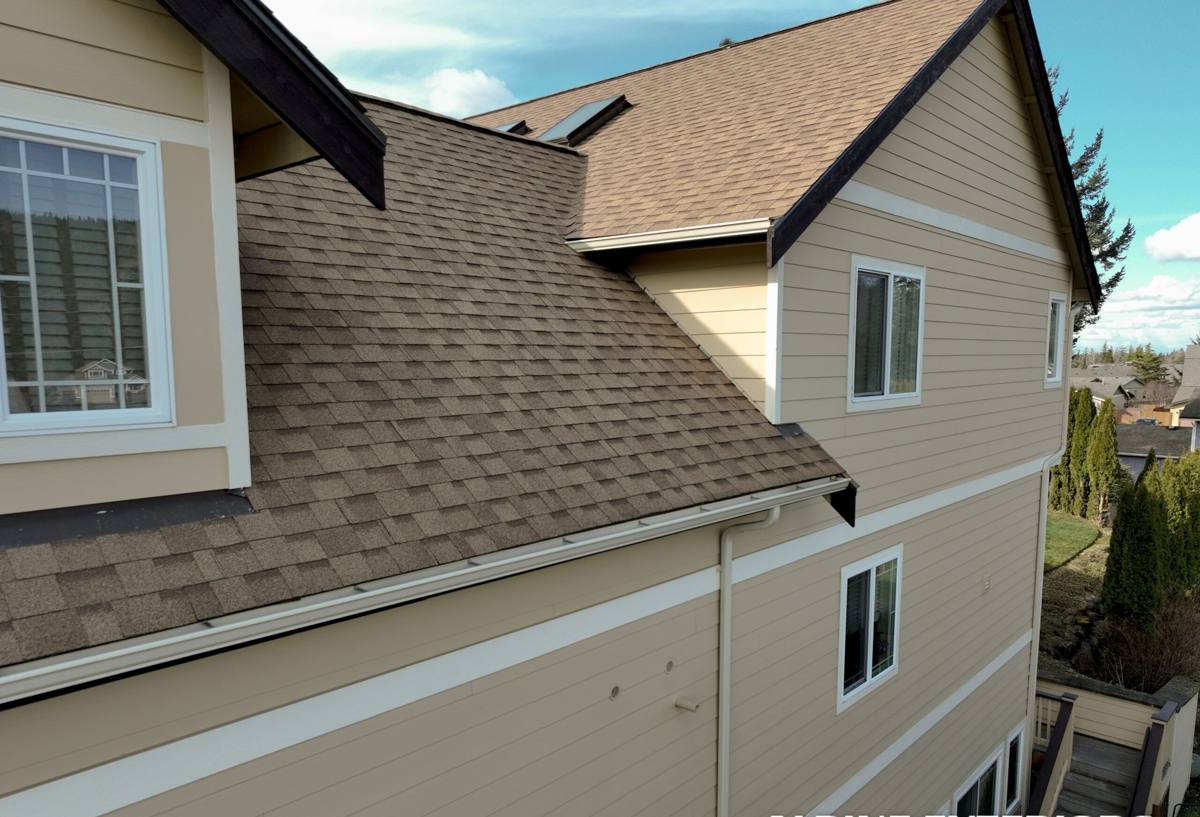
Many Blanchard properties sit under conifer cover, which is great for shade and privacy but means less direct sun to dry out siding, trim, and window sills after a storm. Moss and algae take hold in that kind of damp shade, and where they grow against wood trim or a wood sill, they hold moisture against the material far longer than bare wood would hold it on its own. Over years, that's a slow path to rot at the corners and sills — usually the first place a window actually fails.
Signs a Blanchard Home Needs Replacement, Not Just a Repair
Not every window problem calls for full replacement. But there are signs that mean patching a seal or re-caulking a gap won't solve the underlying issue.
- Soft or spongy wood at the sill or lower corners of the frame
- Visible daylight or a draft you can feel around the sash when the window is closed and locked
- Fogging or a permanent haze between the panes of a double-pane window, which means the seal has failed and the gas fill is gone
- Hardware that's corroded, seized, or was replaced more than once already
- Paint or finish that keeps failing at the same spot no matter how often it's touched up
- Noticeably higher heating bills with no other explanation, especially on the rooms facing the water or prevailing wind
- Visible gaps between the window frame and the siding or trim
If you're seeing one or two of these, a repair might still make sense. If you're seeing several at once, especially rot at the sill, that's usually the point where replacement is the more honest recommendation — patching a rotting frame just delays the same job a year or two down the road.
What a Correct Window Replacement Job Actually Involves
A window replacement is only as good as what happens inside the wall, not just the window itself. In a climate like this one, a few details matter more than they would somewhere drier:
Sill Pan and Flashing
Every new window opening should get a sloped sill pan and properly integrated flashing that ties into the house wrap or building paper above and below the opening. This is what directs any water that does get past the window itself back out of the wall, rather than letting it sit against the framing. Skipping this step is one of the most common causes of hidden rot behind a window that looks fine from the outside.
Air Sealing and Insulation, Not Just Caulk
The gap between the new window frame and the rough opening needs to be sealed and insulated correctly, not just filled with a bead of caulk on the outside. Done right, this cuts drafts and moisture intrusion at the same time.
Matching Frame Material to Exposure
A window on a sheltered, south-facing wall doesn't face the same conditions as one on a north wall exposed to wind and salt spray. Part of doing this job right in Blanchard is recommending the frame and hardware finish that fits where the window actually sits, not using the same spec on every opening regardless of exposure.
Comparing Frame Materials for Blanchard's Conditions
| Material | How It Handles Salt Air & Rain | Maintenance | Typical Lifespan |
|---|---|---|---|
| Vinyl | Won't corrode or rot; handles moisture well | Low — occasional cleaning | 20–30 years |
| Fiberglass | Very stable in wet, salty conditions; minimal expansion/contraction | Low | 30+ years |
| Wood | Attractive but vulnerable to prolonged moisture and rot without diligent upkeep | High — regular refinishing and inspection | Varies widely with maintenance |
| Wood-clad (wood interior, clad exterior) | Exterior clad layer resists weather; interior wood still needs some care | Moderate | 25–35 years |
| Aluminum | Corrodes faster in salt air unless properly coated; conducts cold | Moderate | Varies with coating quality |
We don't push one material on every home. A lot of it comes down to how exposed the window is, what the rest of the house is finished in, and what the homeowner wants to maintain long-term. For a home close to the water or under heavy tree shade, we tend to steer people toward vinyl or fiberglass on exposed elevations because they hold up with the least ongoing upkeep — not because wood or aluminum are bad products, but because they demand more attention in this specific climate.
Glass Packages Worth Considering Here
Beyond frame material, the glass package matters. Double-pane with low-E coating and argon fill is the baseline we'd recommend for most Blanchard homes — it handles the region's mild but persistent damp cold reasonably well. Triple-pane adds real value on walls that take the brunt of the wind, or in rooms where you've noticed a cold draft even with the window shut. It's not necessary everywhere, but it's worth discussing room by room rather than defaulting the whole house to one spec.
Our Window Replacement Process
- On-site assessment. We look at each window's exposure, current condition, and any signs of rot or hidden moisture before recommending anything.
- Honest scope and options. We walk through frame material, glass package, and cost factors for your specific home, room by room if conditions vary.
- Removal and opening inspection. Old windows come out carefully so we can check the framing underneath for rot or moisture damage before it's covered back up.
- Sill pan, flashing, and air sealing. This is the step that determines whether the new window actually keeps water and air out for the long haul.
- Installation and adjustment. New windows are set, shimmed, and adjusted so they operate smoothly and seal correctly.
- Exterior and interior finish work. Trim, caulking, and paint or stain are finished to match the rest of the home.
- Final walkthrough. We test every window with you before we consider the job done.
What Drives the Cost of Window Replacement
| Factor | Why It Matters |
|---|---|
| Number and size of windows | More openings and larger glass sizes mean more material and labor |
| Frame material | Vinyl is generally the most budget-friendly; fiberglass and wood-clad cost more upfront |
| Glass package | Triple-pane and specialty coatings add cost over standard double-pane low-E |
| Condition of the existing opening | Rot or framing damage found during removal adds repair work before the new window can go in |
| Access and exposure | Upper-story or hard-to-access windows on steep Chuckanut-area lots take more time to work safely |
| Trim and finish work | Matching existing trim profiles or repainting/staining adds labor |
We'd rather walk your home and give you real numbers than throw out a price range that doesn't reflect your actual windows. What we can say honestly is that the biggest cost swings usually come from hidden rot found once the old window is out, and from how many windows are being done at once — bundling several openings into one visit is almost always more efficient than doing them one at a time over separate trips.
Why Working With a Crew That Knows Blanchard Matters
Window replacement isn't just a product install — it's a job that has to account for how a specific site behaves in weather. A crew that regularly works the Chuckanut Drive area already knows which elevations take the worst of the wind-driven rain, how much moss and shade to expect on a given lot, and what salt exposure does to hardware over time. That knowledge shapes real decisions: which openings get extra attention to flashing, which frame finishes hold up best, and where a slightly higher-spec glass package is worth it versus where it isn't.
It also means fewer surprises. A crew unfamiliar with this stretch of Whatcom and Skagit County might not think to check for rot patterns common to shaded, water-adjacent lots, or might not flag hardware corrosion as an early warning sign the way we do because we've seen it before on homes just like yours.
Keeping New Windows Performing Long-Term
A correctly installed window in a good frame material shouldn't need much, but a little seasonal attention goes a long way here:
- Rinse salt residue off exterior frames and hardware periodically, especially on water-facing elevations
- Keep gutters and downspouts clear so runoff doesn't sheet down across window openings
- Trim back vegetation that's shading a window enough to keep it damp and encourage moss or algae growth
- Check and lightly lubricate locks and cranks once a year, since salt air accelerates wear on moving hardware
- Re-caulk exterior joints if you notice any gap or cracking, rather than waiting for it to let water in
If you're weighing whether it's time to replace windows on your Blanchard home, we're happy to take a look and give you a straight answer — including telling you if repair is still a reasonable option. Reach out for a free, no-pressure estimate using the form below.