 Chuckanut
 Decking Built for Burlington's Weather, Not Just Its Looks
A deck in Burlington doesn't live an easy life. Between the salt-laden air moving in off the water, long stretches of driving rain through fall and winter, and a moss season that seems to start earlier every year, the ground-level and elevated decks around this community take a beating that inland decks simply don't. We build and replace decks here often enough to know that the products and details that work fine forty miles inland can fail early in this specific microclimate. This page is about one thing: doing composite decking right, for Burlington conditions, with a crew that already understands what this weather does to a structure over time.
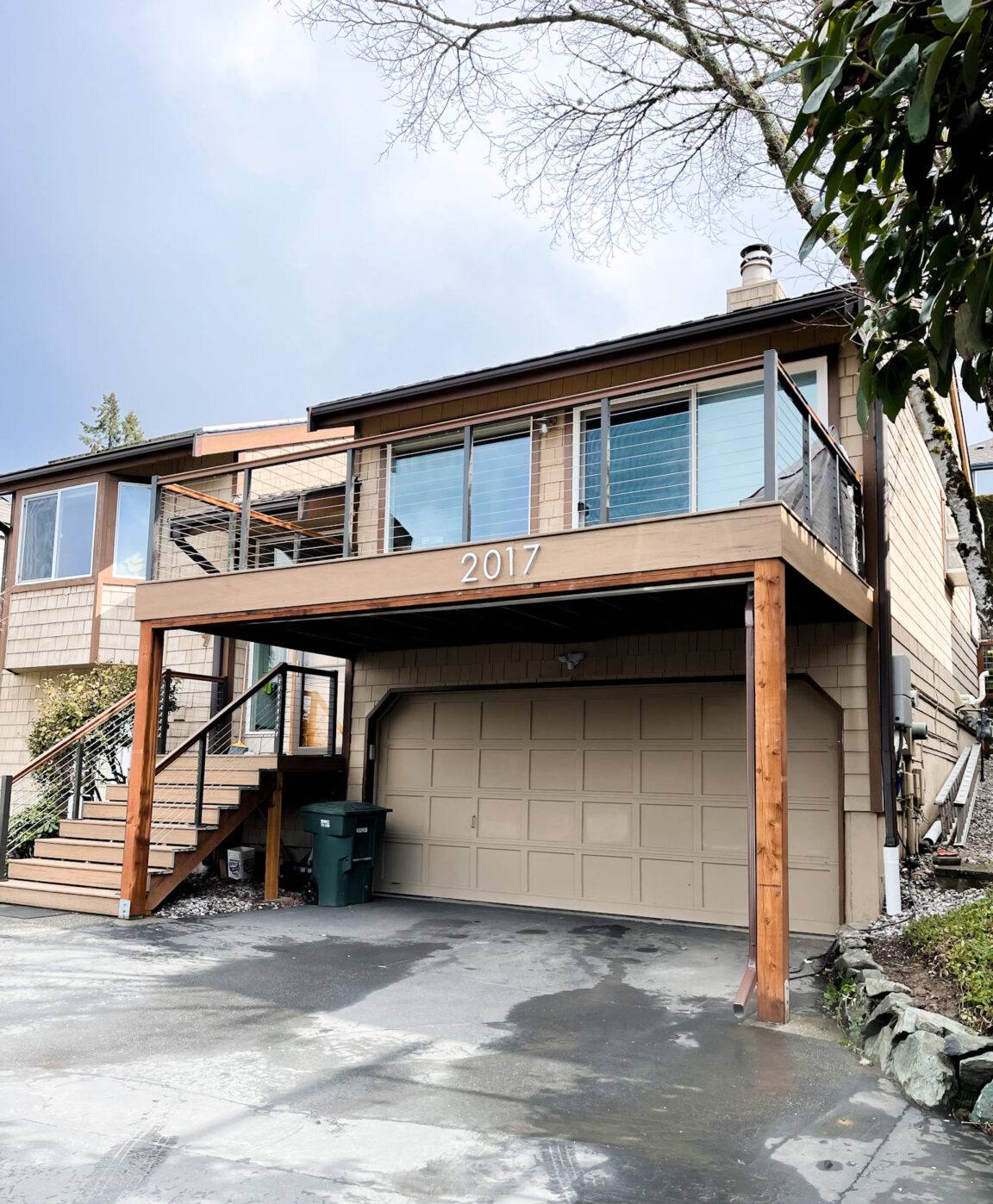
What Salt Air, Rain, and Moss Actually Do to a Deck
Each of these three factors attacks a deck differently, and understanding the mechanism is what separates a deck that lasts from one that doesn't.
Salt Air
Airborne salt accelerates corrosion on any exposed metal — screw heads, joist hangers, structural brackets, railing hardware. A fastener that would last decades in a dry inland climate can start rusting and staining within a few seasons here. Once a fastener corrodes, it weakens, and rust streaks bleed into the decking material itself, which is both a structural issue and a cosmetic one.
Driving Rain
Rain that comes in sideways, rather than straight down, gets forced into gaps that a standard installation might not account for — ledger connections, board end joints, stair stringers, and the perimeter where decking meets the house. Standing water and trapped moisture underneath a deck is one of the leading causes of hidden rot in the framing below, even when the decking surface itself looks fine.
Moss and Organic Growth
A long, damp moss season means organic growth gets a real foothold on any surface that stays shaded or doesn't drain and dry quickly. Moss and algae hold moisture against the decking material, they make boards slick and unsafe underfoot, and on the wrong product they can work into surface texture in a way that's genuinely hard to reverse.
Why Composite Decking Fits This Climate
Composite decking — boards made from a blend of wood fiber and recycled plastic, typically with a protective cap layer — is a strong fit for Burlington precisely because it doesn't behave like solid wood in wet conditions. It won't absorb water the way a natural wood board does, so it isn't prone to the swelling, cupping, and splintering that shows up on wood decks after a few wet winters. It also doesn't need annual staining or sealing to keep moisture out, which matters in a place where a dry, mild stretch to do that kind of maintenance work can be hard to find.
That said, composite isn't maintenance-free, and any contractor who tells you otherwise isn't being straight with you. It still needs airflow underneath, it still needs periodic cleaning to stay ahead of moss and mildew, and the quality of the install underneath the boards matters just as much as the boards themselves. A composite deck built on a poorly ventilated, poorly flashed substructure will still develop hidden rot in the framing — the composite surface just hides the problem longer, which is worse, not better.
What a Correct Installation Actually Involves
Most of what determines whether a deck holds up in this climate happens before a single composite board goes down. This is where we spend the most attention.
Framing and Ledger Connection
The ledger board — where the deck attaches to the house — is the single most common failure point on decks in wet climates. It needs proper flashing that directs water away from the house band joist, not just caulk and a hope. We use structural fasteners and connectors rated for exterior, corrosion-prone environments, not standard interior-grade hardware.
Drainage and Airflow
Joist spacing and the gap between boards are set to let water move through and air circulate underneath, rather than pooling on top of joists or getting trapped in dead air pockets. For decks close to grade, we also look at how water drains away from the structure underneath, not just off the surface.
Fasteners and Hardware
Every screw, bracket, and joist hanger is chosen for corrosion resistance appropriate to a salt-air environment, not just whatever is cheapest at the yard. This is a small line item on an estimate and one of the biggest factors in how a deck ages over ten or fifteen years.
Board Layout and End Treatment
Composite board ends need to be capped or protected per manufacturer spec, and layout is planned to minimize butt joints in high-exposure areas. Stair treads and any area that holds standing water get extra attention, since these are where moss and slip risk show up first.
Composite vs. Other Decking Materials for This Climate
| Material | Moisture Behavior | Maintenance | Typical Lifespan Here |
|---|---|---|---|
| Pressure-treated wood | Absorbs water; prone to cupping, splitting, and rot without diligent upkeep | Annual cleaning, staining/sealing | 10–15 years before major repair or replacement |
| Composite | Doesn't absorb water; capped boards resist staining and moisture damage | Periodic washing to control moss/algae; no staining or sealing | 25+ years with proper substructure |
| Cedar | Naturally rot-resistant but still absorbs moisture; performance depends heavily on upkeep | Regular oiling/sealing, more frequent in wet climates | 15–20 years with consistent maintenance |
| PVC | Fully moisture-resistant, doesn't hold water at all | Low; occasional washing | 25–30 years |
We install composite decking as our standard recommendation for most Burlington projects because it strikes the right balance of moisture performance, appearance, and cost. PVC is a reasonable option for homeowners who want the lowest possible maintenance and are comfortable with its different look and higher price point; wood and cedar remain valid choices for homeowners who prefer the natural material and are willing to commit to the upkeep it requires in this climate.
Our Process, Start to Finish
- On-site assessment: We look at the existing structure (if there is one), grade, drainage, and sun/shade exposure specific to your property.
- Honest estimate: You get a clear scope of work and pricing before anything starts — no surprise change orders for things we should have caught up front.
- Framing and structural work: This is where we install proper flashing, corrosion-resistant hardware, and correct joist spacing for drainage and airflow.
- Decking installation: Boards are laid per manufacturer spec with attention to fastening pattern, board gaps, and end treatment.
- Railing, stairs, and finish details: Hardware and fasteners here are chosen for the same corrosion resistance as the structure below.
- Final walkthrough: We go over care and cleaning specific to your product and your property's exposure before we consider the job done.
Keeping a Composite Deck Ahead of Moss and Algae
Composite decking makes maintenance simpler than wood, but "low-maintenance" isn't "no-maintenance," especially with a moss season as long as this region's. A few habits go a long way:
- Sweep debris off the deck regularly, especially fallen leaves and needles that trap moisture against the board surface
- Wash the deck at least once or twice a year with a soft-bristle broom or brush and a cleaner rated for composite material — avoid pressure washing directly into the board grain
- Keep gutters and downspouts near the deck clear so runoff isn't dumping directly onto the surface or the framing below
- Trim back overhanging branches and vegetation that keep sections of the deck shaded and slow to dry
- Check the underside of the deck once a year for standing water, debris buildup, or early signs of hardware corrosion
- Address any slick, shaded, or persistently damp spots early — that's usually where moss gets its first foothold
What Affects the Cost of a Composite Deck Here
| Factor | Why It Matters in This Climate |
|---|---|
| Deck size and height | Elevated decks need more substantial framing and railing to meet code, and more corrosion-resistant hardware overall |
| Substructure condition | Replacing or reinforcing existing framing that's seen rain damage adds cost but is not optional for a safe, lasting deck |
| Board tier and brand | Composite lines vary in cap thickness and moisture/moss resistance; better-protected boards cost more up front and less over time |
| Railing system | Composite, metal cable, or glass railing all have different installation and hardware requirements |
| Site access and grade | Sloped or hard-to-access lots common in this area can add labor for both framing and drainage work |
We don't publish blanket prices because every property and every existing structure is different, but a straightforward estimate that walks through these factors is part of every quote we give.
Why Hire a Crew That Already Works in Burlington
A contractor who mostly works dry, inland projects can still build a deck that looks right on the day it's finished. The difference shows up two or three winters later, when hardware that wasn't rated for salt air starts to rust, or when a substructure that wasn't detailed for driving rain starts trapping moisture nobody can see yet. We work in this climate regularly, which means the flashing details, fastener choices, and drainage planning described above aren't extra steps we upsell — they're just how we build here, because we've seen what happens when they're skipped.
If you're planning a new deck or replacing one that's showing its age, we're happy to take a look and walk you through what your property specifically needs. Reach out for a free, no-pressure estimate using the form below.