 Chuckanut
 Fiber Cement Siding, Built for Burlington's Weather
Burlington sits low in the Skagit Valley, close enough to Skagit Bay to pick up salt-laden air on a regular basis and flat enough that storm systems moving in off the water don't lose much force before they reach town. Add a shade-heavy tree canopy on a lot of older lots and you get a moss season that runs longer here than in drier parts of the state. Siding on a Burlington home isn't just cladding — it's the first line of defense against three conditions working on it at once, year after year. When homeowners ask us what siding actually holds up here, our answer is the same every time: James Hardie fiber cement, installed to spec. This page covers what that means specifically for a fiber cement siding job in Burlington, not siding in general.
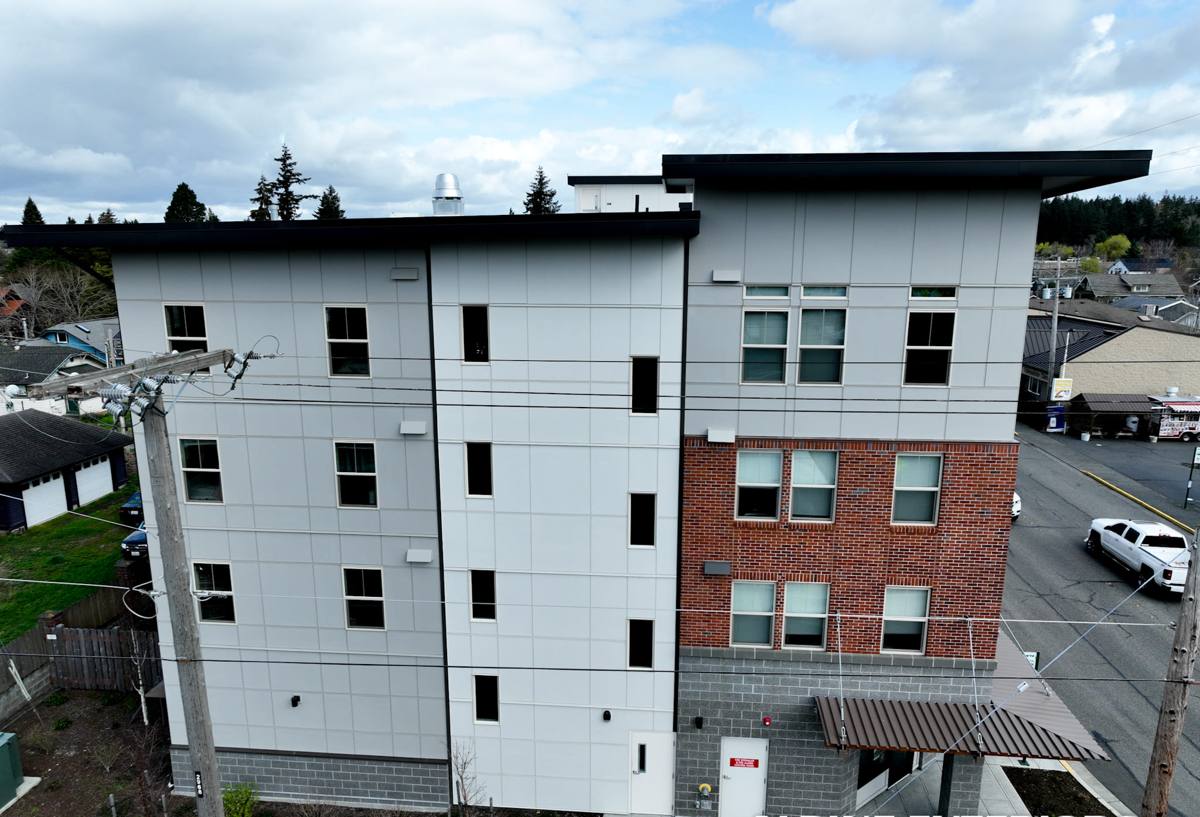
What Salt Air, Driving Rain, and Moss Actually Do to Siding
Salt Air and Corrosion
Salt-laden air moving inland off Skagit Bay accelerates corrosion on exposed metal — fasteners, flashing, trim screws — faster than it would happen further inland. A siding material that depends on field-applied paint to protect it is also fighting a faster clock here, since salt exposure tends to break down lower-grade finishes sooner than in a drier, saltless climate.
Driving Rain That Doesn't Fall Straight Down
Storm fronts coming through the Skagit Valley usually bring wind with the rain, which means water gets pushed sideways into wall assemblies instead of running straight down off a roof. That matters more at siding joints, window flashing, and corner details than most homeowners expect — a gap that would stay dry in a calmer climate becomes a water entry point here.
A Moss Season That Doesn't Take a Break
Shaded, north-facing walls and lots with mature tree cover — common around Burlington — hold moisture longer than sun-exposed walls do. That dampness is exactly what moss needs, and once it takes hold it keeps a wall section wet well after a storm has passed, which is a slow, steady stress on whatever material is underneath.
None of these three shows up as a single dramatic failure. They accumulate — a little paint breakdown here, a slightly corroded fastener there, a damp patch behind moss that never fully dries — until a homeowner is looking at soft trim, staining, or a section of wall that needs more than a patch.
Why We Install Only James Hardie Fiber Cement
We install one siding product on every job we take on, and fiber cement siding for Burlington homes is always James Hardie — never vinyl, LP SmartSide, Cemplank, Allura, primed spruce, or cedar. That's a professional standard, not a limited catalog. Each of those alternatives does something well: vinyl is inexpensive, engineered wood installs fast and takes paint easily, cedar has real natural character. But each one carries a trade-off we think matters too much in a climate like this to put our name behind.
Vinyl can warp and grow brittle with age and temperature swings, and its seams and J-channels are exactly the kind of gap wind-driven rain works into over time. Wood-based products, however well treated at the factory, still have an organic core that depends on flawless field priming and caulking at every cut edge — a demanding standard to hold across an entire crew, on every job, for the full life of the siding. Cedar is genuinely attractive, but it's organic too, and it asks for real ongoing upkeep — refinishing, sealing, moss control — to keep performing through a wet season that doesn't offer much of a dry stretch to recover in between storms.
Fiber cement handles the core problem differently because it isn't organic. There's no wood substrate for moisture to work into, and it doesn't feed moss growth the way wood-based products can. James Hardie builds climate-engineered HZ product lines around the kind of sustained moisture and coastal exposure this part of Skagit County sees, rather than a single generic formulation sold everywhere in the country. Paired with a factory-applied ColorPlus finish — baked on under controlled conditions instead of painted on site — it holds color and resists cracking longer than most field-applied finishes manage in a climate this wet.
Comparing Siding Materials for a Burlington Home
| Material | Behavior in Salt Air & Driving Rain | Moss and Moisture Resistance | Maintenance Burden Here |
|---|---|---|---|
| James Hardie fiber cement | Dimensionally stable; won't warp or corrode at the core | Non-organic core doesn't feed moss growth | Low; factory finish holds up without recoating |
| Vinyl | Can warp or grow brittle with temperature swings | Seams and channels give moisture a path in | Low upfront, but hidden moisture damage is hard to catch |
| LP SmartSide (engineered wood) | Sensitive at cut edges and fastener holes if priming is imperfect | Organic core is more vulnerable to sustained dampness | Moderate; edge sealing needs ongoing attention |
| Cedar | Absorbs moisture readily without regular sealing | Organic surface feeds moss and mildew growth | High; refinishing and moss control on a recurring cycle |
What a Correct Fiber Cement Install Actually Involves
Fiber cement siding is only as good as the installation behind it, and that's especially true in a climate that punishes shortcuts. A correct job on a Burlington home means every detail below is handled — not most of them:
- House wrap or weather-resistive barrier installed and lapped correctly before any siding goes up
- Flashing integrated at every window, door, and roofline transition — not caulked over after the fact
- Proper starter strip and clearance from grade, decks, and patios so the bottom edge stays out of standing moisture
- Fastener pattern, spacing, and corrosion resistance matched to the specific Hardie product line and local wind exposure
- Joint and seam treatment that accounts for each wall's actual sun and shade exposure, not a single blanket approach
- Factory-finished color matched correctly at trim and touch-up points instead of a mismatched field repaint
Skip any one of these and you've built in a weak point. It usually doesn't show up as a problem in year one or two — it shows up three or four wet seasons later, as staining, a soft spot at the base of a wall, or a callback nobody wants to make.
Our Process for a Burlington Fiber Cement Job
Walkthrough and Assessment
We start by looking at the specific walls involved on your home — which ones take wind-driven rain directly, which are shaded and slower to dry, and whether the existing wall assembly already has moisture or rot issues that need addressing before new siding goes up. Installing fiber cement over a wall with hidden damage just buries the same problem under new material.
Planning Before Install Day
We work out flashing details, joint layout, and how the siding will meet windows, trim, and rooflines before crews start cutting material. Deciding those details on paper first avoids field improvisation, which is exactly where corners tend to get cut on a rushed job.
Installation to Manufacturer Spec
Every fastener, gap, and flashing lap follows James Hardie's published installation requirements for this climate zone, not a generic national standard. That's what keeps the manufacturer's warranty intact, and it's the difference between siding that performs for decades and siding that just looks right on install day.
Final Walkthrough
We walk the finished job with you, cover what little maintenance fiber cement actually needs, and make sure you know what a properly finished wall looks like if you ever want to check it yourself down the road.
Cost Factors for Fiber Cement Siding in Burlington
Fiber cement siding costs more upfront than vinyl and is generally in line with or a bit above quality engineered wood, but it's priced for a service life measured in decades rather than years. A few things move the number on a specific Burlington home:
| Factor | Why It Matters |
|---|---|
| Wall condition underneath old siding | Rot or moisture damage found during tear-off needs repair before new siding goes up |
| Home size and wall complexity | More corners, dormers, and transitions mean more cuts and flashing details |
| Siding profile chosen | Lap, shingle, and board and batten profiles differ in material and labor needs |
| Trim and window count | More openings mean more flashing and finish work around each one |
| Access and site conditions | Tight lots, tree cover, or difficult access can add labor time |
We'll walk your home and give you real numbers based on what your walls actually need, rather than a rough per-square-foot estimate that doesn't account for what tear-off reveals.
Why Hire a Crew That Already Works Burlington
Fiber cement rewards installation experience specific to this climate. A crew that has worked fiber cement siding across Burlington and the surrounding Skagit Valley through multiple wet seasons already knows which wall orientations need extra flashing attention because of shade and prevailing wind, how much clearance a starter strip actually needs in ground conditions this damp, and where a shortcut on someone else's job later shows up as a callback. That judgment doesn't show up on a spec sheet, and it's the difference between siding that still looks and performs the same in twenty years and siding that's showing staining or soft spots by year five.
Getting It Right the First Time
Fiber cement siding isn't a forgiving material to redo. Correcting a bad install usually means pulling and replacing sections rather than a quick patch, which costs more than doing the flashing and fastening right the first time. That's why we treat the assessment and planning phase of a Burlington fiber cement job as seriously as the install itself.
If you're weighing fiber cement siding for a home in Burlington, we're happy to walk the property, talk through what your specific walls need given their orientation and exposure, and give you a straightforward, no-pressure estimate. There's a form below — reach out and we'll set up a time to take a look.