 Chuckanut
 Siding That Has to Work Against Real Coastal Weather
Homes in the Burlington area sit close enough to the water and the marine air that siding gets tested every month of the year, not just in the occasional storm. Salt-laden air moving in off the water accelerates corrosion on fasteners and metal trim. Driving rain, often pushed sideways by wind rather than falling straight down, finds every gap in a wall assembly that wasn't detailed correctly. And the long, damp shoulder seasons that Whatcom County is known for keep siding surfaces wet for days at a stretch, which is exactly the condition moss and algae need to take hold. Any siding product can look fine on the truck. What separates a good job from a bad one here is whether the material and the installation can shrug off those three conditions for decades, not just for the first few winters.
This page is about one job specifically: installing James Hardie fiber cement siding on a home in the Burlington area. We're not going to talk in generalities about siding in general — we're going to walk through what this climate actually does to a wall, what Hardie's product line offers to counter it, and what a correct installation looks like when the crew doing it already knows this neighborhood's weather.
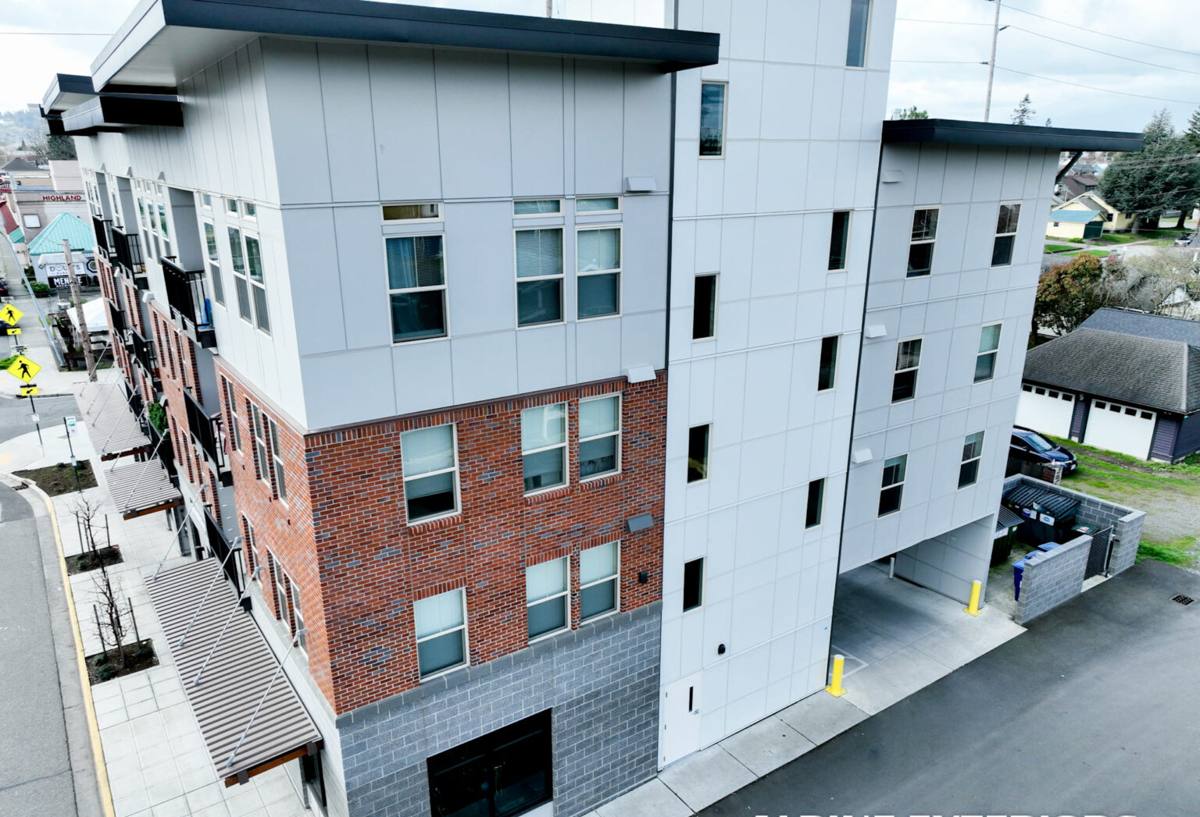
What Salt Air, Driving Rain, and Moss Season Actually Do to a Wall
Salt Air and Fasteners
Airborne salt is corrosive to unprotected or lower-grade metal. Nail heads, flashing, and trim fasteners that aren't rated for coastal exposure can start showing rust streaks and pitting well before the siding itself shows any wear. Once a fastener corrodes, it loses holding strength and can telegraph a rust stain straight through paint or factory finish. Coastal-proximity homes need corrosion-resistant fastener specs and flashing details, not the minimum the building code happens to allow inland.
Driving Rain and Wind-Driven Moisture
Rain that comes in at an angle doesn't just run down a wall — it gets pushed sideways and upward into laps, seams, and penetrations. A siding system that relies on face-sealing (caulk alone) to keep water out will eventually fail, because caulk is a maintenance item, not a permanent barrier. What actually keeps a wall dry over time is a properly lapped water-resistive barrier, correctly flashed windows and penetrations, and a siding product engineered with the right butt joints, laps, and clearances so that any water that does get past the face has somewhere to drain.
Moss and Algae in the Shoulder Seasons
Shaded elevations, north-facing walls, and areas under tree cover stay damp longer here than in drier parts of the state. Organic growth on siding isn't just cosmetic — moss holds moisture against the surface, and over years that can soften or degrade materials that aren't dimensionally stable when wet. Fiber cement doesn't swell, rot, or provide an organic food source the way wood-based sidings can, which matters a lot on the shadier sides of a Burlington lot.
Why We Standardized on James Hardie Fiber Cement
We install James Hardie exclusively. We don't offer vinyl, LP SmartSide, Cemplank, Allura, primed spruce, or cedar, and that's a deliberate call, not a limitation of what we know how to install. Each of those alternatives has real strengths, but each also has a trade-off that shows up over time in exactly this kind of climate — vinyl can warp and fade and offers limited impact resistance; wood-based products need consistent, ongoing maintenance to keep moisture out of exposed edges; cedar is beautiful but demands upkeep most homeowners underestimate at the time of installation. James Hardie's fiber cement is non-combustible, dimensionally stable in wet-dry cycling, and backed by a factory-applied ColorPlus finish that's formulated to hold color and resist the kind of coastal weathering this area produces. We'd rather install one product exceptionally well than spread our crew's expertise thin across several.
The HZ5 Product Line
James Hardie engineers its siding by climate zone, and the Pacific Northwest falls under the HZ5 designation — the line built specifically for regions with sustained moisture exposure. HZ5 products are formulated for better performance against moisture-related freeze-thaw and moss/mildew resistance compared to siding designed for drier climate zones. For a Burlington home, specifying HZ5 isn't an upsell — it's the correct product for the zone, and it's what we install as standard here.
What a Correct Installation Actually Involves
The siding board itself is only part of the system. Most siding failures we get called to evaluate trace back to installation shortcuts, not the product. A correct James Hardie install includes:
- A continuous, correctly lapped water-resistive barrier behind the siding, with seams taped or shingled to shed water downward
- Rainscreen or furring where the wall assembly calls for a drainage gap, so any incidental moisture behind the siding can drain and dry rather than sitting against the sheathing
- Corrosion-resistant, correctly spaced fasteners driven to Hardie's specified depth — not overdriven, which cracks the board's edge, and not underdriven, which leaves boards loose
- Proper flashing at every window, door, and penetration, integrated with the water-resistive barrier rather than just caulked over
- Correct joint gaps and caulking at butt joints and trim, using sealants rated for the exposure rather than whatever's on hand
- Field-cut edges primed or sealed per Hardie's installation guidance so cut ends aren't left exposed to moisture
Skip any one of these and the siding can still look right for a year or two — the problems show up later, as staining, cracking, or moisture intrusion that's expensive to trace once it's hidden behind the finished wall.
Our Process for a Burlington Job
1. On-Site Assessment
We walk the exterior, look at existing siding condition, check for signs of past moisture intrusion around windows and trim, and note which elevations get the most weather exposure — the side facing prevailing wind and rain usually needs the most attention to flashing detail.
2. Product and Color Selection
We confirm the HZ5 product profile (lap siding, panel, or a mix with trim and soffit) and walk through ColorPlus color options, which come factory-finished so the color isn't dependent on field painting conditions — a real advantage during a wet install season.
3. Tear-Off and Wall Prep
Old siding comes off, sheathing is inspected for hidden damage, and any rot or compromised material is repaired before anything new goes up. This is the point where problems from a prior installation typically surface, and it's better to find them now than after the new siding is closed in.
4. Water Management Install
The water-resistive barrier, flashing, and drainage plane go in first and get inspected before siding starts. This step is invisible in the finished product but does most of the actual work of keeping the wall dry for the next several decades.
5. Siding Installation
Hardie boards go up to spec — correct fastener pattern, correct gaps, correct flashing integration at penetrations — with attention to the elevations that take the most direct weather.
6. Final Trim, Caulk, and Walkthrough
Trim and caulk are finished last, and we walk the job with the homeowner before calling it done.
Comparing Siding Options for This Climate
| Factor | James Hardie (HZ5) | Vinyl | Wood/Cedar |
|---|---|---|---|
| Moisture stability | Dimensionally stable, engineered for wet climates | Doesn't rot, but can warp or buckle with heat/cold cycling | Requires consistent sealing to resist moisture |
| Moss/algae resistance | Non-organic, doesn't feed growth | Growth can accumulate on surface texture | Organic material, more susceptible without upkeep |
| Fire resistance | Non-combustible | Combustible, can melt/deform near heat | Combustible |
| Finish durability | Factory ColorPlus finish, engineered for UV/weathering | Color is through-body but can fade | Needs repainting/restaining on a maintenance cycle |
| Maintenance burden | Low — periodic wash and caulk check | Low, but cracks/impact damage aren't repairable in place | Higher — regular sealing, staining, or painting |
What Drives Cost on a Job Like This
Every home is different, but the factors that move the price on a Burlington James Hardie project are consistent:
| Cost Factor | Why It Matters |
|---|---|
| Wall square footage and number of stories | More area and access complexity (scaffolding, ladders) adds labor |
| Condition of existing sheathing | Rot repair found during tear-off is priced as it's discovered |
| Product profile (lap width, panel vs. lap, trim detail) | Wider laps and more trim detail take more time to install correctly |
| Number of windows, doors, and penetrations | Each one needs individual flashing work |
| Color and finish selection | ColorPlus factory finishes vary slightly by color and product line |
We don't quote off square footage alone over the phone — an accurate number comes from seeing the actual walls.
Why It Matters That Your Crew Already Works This Area
A crew that installs siding across a lot of different climates has to relearn local conditions on every job. A crew that regularly works homes around Chuckanut and Burlington already knows which elevations in this area take the worst of the driving rain, how much drainage detail the moss season actually calls for, and what fastener and flashing specs hold up against the salt air rather than just meeting code minimums. That local pattern recognition is the difference between a siding job that's installed correctly on paper and one that's installed correctly for the specific weather it has to survive.
A Simple Homeowner Checklist Before You Hire
- Ask whether the crew is James Hardie factory-trained or certified, not just familiar with the product
- Ask what HZ product line they'll be using and why it's appropriate for this climate zone
- Ask to see the flashing and water-resistive barrier detail before it's covered by siding
- Ask what fastener type and spacing they use, and whether it's corrosion-resistant
- Get the warranty terms in writing — both the manufacturer warranty and the installer's workmanship warranty
- Ask how they handle sheathing repair if rot or damage is found during tear-off
Longevity and Upkeep After Installation
Correctly installed James Hardie siding in this climate is a low-maintenance product, not a no-maintenance one. Plan on an occasional gentle wash to keep the surface free of surface grime and any early moss growth on shaded elevations, and a periodic check of caulk joints at trim and penetrations, since sealant is the one component in the system with a shorter service life than the siding itself. Beyond that, the ColorPlus finish and the fiber cement material are built to hold up against this area's salt air, rain, and damp seasons for a long service life without repainting.
If you're weighing a siding replacement on a Burlington-area home, we're happy to take a look and give you a straightforward, no-pressure estimate — just fill out the form below.