 Chuckanut
 Building New in Columbia Means Getting the Windows Right the First Time
When a home is going up from the studs out in Columbia, the windows aren't a repair item — they're part of the building envelope from day one. That's a very different job than swapping out an old window in an existing wall. New-construction windows get installed with a nailing fin directly against the sheathing, tied into the weather-resistant barrier (WRB), and flashed before the siding ever goes on. Get that sequence wrong, and the mistake gets buried behind trim and siding for years before it shows up as a stain, a soft spot, or a drafty room.
In Whatcom County, and especially close to the water around Chuckanut, that margin for error is smaller than it is inland. Salt-laden air, wind-driven rain, and a moss season that can stretch for most of the year all put extra stress on the window-to-wall connection. A new build is the one chance to get that connection built correctly instead of fighting it later.
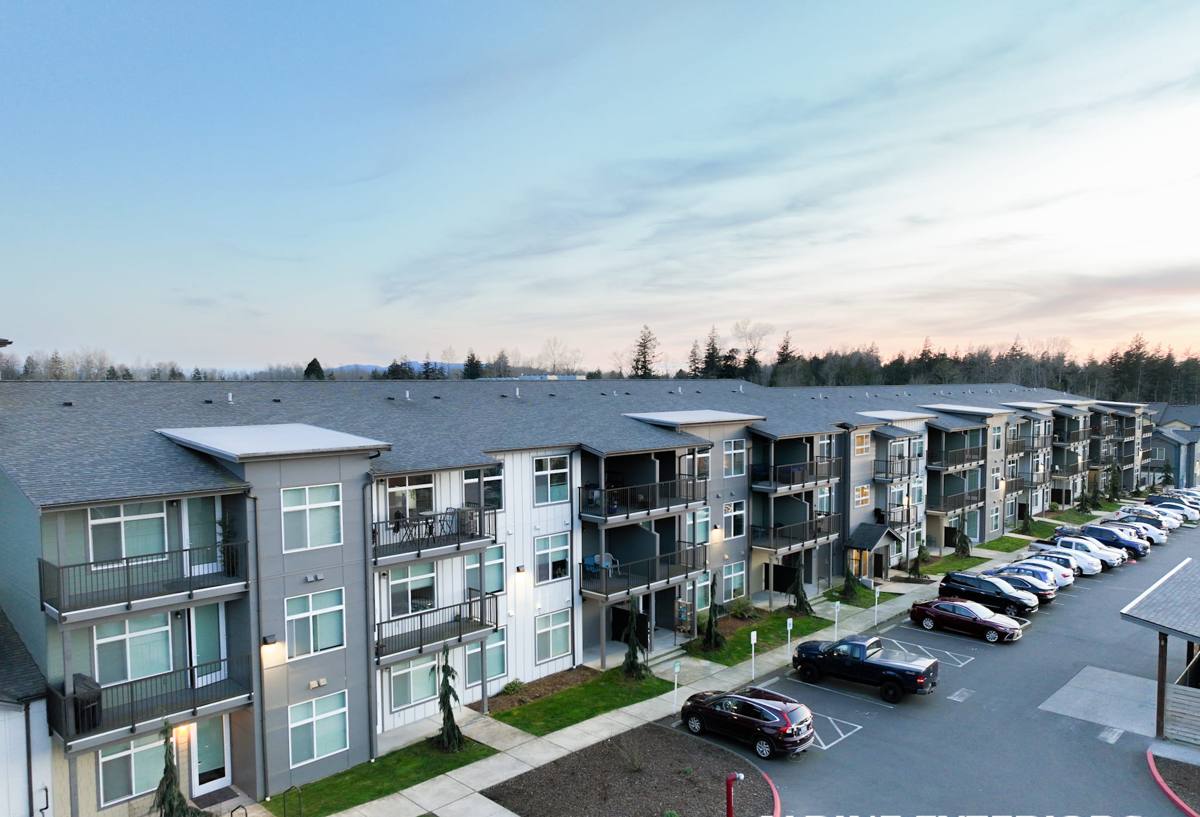
What Salt Air, Driving Rain, and Moss Season Demand From a New Window Opening
Salt Air and Corrosion
Proximity to saltwater means airborne salt settles on exterior surfaces, including window hardware, fasteners, and cladding. Untreated or lower-grade fasteners and hardware corrode faster here than they would twenty miles inland. On a new build, this is the moment to specify corrosion-resistant fasteners and hardware finishes rather than dealing with pitted hinges or streaking corrosion stains a few years down the road.
Wind-Driven Rain
Storms coming off the water don't just fall straight down — they drive rain sideways into wall assemblies, right at the seams around window openings. A window that's simply "caulked in" will eventually let water past the sealant. What stops wind-driven rain is a properly shingled flashing system: sill pan first, then the window, then jamb flashing, then head flashing, layered so water is always shed outward and downward, never trapped behind a layer that can't dry.
A Long Moss Season and Trapped Moisture
Moss thrives in the shaded, damp conditions common around Chuckanut for much of the year, and it doesn't stay confined to roofs — it colonizes window sills, trim, and any spot where organic debris and moisture collect. Moss and the moisture it holds against wood trim or poorly sealed joints keep those areas wet far longer than they'd stay wet in a drier climate, which accelerates rot in unprotected wood components. New-construction detailing needs to account for this by keeping sills sloped, materials at the sill line moisture-tolerant, and gaps sealed so there's nowhere for organic buildup to sit against the window frame.
New-Construction Windows vs. Replacement Windows: Why the Install Method Is Different
Homeowners sometimes assume a "window install" is a window install. On a new build, it isn't the same job as a replacement, and the differences matter for how the opening performs long-term.
| Factor | New-Construction Install | Replacement/Retrofit Install |
|---|---|---|
| Frame type | Nail-fin frame fastened to sheathing | Block frame or insert fitted into the existing opening |
| Access to structure | Full access to studs, sheathing, and WRB | Limited — existing siding and trim usually stay in place |
| Flashing | Built in layers as part of the wall assembly | Worked around existing flashing and finishes |
| Best fit | New builds, additions, full wall rebuilds | Existing homes with sound framing and siding |
Because Columbia has a steady mix of new builds and additions, we treat these as two different scopes of work — not a one-size-fits-all "window job." A new-construction opening gives us the chance to build the moisture management system correctly from the sheathing out, which is the harder thing to fix later if it's done wrong.
What a Correct New-Construction Window Installation Involves
There's a specific order of operations that keeps water moving out of a wall assembly instead of into it. Skipping or reordering any of these steps is the most common source of window leaks in new construction we're asked to diagnose.
- Rough opening check. The opening is measured and squared before the window ever shows up on site — undersized, oversized, or out-of-square openings cause problems that no amount of caulk fixes later.
- Sill pan flashing. A sloped, sealed pan is built at the bottom of the opening so any water that gets past the window has a way out, not a place to pool.
- WRB integration. The weather-resistant barrier is cut and folded into the opening before the window is set, so water on the wall's surface is directed around the window, not behind it.
- Setting and fastening the window. The window is shimmed level and plumb, then fastened through the nailing fin per the manufacturer's pattern — under- or over-driven fasteners both compromise the seal.
- Flashing tape at jambs and head. Applied in the correct shingle-lap order — sides before top — so every layer sheds water onto the layer below it.
- Sealant at the interior and exterior. Backer rod and sealant where specified, with a gap left at the sill for drainage rather than a solid bead that traps moisture.
- Insulating the perimeter gap. The space between the frame and rough opening is filled with an appropriate low-expansion material to control air movement without bowing the frame.
Choosing Frame Material and Glass for a Columbia Build
There's no single "best" window for every project, but the coastal, wet, shaded conditions common around Chuckanut narrow the field of what we recommend as a professional standard.
Frame Material
Vinyl and fiberglass frames handle sustained moisture and salt exposure with very little maintenance, which matters in a climate where trim stays damp for long stretches during moss season. Wood and wood-clad frames can look excellent and remain a fine choice with disciplined upkeep, but they demand more regular inspection and maintenance in this kind of environment — repainting, resealing, and staying ahead of any spot where the cladding or finish has been compromised. We'll walk through the maintenance trade-offs honestly rather than push one material as the only option.
Glass and Coatings
Low-E coatings and argon or krypton gas fills help with year-round comfort and condensation control, which is worth prioritizing here given how much of the year is damp and overcast. Double-pane glass is standard for most builds; triple-pane adds cost and weight but can be worth it on north- or water-facing walls that take the brunt of wind and cold.
Our New-Construction Window Process
For Columbia builds, our process is built around coordinating with the builder's schedule and getting the envelope details right the first time, since re-opening a finished wall is far more disruptive than getting the sequence right during framing.
- Site walk during framing to confirm rough openings, header heights, and any structural details that affect window sizing
- Product selection based on exposure — which walls face prevailing wind and rain, which sit in shade prone to moss and moisture buildup
- Coordination with the WRB and siding installer so flashing sequencing lines up instead of being an afterthought
- Installation following manufacturer instructions and the flashing order above, not a shortcut version of it
- Post-install inspection of every opening — flashing laps, fastening pattern, and sealant lines — before siding closes it in
- Final walkthrough covering operation, hardware, and basic maintenance expectations for this climate
Cost Factors for a New-Construction Window Package
We give exact numbers only after seeing the plans and the opening count, but these are the factors that move a project's cost up or down:
| Factor | Why It Matters |
|---|---|
| Number and size of openings | More and larger windows mean more material and labor |
| Frame material | Vinyl, fiberglass, and wood-clad carry different material costs and lead times |
| Glass package | Low-E coatings, gas fills, and triple-pane options add cost but improve comfort and durability |
| Wall height and access | Multi-story walls, steep gables, or tight scaffolding needs add labor time |
| Scheduling with the build | Windows installed on schedule with framing avoid rush fees and delay costs elsewhere on the job |
Mistakes We Commonly Find on New Builds in This Area
Most of the window problems we get called out to look at in Columbia and the surrounding area trace back to a handful of recurring issues: sill pans skipped or installed flat instead of sloped, flashing tape applied out of shingle order so water gets funneled behind the WRB instead of over it, sealant used to "fix" a gap that should have had proper flashing instead, and gaps around the frame left uninsulated or over-packed with expanding foam that bows the jambs. None of these show up on move-in day — they show up two, three, or more moss seasons later as stains, soft trim, or drafts. Getting the sequence right during construction is far cheaper than correcting it after the siding and interior finishes are in place.
Why Hire a Crew That Already Works in Columbia and Chuckanut
A crew that regularly works new builds around Chuckanut already knows which walls tend to catch the worst of the wind-driven rain, how long moss season really runs in this pocket of Whatcom County, and how to sequence window installation around a builder's framing and siding schedule without becoming the bottleneck. That local familiarity shows up in fewer callbacks — not because the materials are different, but because the details that matter in this climate get handled correctly the first time instead of learned the hard way on someone's new home.
If you're planning a new build or addition in Columbia and want windows installed correctly from the framing stage forward, we're happy to take a look at your plans and walk the site with your builder. Reach out for a free, no-pressure estimate using the form below.