 Chuckanut
 Fairhaven's Coastal Climate Is Tough on Decking
Homes in and around Fairhaven deal with a specific combination of weather that most decking materials weren't designed for. Salt-laced air off the water accelerates corrosion on fasteners and hardware. Driving rain, common through the fall and winter months in Whatcom County, pushes moisture sideways into board seams and end grain rather than just falling straight down. And because so many Fairhaven lots sit under mature trees or in the shade of neighboring homes, decks here go through a long moss season — sometimes eight months or more of damp, shaded conditions where algae and moss can take hold.
A deck built without this climate in mind will show it within a few seasons: cupped or split boards, rusted fastener heads bleeding through the surface, and a green film that makes stairs and walking surfaces genuinely slippery. None of that is inevitable. It's a function of material choice and how the deck was actually put together underneath.
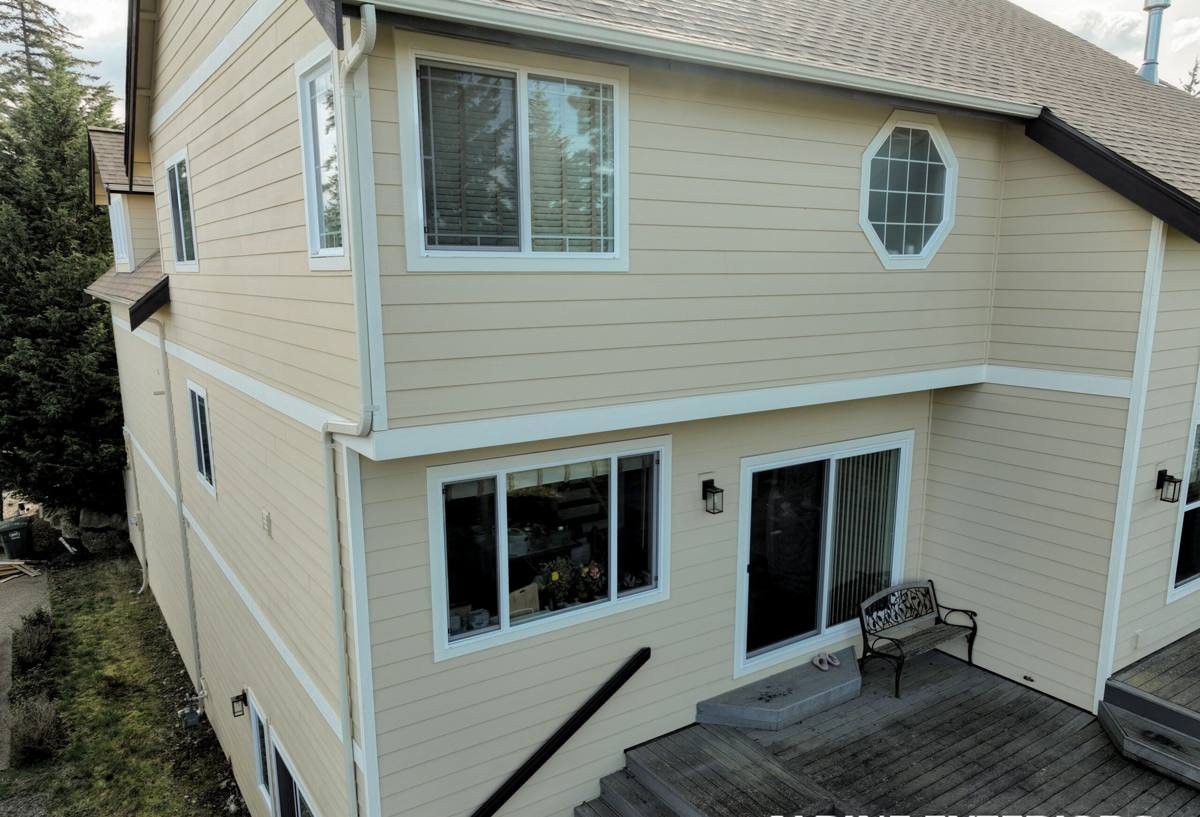
Why Composite Decking Fits Fairhaven Homes
Composite decking — a blend of wood fiber and recycled plastic, usually with a protective outer cap — was built to solve exactly the problems that show up on coastal, shaded properties. That doesn't mean a composite deck is maintenance-free or immune to every issue, but it removes the biggest failure points that wood decks run into in this climate.
Moisture and Rot Resistance
Capped composite boards don't absorb water the way solid wood does, so they don't swell, cup, or rot from the repeated wet-dry cycles that define a Whatcom County winter. The core material is largely indifferent to moisture exposure, which matters most at board ends, around fasteners, and anywhere water tends to pool.
Standing Up to Salt Air
Salt air is harder on metal than it is on decking boards themselves, so the composite board choice only solves half the problem — the other half is using fasteners, brackets, and ledger hardware rated for coastal exposure. We treat that as a standard part of any Fairhaven deck build, not an upgrade.
Less Time on Upkeep
Composite decking doesn't need sanding, staining, or sealing on a recurring schedule the way wood does. For homeowners who'd rather spend a weekend using the deck than maintaining it, that's often the deciding factor — especially on a property where shaded, damp conditions would otherwise mean refinishing wood more often than a sunnier lot would require.
Composite vs. Other Decking Materials
There's no single "best" decking material for every home — the right choice depends on budget, how much upkeep you're willing to do, and how exposed the deck is to rain and shade. Here's how the main options compare for a property like yours in Fairhaven:
| Material | Moisture Behavior | Maintenance | Typical Lifespan |
|---|---|---|---|
| Pressure-Treated Wood | Absorbs water; prone to cupping, splitting, and surface checking in wet shade | Annual cleaning, periodic staining/sealing | 10-15 years before major boards need replacing |
| Cedar | Naturally moderate rot resistance but still absorbs moisture over time | Regular sealing to hold color and resist graying | 15-20 years with consistent upkeep |
| Capped Composite | Resists moisture absorption; core doesn't swell or rot | Periodic washing; no staining or sealing | 25-30+ years, backed by manufacturer warranty |
| PVC/Vinyl Decking | Fully moisture resistant | Low; can show more surface scratching over time | Comparable to composite, often at a higher upfront cost |
For most Fairhaven homes dealing with shade and salt air, capped composite is where the maintenance savings and moisture performance line up best with cost. Where a deck sits fully exposed to sun and wind with less moss risk, wood can still be a reasonable choice for homeowners who don't mind the upkeep — we'll give you an honest read on which fits your specific lot.
What a Correct Composite Deck Installation Involves
The decking boards get most of the attention, but the framing and details underneath are what actually determine whether a deck performs well in this climate for the next few decades.
Substructure and Drainage First
Joists, beams, and posts need to be sized and spaced correctly for composite board spans, which aren't identical to wood spans. Just as important is making sure water has somewhere to go — proper slope away from the house, ledger flashing that actually sheds water instead of trapping it against the rim joist, and clearance underneath the deck so air can circulate and damp debris doesn't sit against the framing.
Fasteners, Flashing, and Ledger Attachment
The ledger board connection — where the deck attaches to the house — is the single most common source of long-term water damage on any deck, composite or wood. It needs correct flashing, proper fasteners, and a gap or membrane that keeps water from tracking behind it into the house framing. We use coastal-rated hardware throughout, since standard fasteners are one of the first things to fail in salt-influenced air.
Board Spacing for Expansion
Composite boards expand and contract with temperature more than most homeowners expect. Gaps at butt joints and around fixed objects like posts need to be set correctly so the deck doesn't buckle in warm weather or open unsightly gaps in the cold. This is a detail that's easy to get wrong and expensive to fix after the fact.
What Affects the Cost of a Fairhaven Composite Deck
Every deck is priced around the specifics of the project, but a few factors consistently move the number more than others:
| Factor | Why It Matters |
|---|---|
| Deck size and shape | Square footage and the number of angles or cutouts drive both material and labor |
| Height and substructure | Elevated decks need more framing, footings, and railing than a low, ground-level deck |
| Board tier and finish | Composite lines range from entry-level capped boards to premium finishes with longer warranties |
| Railing and stairs | Composite or metal railing systems, plus any stair runs, add materially to scope |
| Site access and existing structure | Tear-off of an old deck, tight access, or slope on the lot affects labor time |
We'll walk your specific property and give you a real number based on these factors rather than a rough estimate that changes once we start. Given the moisture and salt exposure typical around Fairhaven, we don't cut corners on flashing or fastener hardware to hit a lower number — that's the part of the deck you won't see again once it's built, and it's the part most likely to cause problems if it's done cheap.
Our Process, Start to Finish
A composite deck installation follows a consistent sequence when it's done right:
- On-site assessment of the existing structure (if any), slope, drainage, and how the deck ties into the house
- Design and material selection, including board style, color, and railing system
- A written estimate that breaks down scope so you know what you're paying for
- Removal of the old deck if applicable, with attention to what condition the framing and ledger are in underneath
- Framing and substructure work, sized and spaced for composite board spans
- Ledger flashing and coastal-rated fastener installation
- Composite board installation with correct expansion gaps
- Railing, stairs, and any trim or fascia work
- Final walkthrough so you know how to clean and care for the specific product you chose
We don't treat any of these steps as optional shortcuts, even the ones a homeowner would never see once the deck is finished.
Keeping Moss and Mildew Off Your New Deck
Composite decking resists rot, but it isn't immune to surface growth — in a shaded, damp spot, algae and moss can still form on top of the boards the same way they would on a sidewalk or roof. The good news is that composite is far easier to keep clean than wood, since there's no bare grain for growth to root into.
- Sweep leaves and debris off regularly, especially in fall — trapped organic matter holds moisture against the board surface
- Rinse the deck periodically with a hose, and use a soft-bristle brush with mild soap on any shaded areas prone to green buildup
- Avoid pressure washing at close range or high pressure, which can damage the board's protective cap
- Check that gaps between boards and around the deck's edge stay clear so water keeps draining as designed
- Trim back overhanging branches where possible to let more light and air reach shaded sections
None of this is a heavy chore — it's the difference between an occasional rinse and the sanding, stripping, and resealing a wood deck would need in the same spot.
Why a Fairhaven-Familiar Crew Matters
Decking contractors who don't regularly work this specific stretch of Whatcom County tend to build the same deck they'd build anywhere — standard fasteners, generic flashing details, and framing specs that assume a drier, sunnier climate. On a Fairhaven property, that shows up as problems within a few years: rust streaks, soft spots at the ledger, or moss that keeps coming back no matter how often it's cleaned.
A crew that already works in this area builds around the salt air and the moss season from the start — the hardware, the flashing, the drainage — instead of treating them as afterthoughts. That's the difference between a deck that still looks and performs well after a decade of Chuckanut-area winters and one that needs early repairs.
Get a Straight Answer on Your Fairhaven Deck
If you're planning a new composite deck or replacing one that hasn't held up to the weather here, we're glad to take a look and give you an honest, no-pressure estimate — including what we'd do differently on your specific lot given its sun, shade, and drainage. Fill out the form below and we'll get back to you with next steps.