 Chuckanut
 Building Decks for Fairhaven's Particular Climate
Fairhaven sits close enough to the water that salt air is a real factor in how a deck ages, not just a talking point. Add in Whatcom County's long wet season and the moss that comes with it, and you've got a set of conditions that punishes decks built to a generic spec. A deck that would hold up fine in a dry inland climate can start showing rot at the ledger board, rusted fasteners, and slick, moss-covered treads within a few seasons here if it wasn't built with this specific environment in mind.
We build custom decks specifically for Fairhaven and the surrounding Chuckanut area, which means every decision — footing depth, fastener grade, decking material, drainage slope — gets made with driving rain and a moss season that can run half the year in the background of our thinking. This page walks through what that actually looks like in practice.
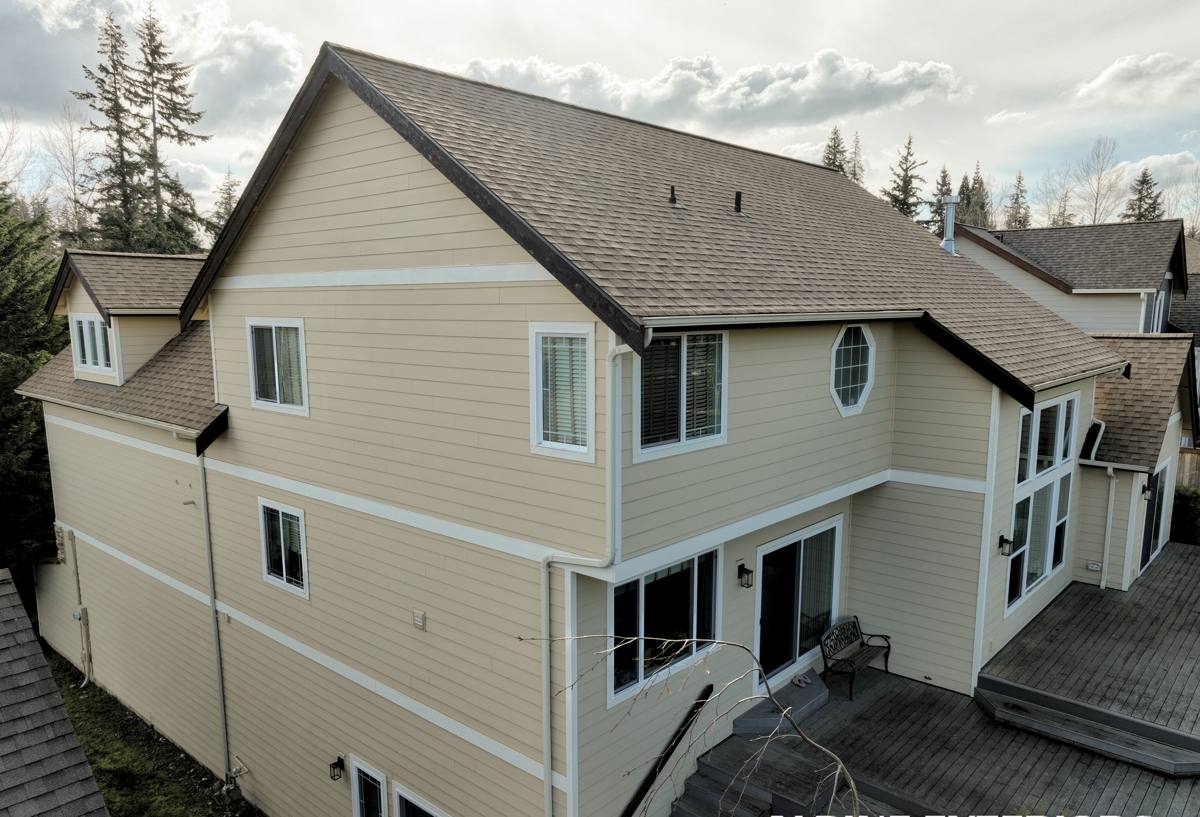
What Driving Rain and Salt Air Do to a Deck Over Time
Three things separate a deck that lasts from one that doesn't in this climate:
Moisture that doesn't drain
Standing water on a deck surface, or moisture trapped between boards and joists, is the single biggest driver of rot. Driving rain doesn't just fall straight down — it gets pushed under railings, into end grain, and behind ledger boards where it's hardest to see. A deck built without deliberate drainage planning will trap that water and start failing from the inside out, often before there's any visible sign on the surface.
Salt air and fastener corrosion
Being close to the water means airborne salt accelerates corrosion on anything less than a properly rated fastener. Cheap or mismatched screws and nails can start rusting and staining the decking around them within a couple of years, and a rusted structural fastener is a safety issue, not just a cosmetic one.
Moss and organic growth
Moss needs shade and sustained moisture to establish, and Fairhaven's tree cover combined with a long wet season gives it both. Moss on a deck surface isn't just unsightly — it holds moisture against the wood constantly and turns a walking surface slick and dangerous, especially on stairs.
What a Correctly Built Deck Requires Here
None of the problems above are unsolvable — they just require building to the actual conditions instead of a generic checklist. A correctly built deck in this area addresses each one directly:
Footings and framing
Footings need to be sized and set to the frost depth and soil conditions actually present on the lot, not guessed at. We also frame with consistent joist spacing and blocking so the decking surface doesn't develop the bounce or gaps that let debris and moisture collect.
Ledger attachment and flashing
Where the deck meets the house is the highest-risk point for hidden rot. Proper ledger flashing — installed so water sheds away from the house band board rather than behind it — is not optional in a climate with this much sustained rain. This is one of the most common shortcuts we see on decks that come to us for repair.
Joist protection
Tape or a comparable moisture barrier over the top of each joist keeps rain from soaking directly into the framing lumber through every screw hole. It's a small material cost that meaningfully extends the life of the structure underneath the decking.
Drainage slope
A slight, deliberate slope away from the house keeps water moving off the deck surface instead of pooling against the siding or collecting under railings.
Fastener selection
Given the salt air here, we use fasteners rated for coastal or corrosive environments rather than standard-grade hardware, even where it costs a bit more upfront.
Choosing the Right Decking Material for This Climate
There's no single "best" decking material — the right choice depends on budget, maintenance appetite, and how much moss and moisture exposure the specific site gets. Here's how the common options actually compare for a Fairhaven property:
| Material | Moisture/Moss Behavior | Maintenance | Typical Lifespan Here |
|---|---|---|---|
| Pressure-treated wood | Resists rot chemically but surface still holds moss if shaded and unsealed | Needs periodic cleaning and re-sealing | 10–15 years with upkeep |
| Cedar | Naturally rot-resistant, ages to gray without treatment; still needs cleaning to prevent moss | Moderate — occasional cleaning/oil if color retention matters | 15–20 years with upkeep |
| Composite decking | Doesn't rot; can still grow surface moss/algae in shaded, damp spots without cleaning | Low — periodic washing, no sealing/staining | 25+ years |
| PVC decking | Fully moisture-resistant; least hospitable surface for moss buildup | Lowest — occasional washing | 25+ years |
We don't push any one product as the automatic right answer. Wood costs less upfront and reads more traditional against certain house styles, but it asks more of the owner over time — cleaning, sealing, occasional board replacement. Composite and PVC cost more initially but trade that maintenance burden for a longer, lower-upkeep lifespan, which matters if the deck sits in a shaded, damp part of the lot where moss pressure is highest.
Our Process, Start to Finish
- On-site consultation — we walk the property, look at sun/shade exposure, drainage patterns, and how the deck will actually be used before recommending anything.
- Design and material selection — layout, railing style, and decking material are chosen together, with honest trade-offs explained rather than upsold.
- Permit and code check — we confirm what Whatcom County and local jurisdiction requirements apply to the specific project before work starts.
- Footings and framing — built to the site's actual soil and frost conditions, not a generic assumption.
- Flashing, joist protection, and drainage detailing — the parts that don't show up in a finished photo but determine how long the deck lasts.
- Decking, railings, and finish work — installed with corrosion-rated fasteners and attention to how water will move across the finished surface.
- Final walkthrough — we go over maintenance expectations specific to the material chosen and the site's moss/moisture exposure.
Permits and Code Considerations in This Area
Most custom deck projects in Whatcom County require a building permit, particularly once a deck exceeds a certain height off grade or attaches structurally to the house. Guardrail height, baluster spacing, and stair rise-and-run are all governed by code and inspected for a reason — these are the details that prevent injuries, not paperwork for its own sake. Ledger attachment to the house is also commonly a point of inspection scrutiny, which lines up with it being the highest-risk failure point in this climate anyway. We handle the permit process as part of the project rather than treating it as the homeowner's problem to sort out separately.
Living With a Deck in a Moss-Prone Climate
Even a well-built deck needs some ongoing attention here. A little routine care goes a long way toward protecting the investment:
- Sweep debris (leaves, needles) off the surface regularly so it can't hold moisture in one spot
- Rinse or wash the deck surface periodically to keep moss and algae from establishing, especially in shaded areas
- Check that gaps between boards stay clear rather than packed with organic debris
- Inspect railings and stair connections annually for looseness or corrosion at fastener points
- Re-seal wood decking on the schedule appropriate to the product if wood was the chosen material
- Keep gutters and downspouts near the deck clear so runoff isn't dumping extra water onto the structure
What Affects the Cost of a Custom Deck Here
| Factor | Why It Matters in Fairhaven |
|---|---|
| Decking material | Wood costs less upfront; composite/PVC cost more but reduce long-term maintenance against moss and rain |
| Footing/foundation work | Sites with poor soil drainage or steeper grade need more substantial footing work |
| Height and structure | Elevated decks require more engineering, railing, and often additional permitting scrutiny |
| Flashing and moisture detailing | Not optional here, but the quality of ledger flashing and joist protection does vary by installer and adds real labor cost |
| Fastener grade | Corrosion-rated fasteners cost more than standard-grade hardware but matter more this close to salt air |
| Railing and stair complexity | Custom railing designs and multi-level stairs add labor beyond a simple single-level deck |
We give straightforward, itemized estimates so it's clear what's driving the number, rather than a single lump figure that hides where the money is going.
What to Check Before Hiring a Deck Contractor in Fairhaven
- Do they carry current WA contractor licensing, bonding, and liability insurance?
- Can they explain how they'll handle ledger flashing and joist protection specifically, not just "we'll build it to code"?
- Do they have experience with decks in this specific coastal/wet climate, or mostly inland/dry-climate work?
- Will they pull the required permit themselves, or leave that step to the homeowner?
- Do they give a clear, itemized estimate rather than a single vague number?
- Are they willing to talk through material trade-offs honestly, including the ones that cost more but reduce future maintenance?
Why Local Experience Matters
A deck built by a crew that mostly works drier inland climates will often build a technically code-compliant deck that still fails early here, because code minimums don't account for salt air corrosion or moss-driven surface degradation — those are climate-specific judgment calls, not line items in the building code. Working Fairhaven and the broader Chuckanut area regularly means we've seen how ledger flashing, fastener choice, and decking material actually hold up over years in this exact environment, not just how they perform on paper.
If you're planning a new custom deck or replacing one that's showing its age, we're happy to walk the site with you and put together a straightforward, no-pressure estimate using the form below.