 Chuckanut
 Fairhaven Decks Face a Different Set of Problems
A deck built the same way in a dry inland climate and a deck built near the water in Fairhaven age at very different rates. Homes in this part of Whatcom County sit close enough to Bellingham Bay that salt-laden air is a constant, low-grade stressor on fasteners, flashing, and any metal hardware holding the structure together. Add in the region's long stretch of driving rain from fall through spring, plus deep tree canopy in many yards, and you get a deck environment that's damp far more often than it's dry. That combination is exactly what accelerates rot in framing, corrodes cheap fasteners, and feeds the moss and algae that make boards slick and dark within a couple of seasons.
None of that means a deck can't last in Fairhaven — it means the build has to account for those conditions from the footings up, not just at the surface. That's the difference between a deck that needs replacing again in eight years and one that holds up for decades.
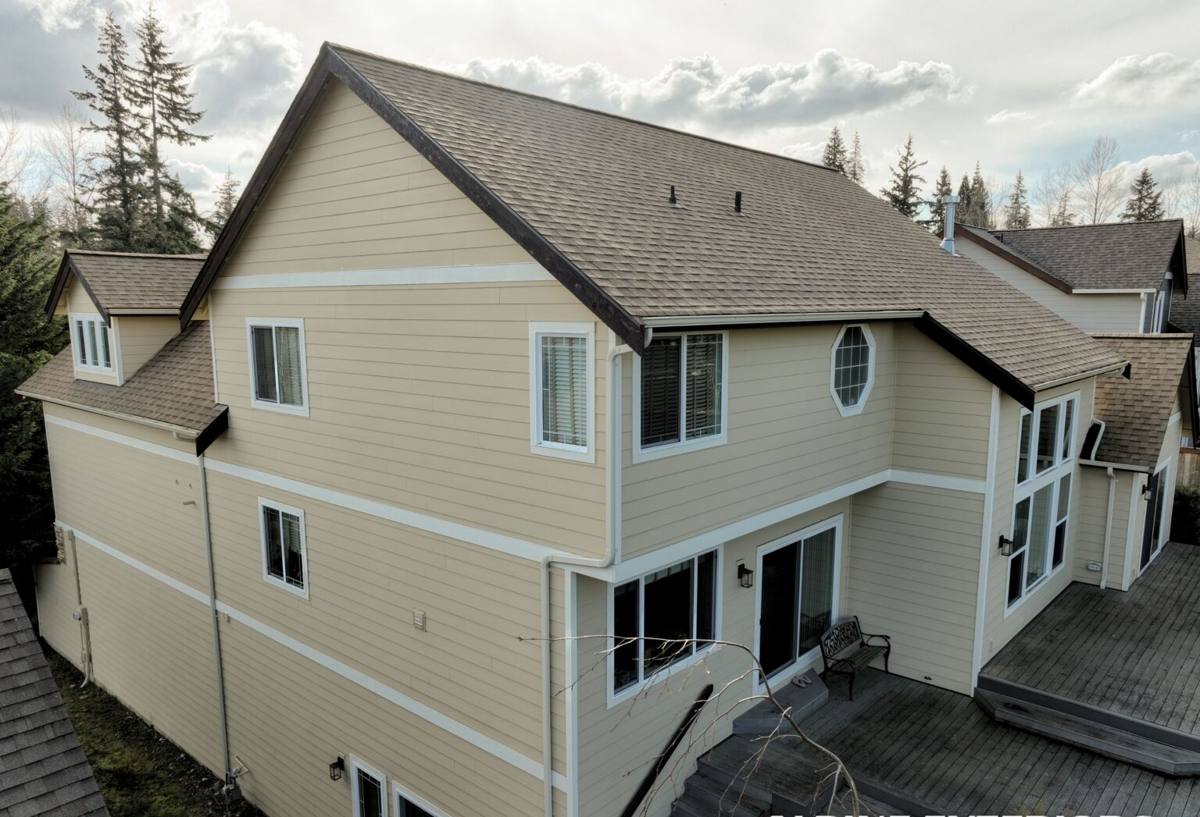
Signs a Deck Needs Replacement, Not Just Repair
Homeowners often ask us to "just fix a few boards," and sometimes that's genuinely all that's needed. But there's a point where patching becomes false economy. Here's how we tell the difference on a site visit:
- Soft or spongy decking in multiple areas, not just one isolated board
- Rot or discoloration at the ledger board where the deck attaches to the house — this is a structural red flag, not cosmetic
- Rusted, bleeding, or loose fasteners across the deck rather than a few isolated spots
- Wobble or movement in the railing posts or stair stringers when tested by hand
- Persistent moss or black-green staining that returns within weeks of cleaning
- Footings that have shifted, heaved, or show visible cracking
One or two of these on their own might mean targeted repair. Several at once, especially anything touching the ledger or footings, usually means the structure has aged out and repair would just be delaying a full rebuild.
What a Correct Deck Replacement Actually Involves
Below the Decking
The parts nobody sees are what determine whether a deck lasts. In a climate like ours, that starts with footings sized and set below frost depth in Whatcom County's often wet, clay-heavy soils, and framing lumber rated for ground contact or exterior exposure wherever it's within a few inches of grade or moisture. The ledger board — the piece bolted to your house that carries a large share of the deck's load — needs proper flashing integrated with your home's existing water barrier, not just caulked and left. A poorly flashed ledger is one of the most common causes of hidden rot damage to the house itself, not just the deck.
At the Surface
Joist tape or a comparable moisture barrier over the tops of joists keeps water from sitting in end grain, which is where rot typically starts even on treated lumber. Fasteners should be corrosion-resistant hardware rated for exterior and, ideally, coastal-adjacent use — standard interior-grade screws and brackets will corrode faster here than they would twenty miles inland. Spacing between boards needs to account for drainage and airflow underneath, which matters more in a high-rainfall climate than in a dry one, since trapped moisture under the deck is what feeds mold and accelerates joist decay.
Railings and Stairs
Guardrails and stair railings are structural, code-governed elements, not decoration. They need to meet current height and spacing requirements and be fastened to solid blocking, not just face-screwed into decking. A deck can look finished and still fail here if railings weren't engineered into the original structure.
Choosing the Right Decking Material for This Climate
There's no universally "best" decking material — there's the right material for your budget, your maintenance appetite, and how much sun or shade your deck actually gets. Here's how the common options compare for a moss-prone, salt-air-exposed property:
| Material | How It Handles Moss & Moisture | Maintenance | Typical Lifespan |
|---|---|---|---|
| Pressure-treated lumber | Resists rot well if properly sealed; can still stain and grow moss in shaded, damp spots | Needs re-staining/sealing every 2-3 years | 15-20 years with upkeep |
| Cedar | Naturally rot- and insect-resistant, but surface still needs treatment to resist moss staining | Regular cleaning and sealing to keep appearance | 15-20 years with upkeep |
| Composite decking | Doesn't absorb water like wood; moss and algae sit on the surface rather than growing into it, so it rinses off easier | Periodic washing; no staining or sealing | 25-30+ years, manufacturer-dependent |
We'll be straightforward about trade-offs rather than steering you toward whatever's easiest for us to install. Composite costs more upfront but the maintenance burden is lower, which matters if you don't want a yearly sealing job in a climate that gives you a short dry-weather window to do it in. Wood costs less upfront and can look excellent, but only if you're realistic about the upkeep schedule — skipped maintenance years are where wood decks in this climate get into trouble.
What Drives the Cost of a Deck Replacement
| Factor | Why It Matters |
|---|---|
| Deck size and footprint | Larger square footage means more framing, more decking, more labor hours |
| Height off grade | Taller decks need more substantial framing and often code-required guardrails |
| Material choice | Composite and premium woods cost more per board than standard pressure-treated lumber |
| Ledger and structural condition | Rot damage to the house's rim joist or sheathing behind the ledger adds repair scope |
| Site access | Steep or wooded Fairhaven lots can mean harder material staging and demo hauling |
| Permit and inspection requirements | Whatcom County and local permitting adds time and a hard cost line, but it's not optional for most rebuilds |
We won't quote a number without seeing the site — anyone who does is guessing. What we can promise is a written estimate that breaks out these factors so you know what you're paying for, not a flat number with no explanation behind it.
Our Deck Replacement Process
- On-site assessment. We inspect the existing deck, ledger connection, footings, and surrounding siding for hidden moisture damage before quoting anything.
- Written estimate. You get a clear scope and price breakdown — no verbal-only quotes.
- Permitting. We handle the permit application and coordinate required inspections so the job is documented and code-compliant, which matters for resale and insurance down the line.
- Demolition and disposal. Full removal of the old structure, including a check for rot that's spread into the house framing.
- Framing and flashing. Footings, joists, and ledger flashing built to hold up under sustained wet conditions, not just pass a dry-day inspection.
- Decking, railing, and stairs installed per your material choice and current code requirements.
- Final walkthrough so you understand what maintenance, if any, your new deck will need going forward.
Permits and Local Code in Whatcom County
Most deck replacements that involve structural work — new footings, a rebuilt ledger connection, or any change to railings and stairs — require a permit. This isn't a formality we recommend skipping to save time. An unpermitted deck can complicate a home sale, cause problems with insurance claims if something fails, and in some cases has to be torn out and redone if it's flagged later. We pull the permits and schedule the required inspections as part of the job, so you're not left managing that process yourself.
Keeping a New Deck in Good Shape
Whatever material you choose, a few habits go a long way in a wet, salt-adjacent climate like Chuckanut and Fairhaven's:
- Sweep off standing leaves and debris regularly — they trap moisture against the surface and speed up moss growth
- Rinse salt residue and grime off with plain water a few times a year, especially after storms
- Keep gutters and downspouts clear so runoff isn't dumping extra water onto or under the deck
- Check railings and stair connections once a year for looseness
- Re-seal wood decking on the schedule recommended for that species — don't wait until it's visibly gray and worn
- Trim back overhanging branches that keep sections of the deck shaded and slow to dry
Why It Matters That We Already Work in Fairhaven
A crew that's replaced decks throughout Fairhaven and the wider Chuckanut area already knows which details this climate punishes if they're skipped — the ledger flashing detail that keeps water out of your siding, the fastener grade that won't streak or fail early near the water, the drainage gaps that keep moss from taking over a shaded deck. That's not something you get from a generic install; it's something you get from having done this work, on this coastline, enough times to know where corners get cut and what it costs homeowners later when they are.
If your current deck is showing its age, or you're planning ahead before it becomes a safety issue, we're happy to take a look and give you a straight answer about repair versus replacement. Reach out for a free, no-pressure estimate using the form below.