 Chuckanut
 Building Decks for Happy Valley's Coastal Conditions
Happy Valley sits close enough to the water and the tree line that a deck here works harder than a deck almost anywhere inland. Salt-laden air off the bay corrodes fasteners and hardware faster than manufacturers' standard warranties assume. Driving rain off Chuckanut's exposed slopes drives moisture sideways into ledger boards, stair stringers, and railing posts. And the long, damp shoulder seasons that stretch from October into May give moss and algae months to colonize any surface that doesn't shed water and dry out quickly. A deck built to a generic spec sheet, without those three factors in mind, tends to show its age in Happy Valley within a handful of years — soft spots at the ledger, streaked and slick decking, corroded screws bleeding rust into the wood grain.
We build and replace decks in this neighborhood regularly, which means we've seen how different builders' shortcuts play out five and ten years later, not just on installation day. This page covers what a deck actually needs to hold up here, how we approach the work, and what to weigh when you're comparing materials or contractors.
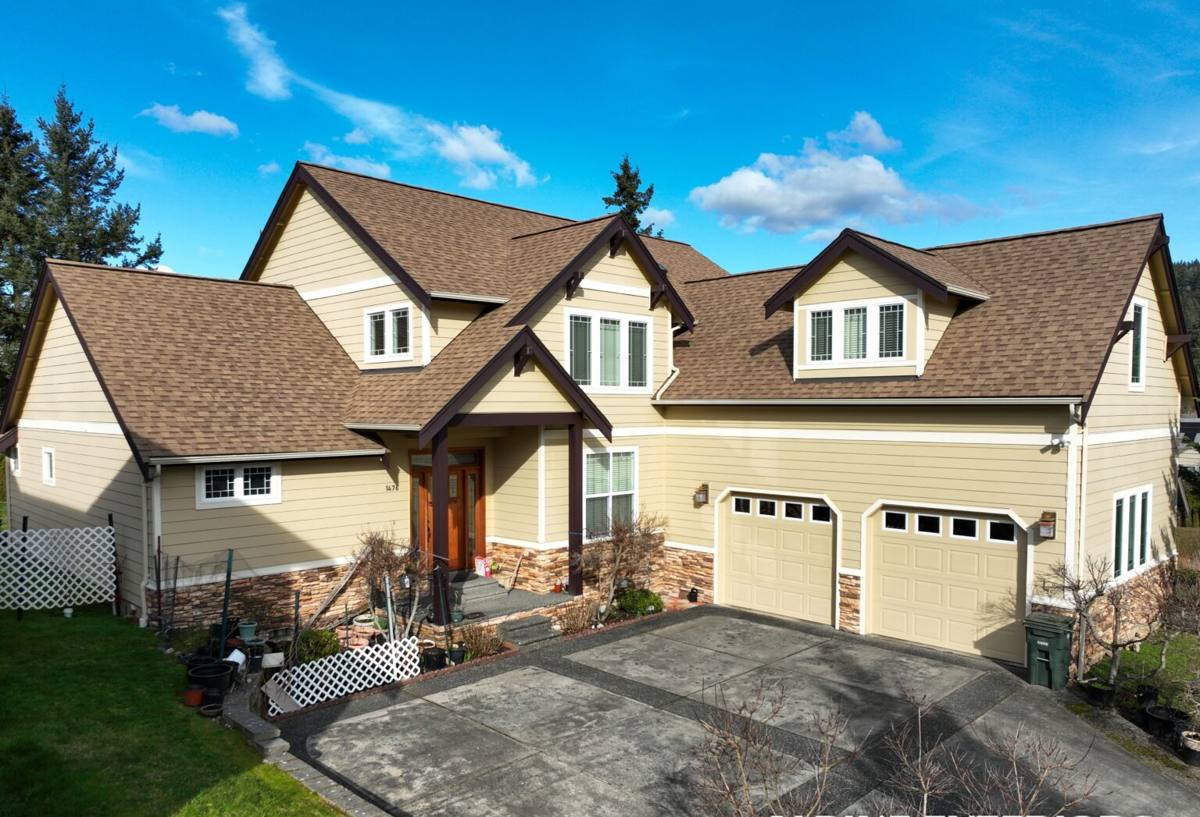
What Whatcom County's Coastal Climate Does to a Deck
Salt Air and Metal Hardware
Standard galvanized fasteners and brackets are rated for general outdoor exposure, not sustained coastal salt exposure. In a marine-influenced microclimate like Happy Valley's, under-rated hardware can start showing surface corrosion within a few seasons — long before the decking itself needs attention. Once a fastener corrodes, it weakens at the exact point where it's holding structural load, which is a bigger problem than cosmetic staining.
Driving Rain and Water Intrusion
Rain that comes in at an angle, which is common with the wind patterns off Chuckanut's slopes, doesn't just fall on a deck surface — it gets pushed under railing caps, behind fascia boards, and into any gap around the ledger where the deck attaches to the house. That ledger connection is the single most common point of hidden rot on decks we're called out to inspect, because it's the hardest area to see and the easiest for a builder to under-flash.
Moss, Algae, and the Long Wet Season
Whatcom County's wet season runs long, and shaded or north-facing decks in Happy Valley can stay damp for days at a stretch. Moss and algae need exactly that — sustained moisture and shade — to take hold. Beyond looking bad, a moss-covered deck surface is genuinely slick and holds moisture against the board, which accelerates wood decay and can degrade the surface coating on composite decking over time.
What a Correctly Built Deck Needs Here
- Fasteners and structural hardware rated for coastal or marine exposure, not just standard exterior-grade
- Proper ledger flashing that directs water away from the house rim joist, with a gap or drainage path rather than a sealed-tight seam that traps moisture
- Joist tape or a comparable moisture barrier on top of framing members, so standing water doesn't sit directly against exposed wood
- Decking material and fastening pattern chosen for how it drains and dries, not just how it looks on day one
- Railing post connections that are mechanically fastened into framing, not just surface-mounted to decking
- Airflow underneath the deck where grade and height allow it, since stagnant air under a low deck is what keeps moss and mildew established
- A surface texture and slope that sheds water rather than pooling it, particularly on shaded sections
Choosing Decking Material for Happy Valley
There's no single "best" decking material — the right choice depends on how much upkeep you want to do, your budget, and how shaded or exposed the deck site is. Here's how the common options compare under the conditions Happy Valley actually sees:
| Material | Moss/Algae Resistance | Maintenance | Typical Lifespan |
|---|---|---|---|
| Pressure-treated wood | Low — needs regular cleaning and sealing | Annual cleaning, re-sealing every 1-2 years | 10-15 years with upkeep |
| Cedar | Moderate — natural oils help some, still needs care | Regular cleaning, periodic staining/sealing | 15-20 years with upkeep |
| Composite decking | Good — capped boards resist moisture uptake | Periodic washing, no sealing needed | 25-30 years, manufacturer-warrantied |
| PVC decking | Very good — non-organic surface, nothing for moss to root into | Low — occasional washing | 30+ years, manufacturer-warrantied |
We install all of these depending on what the homeowner wants and what the budget calls for. What we don't do is cut corners on the framing and fastening underneath, regardless of which surface material sits on top — because a composite deck on an under-flashed ledger will still rot from below.
A Note on Sealed vs. Vented Deck Boards
Some lower-cost composite and wood installations rely on tight board spacing with little to no drainage gap. In a climate as wet as ours, that traps moisture between boards and creates ideal conditions for algae growth in the gaps. We space and fasten decking to let water and air move through, which costs a small amount of extra labor and material but pays off in how the deck looks and performs by year three or four.
New Builds vs. Deck Replacement
Happy Valley has a mix of older homes with original decks and newer construction, so we do both new builds and full replacements regularly.
New Deck Construction
For a new deck, we start with the ledger connection and framing layout, since that's the part that determines how the deck performs for the next 20-plus years regardless of what decking material eventually goes on top. We design footing depth and spacing to local code and site conditions, then build up from there.
Deck Replacement
When we replace an existing deck, the framing underneath is often the real story — even if the surface boards look fine, we check the ledger flashing, joist condition, and post bases before deciding whether the substructure can be reused or needs to come out. Reusing failing framing under new decking just hides the problem for a few more years; we'll tell you plainly if that's what we're looking at rather than build over it.
How We Approach a Deck Project
- On-site assessment — we look at sun/shade exposure, drainage, existing structure condition (for replacements), and how the deck ties into the house
- Material and design discussion — we walk through decking options, railing style, and layout based on your budget and how you'll use the space
- Permitting — most deck work in Whatcom County requires a permit depending on size and height; we handle that process
- Framing and structural work — footings, ledger flashing, joists, and hardware installed to coastal-exposure standards
- Decking, railing, and finish work — installed with drainage and airflow in mind, not just appearance
- Final walkthrough — we go over care and cleaning specific to the material you chose, including moss prevention for shaded areas
Deck Maintenance for This Climate
Even a well-built deck needs some seasonal attention in a climate like ours. What that looks like depends on material:
- Sweep debris off the deck regularly, especially in fall — trapped leaves hold moisture against the surface
- Clean moss and algae buildup with an appropriate deck cleaner before it gets established, particularly on shaded sections
- Check railing post connections and stair stringers annually for movement or soft wood
- For wood decks, plan on re-sealing or staining on the schedule the product calls for — skipping a cycle in our wet climate shows up fast
- Keep gutters and downspouts near the deck clear so runoff isn't dumping extra water onto or under the structure
Why Local Deck-Building Experience Matters
A deck contractor who mostly works drier inland areas may not default to coastal-rated hardware or think through ledger flashing the same way — not because the work is careless, but because it's not what their usual conditions demand. Working Happy Valley and the rest of Whatcom County regularly means we've seen which details actually matter here: the hardware grade, the flashing detail, the board spacing, the shade patterns that turn one side of a deck mossy while the other stays clean. Those aren't things you learn from a spec sheet — they're things you learn from callbacks and re-inspections on decks built without them.
We also know the local permitting process and the practical realities of building on Happy Valley's terrain — slope, drainage, and how close houses sit to trees and shade lines — which keeps the project moving without surprises partway through.
Get a Free Estimate
If you're planning a new deck or replacing one that's showing its age, we're glad to take a look and give you a straightforward assessment — no pressure, no inflated quote to negotiate down from. Fill out the form below and we'll set up a time to walk the site with you.