 Chuckanut
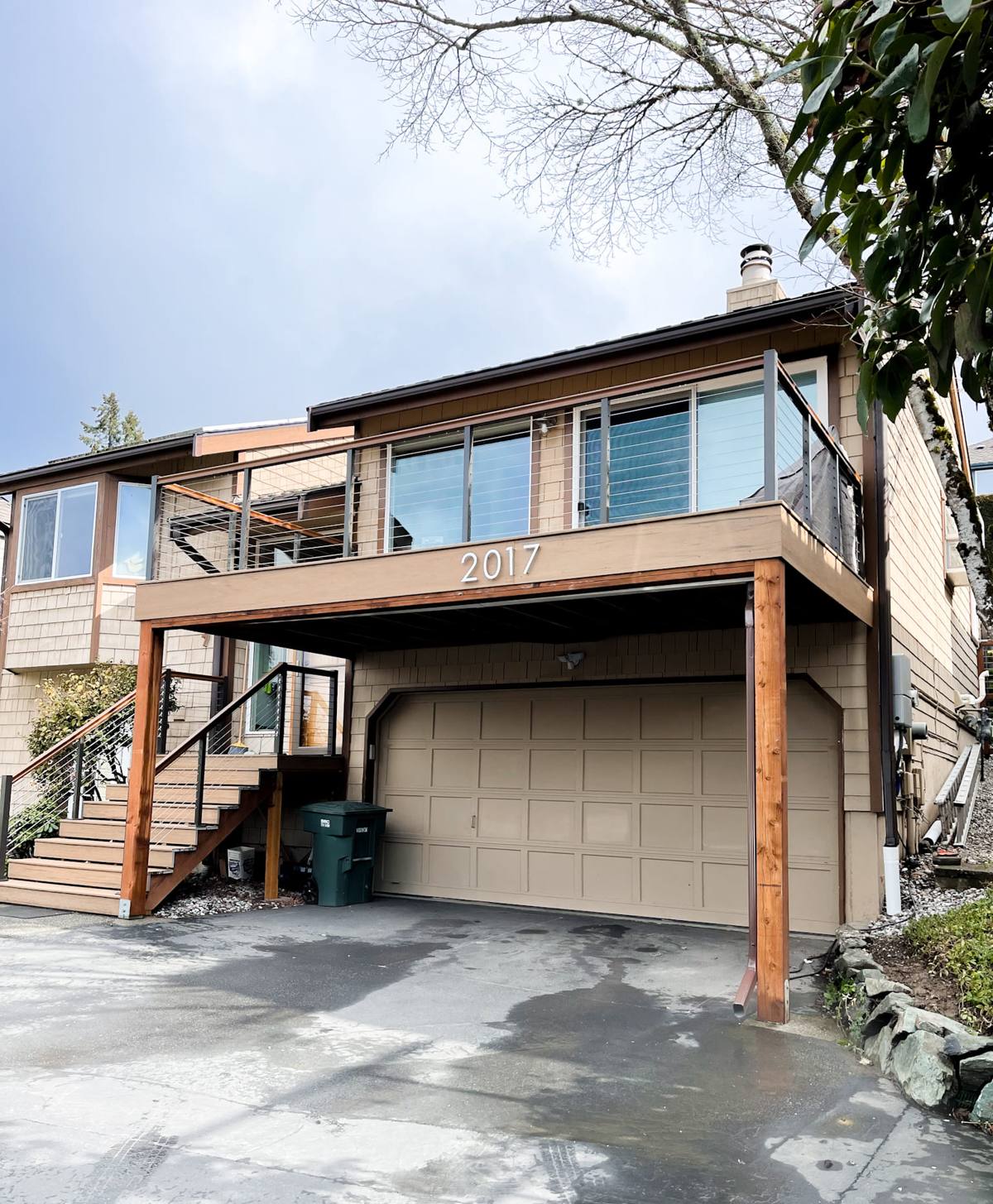
 Building Decks for Mount Vernon Homes
Mount Vernon homeowners ask us for the same thing over and over: a deck that actually holds up. Not a deck that looks good in the first summer and then starts showing gray streaks, soft spots, or popped fasteners by year three. Building outdoor structures in this part of Washington means building for water first and appearance second — because if the water problem isn't solved, the appearance won't last anyway.
Chuckanut Siding is based locally, and our crews already know what a deck in this area is up against: long stretches of driving rain, salt-tinged air moving in off the water, and a moss season that can stretch from fall through spring. A deck built without those factors in mind is a deck that's already on a shorter clock than it should be.
What This Climate Does to a Deck
Before we talk about design or materials, it's worth being honest about what Whatcom County weather actually does to an outdoor structure over time. This isn't scare-tactic marketing — it's just the reality every deck in the region has to deal with:
- Driving rain gets pushed sideways by wind, which means it reaches surfaces that a calmer climate wouldn't test — ledger connections, stair stringers, the undersides of rail posts.
- Salt-influenced air accelerates corrosion on fasteners, brackets, and any exposed metal hardware, especially on homes closer to the water.
- Moss and algae take hold anywhere moisture sits and sunlight is limited, which turns horizontal deck boards and shaded understructure into prime growing conditions for months at a time.
- Freeze-thaw cycling, while milder here than inland climates, still stresses any spot where water gets trapped and repeatedly freezes and expands.
None of these are exotic problems. They're just constant ones. A deck that's built to shed water quickly, drain properly, and use corrosion-resistant hardware from day one will outlast one that wasn't — by years, not months.
What a Correctly Built Deck Needs Here
Framing and Structure
The framing is the part no one sees once the project is done, which is exactly why it's the part most worth getting right. Ledger boards need proper flashing to keep water from wicking into the house rim joist — this is one of the most common failure points we find on decks that were built quickly or by crews unfamiliar with the local moisture load. Joist spacing, beam sizing, and post footings all need to account for both structural load and the reality that this ground stays wet for a good part of the year.
Hardware and Fasteners
In a salt-air-adjacent climate, standard hardware corrodes faster than homeowners expect. We use fasteners and structural connectors rated for exterior and coastal-influenced exposure, not just whatever comes with a lumber package. It costs a little more up front. It saves a lot of headache later, because replacing corroded structural hardware on a finished deck is far more disruptive than choosing the right hardware the first time.
Decking Material Choice
There's no single "best" decking material — there's a best material for a given budget, maintenance appetite, and look. Here's how the common options actually compare in this climate:
| Material | Moisture Behavior | Maintenance | Typical Lifespan Here |
|---|---|---|---|
| Pressure-treated wood | Good if sealed and re-sealed regularly; prone to moss if neglected | Annual cleaning, periodic sealing | 10–15 years with upkeep |
| Cedar | Naturally moisture-resistant, but surface graying happens fast in this climate | Regular cleaning, occasional oil/stain | 15–20 years with upkeep |
| Composite decking | Sheds water well, resists rot; can still grow surface algae if not cleaned | Periodic washing, no sealing needed | 25–30+ years |
| PVC decking | Fully moisture-resistant, does not absorb water | Occasional washing | 25–30+ years |
We'll walk through these trade-offs honestly during an estimate rather than pushing whatever has the best margin. A homeowner who wants a lower upfront cost and doesn't mind yearly maintenance may be perfectly happy with treated wood. A homeowner who wants to set it and mostly forget it usually leans composite or PVC.
Drainage and Moss Prevention
Moss doesn't grow because a deck is "old" — it grows because moisture and shade sit together long enough for it to take hold. The two biggest factors we control at the build stage are board gapping and slope. Proper gapping between boards lets water pass through instead of pooling on the surface, and a slight slope away from the house keeps water moving toward the edges instead of collecting mid-deck. Understructure ventilation matters too — a deck built low to the ground with no airflow underneath stays damp far longer after a storm, which is exactly the environment moss prefers.
For homes with heavy tree cover, which is common around Mount Vernon, we'll also talk about how much sun exposure the deck realistically gets and adjust material recommendations accordingly. A shaded, wood deck under conifers is going to need more moss management than an open, sunnier one — that's just physics, not a knock on the property.
Our Process for a Mount Vernon Deck Build
- On-site assessment. We look at the house's ledger condition, grade and drainage around the proposed footprint, sun/shade exposure, and any existing structural issues before ever talking materials.
- Design and material selection. We walk through layout, railing style, and decking material trade-offs based on your budget and how much maintenance you actually want to do.
- Permitting. Deck projects above a certain size or height typically require a permit locally — we handle that process rather than leaving it on the homeowner's plate.
- Framing and flashing. This is where the long-term durability of the deck gets decided — proper ledger flashing, joist layout, and footing depth for the soil conditions on your lot.
- Decking, railing, and finish work. Boards, railings, stairs, and any fascia or skirting are installed to shed water correctly, not just look finished.
- Final walkthrough. We go over care and maintenance specific to whatever material you chose, so you know what upkeep actually looks like year one versus year five.
Why Hire a Crew That Already Works This Area
A deck built by a crew that mostly works drier or milder climates tends to make assumptions that don't hold up here — lighter flashing details, standard-grade hardware, drainage slopes calculated for less rainfall than this region actually gets. A crew that works Chuckanut and the surrounding Whatcom County communities regularly isn't guessing about any of that. We've seen what a rushed ledger flashing job looks like five years later, and we build to avoid that outcome from the start.
There's also a practical side to hiring locally: warranty follow-up, seasonal check-ins, and repairs down the road are all easier when the crew that built your deck is a short drive away, not a company that moved on to the next region after the job was done.
What to Ask Before Hiring Anyone for Deck Work
Whether you go with us or someone else, these are worth asking any contractor bidding a deck project in this climate:
- How will you flash the ledger board connection to the house?
- What hardware grade or rating will you use for fasteners and structural connectors?
- What slope and board gapping will the deck surface have for drainage?
- Will the design include airflow underneath the deck, or will it sit low to the ground?
- What does routine maintenance look like for the specific material being proposed?
- Is a permit required for this project, and who's responsible for pulling it?
A contractor who can answer these clearly and specifically, without vague reassurances, is usually one who's actually thought through how the structure will hold up here — not just how it will look on installation day.
Cost Factors to Expect
Deck pricing varies widely based on size, material, height off the ground, railing style, and site access, so we won't quote a number that doesn't mean anything without seeing the property. What we can say is that the factors that move the price most are decking material choice, the complexity of the framing (multi-level decks, stairs, built-in seating), and any site prep needed for grading or drainage. We'll break down where your budget is going during the estimate so there are no surprises later.
If you're planning a new deck or replacing one that's showing its age, we're happy to come take a look and give you a straightforward, no-pressure estimate — just fill out the form below to get started.